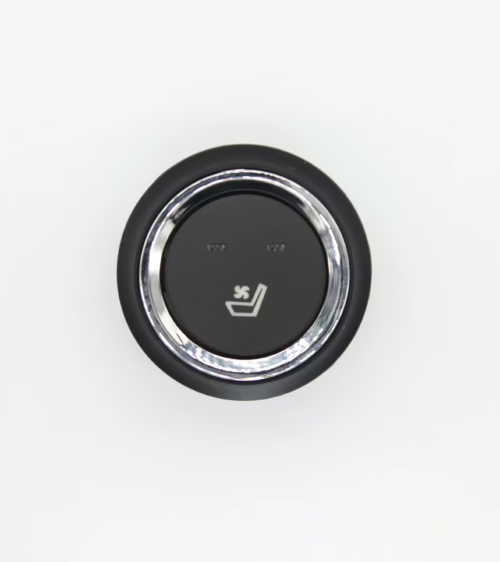
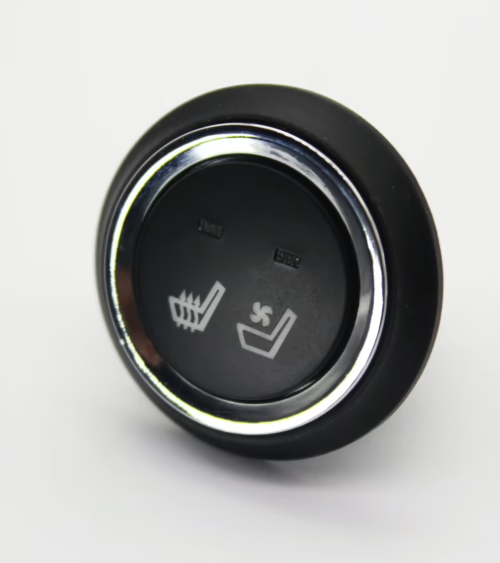
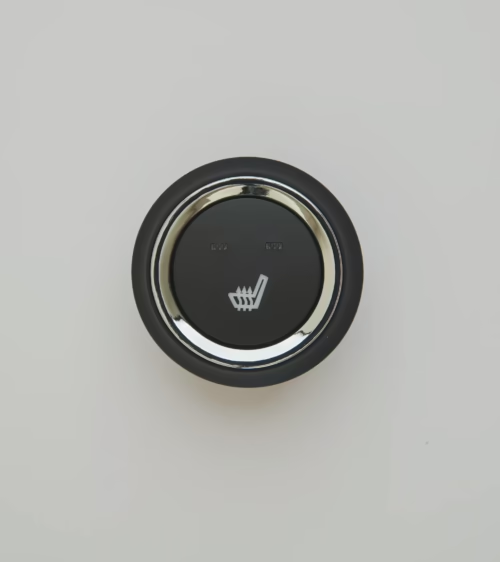
Seat heater control buttons are the tactile interface between the occupant and the seat climate system — the physical input that tells the control module which temperature level to maintain. Selecting the right seat heater control buttons involves matching electrical interface type, operating voltage, connector format, and switch body dimensions to both the control module and the vehicle interior.
This guide covers every practical aspect of seat heater control buttons for OEM seat manufacturers, aftermarket kit suppliers, and vehicle technicians replacing faulty switch assemblies.
1. How Seat Heater Control Buttons Communicate With the Module
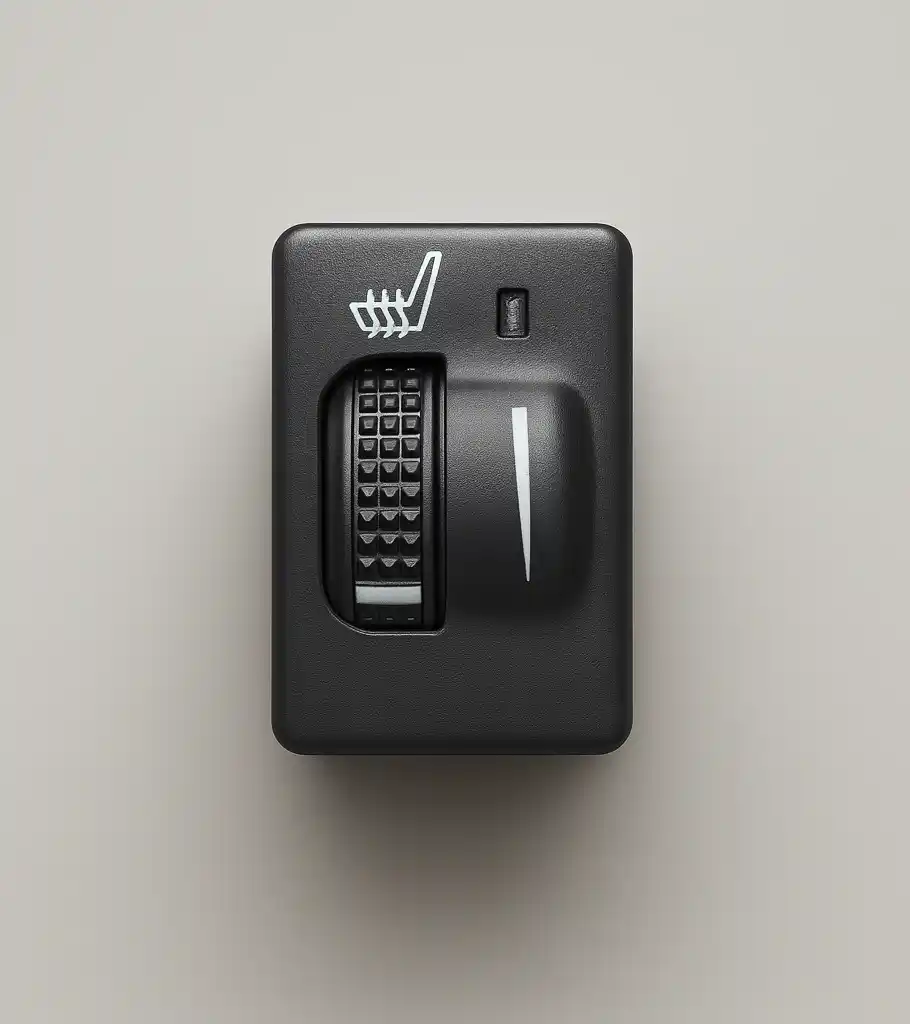
Seat heater control buttons communicate with the seat climate control module through one of three electrical methods. In a discrete voltage system, each button position connects a different resistor to the module input, producing a unique voltage the module interprets as a temperature command. In a resistor-ladder system, multiple seat heater control buttons share a single sense wire and are identified by their individual resistance value.
LIN-bus designs digitize button presses in the switch assembly itself and transmit serial data frames to the body control module over a two-wire bus.
The communication method determines which replacement seat heater control buttons are electrically compatible with a given seat control module. Substituting a resistor-ladder switch into a discrete-voltage circuit will produce incorrect behavior or no response at all. Always confirm the module input type before sourcing replacement seat heater control buttons.
2. Five Types of Seat Heater Control Buttons in Production Use
OEM and aftermarket programs use five main seat heater control button configurations.
- Rocker switch with integrated LED: A two-position rocker that toggles the heater on or off, with an LED indicator behind a translucent lens. Simple wiring: two switch terminals plus one LED supply terminal. Common in entry-level trim applications where cost is the primary constraint.
- Multi-level rocker: A rocker that steps through three heat levels on successive presses, with LED indicators for each level. Requires a multi-pole connector or PWM input line to the control module.
- Round push-button with RGB LED ring: A round button with a color-coded LED ring that changes through heat levels. Popular in aftermarket retrofit kits for its compact footprint and clear visual feedback. This is the most commonly stocked format for seat heater control buttons in aftermarket programs.
- Rotary encoder: A knob that steps through levels by rotation. Preferred in premium vehicles where the haptic response of a rotary control aligns with other interior controls.
- Capacitive touch pad: A flat, touch-sensitive panel with no moving parts and the highest durability rating for mechanical wear. Requires a dedicated capacitive sensing IC in the switch assembly.
3. Electrical Specifications for Seat Heater Control Buttons
Regardless of button type, production-grade seat heater control buttons must satisfy several electrical specifications. Operating voltage is typically 12 V nominal with a functional range of 9 V to 16 V to accommodate battery state and alternator output variation.
LED indicator current draw should not exceed 20 mA per indicator to avoid loading the module supply rail. Switch contact resistance must be below 100 milliohms at rated current to prevent voltage drop errors on the sense line.
Insulation resistance between switch terminals and housing must exceed 10 MOhm at 500 V DC to satisfy FMVSS and ECE electrical isolation requirements. Seat heater control buttons used in humid environments should be specified with a minimum IP54 rating — protection against dust and splashing water from any direction.
4. IP Rating and Environmental Requirements
Seat heater control buttons installed in center consoles and armrests are exposed to beverage spills, humidity, and temperature cycling from minus 40 degrees C to plus 85 degrees C. OEM programs typically require a minimum IP54 rating for seat heater control buttons.
Aftermarket switches installed in open panel cutouts should meet at least IP52. Connector sealing at the harness junction uses sealed connectors with a silicone perimeter gasket or a potted back-shell for installations in moisture-prone areas.
5. Replacing Seat Heater Control Buttons: Step-by-Step
Replacing seat heater control buttons in an aftermarket or OEM seat system follows a consistent procedure. First, disconnect the vehicle battery to prevent accidental heater activation during the repair. Second, remove the switch panel using a trim removal tool — most panels are retained by two to four snap clips around the perimeter. Third, disconnect the harness connector by depressing the locking tab and pulling straight back.
Fourth, confirm the replacement seat heater control buttons match the original in connector type, pin count, and LED voltage. Fifth, reconnect the harness to the new switch, reinstall the panel, and reconnect the battery. Test all heat levels and confirm LED indicators function correctly before returning the vehicle to service.
6. OEM vs. Aftermarket Seat Heater Control Buttons
OEM seat heater control buttons are designed for a specific vehicle platform and connector harness. They offer a perfect fit and finish match but are available only through dealership parts counters at premium cost. Aftermarket seat heater control buttons offer broader compatibility through included pigtail adapters and universal mounting hardware, at a fraction of the OEM replacement cost.
For retrofit programs where the switch is installed in a new panel location, aftermarket seat heater control buttons provide more installation flexibility than OEM parts designed for a fixed panel cutout geometry.
Frequently Asked Questions About Seat Heater Control Buttons
Can I use aftermarket seat heater control buttons with an OEM seat control module?
In most cases yes, provided the replacement button uses the same electrical interface type and the connector pinout matches the OEM harness. Functional differences may exist, but electrical compatibility is the critical criterion.
Why do my seat heater control buttons feel hot to the touch after extended use?
LED indicators generate heat, and in compact switch assemblies the heat accumulates in the switch housing. If surface temperature exceeds 50 degrees C, check the LED supply current. An overloaded LED driver will run hot and shorten LED service life. Switching to a lower-power LED or adding a series resistor to reduce current typically resolves this.
What is the typical service life of seat heater control buttons?
OEM-grade mechanical seat heater control buttons are rated to 50,000 actuations minimum. A driver activating the seat heater twice per day for ten years performs approximately 7,300 actuations — well within the mechanical life rating. Field failures in seat heater control buttons almost always trace to connector corrosion or LED burnout rather than mechanical switch wear.
Source Seat Heater Control Buttons from Lucky Driver Inc.
Lucky Driver Inc. supplies seat heater control buttons in round push-button, rocker, and multi-level formats to OEM seat manufacturers and aftermarket distributors across North America. Whether your program requires a validated seat heater control buttons assembly for a new seat platform or a drop-in replacement for an existing vehicle, Lucky Driver can provide samples, connector compatibility documentation, and technical support.
Contact Lucky Driver Inc. to request seat heater control buttons samples or pricing for your program.
Seat Heater Control Buttons: Summary
Selecting the right seat heater control buttons for an OEM or aftermarket program requires matching the electrical interface, connector format, IP rating, and switch type to the seat control module and the vehicle interior environment. Lucky Driver Inc. maintains North American inventory of seat heater control buttons across all common formats, with same-week shipping for volume distributor orders.
Further Reading
Technical Glossary
NTC Thermistor: Negative Temperature Coefficient resistor used as the temperature feedback sensor in seat climate systems. Resistance decreases predictably as temperature rises, allowing the control module to calculate surface temperature and adjust duty cycle.
PWM (Pulse Width Modulation): The seat heater module switches the element circuit on and off at high frequency, varying the on-time ratio between 0% and 100% to achieve any intermediate power level without resistive loss in a series regulator.
LIN Bus: Low-speed serial protocol used in automotive seat climate systems for communication between the seat module and body control module. Operates at 20 kbit/s over a single wire, enabling infotainment-screen control and OBD-II fault code reporting.
IP54 Rating: Minimum ingress protection for seat climate components. The first digit (5) indicates dust protection; the second (4) indicates resistance to water splash from any direction — required for components exposed to beverage spills.
CISPR 25 Class 5: Most stringent automotive radiated and conducted emissions limit. Switching noise from heater PWM circuits must remain below defined limits from 0.15 MHz to 1 GHz to prevent audible AM radio interference.
PPAP: Production Part Approval Process. Requires dimensional reports, material certifications, and process capability data before a component enters production at an OEM facility. Most Tier-1 seat suppliers require full PPAP from upstream component suppliers before sourcing approval is granted.
Industry Standards and Compliance Reference
ISO 16750: Environmental conditions and testing for electrical and electronic equipment in road vehicles. Defines temperature cycling, humidity, vibration, and shock test profiles that seat climate components must survive without performance degradation or connector failure during a vehicle lifetime of 15 years or 240,000 kilometers.
SAE J1772: While primarily an EV charging standard, the 12 V auxiliary power architecture defined in SAE J1772 governs the operating voltage envelope that automotive seat accessories must tolerate — nominal 12 V, range 9–16 V, transient spikes to 24 V for 50 ms under load-dump conditions.
REACH and RoHS Compliance: European Union regulations restricting hazardous substances in electrical equipment. REACH limits 224 substances of very high concern (SVHCs). RoHS restricts lead, mercury, cadmium, hexavalent chromium, and four phthalates. OEM customers increasingly require full REACH and RoHS compliance declarations before approving suppliers.
IATF 16949:2016: Automotive quality management system standard derived from ISO 9001, adding automotive-specific requirements including control plans, process FMEA, production part approval, and customer-specific requirements. Tier-1 seat manufacturers typically require sub-tier component suppliers to hold IATF 16949 certification or to operate under an approved quality agreement.
UL 94 V-0 Flammability: Polymer components used in seat climate systems must meet UL 94 V-0 flammability classification — the specimen must self-extinguish within 10 seconds of flame removal, with no dripping of burning particles. This applies to connector housings, wire insulation jacketing, and control module enclosures.
Related Guides
Our seat heater switches in stock covers rocker, rotary, and round designs.