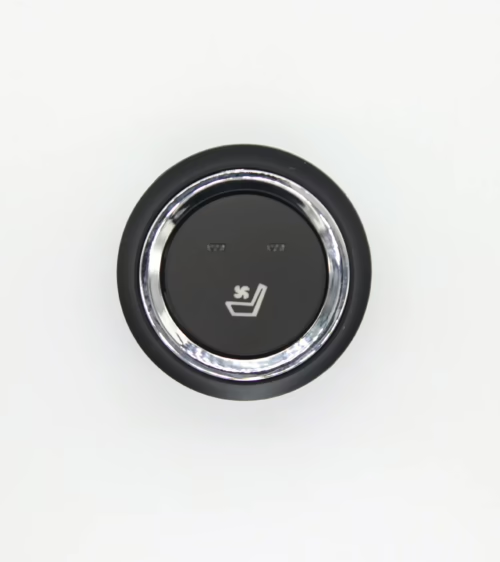
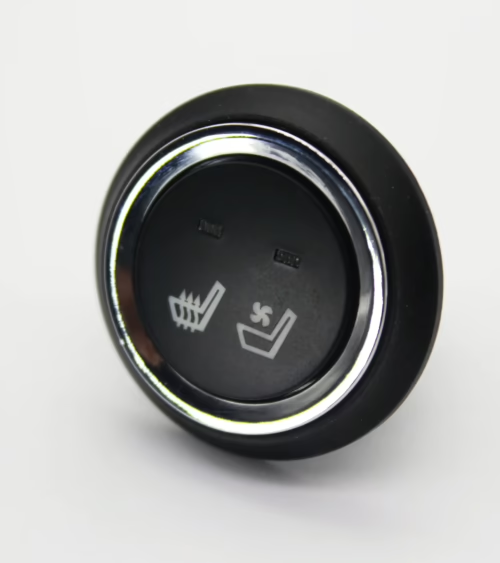
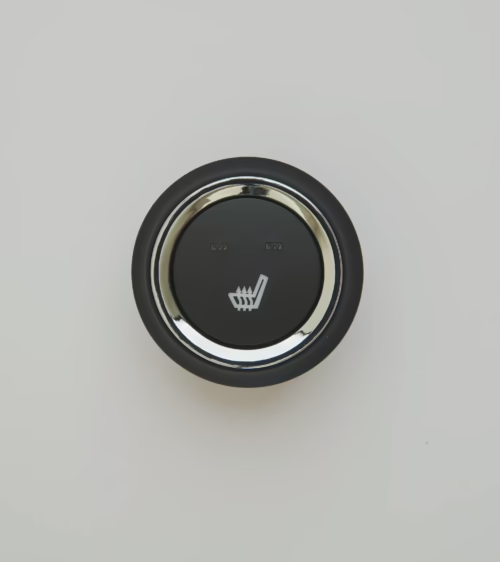
A malfunctioning Dodge Durango seat heater switch is one of the most common heated seat complaints reported by Durango owners, especially in third-row SUVs that see heavy daily use.
Whether the switch light stays on but the seat stays cold, the indicator flickers intermittently, or nothing happens at all when you press the button, the root cause is usually traceable to one of a handful of well-documented failure points.
This guide walks through five practical fixes, from basic diagnostics to full switch replacement, so you can get your heated seats working again without an unnecessary trip to the dealership.
Why the Dodge Durango Seat Heater Switch Fails
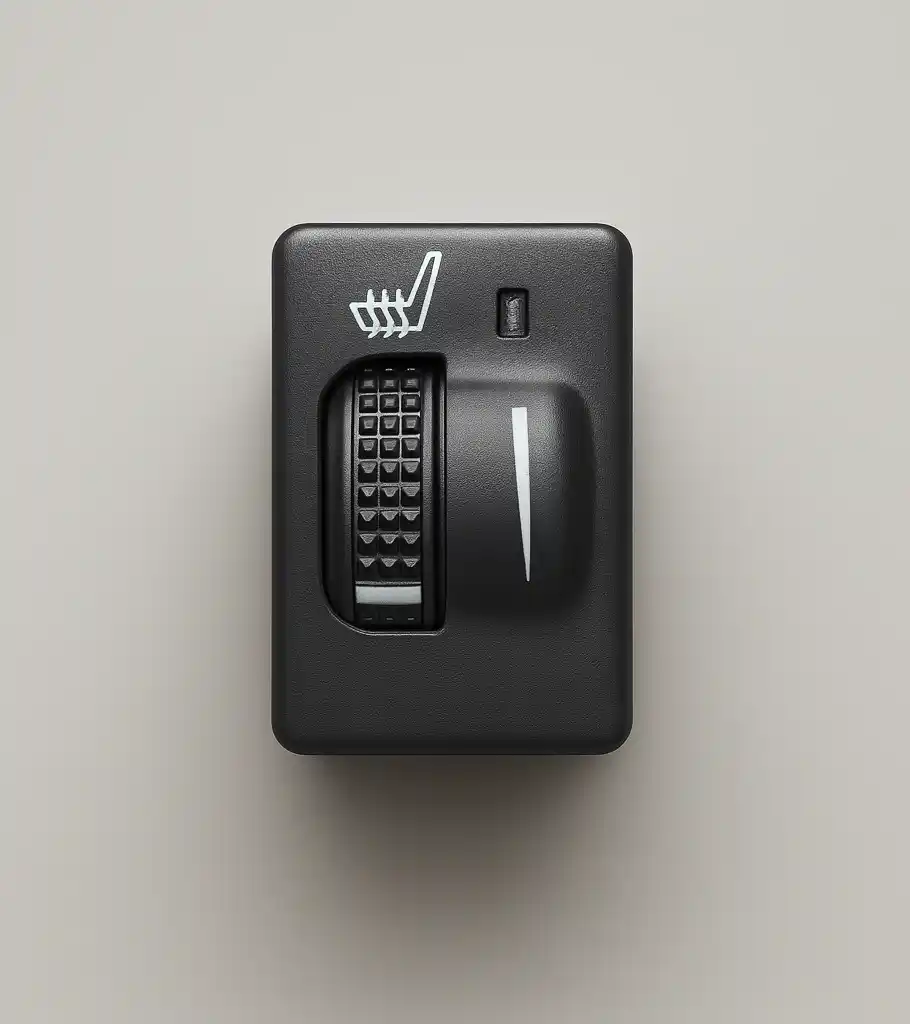
The seat heater switch in a Durango is a low-voltage rocker or button assembly wired into a control circuit that includes a thermistor, a relay or built-in solid-state driver, and the heating element itself.
Because the switch sees constant use, thumb pressure, and cabin temperature swings, its internal contacts are the first component to degrade. Corrosion from spilled drinks, dust ingress around the bezel, and simple mechanical wear on the contact points are the leading causes of failure across 2011-2026 Durango model years.
In many cases, the switch itself is fine, but the connector behind the center console has loosened or corroded, which produces the exact same symptoms as an internal switch fault.
Fix 1: Confirm the Fuse and Power Supply First
Before replacing anything, check the heated seat fuse in the Durango’s Totally Integrated Power Module (TIPM), typically located in the engine bay. A blown fuse will disable both the switch illumination and the heating function on the affected side.
Use the fuse diagram printed on the TIPM cover to locate the correct heated seat circuit, and test it with a multimeter rather than relying on a visual inspection, since a fuse can look intact while still being open internally.
If the fuse is good, use a multimeter to confirm 12V is reaching the switch connector with the ignition on; no voltage at this point indicates a wiring or module issue upstream of the switch.
Fix 2: Clean or Reseat the Switch Connector
Pull the switch panel from the center console or door trim (depending on trim level) and inspect the connector pins. Oxidation on the pins is extremely common in humid climates and after any interior spill.
Clean the pins with electronics-safe contact cleaner, let them dry fully, and reseat the connector firmly until it clicks. This single step resolves a large percentage of intermittent heated seat complaints because it restores a clean, low-resistance path for both the control signal and the heating current.
Fix 3: Bench-Test the Switch for Internal Continuity
If power reaches the connector but the seat still won’t heat, remove the switch and bench-test it with a multimeter in continuity mode. Press through each heat level (high, medium, low, off) and confirm the resistance changes as expected between terminals.
A switch that shows open circuit or erratic readings on any setting has failed internally and should be replaced rather than repaired, since these switches are sealed units not designed for disassembly.
This is also the point where many owners discover the indicator LED works independently of the heating contacts, which explains why the light can stay on even when the seat produces no heat.
Fix 4: Replace the Switch with an OEM-Fit Part
Once you’ve isolated the fault to the switch itself, replacement is straightforward and typically takes under 30 minutes with basic trim tools. Match the part number to your specific Durango trim year, since switch bezels and pinouts changed across the 2011-2013, 2014-2020, and 2021-2026 refresh cycles.
Sourcing a properly rated, OEM-fit unit matters more than price here:
- an underrated switch can overheat under sustained current draw
- while a mismatched connector shape leads to a loose
- unreliable fit. Lucky Driver Inc. maintains a seat heater switch catalog built specifically for cross-referencing OEM part numbers across Dodge
- Jeep
- Chrysler platforms
- which makes it easier to find a direct-fit replacement without guesswork.
Fix 5: Inspect the Heating Element if the Switch Tests Good
If the switch passes continuity testing and the wiring harness checks out, the fault likely sits in the seat pad itself. The heating element is a resistive wire grid, similar in principle to a resistive heating circuit, laminated into the seat foam beneath the upholstery.
Repeated flexing from ingress and egress can fracture individual wire strands over years of use, producing partial or total loss of heat even with a fully functional switch and power supply.
Diagnosing this requires pulling the seat cover and testing element resistance directly, a job best handled by a shop familiar with seat trim removal, since upholstery clips are easy to break on a Durango’s leather-trimmed seats.
Preventing Future Switch Failures
A few habits extend the service life of any replacement switch. Avoid setting drinks in the center console cupholders directly above the switch panel, since spills are the single largest contributor to corrosion failures.
Periodically wipe down the switch bezel to prevent dust and grit from working into the rocker mechanism.
If you’re outfitting multiple seats or planning ahead for a fleet or resale vehicle, it’s worth reviewing Lucky Driver’s full range and browsing seat heating products in one place, including pads, switches, and control modules sized for Durango-compatible wiring harnesses.
Frequently Asked Questions
Q:
- Why does my Durango seat heater switch light up but the seat stays cold?
A: This almost always points to a heating element failure downstream of the switch - or a break in the wiring harness between the switch and seat pad. The indicator LED runs on a separate circuit path from the heating contacts
- so it can function normally even when the heat itself has failed.
Q:
- Can I replace just the seat heater switch without removing the seat?
A: Yes. On nearly all Durango trims - the switch is accessible from the console or door panel without disturbing the seat itself
- making it one of the simplest heated seat repairs to perform in a driveway with basic trim removal tools.
Q:
- How do I know if my Durango’s heated seat problem is the switch or the seat pad?
A: Bench-test the switch for continuity across each heat setting as described above. If the switch tests correctly - the problem is almost certainly in the heating element or the wiring harness running to the seat pad rather than the switch itself.
Diagnosing a faulty Dodge Durango seat heater switch doesn’t require a dealership visit in most cases, just a systematic check of fuses, connectors, and switch continuity before committing to a replacement. Lucky Driver Inc.
supplies OEM-grade seat heater switches, heating pads, and control modules engineered for reliable fitment across Dodge, Jeep, and Chrysler platforms, giving Durango owners a dependable path back to a warm, fully functional seat.
Related Articles
- Dodge Charger Heated Seat Switch: 5 Fixes for 2026 Models
- Volvo XC90 Seat Heater Switch: 5 Fixes (2026 Guide)
- Audi A4 Heated Seat Switch: 5 Fixes for 2026 Models
- Mercedes C-Class Seat Heater Switch: 5 Fixes (2026 Guide)
- BMW 3 Series Heated Seat Switch: 7 Fixes (2026 Guide)
Frequently Asked Questions About dodge durango seat heater switch
Procurement engineers evaluating dodge durango seat heater switch for OEM programs regularly ask the following questions. Answers cover specification, compatibility, certification, and sourcing for dodge durango seat heater switch requirements.
What voltage ratings are available for dodge durango seat heater switch?
Standard dodge durango seat heater switch configurations support 12 V DC for passenger vehicles and 24 V DC for commercial trucks. Selecting the correct dodge durango seat heater switch voltage at the design stage eliminates harness rework later.
Lucky Driver maintains dodge durango seat heater switch inventory in both ratings for same-week shipment.
Which certifications apply to dodge durango seat heater switch production?
dodge durango seat heater switch assemblies entering OEM programs typically require UL recognition, REACH compliance, and RoHS documentation. Lucky Driver holds certification records for every dodge durango seat heater switch variant and includes copies with sample and production shipments.
How is watt density specified for dodge durango seat heater switch?
Watt density for dodge durango seat heater switch is expressed in W/cm² and ranges from 0.04 to 0.12 depending on heat-up time requirements. Lower watt density dodge durango seat heater switch designs improve element longevity, while higher values suit cold-climate applications.
Lucky Driver engineering reviews dodge durango seat heater switch requirements and recommends watt density based on your seat platform.
What connector families are used with dodge durango seat heater switch?
dodge durango seat heater switch harnesses are available with Molex, TE Connectivity, and Delphi connector families. Matching the dodge durango seat heater switch connector to the vehicle harness reduces assembly time and eliminates adapter cables.
Specify your harness format when requesting a dodge durango seat heater switch quote from Lucky Driver.
What is the lead time for dodge durango seat heater switch samples?
dodge durango seat heater switch samples from Lucky Driver’s North American warehouse ship within 3 to 5 business days for standard configurations. Custom dodge durango seat heater switch variants with modified pad geometry or connector pinouts require 4 to 6 weeks.
Contact Lucky Driver to confirm dodge durango seat heater switch availability before submitting your engineering schedule.