If you drive through cold winters without factory-installed heated seats, you can still add heated seats to your Ford F150 using the same components OEM seat manufacturers rely on.
Whether your truck is a base XL trim without heating options or an older F150 that predates the feature, retrofitting heated seats is a well-established upgrade that thousands of truck owners complete every year.
This guide covers three practical methods, the wiring and switch logic behind each, and how to choose parts that will hold up to daily driving.
Why Add Heated Seats to Your Ford F150
Factory heated seats were only standard on higher trims like the Lariat, King Ranch, and Platinum for many model years, leaving XL and XLT owners without the feature even though the seat frames and wiring harnesses are often pre-wired or easily adaptable.
Adding heated seats improves comfort on cold mornings, reduces windshield fogging by warming occupants faster than the cabin heater alone, and adds resale value since buyers increasingly expect this feature even on work trucks.
For fleet vehicles and daily drivers parked outdoors overnight, seat heating also reduces the time drivers spend idling the engine just to warm up the cabin.
3 Ways to Add Heated Seats to a Ford F150
There are three common approaches, ranked from least to most involved:
- installing a universal aftermarket heating pad kit
- swapping in OEM-style heated seat components salvaged or purchased separately
- or replacing the entire seat with a factory heated unit from a higher trim. Each method has different cost
- difficulty
- long-term reliability tradeoffs
- which we break down below.
Method 1: Aftermarket Universal Seat Heating Pads
Universal heating pad kits are the fastest and least expensive route. These kits include a carbon-fiber or wire-element heating pad sized for the seat bottom and backrest, a wiring harness, a fuse-protected power lead, and a rocker or rotary switch.
Installation involves removing the seat, pulling back the upholstery just enough to slide the pad between the foam and the seat cover, then running wires to a fused 12V source.
Most kits are rated for two to three heat settings and draw between 4 and 8 amps per seat, so proper gauge wiring and an inline fuse are essential.
This method works on any seat regardless of trim level and typically takes two to three hours per seat for a first-time installer.
Method 2: OEM-Style Heater Elements with Factory-Matched Switches
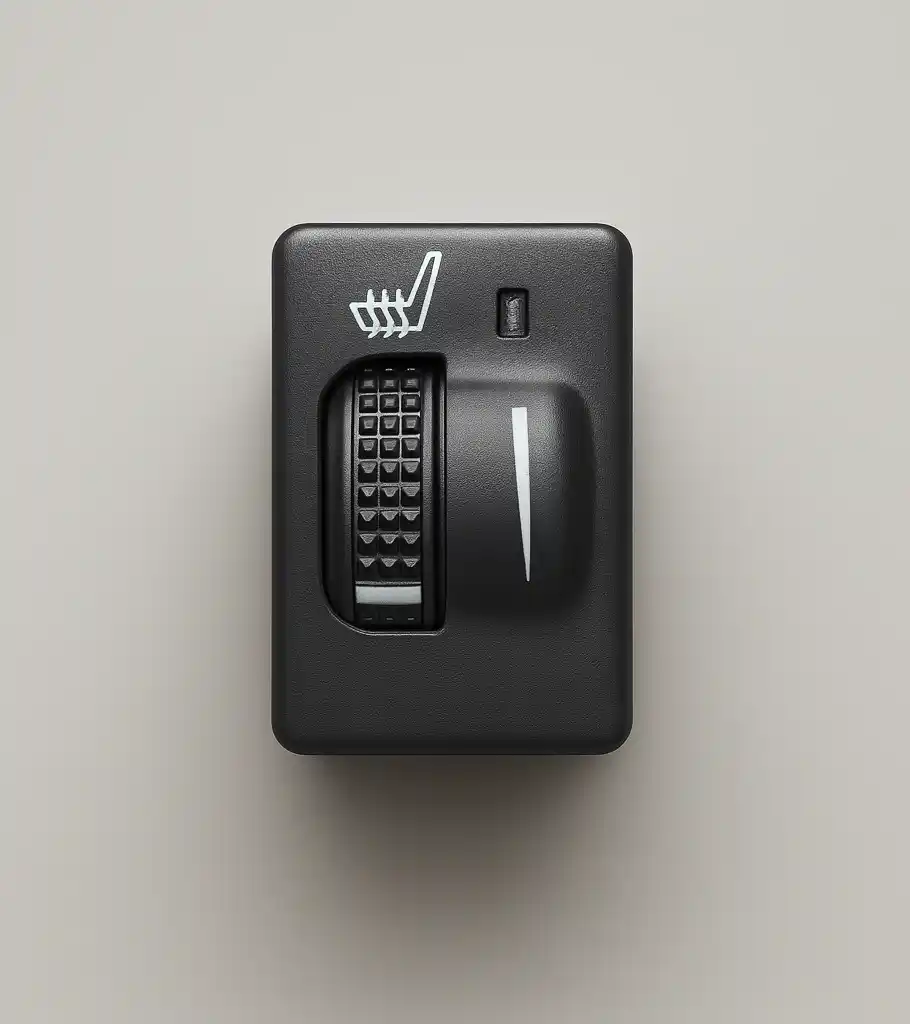
For a more integrated result, many owners source OEM-style heater pads designed specifically for the F150 seat foam profile, paired with a factory-style switch that matches the truck’s dash or console trim.
This approach preserves the stock look and feel since the elements are shaped to the exact contours of Ford’s seat foam rather than a generic universal pad.
It also allows you to wire into the factory seat heater relay location if your truck’s harness was pre-wired for the option, which is common on trucks originally built with the wiring but not the switch or element populated at the factory.
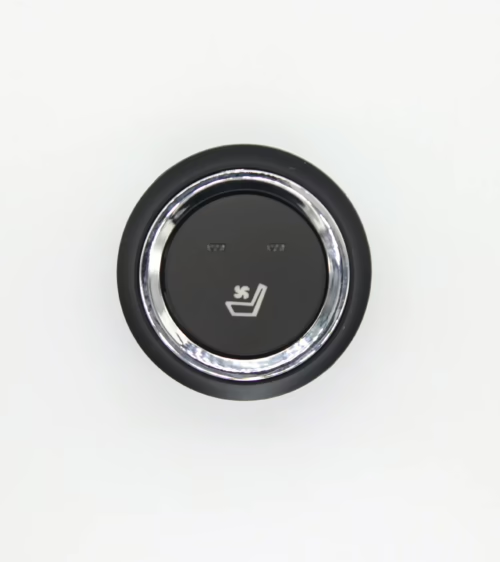
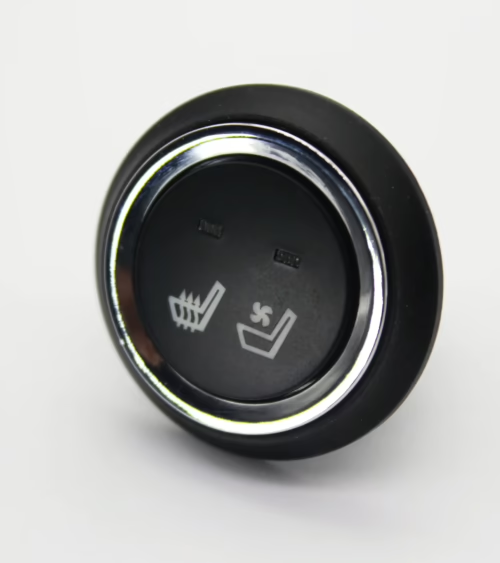
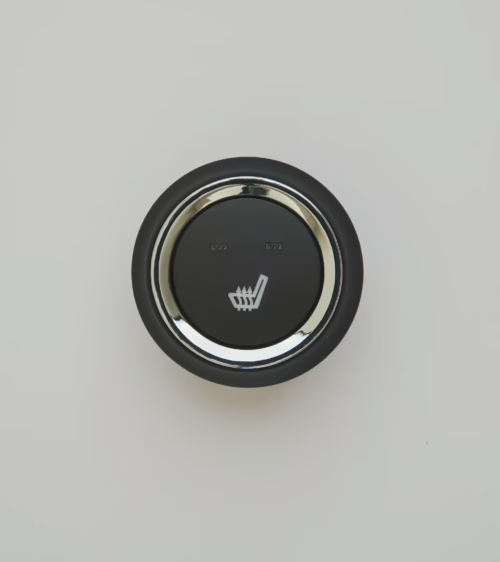
Sourcing replacement seat heater switches that match your dash cluster finish makes this upgrade look factory-installed rather than aftermarket.
Method 3: Replacing Seats with Factory Heated Units
The most involved but cleanest method is swapping your entire seat assembly for a factory heated seat pulled from a Lariat, King Ranch, or Platinum trim F150 of the same model generation.
This guarantees correct bolt patterns, airbag compatibility, and factory wiring connectors, but requires verifying the donor seat’s model year matches your truck’s seat mounting and SRS (airbag) wiring exactly.
Because seat-mounted side airbags are wired through the seat base on many F150 trims, mismatched donor seats can trigger dashboard warning lights or, in rare cases, airbag deployment faults. This method suits owners who want a factory-correct result and are comfortable verifying part numbers before purchase.
Wiring, Switches, and Control Modules Explained
Every heated seat system, regardless of installation method, relies on three core components:
- a resistive heating element
- a switch or control module that regulates power delivery
- a temperature sensor or thermostat that prevents overheating. The heating elements themselves work through Joule heating
- where electrical resistance in the wire or carbon-fiber element converts current into heat. Basic two-stage switches simply toggle between high and low resistance settings
- while more advanced control modules use pulse-width modulation to cycle power and maintain a target seat surface temperature automatically. When retrofitting
- match your control module’s amperage rating to the heating element’s draw
- always run heater circuits through a dedicated fuse rather than tapping an existing circuit that wasn’t sized for the added load.
Installation Tips and Safety Considerations
A few practices separate a reliable install from one that fails within a season. First, always disconnect the seat’s airbag connector and the vehicle battery before removing seat covers, since seat-mounted airbags can deploy unexpectedly during disassembly if the system remains live.
Second, route heater wiring away from sharp seat frame edges and use grommets where wires pass through metal, since chafed insulation is the most common cause of heater failure and intermittent shorts.
Third, avoid folding or creasing the heating element itself when reinstalling the seat cover, as sharp folds break the resistive wire or carbon strands over time. Finally, test each heat setting before fully reassembling the seat trim so you aren’t disassembling a finished installation to chase a wiring mistake.
Choosing the Right Components for Your F150
Component quality matters more than most first-time installers expect. Cheap heating pads often use thin wire elements that break down after repeated seat compression cycles, while better carbon-fiber elements distribute heat more evenly and tolerate the constant flexing of daily seating.
Switches should be rated for automotive-grade temperature and vibration exposure rather than generic 12V switches sold for other applications, since dash-mounted switches face years of thermal cycling from cabin heat and direct sunlight.
If you’re planning the upgrade across multiple seats or want options for both universal and factory-style installs, browsing a full seat heating product catalog makes it easier to match pad size, switch style, and control module amperage in one pass rather than sourcing each part from a different supplier.
FAQ
Does adding heated seats affect the Ford F150’s warranty?
Aftermarket heated seat installations are not covered under Ford’s factory warranty, and improper wiring that damages the seat’s SRS airbag circuit could affect warranty coverage on unrelated seat components.
Using a harness that taps power separately from the airbag wiring avoids this risk entirely.
How much current do aftermarket heated seat pads draw?
Most single-seat kits draw between 4 and 8 amps on the high setting, meaning a properly fused 10-amp circuit is typically sufficient for one seat, while dual-seat installs should use separate fused circuits rather than sharing one fuse.
Can I add heated seats without removing the entire seat from the truck?
Some kits market no-removal installs with thin pads slid under the seat cover. Results last longer when the seat comes out and the cover is pulled back, so the element sits flat without bunching.
Ready to upgrade your F150’s comfort for the cold season?
Lucky Driver Inc. supplies seat heating pads, switches, and control modules built to OEM specifications for Ford trucks and a wide range of other vehicles, giving DIY installers and shops a reliable source for parts that are sized and rated correctly the first time.
Related Articles
- Dodge Durango Seat Heater Switch: 5 Fixes for 2026 Models
- Dodge Charger Heated Seat Switch: 5 Fixes for 2026 Models
- Volvo XC90 Seat Heater Switch: 5 Fixes (2026 Guide)
- Audi A4 Heated Seat Switch: 5 Fixes for 2026 Models
- Mercedes C-Class Seat Heater Switch: 5 Fixes (2026 Guide)
Frequently Asked Questions About add heated seats to ford f150
Procurement engineers evaluating add heated seats to ford f150 for OEM programs regularly ask the following questions. Answers cover specification, compatibility, certification, and sourcing for add heated seats to ford f150 requirements.
What voltage ratings are available for add heated seats to ford f150?
Standard add heated seats to ford f150 configurations support 12 V DC for passenger vehicles and 24 V DC for commercial trucks. Selecting the correct add heated seats to ford f150 voltage at the design stage eliminates harness rework later.
Lucky Driver maintains add heated seats to ford f150 inventory in both ratings for same-week shipment.
Which certifications apply to add heated seats to ford f150 production?
add heated seats to ford f150 assemblies entering OEM programs typically require UL recognition, REACH compliance, and RoHS documentation. Lucky Driver holds certification records for every add heated seats to ford f150 variant and includes copies with sample and production shipments.
How is watt density specified for add heated seats to ford f150?
Watt density for add heated seats to ford f150 is expressed in W/cm² and ranges from 0.04 to 0.12 depending on heat-up time requirements. Lower watt density add heated seats to ford f150 designs improve element longevity, while higher values suit cold-climate applications.
Lucky Driver engineering reviews add heated seats to ford f150 requirements and recommends watt density based on your seat platform.
What connector families are used with add heated seats to ford f150?
add heated seats to ford f150 harnesses are available with Molex, TE Connectivity, and Delphi connector families. Matching the add heated seats to ford f150 connector to the vehicle harness reduces assembly time and eliminates adapter cables.
Specify your harness format when requesting a add heated seats to ford f150 quote from Lucky Driver.
What is the lead time for add heated seats to ford f150 samples?
add heated seats to ford f150 samples from Lucky Driver’s North American warehouse ship within 3 to 5 business days for standard configurations. Custom add heated seats to ford f150 variants with modified pad geometry or connector pinouts require 4 to 6 weeks.
Contact Lucky Driver to confirm add heated seats to ford f150 availability before submitting your engineering schedule.