If you drive a Wrangler through cold winters or early morning trail runs, you already know how quickly the cabin can feel like an icebox before the heater core catches up.
Owners who want to add heated seats to Jeep Wrangler models — whether it’s a base Sport S, a Rubicon, or an older JK — can do so without dealer-installed factory options, using aftermarket seat heating pads designed for retrofit installation. This guide walks through the technical process:
- how the pads work
- which kit fits your seat frame
- how to wire and switch the system safely
- how to keep it running for years.
Why Wrangler Owners Retrofit Heated Seats
Jeep only offered factory heated seats on certain trims (Sahara, Rubicon, and higher trims with the Cold Weather Group), which means a large share of Wrangler owners — especially those with base Sport or Sport S trims, or older JK-generation Jeeps — never got the option from the factory.
Because Wranglers have removable doors, soft tops, and less cabin insulation than a typical crossover, occupants often feel cold even when the HVAC system is working correctly.
A retrofit seat heater solves this directly at the source of contact rather than waiting for cabin air to warm up, and it draws a fraction of the current a resistive cabin heater blower would need to do the same job.
How Seat Heating Pads Actually Work
Aftermarket seat heaters use flexible carbon-fiber or wire-element pads mounted between the seat foam and the upholstery. When 12V current passes through the resistive element, it converts electrical energy into heat through Joule heating, the same physical principle used in nearly every electric heating device.
Quality kits pair the element with a thermostat or PTC (positive temperature coefficient) limiter that caps surface temperature around 105–115°F, preventing hot spots that could damage upholstery foam or cause discomfort over long drives.
Carbon-fiber elements are generally preferred for Wrangler installs because they’re thinner, flex with the seat foam without cracking, and hold up better to the vibration a Jeep transmits on unpaved trails compared to rigid wire-loop elements.
Choosing the Right Kit for Your Wrangler Generation
Seat frame shape and factory harness routing differ meaningfully between the JK (2007–2018) and JL (2018–present) generations, and even within trims. Before ordering, confirm three things:
- seat style (cloth vs. leather
- since leather typically needs a firmer element to avoid wrinkling)
- whether your seats have side-impact airbags built into the bolster (which changes where the element can be routed)
- whether you want a single-stage (on/off) or multi-stage (low/med/high) heating pad. Multi-stage kits cost more but let occupants dial in comfort without constantly cycling the seat on and off
- they pair better with a rotary or multi-position switch rather than a simple toggle.
Step-by-Step Installation Process
Installing a heated seat kit is a manageable weekend project for anyone comfortable with basic hand tools and a multimeter. The general process breaks down into five steps:
- Step 1 — Remove the seat: Unbolt the seat from the floor mounts and disconnect the factory airbag connector if equipped, then set the seat on a clean, padded surface.
- Step 2 — Detach the upholstery: Carefully unhook the hog rings or clips holding the seat cover to the foam, working from the bottom edge upward to avoid stretching the material.
- Step 3 — Position the heating element: Lay the pad against the foam in the seat bottom and backrest, securing it with the adhesive backing or hook-and-loop fasteners included in the kit.
- Step 4 — Route the wiring: Run the harness through existing factory grommets toward the switch location, keeping wiring away from seat rail pivot points to prevent chafing.
- Step 5 — Reinstall and test: Reattach the upholstery, bolt the seat back in, reconnect the airbag harness, and test each heat stage before buttoning up the interior panels.
Wiring, Switches, and Control Options
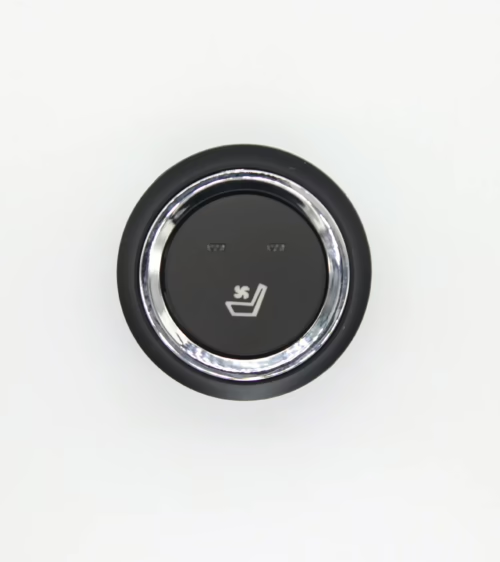
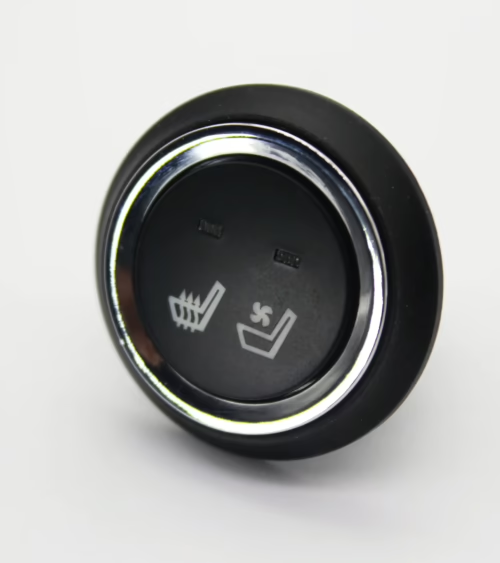
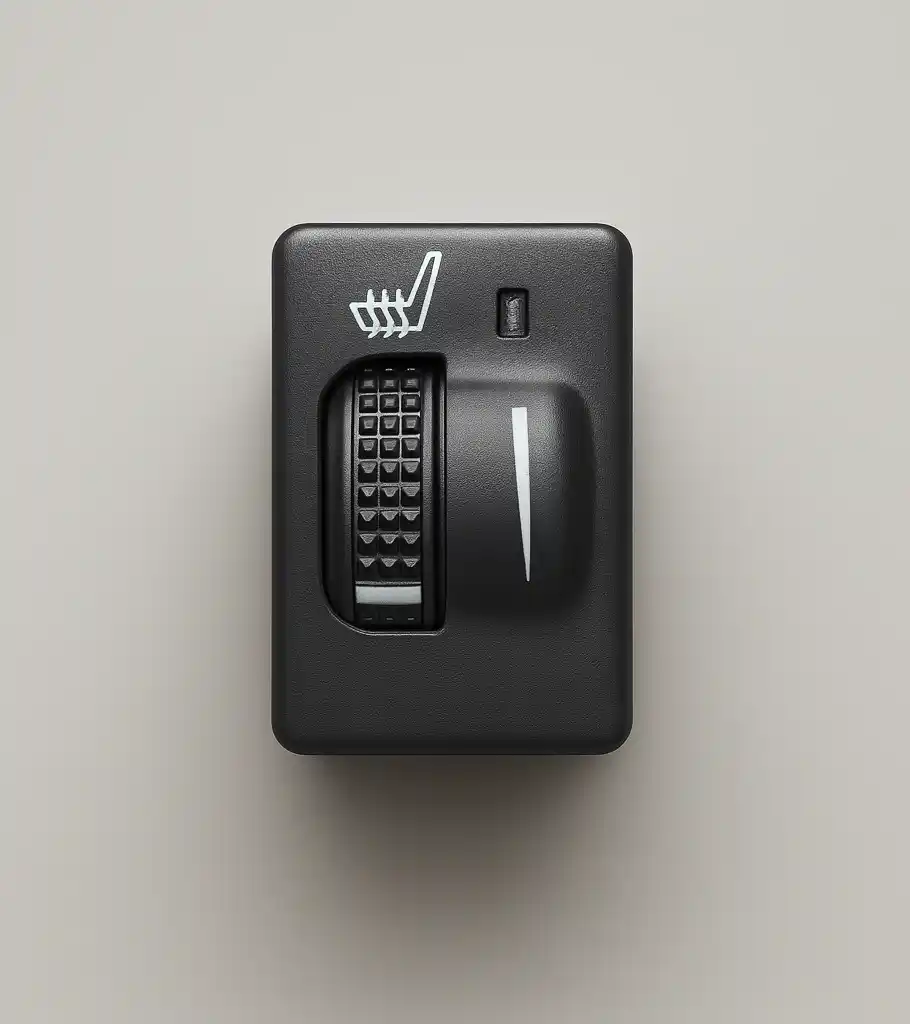
The switch is what turns a heating pad into a usable feature, and it’s worth spending time getting this part right. Many installers mount a rocker or rotary switch in the dash blank-off panel or center console using a factory-style bezel so the finished look matches OEM trim.
For anyone replacing a worn or malfunctioning unit, or upgrading from single-stage to multi-stage control, browsing replacement seat heater switches is the fastest way to match connector pinout and amperage rating to your specific pad setup.
Match the switch’s current rating to the pad’s total draw — most single-seat elements pull between 3 and 5 amps per stage, so a switch rated below that will overheat and fail prematurely.
Fusing, Circuit Protection, and Electrical Safety
Any add-on 12V circuit needs its own fuse tapped as close to the battery or a switched accessory source as practical, sized to the total current draw of both seats running on high simultaneously.
A typical dual-seat, multi-stage installation warrants a 15A or 20A fuse depending on element wattage, and the wiring gauge should be sized to match — 18 AWG is adequate for single-seat runs, but 16 AWG is safer for shared dual-seat harnesses.
Never tap power directly from the seat’s airbag wiring harness; keep the heater circuit entirely separate from the Supplemental Restraint System to avoid interfering with airbag deployment logic.
If you’re unsure about wire gauge, connector quality, or grounding points, following SAE automotive wiring standards for gauge-to-amperage ratios removes the guesswork.
Maintenance and Troubleshooting Tips
A properly installed heated seat kit should last the life of the vehicle, but a few habits keep it reliable. Avoid running heated seats continuously on high for hours, since sustained top-stage output shortens element life over years of use.
If a seat stops heating, check the fuse first, then test the switch continuity with a multimeter before assuming the pad itself failed — pad failures are less common than switch or connector failures in real-world use.
Keep the upholstery clean and avoid soaking the seat with liquids, since moisture intrusion at the element connector is one of the more frequent causes of intermittent heating.
For anyone assembling a full kit from scratch — pad, switch, and wiring harness together — it’s worth browsing the full seat heating product lineup to make sure every component is rated to work together rather than mixing mismatched parts.
Frequently Asked Questions
Does adding heated seats affect the Wrangler’s factory warranty?
Aftermarket seat heater installation typically does not void the entire vehicle warranty, but it can affect warranty coverage on the seat itself or any airbag-related components if the installation disturbs the SRS harness.
Keep the factory seat cover and airbag connectors intact and reversible where possible.
Can heated seats be added to leather and cloth seats equally well?
Yes. Leather holds heat more evenly and transfers it faster to the occupant, while cloth may need slightly higher wattage elements to feel equally warm because the fabric insulates.
How much does a DIY heated seat installation cost compared to a shop install?
A DIY kit for both front seats costs a fraction of shop labor alone. Parts are modest; the main expense in a professional install is 3-5 hours of pulling seats, routing wiring, and testing.
Ready to stop shivering through cold-weather drives? Lucky Driver Inc. supplies OEM-grade seat heating pads, switches, and control modules built for Jeep Wrangler retrofits and other North American vehicles — explore the catalog to find the right kit for your seats and get warm before the next cold snap.
Related Articles
- Add Heated Seats to Ford F150: 3 Proven Methods (2026)
- Dodge Durango Seat Heater Switch: 5 Fixes for 2026 Models
- Dodge Charger Heated Seat Switch: 5 Fixes for 2026 Models
- Volvo XC90 Seat Heater Switch: 5 Fixes (2026 Guide)
- Audi A4 Heated Seat Switch: 5 Fixes for 2026 Models
Frequently Asked Questions About add heated seats to jeep wrangler
Procurement engineers evaluating add heated seats to jeep wrangler for OEM programs regularly ask the following questions. Answers cover specification, compatibility, certification, and sourcing for add heated seats to jeep wrangler requirements.
What voltage ratings are available for add heated seats to jeep wrangler?
Standard add heated seats to jeep wrangler configurations support 12 V DC for passenger vehicles and 24 V DC for commercial trucks. Selecting the correct add heated seats to jeep wrangler voltage at the design stage eliminates harness rework later.
Lucky Driver maintains add heated seats to jeep wrangler inventory in both ratings for same-week shipment.
Which certifications apply to add heated seats to jeep wrangler production?
add heated seats to jeep wrangler assemblies entering OEM programs typically require UL recognition, REACH compliance, and RoHS documentation. Lucky Driver holds certification records for every add heated seats to jeep wrangler variant and includes copies with sample and production shipments.
How is watt density specified for add heated seats to jeep wrangler?
Watt density for add heated seats to jeep wrangler is expressed in W/cm² and ranges from 0.04 to 0.12 depending on heat-up time requirements. Lower watt density add heated seats to jeep wrangler designs improve element longevity, while higher values suit cold-climate applications.
Lucky Driver engineering reviews add heated seats to jeep wrangler requirements and recommends watt density based on your seat platform.
What connector families are used with add heated seats to jeep wrangler?
add heated seats to jeep wrangler harnesses are available with Molex, TE Connectivity, and Delphi connector families. Matching the add heated seats to jeep wrangler connector to the vehicle harness reduces assembly time and eliminates adapter cables.
Specify your harness format when requesting a add heated seats to jeep wrangler quote from Lucky Driver.
What is the lead time for add heated seats to jeep wrangler samples?
add heated seats to jeep wrangler samples from Lucky Driver’s North American warehouse ship within 3 to 5 business days for standard configurations. Custom add heated seats to jeep wrangler variants with modified pad geometry or connector pinouts require 4 to 6 weeks.
Contact Lucky Driver to confirm add heated seats to jeep wrangler availability before submitting your engineering schedule.