Owners who want to add heated seats to Honda Civic models that shipped without factory heating have a straightforward path:
- an aftermarket seat heater kit installed under the OEM upholstery. Because Civics from the 8th generation onward share similar seat frame construction and 12V electrical architecture
- the retrofit process is well documented and repeatable across trims that lack the heated seat option from the factory. This guide walks through the technical steps
- component choices
- safety considerations needed to complete a clean
- factory-quality installation.
Why Civic Owners Retrofit Heated Seats
Honda historically reserved heated seats for EX, Touring, and Si trims, leaving LX and Sport buyers without the feature even though the underlying seat foam, frame, and upholstery are nearly identical across trims. Retrofitting closes that gap at a fraction of the cost of trading up a trim level.
Cold-climate owners also cite faster cabin comfort, since seat heaters warm the occupant directly rather than waiting for the HVAC system to heat the whole cabin.
For daily commuters, this translates to measurable comfort gains within 60–90 seconds of startup, well before the engine reaches operating temperature and blower air turns warm.
How Seat Heating Elements Work
Aftermarket and OEM seat heaters both rely on resistive heating, where electrical current passing through a carbon-fiber or nichrome wire element generates heat proportional to the element’s resistance and applied voltage.
Most Civic-compatible kits use flexible carbon-fiber heating pads rather than older wire-coil designs, because carbon fiber distributes heat more evenly and tolerates the repeated flexing that occurs every time a seat cushion compresses under a passenger.
Element wattage typically ranges from 30W to 45W per seat cushion and backrest pad combined, which is enough to raise seat surface temperature roughly 20–30°F above ambient within five minutes without overloading a Civic’s 12V circuit.
Selecting the Right Seat Heater Kit
Not all kits are equivalent. When sourcing components, match the kit to the Civic’s seat shape and confirm the pad size covers both the cushion and backrest bolsters, not just the center seating area. Key specifications to verify before purchase:
- Heating element material — carbon fiber for durability over wire-coil elements
- Dual-zone temperature settings (Hi/Lo or Hi/Med/Lo) versus single-setting pads
- Element thickness — under 3mm to avoid altering seat contour or triggering occupant classification sensor errors
- Wiring harness length and connector type compatible with Civic seat wiring channels
Buyers upgrading multiple vehicles or replacing worn factory pads often browse a full catalog of seat heating products to compare wattage, pad dimensions, and control options side by side before committing to a kit.
Removing the Seat and Accessing the Upholstery
Installation begins with seat removal. Disconnect the negative battery terminal first to avoid triggering the SRS airbag warning light, since Civic seats route the seatbelt pretensioner and, on some trims, an occupant weight sensor through the seat base wiring.
Unbolt the seat rail mounting bolts (typically four 14mm bolts), disconnect the seat wiring harness connector, and remove the seat from the vehicle.
Once out, detach the seatback panel clips and pull the upholstery hog rings or hook-and-loop fasteners along the cushion perimeter to peel back the seat cover far enough to lay the heating element against the foam.
Positioning and Securing the Heating Element
Lay the cushion pad centered over the seating surface, avoiding direct contact with the seatbelt pretensioner cable or occupant sensor pad if the trim includes one.
Secure the element to the foam using the adhesive backing included with most kits, or fabric spray adhesive for pads without a tacky backing. Route the backrest pad the same way, keeping wiring away from seat frame pivot points where repeated motion could chafe the insulation.
Reinstall the seat cover, working the hog rings or fasteners back into place, and confirm the pad doesn’t create visible bunching or shift the seat’s factory contour.
Wiring, Fusing, and Switch Installation
Route the heater’s power leads to a switched 12V ignition source rather than a constant-hot circuit, so the heaters can’t be left running with the vehicle off and draining the battery.
Install an inline fuse rated to the kit’s maximum draw — typically 10A per seat — between the power source and the heating element.
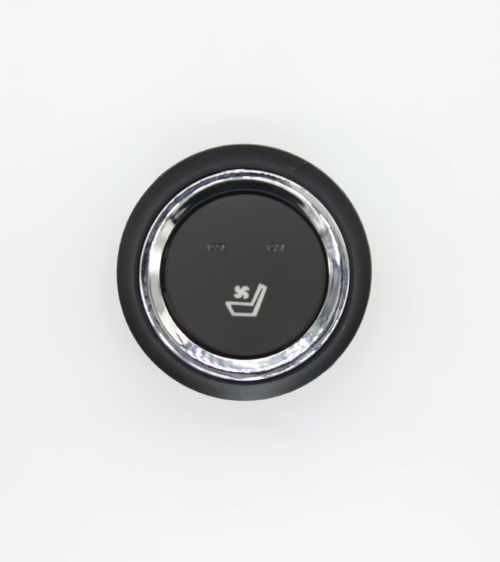
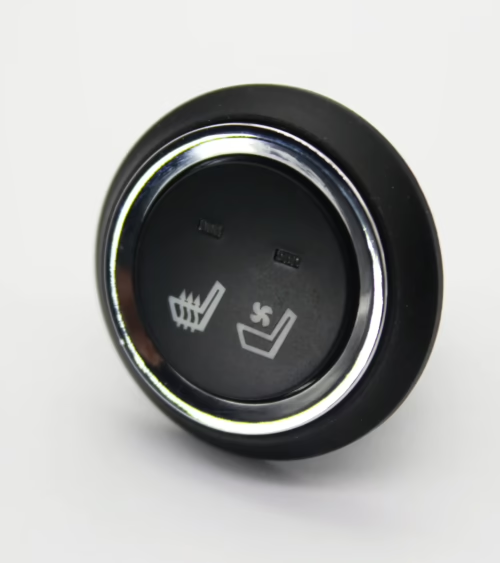
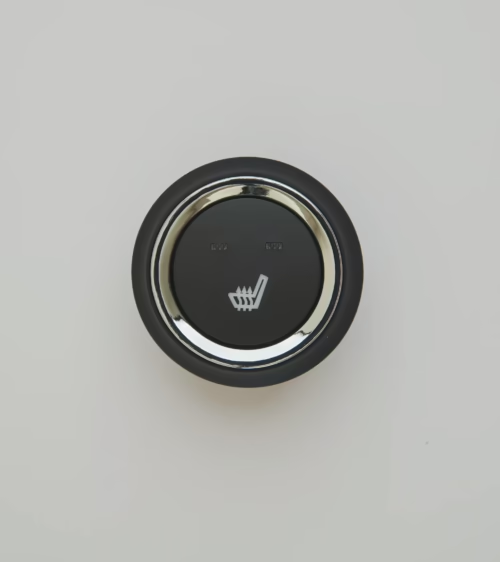
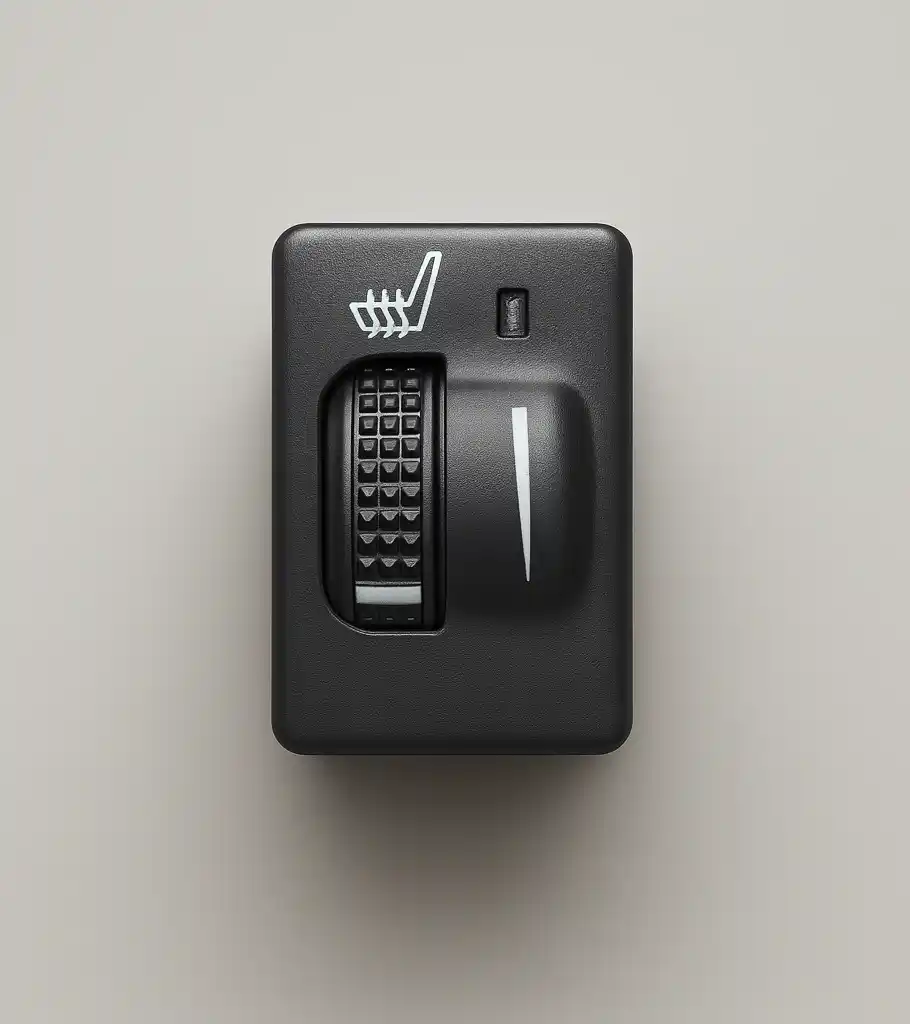
Mount the control switch in the console or dash using a factory-style rocker that matches Civic’s existing switch blanks. Many installers pick replacement seat heater switches that snap into unused factory cutouts for a finished look, instead of an aftermarket toggle on the dash surface.
Testing and Verifying the Installation
Before reinstalling the seat, bench-test the heating element and switch with the battery reconnected to confirm both heat settings function and the element warms evenly across the pad surface.
After the seat is bolted back in and the harness reconnected, verify the SRS warning light is off and the seatbelt pretensioner still functions correctly.
Run the heater through a full 10-minute cycle on both settings, checking for hot spots, unusual odors, or breaker trips, which would indicate a wiring short or an undersized fuse. A properly installed system should reach a stable, evenly distributed warm temperature without cycling on and off erratically.
Frequently Asked Questions
Does adding heated seats to a Honda Civic void the factory warranty?
Aftermarket seat heater installation does not void the Civic’s vehicle warranty. Honda may still deny coverage for seat, seatbelt, or SRS components if the retrofit caused the fault.
Keeping wiring away from pretensioner cables and occupant sensors minimizes this risk.
Will a heated seat kit trigger the airbag or SRS warning light?
It can, if the heating element pad interferes with an occupant weight sensor mat built into the cushion foam on certain trims.
Disconnecting the battery before installation and routing wiring away from the sensor pad prevents most SRS fault codes.
How long does a Civic heated seat installation take?
A single-seat installation typically takes 2–3 hours for someone comfortable with basic hand tools and seat removal. Installing heaters in both front seats in one session usually takes 4–5 hours including testing time.
Lucky Driver Inc. supplies seat heating pads, heater switches, and control modules engineered for direct-fit retrofits across Honda Civic model years and other popular platforms. Browse our current inventory or contact our technical team for guidance on matching the right kit to your Civic’s trim and seat configuration.
Related Articles
- Add Heated Seats to Toyota Tacoma: 4 Proven Methods
- How to Add Heated Seats to Jeep Wrangler: 5 Steps (2026)
- Add Heated Seats to Ford F150: 3 Proven Methods (2026)
- Dodge Durango Seat Heater Switch: 5 Fixes for 2026 Models
- Dodge Charger Heated Seat Switch: 5 Fixes for 2026 Models
Frequently Asked Questions About add heated seats to honda civic
Procurement engineers evaluating add heated seats to honda civic for OEM programs regularly ask the following questions. Answers cover specification, compatibility, certification, and sourcing for add heated seats to honda civic requirements.
What voltage ratings are available for add heated seats to honda civic?
Standard add heated seats to honda civic configurations support 12 V DC for passenger vehicles and 24 V DC for commercial trucks. Selecting the correct add heated seats to honda civic voltage at the design stage eliminates harness rework later.
Lucky Driver maintains add heated seats to honda civic inventory in both ratings for same-week shipment.
Which certifications apply to add heated seats to honda civic production?
add heated seats to honda civic assemblies entering OEM programs typically require UL recognition, REACH compliance, and RoHS documentation. Lucky Driver holds certification records for every add heated seats to honda civic variant and includes copies with sample and production shipments.
How is watt density specified for add heated seats to honda civic?
Watt density for add heated seats to honda civic is expressed in W/cm² and ranges from 0.04 to 0.12 depending on heat-up time requirements. Lower watt density add heated seats to honda civic designs improve element longevity, while higher values suit cold-climate applications.
Lucky Driver engineering reviews add heated seats to honda civic requirements and recommends watt density based on your seat platform.
What connector families are used with add heated seats to honda civic?
add heated seats to honda civic harnesses are available with Molex, TE Connectivity, and Delphi connector families. Matching the add heated seats to honda civic connector to the vehicle harness reduces assembly time and eliminates adapter cables.
Specify your harness format when requesting a add heated seats to honda civic quote from Lucky Driver.
What is the lead time for add heated seats to honda civic samples?
add heated seats to honda civic samples from Lucky Driver’s North American warehouse ship within 3 to 5 business days for standard configurations. Custom add heated seats to honda civic variants with modified pad geometry or connector pinouts require 4 to 6 weeks.
Contact Lucky Driver to confirm add heated seats to honda civic availability before submitting your engineering schedule.