A heated seat stuck on high is more than an annoyance — it is a fault that deserves immediate attention.
When a seat heater ignores its temperature setting and keeps pumping full power into the cushion, the surface can climb well past the comfort range and stay there for an entire drive.
The good news is that this failure mode almost always traces back to one of six components in the heating circuit:
- the switch
- the relay or output driver
- the temperature sensor
- the control module
- the wiring
- or the installation itself. This guide walks through each cause
- shows you how to diagnose the fault step by step
- explains which parts to replace.
How a Heated Seat Controls Temperature
To understand why a seat heater gets stuck on high, it helps to know how the system regulates heat in the first place.
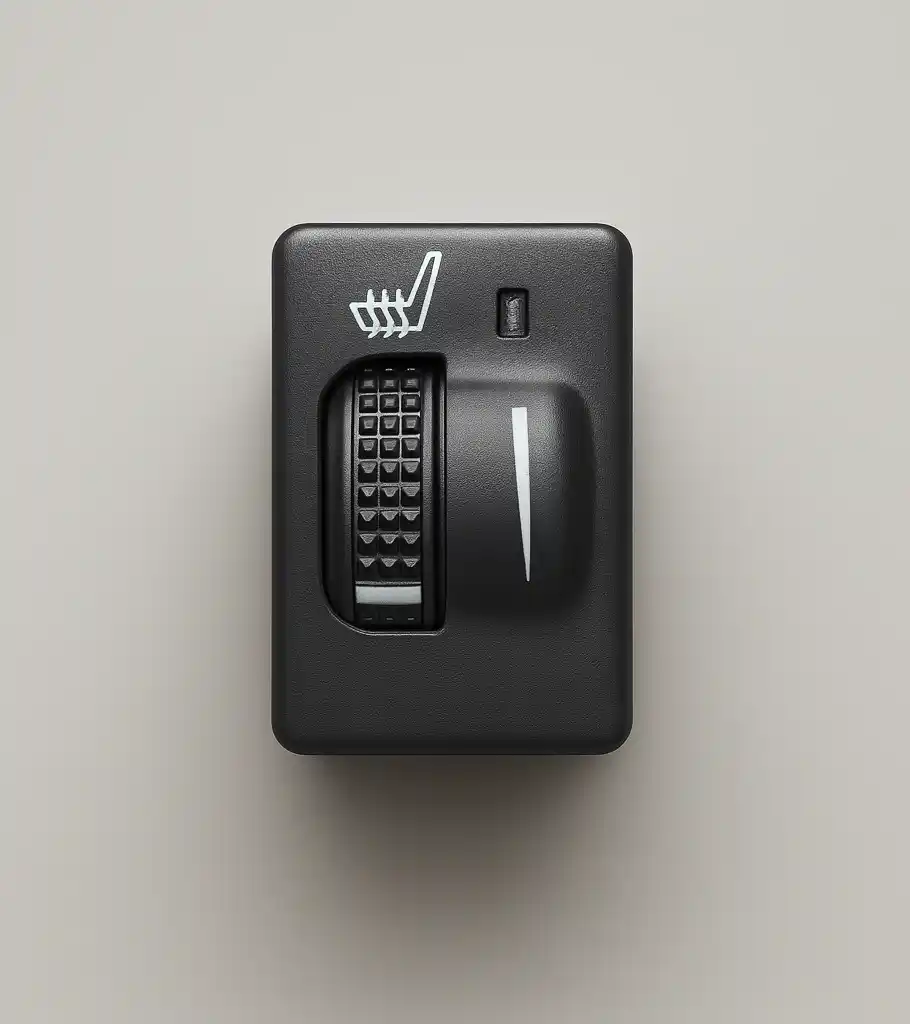
In a modern closed-loop system, the occupant selects a level on the switch, the switch signals a control module, and the module energizes the heating pad through a relay or a solid-state output (typically a MOSFET).
A temperature sensor embedded in or near the pad reports the cushion temperature back to the module, which cycles power on and off — often using pulse-width modulation — to hold the target temperature.
Older and simpler systems are open-loop:
- the high and low settings simply switch between different resistance paths in the heating element
- or rely on a bimetallic thermostat in the pad to interrupt current at a fixed temperature. In either architecture
- “stuck on high” means the same thing electrically: power is reaching the heating element continuously
- nothing in the control chain is interrupting it. Every cause below is a different way that interruption fails to happen.
Cause 1: A Failed Seat Heater Switch
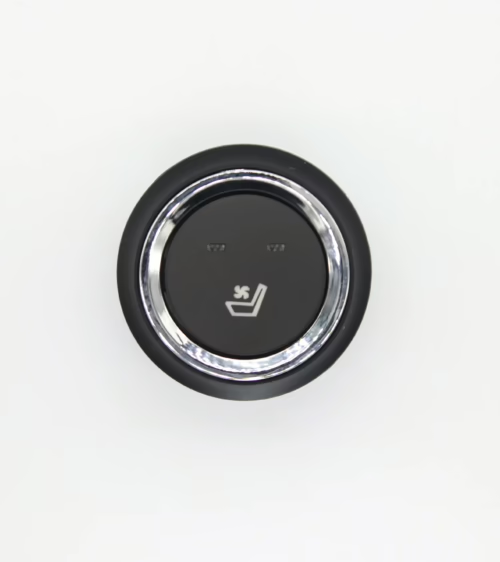
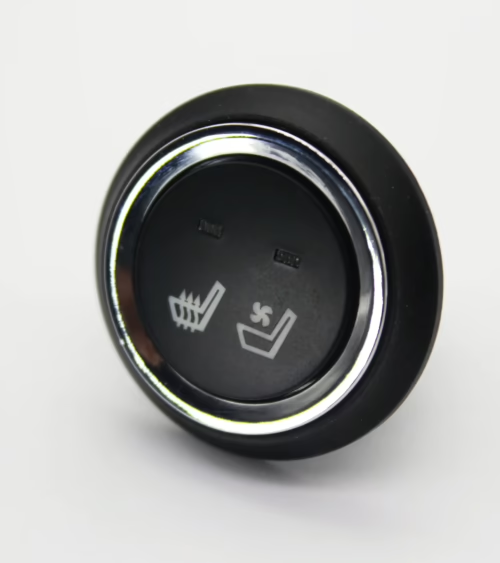
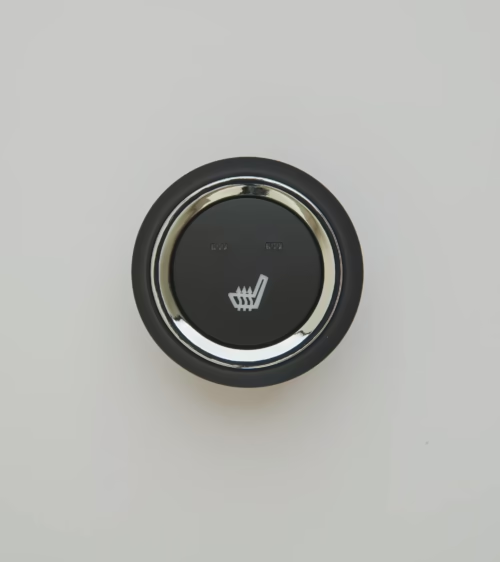
The switch is the most frequently replaced part in the circuit, and for good reason. Rocker and rotary switches live in a harsh spot — they collect spilled coffee, road salt from gloves, and thousands of actuation cycles.
Inside the switch, contacts can pit and stick, and carbon tracking across the contact board can create a permanent conductive path. When that happens, the switch effectively commands “high” all the time, regardless of the knob or button position.
On resistance-coded switches, a short across the resistor ladder sends the module a signal it interprets as the maximum setting. On simple direct-switching designs, welded contacts pass full current straight to the pad. Either way, the fix is straightforward and inexpensive:
- swap in a new switch. If you service vehicles regularly
- keeping replacement seat heater switches for common platforms on the shelf turns this from a multi-day repair into a fifteen-minute job.
Cause 2: Welded Relay Contacts or a Shorted Output Driver
Even with a healthy switch and module, the component that actually carries the heating current can fail in the “on” state. Seat heating pads draw meaningful current — commonly 4 to 8 amps per seat at 12 volts — and every switching cycle arcs the relay contacts slightly.
Over years of service, contacts can weld together, leaving the circuit permanently closed no matter what the module commands.
Solid-state designs are not immune. A power MOSFET that fails typically fails shorted from drain to source, which passes current continuously.
The telltale sign of a stuck output stage is that the seat heats even when the switch is off, and sometimes even after the switch indicator light goes dark.
If unplugging the switch does not stop the heating, suspect the relay or the module’s output driver rather than the switch itself.
Cause 3: A Faulty Temperature Sensor
Closed-loop systems depend entirely on the feedback sensor, which is almost always a negative-temperature-coefficient thermistor — a resistor whose resistance drops predictably as it warms up. The control module reads that resistance to decide when to cut power.
If the sensor circuit goes open (a broken wire, a cracked sensor bead, or a corroded connector pin), the module sees very high resistance and concludes the seat is ice cold. It responds exactly as designed:
- full power
- continuously.
Sensor faults also happen mechanically. During upholstery work, the sensor can be pulled away from the heating pad surface, so it measures foam temperature instead of pad temperature and lags far behind reality. The pad overshoots badly before the sensor ever registers warmth.
Any time a seat is re-trimmed, the sensor’s position against the pad should be verified before the cover goes back on.
Causes 4 and 5: Control Module Faults and Wiring Shorts
The control module itself can lock an output on. Water intrusion is the classic trigger — modules mounted under the seat sit directly in the path of spilled drinks and wet floor mats, and corrosion on the board can bridge the output circuit.
Firmware lockups on CAN-connected modules are rarer but do occur; a module that stops processing switch messages may leave its last output state latched.
Wiring faults produce the same symptom from outside the module. The harness under a seat flexes every time the seat slides on its rails, and a chafed control wire that shorts to battery voltage can back-feed the heating circuit or fool the module into seeing a permanent “high” request.
Look closely at the harness where it passes near seat rails, frame edges, and the seat-position motors — these are the points where insulation wears through first.
Cause 6: Incorrect Aftermarket Installation
A heated seat stuck on high in a recently retrofitted vehicle is very often an installation problem rather than a component failure.
Common mistakes include wiring the pad directly to switched ignition power and bypassing the controller entirely, omitting or mis-locating the temperature sensor, installing a pad whose wattage exceeds what the controller was designed to regulate, and folding or compressing the pad so heat concentrates in one zone.
Quality aftermarket kits are engineered as a matched system:
- the pad’s resistance
- the sensor’s placement
- the controller’s cut-off thresholds are designed together. Substituting parts between kits
- or “simplifying” the wiring during installation
- removes the protections the system depends on. If a retrofit runs hot
- re-check the installation against the kit’s wiring diagram before condemning any single component.
How to Diagnose a Heated Seat Stuck on High
Work through the circuit from the simplest check to the most involved:
- Confirm the symptom. Measure the seat surface with an infrared thermometer. Most systems regulate the cushion in roughly the 36–42 °C (97–108 °F) range on high; a surface that keeps climbing past 45 °C and never cycles down confirms a genuine control failure.
- Test the switch. Cycle through every setting and off. If the heat level never changes, unplug the switch connector. If heating stops, the switch is the fault.
- Check the output stage. If the pad still heats with the switch unplugged, pull the seat heater relay or fuse and confirm heating stops. A circuit that stays live points to a welded relay or a wiring short to power.
- Measure the sensor. Disconnect the pad connector and measure the thermistor’s resistance at room temperature, then compare against the specification. An open circuit or wildly high reading means the module is being told the seat is cold.
- Scan for codes. On CAN-based systems, the seat or comfort module often stores specific faults for sensor open-circuit, output short, and switch signal errors, which can shortcut the whole process.
Why You Should Not Ignore It — and What to Replace
A seat heater that cannot shut off is a genuine safety issue, not just a comfort defect.
Skin does not need extreme heat to be injured; prolonged contact with surfaces in the mid-40s °C range can cause low-temperature burns, and the risk is highest for occupants with reduced sensation in the lower body.
This is precisely why regulated systems are designed with sensor feedback and thermal cut-offs, and why a stuck-on-high fault should take the seat heater out of service until it is repaired.
On the repair side, match the fix to the diagnosis. A failed switch or relay is a simple plug-in replacement. A failed sensor usually means replacing the heating pad assembly, since the sensor is typically laminated into it.
A damaged pad should always be replaced rather than spliced — repairs to the element itself change its local resistance and create hot spots.
When you are ready to source parts, you can browse our full range of seat heating products, from pads and sensors to switches and control modules, matched to work together as a system.
Frequently Asked Questions
Is a heated seat stuck on high dangerous?
It can be. Extended contact with a surface that stays above roughly 44 °C can cause low-temperature burns, especially during long drives and especially for passengers with limited sensation or mobility. Until the fault is fixed, disable the circuit by pulling the seat heater fuse.
Can I just unplug the seat heater instead of fixing it?
Yes, as a temporary measure. Pulling the dedicated seat heater fuse or unplugging the pad connector under the seat safely removes power.
It is a reasonable stopgap, but it also disables a feature you paid for — and if the root cause is a wiring short, that short is still present in the harness and should be found and repaired.
How much does it cost to fix a heated seat stuck on high?
It depends on the failed component. A replacement switch is typically the cheapest fix and often installs in minutes. A relay is similarly inexpensive. A heating pad with an integrated sensor costs more because the seat cover must come off to replace it, so labor dominates the bill.
A proper diagnosis first prevents paying for parts you did not need.
Lucky Driver Inc. supplies seat heating pads, seat heater switches, control modules, and seat ventilation systems to OEM seat manufacturers and aftermarket distributors across North America.
If you build, repair, or distribute heated seating systems and need components engineered to regulate reliably — with sensor feedback and control logic designed as a matched system — contact Lucky Driver Inc. for specifications, samples, and volume pricing.
Related Articles
- Seat Heater Stopped Working? 5 Steps to Fix It (2026 Guide)
- Seat Heater Not Working One Side: 7 Causes and Fixes (2026)
- Office Chair Heating Pad 12V: 7 Things to Know (2026 Guide)
- Wheelchair Seat Heater: 7 Things to Know Before You Buy (2026)
- Tractor Seat Heater: 7 Things to Know Before You Buy (2026)
Frequently Asked Questions About heated seat stuck on high
Procurement engineers evaluating heated seat stuck on high for OEM programs regularly ask the following questions. Answers cover specification, compatibility, certification, and sourcing for heated seat stuck on high requirements.
What voltage ratings are available for heated seat stuck on high?
Standard heated seat stuck on high configurations support 12 V DC for passenger vehicles and 24 V DC for commercial trucks. Selecting the correct heated seat stuck on high voltage at the design stage eliminates harness rework later.
Lucky Driver maintains heated seat stuck on high inventory in both ratings for same-week shipment.
Which certifications apply to heated seat stuck on high production?
heated seat stuck on high assemblies entering OEM programs typically require UL recognition, REACH compliance, and RoHS documentation. Lucky Driver holds certification records for every heated seat stuck on high variant and includes copies with sample and production shipments.
How is watt density specified for heated seat stuck on high?
Watt density for heated seat stuck on high is expressed in W/cm² and ranges from 0.04 to 0.12 depending on heat-up time requirements. Lower watt density heated seat stuck on high designs improve element longevity, while higher values suit cold-climate applications.
Lucky Driver engineering reviews heated seat stuck on high requirements and recommends watt density based on your seat platform.
What connector families are used with heated seat stuck on high?
heated seat stuck on high harnesses are available with Molex, TE Connectivity, and Delphi connector families. Matching the heated seat stuck on high connector to the vehicle harness reduces assembly time and eliminates adapter cables.
Specify your harness format when requesting a heated seat stuck on high quote from Lucky Driver.
What is the lead time for heated seat stuck on high samples?
heated seat stuck on high samples from Lucky Driver’s North American warehouse ship within 3 to 5 business days for standard configurations. Custom heated seat stuck on high variants with modified pad geometry or connector pinouts require 4 to 6 weeks.
Contact Lucky Driver to confirm heated seat stuck on high availability before submitting your engineering schedule.