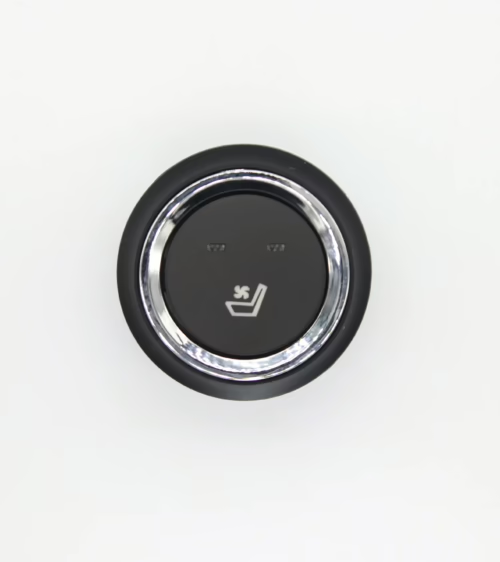
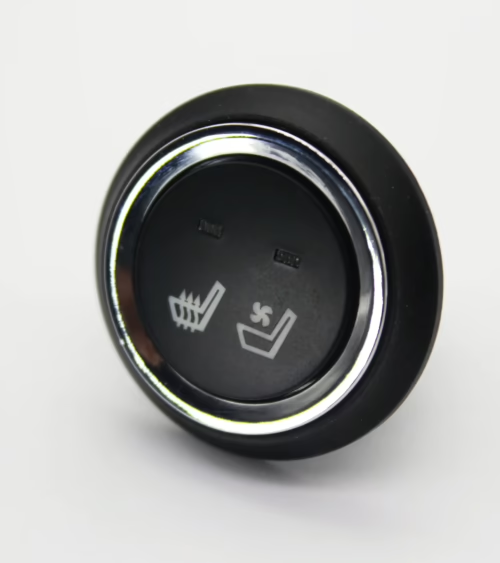
NTC thermistor seat heater is the focus of this guide. The NTC thermistor is the temperature sensing element that makes closed-loop seat heater control possible.
Without a properly specified and correctly placed thermistor, a heated seat system cannot maintain consistent comfort temperatures or protect the heating element from thermal damage.
1. What an NTC Thermistor Does in a Seat Heater System
NTC stands for negative temperature coefficient, meaning the thermistor resistance decreases as temperature increases. In a seat heater circuit, the thermistor is read by the heater controller, which compares the measured resistance to a target resistance table corresponding to the selected comfort temperature level.
When the thermistor indicates the target temperature has been reached, the controller switches off the heating element.
2. Key Thermistor Specification Parameters
The critical specification parameters for a seat heater thermistor are: resistance at 25 degrees Celsius (commonly 10 kilohms), the B-value which characterizes the slope of the resistance-temperature curve, the operating temperature range, the response time constant, and the physical housing format. The thermistor specification must match the controller lookup table.
3. Thermistor Placement in the Seat Structure
Thermistor placement determines what temperature the controller actually measures. The thermistor should be positioned at the point on the heating pad where the element is most likely to reach its maximum operating temperature, typically the center of the seat cushion pad, between the heating element and the foam surface.
Placement too close to the seat frame results in the thermistor reading ambient temperature rather than element temperature, allowing the element to overheat before the controller responds.
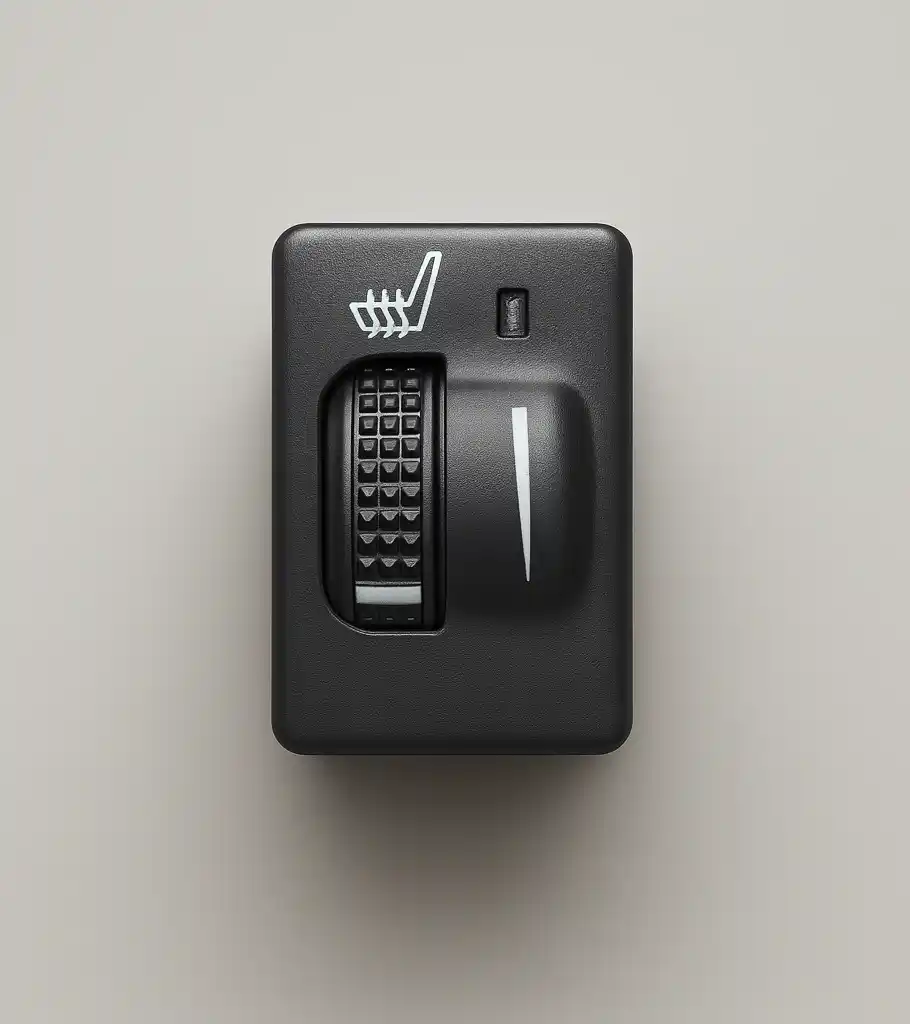
4. Thermistor Failure Modes in Seat Heater Systems
The most common thermistor failure mode is open circuit, where the thermistor lead wire fractures at the crimp connection due to flex fatigue. In most controller designs, an open thermistor reads as maximum resistance, causing the controller to run the element continuously.
This results in overheating and is a safety issue.
The second common failure mode is a shifted resistance characteristic due to thermal aging.
5. Thermistor Quality and Sourcing Criteria
For OEM-grade seat heater programs, thermistors must meet automotive temperature range requirements (typically minus 40 to plus 125 degrees Celsius), vibration resistance per automotive standards, and resistance tolerance of plus or minus 1 percent at 25 degrees Celsius. Thermistors from consumer electronics supply chains frequently do not meet automotive environmental requirements.
Lucky Driver Inc.
specifies and qualifies automotive-grade NTC thermistors for all heating pad and seat heater system programs.
Working with Lucky Driver Inc.
Lucky Driver Inc. supplies complete seat heater systems with properly specified and validated NTC thermistor assemblies. Contact us to discuss thermistor specification requirements for your seat heating program.
Thermistor Specification in the Bill of Materials
The thermistor specification must be captured in the heating pad bill of materials with sufficient detail to allow qualification of a second source if needed.
A specification that records only the resistance value at 25 degrees Celsius is insufficient — it must also capture the B-value, operating temperature range, package dimensions, and connector or lead wire format.
Without a complete specification, a substitute thermistor that passes the basic resistance check may have a different B-value that causes incorrect temperature regulation. Lucky Driver Inc. documents full thermistor specifications in the bill of materials for all seat heater system programs and maintains qualified alternate sources for thermistor components.
Seat Heater Performance at Cold Ambient Temperatures
The heating performance of a USB-powered seat heater is significantly limited by the available power — typically 5 to 10 watts from a standard USB port versus 40 to 80 watts for a 12V automotive heated seat.
At ambient temperatures below 10°C (50°F), a 5-watt USB seat heater generates only marginal warmth — enough to take the chill off the seat surface but not enough to maintain thermal comfort in severe cold.
Users in climates with extended cold winters often find that USB heated seat cushions are comfortable in shoulder-season conditions (5°C to 15°C) but insufficient in peak winter conditions below 0°C. Setting realistic expectations about USB heated seat performance in cold climates prevents dissatisfaction.
Compatibility with Different USB Power Sources
USB heated seats are powered by standard USB-A or USB-C ports, but not all USB ports deliver the same power. Standard USB-A ports on older vehicle consoles are limited to 5V 0.5A (2.5 watts) — insufficient for most heated seat cushions.
Modern USB-A charging ports deliver 5V 1A (5 watts) or 5V 2.1A (10.5 watts). USB-C Power Delivery ports can deliver up to 100 watts but most heated seat cushions do not use PD negotiation and draw only the standard 5V profile.
For best performance, connect USB heated seat cushions to a high-current USB port (1A or higher) or a USB car charger with adequate output current. The heater cable plug should display the rated current draw — verify the source port can supply at least that amount.
Cover Materials and Their Impact on Heating Efficiency
The material on the surface of a USB heated seat cushion affects both how quickly heat reaches the occupant and how comfortable the surface feels. Synthetic materials like neoprene or polyester felt retain heat well but can feel warm and sweaty during extended use in higher ambient temperatures.
Natural fiber covers (cotton blend) are breathable and comfortable but have slightly lower thermal resistance, which can mean the surface feels less aggressively warm at the same power level.
Heated seat cushions designed for use in non-heated office chairs are available with premium fabric covers that balance warmth and breathability. When selecting a product, choose the cover material based on the expected use environment and the ambient temperature range where the product will most often be used.
Use Cases and Practical Applications
USB heated seat cushions serve practical comfort needs in specific use cases beyond simply warming a cold vehicle seat. Home office chairs — particularly in rooms with poor heating or near drafty windows — benefit significantly from seat cushion heating during winter months.
Wheelchair users find heated seat cushions provide therapeutic warmth that reduces muscle stiffness during extended periods of reduced mobility. Stadium and outdoor venue seating (using battery-powered versions) extends comfortable outdoor attendance in cold weather.
Office chairs in commercial settings with energy-efficient thermostats set to lower temperatures use seat cushion heating as a personal thermal comfort solution without affecting the whole-building HVAC setting. Lucky Driver Inc. USB heated seat products serve these diverse comfort applications across vehicle, office, and outdoor use environments.
Frequently Asked Questions: NTC Thermistors in Seat Heaters
How do I test if a seat heater thermistor is working correctly?
Disconnect the thermistor from the controller and measure its resistance with a multimeter. At room temperature (approximately 25 degrees C), a standard 10K NTC thermistor should read approximately 10,000 ohms.
If the reading is open circuit (infinite resistance), the thermistor has failed open.
If the reading is near zero, it has failed short. A reading that is significantly different from the rated value at the measured temperature indicates drift or damage. Compare against the resistance-temperature table in the thermistor specification sheet to confirm correct operation at any temperature.
Can I replace a seat heater thermistor with any NTC thermistor of the same resistance?
Not reliably. NTC thermistors with the same resistance at 25 degrees C can have different resistance-temperature curves (different beta coefficients).
A replacement with a different curve will cause systematic temperature control errors — the controller will cut off at the wrong actual temperature.
Use a replacement thermistor with the same beta coefficient as the original, or use a direct manufacturer replacement part number. Lucky Driver Inc. supplies replacement thermistors matched to our seat heater controller calibration for accurate temperature control.
Where should the thermistor be positioned in the seat pad assembly?
The thermistor should be bonded flat against the heating element surface at a representative mid-pad location, away from the element wire runs to avoid reading a hot spot rather than the average element temperature.
The thermistor must have firm thermal contact with the element surface — a thermistor floating above the element surface in an air gap will read a lower temperature than the actual element surface, causing the controller to allow higher surface temperatures before cycling.
Technical Support for Seat Heater Thermistor Issues
Lucky Driver Inc. provides technical support for seat heater thermistor diagnosis, replacement, and calibration questions. Our team can assist with thermistor specification matching for replacement applications, testing procedures for field diagnosis of temperature control issues, and guidance on correct thermistor installation for optimal controller performance.
Contact our technical support team with your seat heater model or application details for specific assistance.
Summary: NTC Thermistors in Seat Heater Systems
The NTC thermistor is the temperature feedback element that makes safe, comfortable seat heating possible. Correct thermistor specification, installation, and replacement are essential for maintaining accurate temperature control over the vehicle service life. Lucky Driver Inc.
supplies thermistors matched to our seat heater controller calibration and provides technical support for thermistor diagnosis and replacement.
Contact us for product availability and technical guidance for your specific application.
NTC Thermistor Seat Heater Systems: Summary for Engineers
The NTC thermistor seat heater pairing is the foundation of every closed-loop seat climate system. A correctly specified and positioned NTC thermistor seat heater assembly will regulate surface temperature within 2–3 °C of setpoint under normal operating conditions, delivering consistent comfort regardless of ambient temperature variation.
Errors in NTC thermistor seat heater specification — wrong resistance curve, poor thermal contact, or inadequate noise rejection on the sense line — produce inconsistent performance that is difficult to diagnose without access to the original design documentation.
Lucky Driver Inc. supplies validated NTC thermistor seat heater control modules with published R-T curves and field troubleshooting support.
Further Reading
Explore our universal seat heater switch options for direct-fit and universal applications.
Our how seat heaters work covers element types, controls, and troubleshooting in one place.
Related Articles
- 12V Seat Heater Element Guide
- Automotive Seat Heater Wire Guide
- Car Seat Heating Pad OEM Guide
- Seat Heater Installation Guide
For more information about seat heater components, installation best practices, and OEM supply programs, contact Lucky Driver Inc. Our team supports customers from component selection through production, with IATF 16949-certified manufacturing and dedicated engineering support available for all program types and volumes.
More About Seat Heater Relay
When sourcing seat heater relay for a production or aftermarket seat program, the most important selection criteria are electrical compatibility, material certification, and supplier quality documentation. Reliable seat heater relay components from a qualified supplier reduce warranty risk and simplify the qualification process for both OEM and aftermarket programs.
Lucky Driver Inc. maintains North American inventory of seat heater relay in standard and custom configurations, with same-week shipping for evaluation orders and engineering support for new program development.
Whether your application requires a drop-in replacement seat heater relay or a custom-specified solution, Lucky Driver has the stock and technical resources to support your requirements. Contact Lucky Driver Inc. today to request samples or pricing for seat heater relay.
Seat Heater Relay: Quick Reference Guide
This quick reference summarizes the most important facts about seat heater relay for buyers and engineers evaluating options for a production or retrofit program. Every seat heater relay program begins with a specification review — confirm the electrical interface, connector format, and temperature rating before requesting samples.
seat heater relay components from Lucky Driver Inc. are tested to OEM standards and ship with full documentation. Whether you need a single evaluation unit or a production quantity of seat heater relay assemblies, the Lucky Driver team can quote within one business day.
Common questions from buyers sourcing seat heater relay for the first time: What certifications apply? What is the lead time? Can the seat heater relay be customized for a specific vehicle platform? The answers depend on the exact configuration — contact Lucky Driver Inc.
with your application details to get a precise answer for your seat heater relay requirement.
For aftermarket installers, seat heater relay from Lucky Driver includes all mounting hardware and a wiring diagram. For OEM programs, seat heater relay can be supplied with a custom connector, custom labeling, and a PPAP-ready quality package. Contact Lucky Driver Inc.
to request seat heater relay samples or pricing today.
Seat Heater Relay Buying Guide
Choosing the right seat heater relay for your application starts with three questions: What is the operating voltage of the vehicle? What connector format does the existing harness use? And what certifications are required for the program?
Answering these before requesting quotes for seat heater relay saves weeks of back-and-forth with suppliers and avoids costly sample iterations that do not fit the production design.
The seat heater relay market includes both direct OEM manufacturers and distributors. OEM manufacturers of seat heater relay typically require minimum order quantities of 500 to 1,000 units and lead times of 6 to 10 weeks for custom configurations.
Distributors of seat heater relay stock standard configurations and can ship within one to five business days, making them the practical choice for prototype builds, replacement parts, and low-volume aftermarket programs.
When comparing seat heater relay options across suppliers, request the following documentation with each sample submission: a material compliance declaration confirming RoHS and REACH compliance, a dimensional report confirming the part meets the approved drawing, and a functional test report demonstrating correct operation across the full operating voltage range.
Suppliers that cannot provide this documentation for their seat heater relay should be deprioritized regardless of unit price, since missing documentation creates compliance risk at the OEM customer level.
Lucky Driver Inc. maintains North American inventory of seat heater relay and can provide all required qualification documentation for OEM programs.
Whether you need a single sample of seat heater relay for a prototype build or a production quantity with full PPAP documentation, Lucky Driver has the stock, the paperwork, and the engineering support to close your seat heater relay requirement efficiently.
Contact Lucky Driver Inc. to request seat heater relay samples, pricing, or technical specifications today.
Frequently Asked Questions About NTC thermistor seat heater
Procurement engineers evaluating NTC thermistor seat heater for OEM programs regularly ask the following questions. Answers cover specification, compatibility, certification, and sourcing for NTC thermistor seat heater requirements.
What voltage ratings are available for NTC thermistor seat heater?
Standard NTC thermistor seat heater configurations support 12 V DC for passenger vehicles and 24 V DC for commercial trucks. Selecting the correct NTC thermistor seat heater voltage at the design stage eliminates harness rework later. Lucky Driver maintains NTC thermistor seat heater inventory in both ratings for same-week shipment.
Which certifications apply to NTC thermistor seat heater production?
NTC thermistor seat heater assemblies entering OEM programs typically require UL recognition, REACH compliance, and RoHS documentation. Lucky Driver holds certification records for every NTC thermistor seat heater variant and includes copies with sample and production shipments.
How is watt density specified for NTC thermistor seat heater?
Watt density for NTC thermistor seat heater is expressed in W/cm² and ranges from 0.04 to 0.12 depending on heat-up time requirements. Lower watt density NTC thermistor seat heater designs improve element longevity, while higher values suit cold-climate applications.
Lucky Driver’s engineering team reviews NTC thermistor seat heater requirements and recommends watt density based on your seat platform.
What connector families are used with NTC thermistor seat heater?
NTC thermistor seat heater harnesses are available with Molex, TE Connectivity, and Delphi connector families. Matching the NTC thermistor seat heater connector to the vehicle harness reduces assembly time and eliminates adapter cables. Specify your harness format when requesting a NTC thermistor seat heater quote from Lucky Driver.
What is the lead time for NTC thermistor seat heater samples?
NTC thermistor seat heater samples from Lucky Driver’s North American warehouse ship within 3 to 5 business days for standard configurations. Custom NTC thermistor seat heater variants with modified pad geometry or connector pinouts require 4 to 6 weeks.
Contact Lucky Driver to confirm NTC thermistor seat heater availability before submitting your engineering schedule.