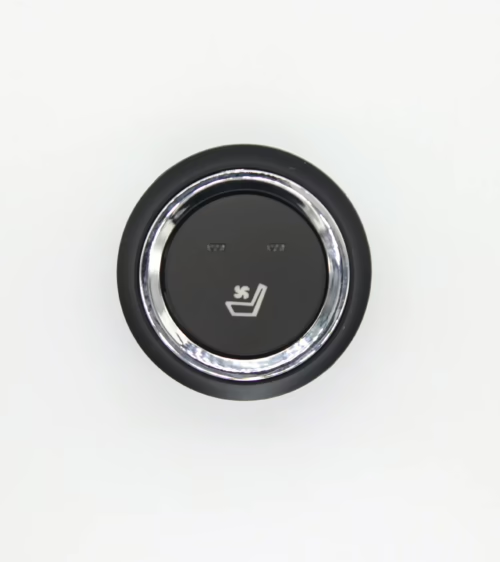
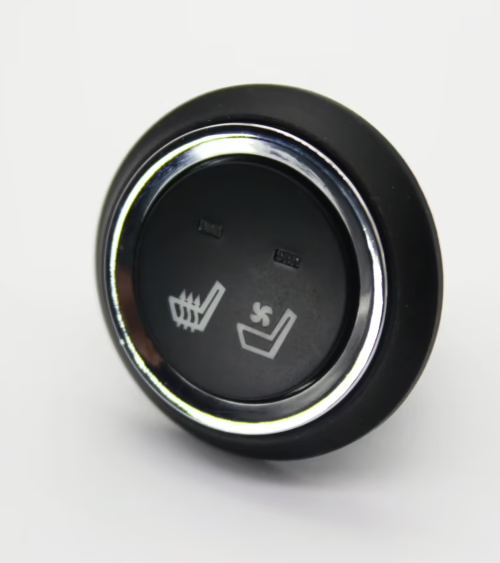
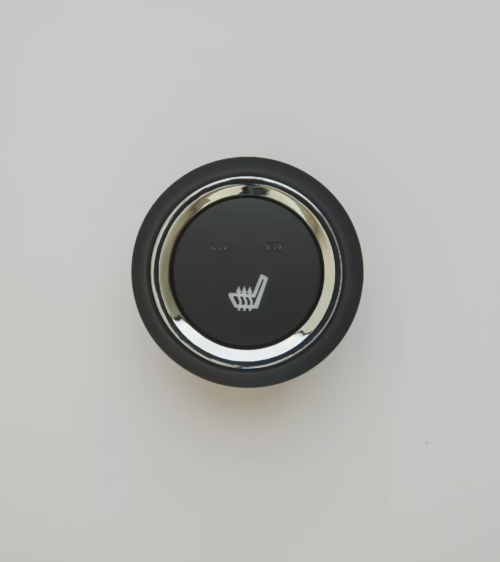
The 12V seat heater element is the component that converts electrical energy into the heat that warms the seat surface. Getting the element specification right is the most consequential engineering decision in a seat heating system design.
1. How a 12V Heating Element Works
A seat heater element is a resistance circuit that converts electrical current to heat according to P equals V squared divided by R, where P is power in watts, V is voltage (nominally 12V in automotive systems), and R is element resistance in ohms.
A 40-watt element at 12V has a resistance of approximately 3.6 ohms and draws approximately 3.3 amps. At the actual vehicle voltage of 13.8V (charging system operating voltage), the same element produces approximately 53 watts, a meaningful difference that must be accounted for in thermal design.
2. Resistance Wire vs. Carbon Fiber: Performance Comparison
Resistance wire elements (NiCr or FeCrAl) provide predictable watt output, long flex life, and are the industry standard for most vehicle programs. Carbon fiber elements have lower mass (faster heat-up), more uniform surface heat distribution, and lower thickness profile.
Carbon fiber is preferred for premium programs where heat-up time and surface temperature uniformity are differentiating features.
3. Watt Output Selection for the Application
Correct watt output depends on:
- the thermal resistance of the seat trim and foam stack above the element
- the target surface temperature and heat-up time
- the available vehicle circuit capacity. A standard passenger vehicle seat cushion element is typically specified between 30 and 50 watts. Commercial vehicle seats with thicker trim may require 60 to 80 watts per zone
4. Element Resistance Calculation
Target element resistance in ohms equals V squared divided by P, using nominal battery voltage of 12.0V for conservative thermal design. For a 40-watt cushion element:
- R equals 144 divided by 40
- giving 3.6 ohms. Total system resistance at 12V determines the current draw and fuse rating required. Add 20 percent margin to the calculated current for fuse selection
5. Element Layout and Flex Life
The element wire routing pattern determines heat distribution uniformity and sets the minimum bend radius experienced during occupant use. Elements routed in tight serpentine patterns provide uniform heating but stress the wire at each bend.
Elements with long parallel runs and gentle end loops are more resistant to flex fatigue but may produce temperature non-uniformity at the turns.
6. Qualifying 12V Seat Heater Element Suppliers
Element suppliers for automotive programs must demonstrate:
- resistance tolerance of plus or minus 5 percent lot-to-lot
- flex life meeting the vehicle program requirement (typically 100,000 cycles minimum)
- material traceability for the resistance alloy
- IATF 16949-certified production processes. Lucky Driver Inc. manufactures 12V seat heater elements in carbon fiber and resistance wire configurations
Working with Lucky Driver Inc.
Lucky Driver Inc. designs and manufactures 12V seat heater elements for passenger vehicle, commercial vehicle, and specialty vehicle programs. Contact us to discuss your element specification and supply requirements.
Element Testing After Installation
After installing a seat heater element in the pad assembly, resistance must be measured and recorded as part of the in-process inspection. Acceptable resistance should be within the specified tolerance of the design target.
Elements that fall outside tolerance after installation indicate either a production error (incorrect wire routing length) or damage during the pad assembly process.
Resistance measurement at in-process inspection is the last opportunity to catch element defects before the pad is installed in the seat and trimmed — rework after trim installation is expensive and time-consuming. Lucky Driver Inc.
performs 100 percent resistance measurement on all heating pad elements prior to pad assembly completion and provides measurement records with each production lot.
Connector and Harness Design Standards for Automotive Seat Heater Wiring
Automotive seat heater wiring harnesses must use connectors specifically designed for the under-seat environment. Key connector requirements include:
- positive terminal locking with secondary lock confirmation (prevents accidental disconnection during seat adjustment)
- environmental sealing rated to IP67 or better for water resistance (critical for vehicles in wet climates or with wet footwell conditions)
- temperature rating of at least 85°C for terminals in proximity to the heating element
Consumer-grade connectors — including many low-cost crimp-and-connector kits — do not meet automotive environmental standards and are not appropriate for permanent vehicle installation. Harness assemblies built with automotive-grade connectors significantly reduce the risk of intermittent faults from connector degradation over the vehicle service life.
Strain Relief and Harness Routing at Seat Articulation Points
The most common failure point in automotive seat heater wiring harnesses is at seat articulation points — the seat track, the seat back hinge, and the lumbar adjustment mechanism. At each articulation point, the harness flexes through its full range of motion every time the seat position is adjusted.
Over thousands of adjustment cycles, wiring without adequate strain relief and routing length develops stress fractures at the crimp terminations or chafes through the insulation on hard edges.
Correct routing requires: sufficient wire length at each articulation point to allow full range of motion without tension, clip or tie-down attachment to secure the harness away from pinch points, and plastic conduit or spiral wrap protection where the harness crosses structural edges.
Grounding Strategies for Noise-Free Heater Operation
Improper grounding of seat heater circuits can cause interference with vehicle audio, infotainment, and body electronics. The seat heater element creates a resistive load that pulses with the PWM switching frequency of the controller — typically 50 to 200 Hz.
If the return current path passes through shared body ground connections used by sensitive electronics, the PWM current creates ground bounce that manifests as buzzing in the audio system or flickering in digital displays.
Dedicated ground paths from the heater controller directly to the battery negative terminal — independent of the body ground distribution network — eliminate this interference mechanism. When diagnosing seat heater-related electrical noise, inspect the ground path before condemning the controller.
Harness Documentation and Service Repair Information
Complete wiring harness documentation supports both initial installation and subsequent service. A professional harness installation should include:
- a wiring diagram showing all connections from power source through controller to element and thermistor
- identification of all connector locations by seat zone and seat position
- wire color coding chart
- specification of fuse ratings and locations
This documentation allows a different technician to service the system without reverse-engineering the installation. For OEM programs, harness documentation is a required element of the part documentation package submitted with PPAP. Lucky Driver Inc. provides complete wiring documentation with all harness assemblies supplied to installer and OEM program customers.
Frequently Asked Questions: 12V Seat Heater Elements
What is a typical 12V seat heater element lifespan?
A quality 12V seat heater element should survive the vehicle service life — typically 10 to 15 years or 150,000 miles under normal use.
Accelerated life testing simulates this service life by cycling the element through thousands of thermal cycles under elevated temperature and humidity conditions.
Elements that fail life testing before completing the specified cycle count have design or material deficiencies that will cause premature field failures. Request endurance test data from your supplier before approving an element for production use.
Can a 12V seat heater element be run at 24V?
Running a 12V element at 24V delivers four times the rated power (V squared divided by R), causing severe overheating that will rapidly destroy the element and potentially cause a fire.
Never operate a 12V seat heater element at voltages higher than the rated nominal voltage. For 24V vehicle applications (commercial trucks and buses), specify elements rated for 24V nominal operation.
What causes a seat heater element to fail short circuit?
Short circuit failures in seat heater elements are caused by insulation breakdown. Contributing factors include:
- mechanical damage from sharp edges in the seat structure abrading the element during seat adjustment
- manufacturing defects in insulation thickness or coverage
- accelerated aging from sustained operation near the upper temperature limit
Short circuit failures cause rapid heating, fuse tripping, or controller damage. Inspect the element for signs of mechanical damage during installation and ensure the harness routing keeps the element away from sharp structural edges.
Source Quality 12V Seat Heater Elements from Lucky Driver Inc.
Lucky Driver Inc. supplies 12V seat heater elements in resistance wire and carbon fiber configurations for aftermarket kit assembly and OEM program supply. Our elements are tested for resistance conformance, insulation integrity, and element geometry before shipment. Complete qualification test data packages are available for OEM program customers.
Contact us for element specifications, pricing, and sample availability for evaluation in your specific seat heater application.
Summary: 12V Seat Heater Elements
The 12V seat heater element is the core thermal component of any automotive heated seat system. Selecting an element with correct wattage, resistance, geometry, and documented qualification test data is the foundation of a reliable heated seat program.
Lucky Driver Inc. supplies 12V seat heater elements in resistance wire and carbon fiber configurations with complete quality and qualification documentation for aftermarket and OEM program customers. Contact us for product specifications and supply options for your application.
12V Seat Heater Element: Engineering Summary
A 12V seat heater element that is correctly specified for its target seat geometry, foam compression load, and controller PWM frequency will deliver consistent warmth throughout the vehicle service life.
The most common field failures in 12V seat heater element applications trace to undersized conductor cross-section, inadequate insulation flex rating, or heater pad resistance drift caused by improperly bonded element traces at high-wear fold zones.
Lucky Driver Inc. supplies 12V seat heater element assemblies to OEM seat manufacturers and aftermarket kit builders, with resistance verification testing on every production lot.
Further Reading
Need the hardware itself? Browse our seat heater switch catalog with US-based shipping.
See our seat heater fundamentals for a full overview of the technology.
Related Articles
- NTC Thermistor Seat Heater Guide
- Automotive Seat Heater Wire Guide
- Car Seat Heating Pad OEM Guide
- Seat Heater Installation Guide
For more information about seat heater components, installation best practices, and OEM supply programs, contact Lucky Driver Inc. Our team supports customers from component selection through production, with IATF 16949-certified manufacturing and dedicated engineering support available for all program types and volumes.
More About Heated Car Seat Cover
When sourcing heated car seat cover for a production or aftermarket seat program, the most important selection criteria are electrical compatibility, material certification, and supplier quality documentation.
Reliable heated car seat cover components from a qualified supplier reduce warranty risk and simplify the qualification process for both OEM and aftermarket programs.
Lucky Driver Inc. maintains North American inventory of heated car seat cover in standard and custom configurations, with same-week shipping for evaluation orders and engineering support for new program development.
Whether your application requires a drop-in replacement heated car seat cover or a custom-specified solution, Lucky Driver has the stock and technical resources to support your requirements. Contact Lucky Driver Inc. today to request samples or pricing for heated car seat cover.
Heated Car Seat Cover: Quick Reference Guide
This quick reference summarizes the most important facts about heated car seat cover for buyers and engineers evaluating options for a production or retrofit program. Every heated car seat cover program begins with a specification review — confirm the electrical interface, connector format, and temperature rating before requesting samples.
heated car seat cover components from Lucky Driver Inc. are tested to OEM standards and ship with full documentation. Whether you need a single evaluation unit or a production quantity of heated car seat cover assemblies, the Lucky Driver team can quote within one business day.
Common questions from buyers sourcing heated car seat cover for the first time: What certifications apply? What is the lead time? Can the heated car seat cover be customized for a specific vehicle platform? The answers depend on the exact configuration — contact Lucky Driver Inc.
with your application details to get a precise answer for your heated car seat cover requirement.
For aftermarket installers, heated car seat cover from Lucky Driver includes all mounting hardware and a wiring diagram. For OEM programs, heated car seat cover can be supplied with a custom connector, custom labeling, and a PPAP-ready quality package. Contact Lucky Driver Inc.
to request heated car seat cover samples or pricing today.
Heated Car Seat Cover Buying Guide
Choosing the right heated car seat cover for your application starts with three questions: What is the operating voltage of the vehicle? What connector format does the existing harness use? And what certifications are required for the program?
Answering these before requesting quotes for heated car seat cover saves weeks of back-and-forth with suppliers and avoids costly sample iterations that do not fit the production design.
The heated car seat cover market includes both direct OEM manufacturers and distributors. OEM manufacturers of heated car seat cover typically require minimum order quantities of 500 to 1,000 units and lead times of 6 to 10 weeks for custom configurations.
Distributors of heated car seat cover stock standard configurations and can ship within one to five business days, making them the practical choice for prototype builds, replacement parts, and low-volume aftermarket programs.
When comparing heated car seat cover options across suppliers, request the following documentation with each sample submission:
- a material compliance declaration confirming RoHS and REACH compliance
- a dimensional report confirming the part meets the approved drawing
- a functional test report demonstrating correct operation across the full operating voltage range
Suppliers that cannot provide this documentation for their heated car seat cover should be deprioritized regardless of unit price, since missing documentation creates compliance risk at the OEM customer level.
Lucky Driver Inc. maintains North American inventory of heated car seat cover and can provide all required qualification documentation for OEM programs.
Whether you need a single sample of heated car seat cover for a prototype build or a production quantity with full PPAP documentation, Lucky Driver has the stock, the paperwork, and the engineering support to close your heated car seat cover requirement efficiently.
Contact Lucky Driver Inc. to request heated car seat cover samples, pricing, or technical specifications today.