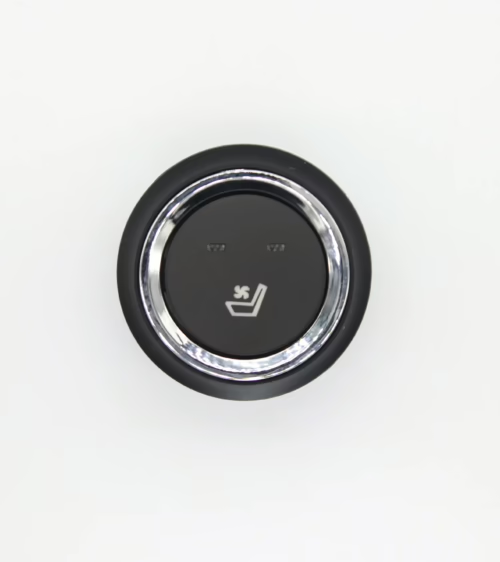
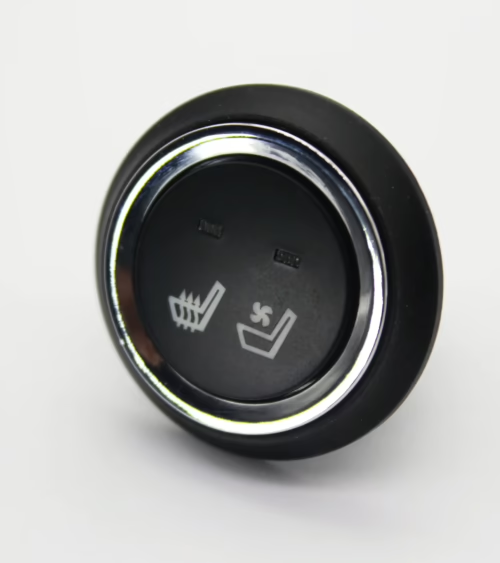
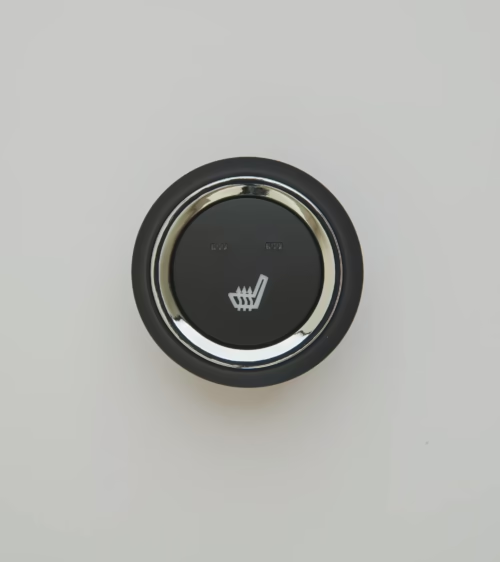
A malfunctioning Subaru Outback seat heater switch is one of the most common comfort-system complaints reported by Outback owners once winter driving sets in, and the good news is that most failures trace back to a small, identifiable set of causes.
Whether your seat heater refuses to turn on, gets stuck on high, or works intermittently when you hit a bump, this guide walks through five practical fixes technicians actually use, along with the underlying electrical logic so you understand why each step matters.
How the Subaru Outback Seat Heater System Works
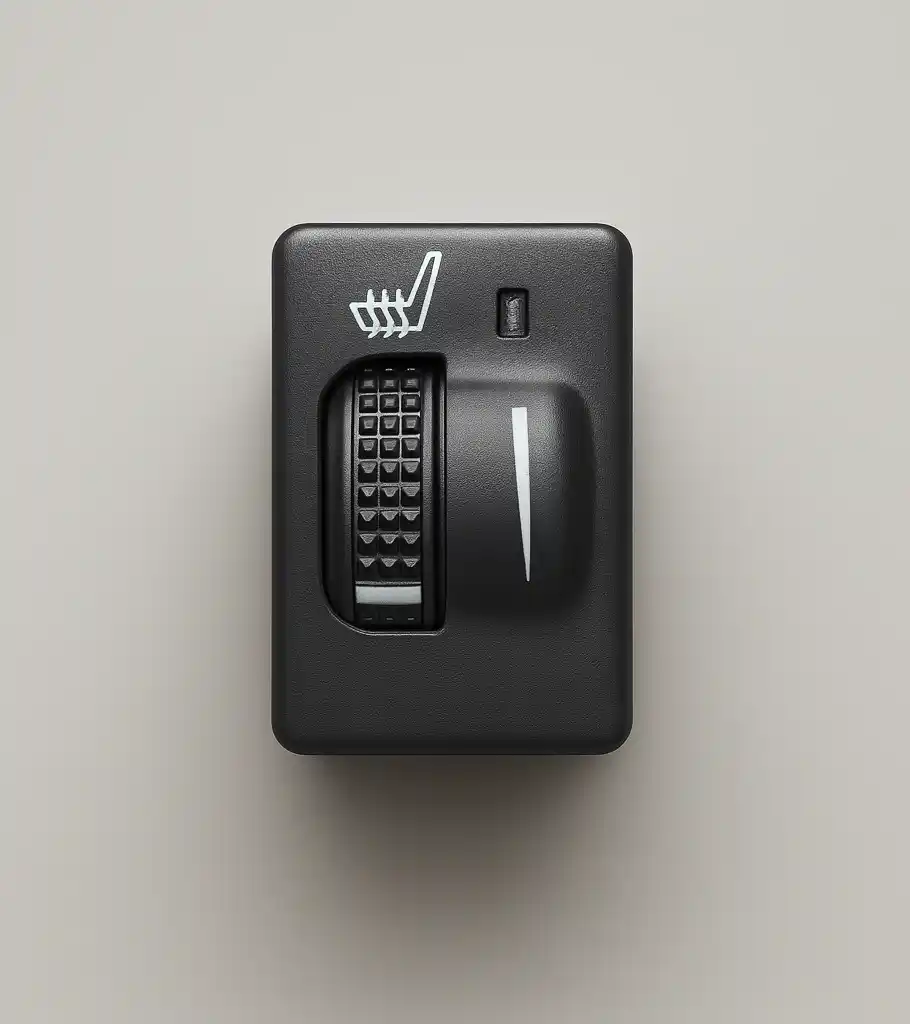
Every Subaru Outback trim with heated seats uses a resistive heating pad bonded to the seat cushion and backrest, wired through a dash-mounted or console-mounted rocker switch to a thermostat-controlled circuit.
Most modern pads rely on positive temperature coefficient (PTC) heating elements, which self-regulate resistance as they warm up, preventing overheating without a separate temperature sensor in simpler designs.
The switch itself is not just an on/off toggle — it typically integrates an LED indicator, a multi-position resistor network for low/medium/high heat levels, and in many trims a signal line back to the body control module.
Because the switch sits at the intersection of mechanical wear (constant finger pressure) and electrical load (heating current), it’s the single most failure-prone component in the entire system.
Fix 1: Confirm the Fuse and Power Supply
Before assuming the switch itself is bad, check the seat heater fuse in the interior fuse box, usually labeled “Seat Heater” or grouped under a numbered circuit in the owner’s manual diagram.
A blown fuse produces symptoms identical to a dead switch — no LED, no heat, no response on any setting. Use a test light or multimeter across the fuse terminals with the ignition on; no reading means the fuse has failed and should be replaced with an identical amperage rating.
If the replacement fuse blows again within seconds, stop and inspect the wiring harness for a short before reinstalling anything, since a repeat blow almost always indicates a pinched or chafed wire under the seat rather than a coincidence.
Fix 2: Test the Switch Itself with a Multimeter
With the switch removed from the dash or console, back-probe the connector with a multimeter set to continuity mode.
Press each heat level and confirm the switch closes the correct circuit path — low, medium, and high should each produce a distinct resistance value or continuity pattern depending on the model year.
A switch that shows continuity on only one setting, or none at all, has failed internally and needs replacement rather than repair, since the contact points inside are sealed and not serviceable.
This is the most reliable single test for isolating the switch from the rest of the circuit, and it takes less than five minutes with the dash panel popped.
Fix 3: Inspect the Wiring Harness and Connector
Outback seat wiring runs through a sliding track connector at the base of the seat rail, and repeated forward-backward seat adjustment over years of use causes this harness to flex thousands of times. Look for cracked insulation, corroded pins, or a connector that doesn’t click fully into place.
A loose or oxidized pin creates intermittent contact resistance, which explains the common complaint of a seat heater that “works sometimes” or cuts out when the seat is adjusted.
Cleaning the connector with electrical contact cleaner and reseating it fully resolves a large share of intermittent cases without any parts replacement at all.
Fix 4: Check the Heating Pad and Ground Circuit
If the switch tests good and power reaches the seat, but there’s still no heat, the pad itself or its ground return may be at fault.
Ground straps under the seat frame corrode from road salt and moisture exposure, especially in regions with harsh winters — precisely the climates where seat heaters see the heaviest use.
A corroded ground creates enough resistance to prevent the pad from drawing sufficient current, even though every other part of the circuit checks out.
Scrape the ground point back to bare metal and re-torque the fastener before condemning the pad itself, since pad failures are less common than connection failures in Outback-specific reports.
Fix 5: Replace the Switch with a Correct-Fit Part
When testing confirms the switch has failed, replace it with a part that matches your exact trim’s connector pinout and button layout, since Subaru revised the switch design across Outback generations and an incorrect part won’t seat properly even if it physically fits the dash cutout. Lucky Driver Inc.
stocks replacement seat heater switches engineered to OEM electrical specifications, so heat levels, LED behavior, and connector pin assignments match factory wiring without splicing or adapter harnesses.
Installation is generally a matter of releasing the dash bezel clips, disconnecting the old switch, and pressing the new one into place — no soldering required on most Outback trims.
Step-by-Step Switch Replacement
- Disconnect the negative battery terminal before working near any wiring harness.
- Gently pry the dash or console trim panel using a plastic trim tool to avoid scratching the bezel.
- Disconnect the old switch’s electrical connector by pressing the locking tab and pulling straight back.
- Press the new switch into the housing until the retaining clips seat fully.
- Reconnect the harness, reinstall the trim panel, and reconnect the battery.
- Test all heat levels with the engine running before closing up the work area.
OEM vs. Aftermarket Switches: What Actually Matters
Not all replacement switches are built to the same tolerance. Cheap universal switches often use thinner internal contacts rated for lower current, which shortens service life under the sustained load a seat heater circuit draws during a full winter commute.
When comparing options, prioritize parts rated for the correct amperage, with connector housings molded to match Subaru’s factory pin spacing rather than requiring a bridge adapter.
Browsing a dedicated catalog rather than a generic parts marketplace makes this comparison far easier — you can browse Lucky Driver’s full range of seat heating products to compare switch specifications, pad kits, and control modules side by side before ordering.
Preventive Maintenance to Extend Switch Life
Seat heater switches fail faster when seats are adjusted while wiring is under tension, or when interior cleaning products seep into the switch housing during detailing.
Wipe switches with a dry cloth rather than spraying cleaner directly onto the dash panel, and periodically inspect the seat track connector for signs of wear if you frequently move the seat position.
Owners who tow trailers or carry heavy cargo that shifts seat position under load should also check the harness routing annually, since repeated flexing at the track connector is the leading mechanical cause of premature failure in this specific circuit.
Frequently Asked Questions
Q:
- Why does my Subaru Outback seat heater switch light up but produce no heat?
A: This usually indicates the switch’s control circuit is intact but the heating pad or its ground connection has failed - since the LED is powered independently from the heating element in most Outback wiring configurations.
Q: Can I repair a cracked seat heater switch instead of replacing it?
A: The internal contacts are sealed and not designed for disassembly, so a cracked or electrically failed switch should be replaced rather than repaired to avoid intermittent contact issues later.
Q: Will an aftermarket seat heater switch trigger a dashboard warning light?
A: A correctly matched switch with the proper pin configuration and resistance values will not trigger a warning light, but a mismatched or incorrectly wired part can cause the body control module to flag an electrical fault.
Related Articles
- Nissan Rogue Heated Seat Switch: 5 Fixes (2026 Guide)
- Nissan Altima Seat Heater Switch: 5 Fixes (2026 Guide)
- 5 Signs Your Jeep Grand Cherokee Seat Heater Switch Is Bad
- Jeep Wrangler Heated Seat Switch: 2026 Complete Repair Guide
- Ram 1500 Heated Seat Switch: 2026 Complete Repair Guide
If your diagnosis points to a failed component, Lucky Driver Inc. supplies OEM-spec seat heater switches, control modules, and heating pads engineered for reliable fit and long-term durability — helping Outback owners get their heated seats back in service without guesswork or aftermarket compromises.
Frequently Asked Questions About subaru outback seat heater switch
Procurement engineers evaluating subaru outback seat heater switch for OEM programs regularly ask the following questions. Answers cover specification, compatibility, certification, and sourcing for subaru outback seat heater switch requirements.
What voltage ratings are available for subaru outback seat heater switch?
Standard subaru outback seat heater switch configurations support 12 V DC for passenger vehicles and 24 V DC for commercial trucks. Selecting the correct subaru outback seat heater switch voltage at the design stage eliminates harness rework later.
Lucky Driver maintains subaru outback seat heater switch inventory in both ratings for same-week shipment.
Which certifications apply to subaru outback seat heater switch production?
subaru outback seat heater switch assemblies entering OEM programs typically require UL recognition, REACH compliance, and RoHS documentation. Lucky Driver holds certification records for every subaru outback seat heater switch variant and includes copies with sample and production shipments.
How is watt density specified for subaru outback seat heater switch?
Watt density for subaru outback seat heater switch is expressed in W/cm² and ranges from 0.04 to 0.12 depending on heat-up time requirements. Lower watt density subaru outback seat heater switch designs improve element longevity, while higher values suit cold-climate applications.
Lucky Driver engineering reviews subaru outback seat heater switch requirements and recommends watt density based on your seat platform.
What connector families are used with subaru outback seat heater switch?
subaru outback seat heater switch harnesses are available with Molex, TE Connectivity, and Delphi connector families. Matching the subaru outback seat heater switch connector to the vehicle harness reduces assembly time and eliminates adapter cables.
Specify your harness format when requesting a subaru outback seat heater switch quote from Lucky Driver.
What is the lead time for subaru outback seat heater switch samples?
subaru outback seat heater switch samples from Lucky Driver’s North American warehouse ship within 3 to 5 business days for standard configurations. Custom subaru outback seat heater switch variants with modified pad geometry or connector pinouts require 4 to 6 weeks.
Contact Lucky Driver to confirm subaru outback seat heater switch availability before submitting your engineering schedule.