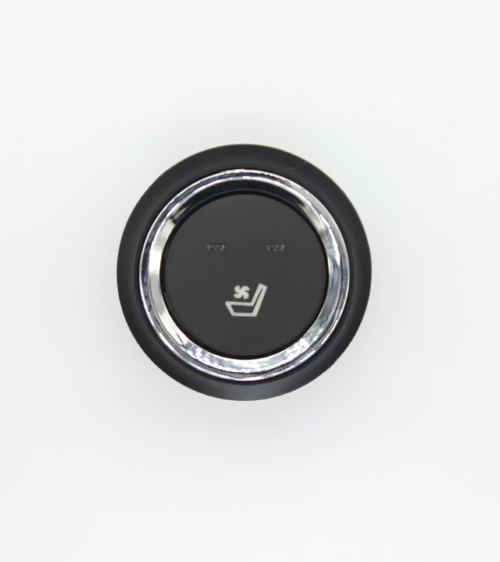
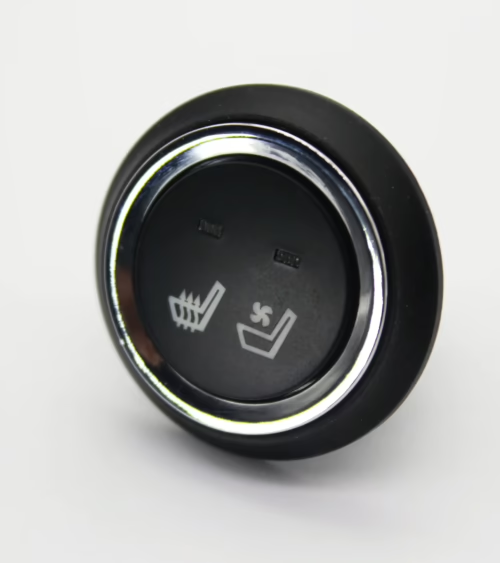
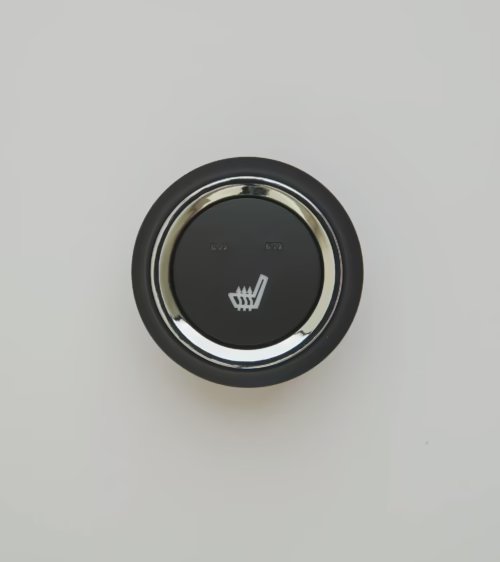
A malfunctioning Hyundai Tucson seat heater switch is one of the most common heated-seat complaints reported by Tucson owners across the 2016-2025 model years, and the good news is that most failures come down to a small handful of root causes you can diagnose in under an hour.
Whether your seat heater refuses to turn on, gets stuck on high, or works intermittently when you hit a bump, this guide walks through the five most effective fixes, from cleaning corroded contacts to replacing the switch assembly entirely.
Common Symptoms of a Failing Tucson Seat Heater Switch
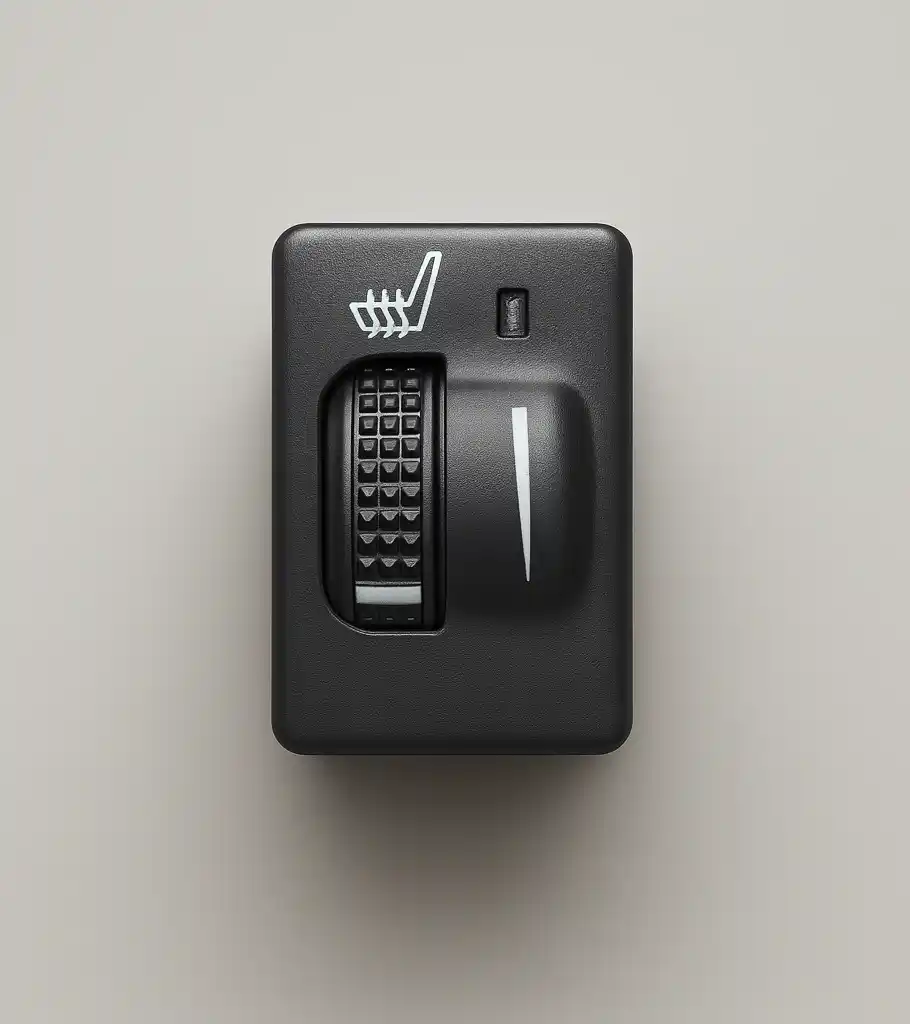
Before pulling any trim panels, it helps to identify exactly how the system is failing, since the symptom often points directly to the cause. Owners typically report one of the following patterns:
- No indicator light and no heat when the button is pressed
- Indicator light illuminates but the seat pad never warms up
- Heat cycles on and off erratically, especially over rough roads
- Only one heat level (usually high) works, while low and medium do nothing
- The switch feels loose, sticky, or fails to click into position
Each of these maps to a distinct failure point: the switch contacts, the wiring harness, the heating pad itself, or the control module that regulates temperature output. Isolating which component is at fault saves significant diagnostic time and prevents unnecessary part swaps.
Fix 1: Inspect and Clean the Switch Contacts
The switch itself is a mechanical rocker or push-button assembly with internal copper contacts that carry current to the seat pad circuit. Over years of use, dust, moisture, and oxidation build up on these contacts, creating resistance that either blocks the signal entirely or causes intermittent operation.
Remove the switch bezel from the center console or door panel (depending on trim level), disconnect the harness connector, and inspect the contact points with a flashlight.
Light corrosion can often be cleared with electrical contact cleaner and a nylon brush rather than abrasive tools, which can scratch the plating and worsen the problem over time. Reassemble, reconnect the harness, and test each heat level before closing the panel back up.
Fix 2: Test the Wiring Harness and Connector
If cleaning the contacts doesn’t resolve the issue, the next step is checking continuity through the wiring harness that runs from the switch to the seat heating element. Use a multimeter set to continuity mode with the switch disconnected from the vehicle’s power source.
Probe each pin on the harness connector while wiggling the wire bundle near the seat rail, since this is where repeated seat sliding causes wire fatigue and hidden breaks in the insulation. A dropped reading during movement confirms a chafed or broken wire rather than a bad switch.
Repair kits with heat-shrink connectors work well for isolated breaks, but a harness with multiple failure points along its length is usually more reliable to replace outright.
Fix 3: Check the Heating Element and Thermal Fuse
Seat heating pads use resistive wiring, and many designs incorporate a positive temperature coefficient element that self-regulates heat output and prevents overheating.
When this element develops a break or when its inline thermal fuse trips due to a short, the switch and wiring can test perfectly fine while the seat still produces no heat.
This is a frequent misdiagnosis, since the switch is the most visible and accessible component, so owners naturally suspect it first.
Testing resistance across the pad’s leads with the seat cushion removed will confirm whether the element itself has failed, in which case the pad needs replacement rather than the switch.
Fix 4: Replace the Seat Heater Switch Assembly
When contact cleaning and wiring checks don’t restore function, the switch assembly itself has likely worn out internally, which is common on switches that have logged 80,000 miles or more of daily use.
Hyundai Tucson switches use a keyed connector and snap-fit housing, so removal typically requires a trim pry tool rather than screwdrivers to avoid cracking the plastic bezel. Lucky Driver Inc.
stocks direct-fit replacement seat heater switches engineered to match OEM connector pinouts and heat-level logic, so the new switch drops in without splicing wires or reprogramming. Matching the exact trim level and model year is critical, since Tucson switches vary between two-stage and three-stage heat control depending on configuration.
Fix 5: Diagnose the Seat Heater Control Module
On trims where the seat heater switch communicates with a separate control module rather than switching power directly, a failed module can mimic a bad switch by producing no response even when the switch itself tests correctly.
This module regulates current draw to the heating element and, on some models, also manages ventilation fan speed.
Diagnosing it typically requires checking for power and ground at the module connector using the vehicle’s wiring diagram, since a missing ground is a far more common failure than an internal module fault.
If the module is confirmed faulty, replacement is usually the only economical repair, as these modules are sealed units not designed for component-level service.
When to Repair vs. Replace the Whole System
Deciding whether to repair an individual component or replace the full seat heater circuit depends on vehicle age, mileage, and how many symptoms are present simultaneously.
A single failed switch on a Tucson under 100,000 miles is almost always worth repairing with a direct-fit part, since labor is minimal and the fix is permanent.
However, if you’re seeing combined symptoms, such as a worn switch alongside a chafed harness and a degraded heating pad, replacing the full kit at once often costs less in labor than three separate repair visits.
For owners comparing options, browsing the full range of seat heating components side by side makes it easier to bundle a switch, pad, and harness into a single order and a single install session.
Preventing Future Seat Heater Switch Failures
Once the system is working again, a few habits extend the life of the new components significantly. Avoid using seat heaters as a substitute for cabin climate control on very short trips, since rapid on-off cycling accelerates wear on the switch contacts more than sustained use does.
Keep the seat rails and under-seat wiring clear of debris, spilled liquids, and stored items that can pinch or abrade the harness over time.
Finally, if you notice the indicator light flickering or heat output becoming inconsistent, address it immediately rather than waiting for full failure, since early-stage wiring issues are far cheaper and faster to repair than a burned-out heating pad caused by a prolonged short circuit.
Frequently Asked Questions
Q:
- Why does my Hyundai Tucson seat heater only work on high?A: This typically indicates a partial switch failure where only one internal contact set is still functional
- or a break in the resistor circuit that steps down voltage for the low and medium settings. Testing the switch in isolation will confirm which is the case.
Q: Can I replace the seat heater switch myself?
A: Yes, on most Tucson trims the switch is accessible after removing a trim bezel with a pry tool and unplugging a single harness connector, making it a straightforward DIY job for anyone comfortable with basic hand tools.
Q: Is a Hyundai Tucson seat heater switch covered under warranty?
A: Electrical components like seat heater switches are typically covered under Hyundai’s 5-year/60,000-mile basic warranty, though vehicles outside that window will need an aftermarket or OEM-fit replacement part.
Whether you’re troubleshooting an intermittent switch or replacing the entire seat heating circuit, Lucky Driver Inc. supplies OEM-fit seat heater switches, heating pads, and control modules engineered for reliable performance in Hyundai Tucson models and beyond.
Explore our catalog to find the exact part for your trim and get your heated seats back in working order this season.
Related Articles
- Hyundai Sonata Heated Seat Switch: 5 Fixes (2026 Guide)
- Hyundai Elantra Seat Heater Switch: 5 Fixes (2026 Guide)
- Subaru Crosstrek Heated Seats: 5 Fixes (2026 Guide)
- Subaru Forester Heated Seat Switch: 5 Fixes (2026 Guide)
- Subaru Outback Seat Heater Switch: 5 Fixes (2026 Guide)
Frequently Asked Questions About hyundai tucson seat heater switch
Procurement engineers evaluating hyundai tucson seat heater switch for OEM programs regularly ask the following questions. Answers cover specification, compatibility, certification, and sourcing for hyundai tucson seat heater switch requirements.
What voltage ratings are available for hyundai tucson seat heater switch?
Standard hyundai tucson seat heater switch configurations support 12 V DC for passenger vehicles and 24 V DC for commercial trucks. Selecting the correct hyundai tucson seat heater switch voltage at the design stage eliminates harness rework later.
Lucky Driver maintains hyundai tucson seat heater switch inventory in both ratings for same-week shipment.
Which certifications apply to hyundai tucson seat heater switch production?
hyundai tucson seat heater switch assemblies entering OEM programs typically require UL recognition, REACH compliance, and RoHS documentation. Lucky Driver holds certification records for every hyundai tucson seat heater switch variant and includes copies with sample and production shipments.
How is watt density specified for hyundai tucson seat heater switch?
Watt density for hyundai tucson seat heater switch is expressed in W/cm² and ranges from 0.04 to 0.12 depending on heat-up time requirements. Lower watt density hyundai tucson seat heater switch designs improve element longevity, while higher values suit cold-climate applications.
Lucky Driver engineering reviews hyundai tucson seat heater switch requirements and recommends watt density based on your seat platform.
What connector families are used with hyundai tucson seat heater switch?
hyundai tucson seat heater switch harnesses are available with Molex, TE Connectivity, and Delphi connector families. Matching the hyundai tucson seat heater switch connector to the vehicle harness reduces assembly time and eliminates adapter cables.
Specify your harness format when requesting a hyundai tucson seat heater switch quote from Lucky Driver.
What is the lead time for hyundai tucson seat heater switch samples?
hyundai tucson seat heater switch samples from Lucky Driver’s North American warehouse ship within 3 to 5 business days for standard configurations. Custom hyundai tucson seat heater switch variants with modified pad geometry or connector pinouts require 4 to 6 weeks.
Contact Lucky Driver to confirm hyundai tucson seat heater switch availability before submitting your engineering schedule.