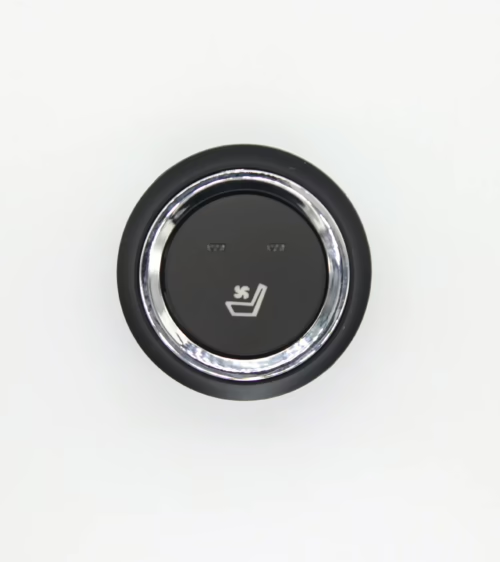
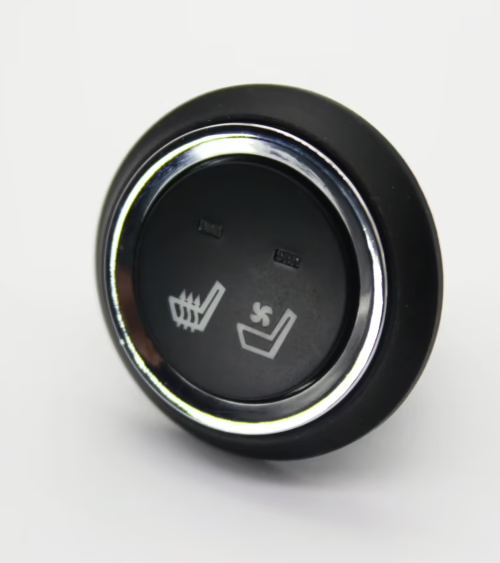
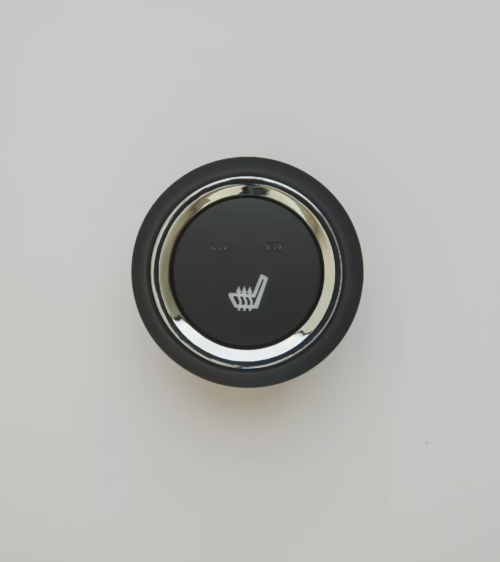
A malfunctioning subaru forester heated seat switch is one of the most common cold-weather complaints Forester owners bring to independent shops and dealerships alike.
Whether the switch fails to illuminate, the seat only heats on one setting, or the heater doesn’t respond at all, the root cause is usually traceable to one of a handful of predictable failure points.
This guide walks through five practical fixes, explains how the underlying heating circuit works, and helps you decide when a full switch replacement is the smarter long-term repair.
How the Forester Heated Seat System Works
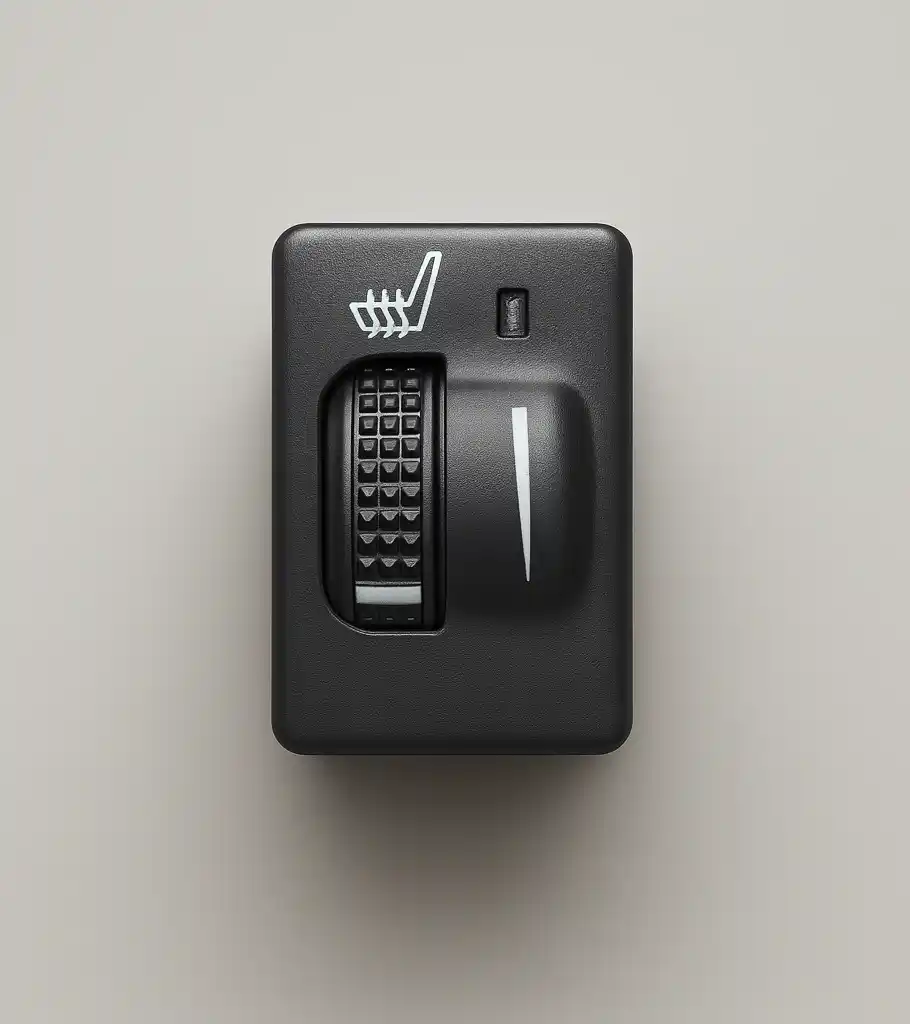
Subaru’s factory seat heating system uses a resistive heating pad bonded to the seat cushion and backrest foam, wired through a control switch mounted on the center console or seat trim.
The switch itself typically contains an integrated relay or a low-current signal path to a body control module, along with an LED indicator that confirms circuit continuity.
Most Forester generations (SJ and SK chassis) use a two- or three-stage heat setting controlled by a single rocker or push-button switch, with a thermostat or PTC (positive temperature coefficient) element regulating output temperature.
Because the switch sits at the intersection of driver input, power delivery, and thermal feedback, it’s often the first component to show symptoms even when the underlying fault lies elsewhere in the circuit.
Fix 1: Inspect the Switch LED and Physical Connections
Before assuming the switch has failed, confirm whether the indicator LED illuminates when pressed. A dead LED with no heat response usually points to a blown fuse or a loose connector behind the console, not the switch itself.
Pull the switch housing and check the wiring harness plug for corrosion, bent pins, or a connector that hasn’t fully seated. Vibration over years of driving can walk these connectors loose, especially on higher-mileage Foresters.
Reseating the connector and cleaning contacts with electrical contact cleaner resolves a surprising number of intermittent cases without any parts replacement.
Fix 2: Test Fuses and Relay Continuity
The heated seat circuit is protected by a dedicated fuse in the interior fuse box, and on some trims, a separate relay. A blown fuse typically means a downstream short, often in the heating pad wiring under the seat cushion where repeated flexing can chafe insulation.
Use a multimeter to confirm the fuse is intact and that battery voltage reaches the switch’s power terminal with the ignition on.
If the fuse blows repeatedly after replacement, stop testing the switch and inspect the seat pad wiring harness for a pinched or frayed section, since continuing to swap fuses without finding the short risks further electrical damage.
Fix 3: Diagnose the Heating Pad Before Blaming the Switch
Because the switch and the heating element share the same circuit, a failed heating pad can present identical symptoms to a failed switch:
- no warmth
- no LED response
- or heat on only one seat side. Disconnect the seat pad harness and measure resistance across the heating element leads. A reading of infinite resistance (open circuit) confirms a broken heating element
- while a reading near zero ohms suggests a short. Either result means the switch is functioning correctly and the pad itself needs replacement or repair
- which changes the entire repair scope and cost estimate.
Fix 4: Replace the Switch When Contacts Wear Out
Mechanical rocker and push-button switches degrade with age as internal contacts oxidize or wear from repeated actuation, a failure mode consistent with general electrical contact degradation seen across automotive switchgear.
Symptoms include a switch that works only when pressed at a certain angle, one heat stage that no longer activates, or a switch that feels loose or spongy compared to its factory feel.
Once wiring, fuses, and the heating pad have been ruled out, the most reliable fix is a direct OEM-fit replacement. Lucky Driver Inc.
stocks replacement seat heater switches engineered to match factory connector pinouts and dash trim fitment, so the swap is a straightforward plug-and-play job without splicing into the harness.
Fix 5: Verify the Repair with a Full Load Test
After any repair — reseated connector, new fuse, or new switch — run a full load test rather than a quick visual check. Start the engine, activate every heat stage, and confirm each setting produces a measurable temperature rise at the seat surface within two to three minutes.
Recheck the fuse after ten minutes of continuous operation to make sure the circuit isn’t drawing excessive current, which would indicate an unresolved short elsewhere in the system.
A repair that passes a full load test is far less likely to recur than one confirmed only by a momentary LED flicker.
OEM vs. Aftermarket Switch Quality Considerations
Not all replacement switches are built to the same tolerance. Cheaper aftermarket units often use thinner contact plating and lower-rated internal relays, which shortens service life under repeated cold-weather use.
When sourcing a replacement, prioritize switches with connector housings that match factory dimensions exactly and contact ratings suited to the current draw of a multi-stage heating pad.
For fleet operators, body shops, or owners who want to browse the full range of compatible parts before deciding, it’s worth taking time to browse seat heating products and compare specifications rather than defaulting to the first listing that fits the vehicle year.
Frequently Asked Questions
Q:
- Can I test a Subaru Forester heated seat switch without removing it from the dash?
A: Partially. You can confirm LED response and listen for a relay click with the switch in place - but accurately testing internal contact resistance requires removing the switch and back-probing the connector with a multimeter.
Q:
- Why does only one seat heat while the other doesn’t respond at all?
A: This points to an isolated fault on one side’s circuit — most often a bad connector - a damaged heating pad
- or a failed switch on that specific seat — rather than a shared fuse or relay problem
- since both seats typically run on independent switch and pad circuits.
Q:
- Is it safe to keep driving with a heated seat switch that intermittently trips the fuse?
A: No. A fuse that blows repeatedly indicates a short circuit generating excess heat in the wiring - which is a fire risk if ignored. Stop using that seat’s heater until the short is located and repaired.
If you’ve worked through these checks and confirmed the switch itself is the failure point, Lucky Driver Inc.
supplies OEM-fit heated seat switches, control modules, and heating pads built to factory specifications for Subaru Forester and a wide range of other makes — helping technicians and owners get heated seats back online with a repair that lasts.
Related Articles
- Subaru Outback Seat Heater Switch: 5 Fixes (2026 Guide)
- Nissan Rogue Heated Seat Switch: 5 Fixes (2026 Guide)
- Nissan Altima Seat Heater Switch: 5 Fixes (2026 Guide)
- 5 Signs Your Jeep Grand Cherokee Seat Heater Switch Is Bad
- Jeep Wrangler Heated Seat Switch: 2026 Complete Repair Guide
Frequently Asked Questions About subaru forester heated seat switch
Procurement engineers evaluating subaru forester heated seat switch for OEM programs regularly ask the following questions. Answers cover specification, compatibility, certification, and sourcing for subaru forester heated seat switch requirements.
What voltage ratings are available for subaru forester heated seat switch?
Standard subaru forester heated seat switch configurations support 12 V DC for passenger vehicles and 24 V DC for commercial trucks. Selecting the correct subaru forester heated seat switch voltage at the design stage eliminates harness rework later.
Lucky Driver maintains subaru forester heated seat switch inventory in both ratings for same-week shipment.
Which certifications apply to subaru forester heated seat switch production?
subaru forester heated seat switch assemblies entering OEM programs typically require UL recognition, REACH compliance, and RoHS documentation. Lucky Driver holds certification records for every subaru forester heated seat switch variant and includes copies with sample and production shipments.
How is watt density specified for subaru forester heated seat switch?
Watt density for subaru forester heated seat switch is expressed in W/cm² and ranges from 0.04 to 0.12 depending on heat-up time requirements. Lower watt density subaru forester heated seat switch designs improve element longevity, while higher values suit cold-climate applications.
Lucky Driver engineering reviews subaru forester heated seat switch requirements and recommends watt density based on your seat platform.
What connector families are used with subaru forester heated seat switch?
subaru forester heated seat switch harnesses are available with Molex, TE Connectivity, and Delphi connector families. Matching the subaru forester heated seat switch connector to the vehicle harness reduces assembly time and eliminates adapter cables.
Specify your harness format when requesting a subaru forester heated seat switch quote from Lucky Driver.
What is the lead time for subaru forester heated seat switch samples?
subaru forester heated seat switch samples from Lucky Driver’s North American warehouse ship within 3 to 5 business days for standard configurations. Custom subaru forester heated seat switch variants with modified pad geometry or connector pinouts require 4 to 6 weeks.
Contact Lucky Driver to confirm subaru forester heated seat switch availability before submitting your engineering schedule.