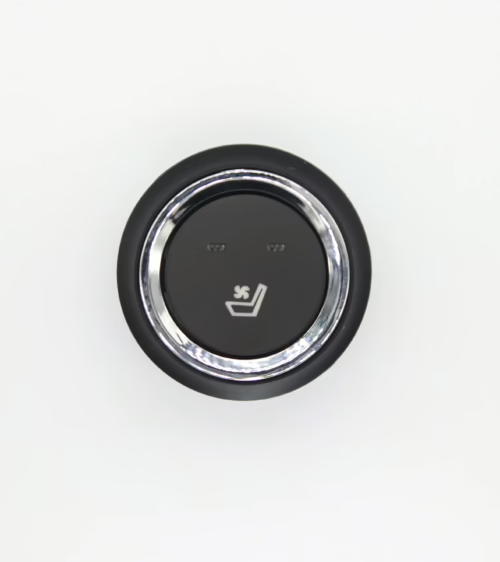
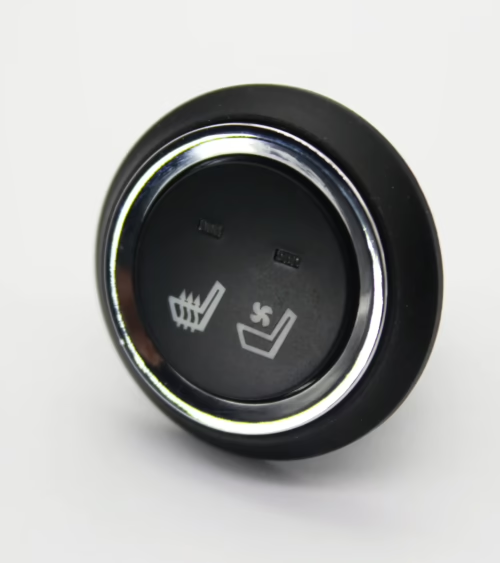
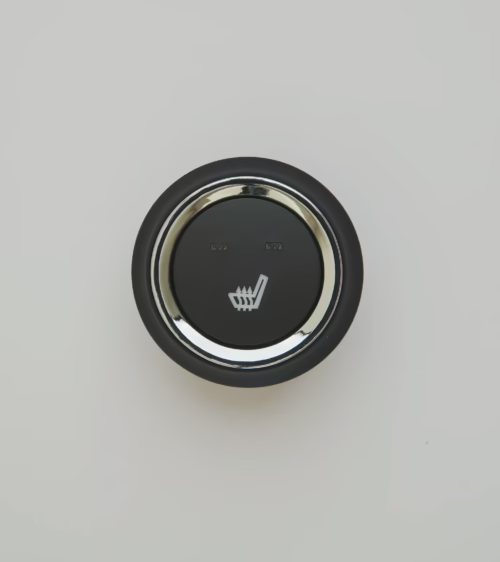
A malfunctioning Kia Sorento heated seat switch is one of the most common comfort-system complaints reported by Sorento owners once cold-weather driving season begins.
Whether the heat won’t activate at all, only one seat level works, or the indicator light stays on without producing warmth, the root cause is almost always isolated to one of five components:
- the switch itself
- the heating pad
- the wiring harness
- a blown fuse
- or the seat control module. This guide walks through each failure point in diagnostic order
- explains how the Kia Sorento’s seat heating circuit is engineered
- outlines exactly how to replace a faulty switch with an OEM-fit part.
How the Kia Sorento Seat Heating Circuit Works
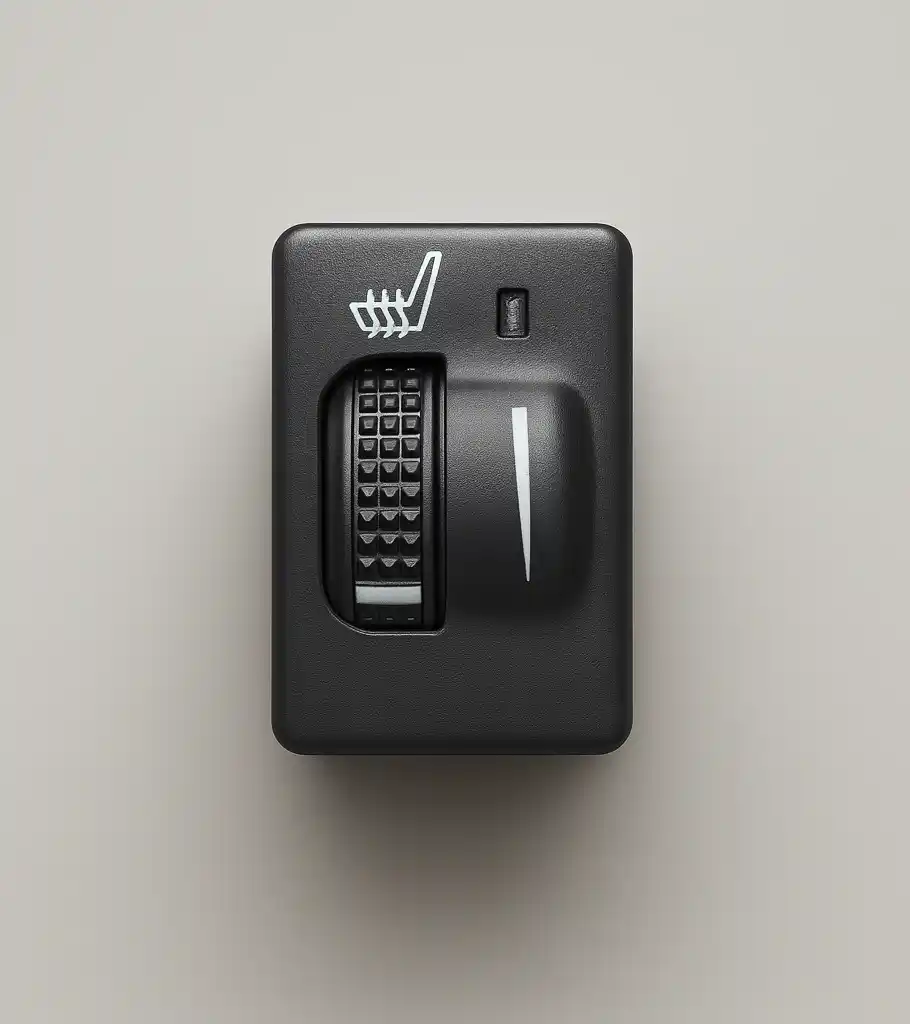
The Kia Sorento uses a resistive heating pad bonded to the seat cushion and backrest foam, wired to a dash- or console-mounted rocker switch that supplies 12V battery power through a fused circuit.
Most Sorento trims (2016 and newer) use a multi-stage system with high, medium, and low heat settings, each corresponding to a different resistance value or duty cycle controlled by a small onboard module.
Many modern implementations rely on a positive temperature coefficient (PTC) heating element, which self-regulates resistance as it warms, reducing the risk of overheating compared to older constant-resistance wire pads.
Understanding this layout matters because a symptom like “seat heater doesn’t work” can originate anywhere along that chain, not just at the switch.
Fix 1: Check the Seat Heater Fuse First
Before assuming the switch has failed, always check the fuse. The Sorento’s seat heater circuit typically runs through a 15A or 20A fuse in the interior fuse panel, usually labeled “SEAT HEATER” or “P/SEAT.” A blown fuse produces the exact same symptom as a dead switch:
- no heat
- no indicator light
- no response at any setting. Pull the fuse with the puller tool built into the fuse box lid and inspect the metal strip for a visible break. If it’s blown
- replace it with an identical amperage rating — never a higher-rated fuse
- since that removes the circuit’s overcurrent protection and risks damaging the wiring harness or the heating pad itself.
Fix 2: Test the Switch for Continuity
If the fuse is intact, the switch is the next most likely failure point, since it’s a mechanical component subjected to thousands of press cycles and constant thermal cycling from seat heat rising through the console trim.
Remove the switch panel (usually a simple pry-out with a trim tool), disconnect the wiring connector, and test continuity across the switch terminals at each heat setting using a multimeter.
A switch that shows no continuity in any position, or inconsistent continuity when wiggled, has worn internal contacts and needs replacement. This is the single most common cause of intermittent heated seat failure in Sorentos over 60,000 miles.
Fix 3: Inspect Wiring and Connectors Under the Seat
Seat wiring harnesses take significant abuse from seat-track sliding, and the connector under the seat cushion is a frequent failure point. Repeated forward-and-back seat adjustment flexes the harness thousands of times, which can fatigue individual conductor strands even when the outer insulation looks fine.
Pull the seat track covers, locate the harness connector, and check for a secure locking tab, corrosion on the pins, or a conductor that has broken inside the insulation.
A frayed wire here will often produce a heater that works only when the seat is in one specific position — a telltale sign that points away from the switch and toward the harness.
Fix 4: Rule Out the Heating Pad or Element
If the switch tests good and the wiring is intact, the heating pad itself may have an open circuit, usually from a crease or tear in the resistive wire mesh. This is more common in cushions than backrests since cushion pads absorb more direct pressure and flex.
Diagnosing a pad failure means removing the seat upholstery, which is more invasive than most owners want to attempt at home. It is usually cheaper to have a shop verify pad resistance with a multimeter before committing to a teardown and re-upholstery.
Fix 5: Replace the Switch with an OEM-Fit Part
Once you’ve confirmed the switch is the failure point, replacement is usually a 15-30 minute job. Match the part number to your Sorento’s model year and trim, since switch button layout, illumination color, and connector pinout changed across generations (UM 2016-2020 vs. MQ4 2021+). Lucky Driver Inc.
stocks replacement seat heater switches engineered to match factory connector shape, button feel, and LED indicator behavior, so the new switch integrates without splicing wires or modifying the dash trim. Installation is a direct swap:
- disconnect the battery negative terminal
- pop the old switch free
- unplug the harness connector
- plug in the new switch
- snap it back into the trim panel.
Preventing Future Seat Heater Failures
Seat heater switches and wiring last longer when a few habits are followed consistently. Avoid running the heater on high for extended periods once the cabin is already warm, since sustained high-duty-cycle operation accelerates wear on both the switch contacts and the heating element.
Keep seat-track movement smooth and avoid forcing the seat past its stop, which reduces strain on the underseat harness.
If you notice the indicator light flickering or the heat cycling on and off unprompted, address it early — those are early warning signs of a failing switch or a connector working loose, and catching them before a full failure avoids a cold commute in January.
Frequently Asked Questions
Q:
- Why does my Kia Sorento heated seat switch light up but produce no heat?
A: This usually points to a break downstream of the switch — most often a fatigued wire in the underseat harness or an open circuit in the heating pad itself - rather than the switch
- since the switch is clearly receiving power and closing the circuit for the indicator light.
Q: Can I replace just the driver’s side switch, or do both sides need to be replaced together?
A: Each seat has its own independent switch and circuit, so you only need to replace the switch on the affected side. The driver and passenger switches are not linked electrically.
Q:
- How much does a Kia Sorento heated seat switch replacement typically cost?
A: A quality aftermarket or OEM-fit switch generally runs well under what a dealership charges for the part alone - since installation is usually a DIY-friendly 15-30 minute job
- most owners save significantly by sourcing the switch directly and doing the swap themselves.
If your Kia Sorento’s seat heater has stopped working, don’t wait for winter to force the issue. Lucky Driver Inc.
supplies OEM-fit seat heater switches, heating pads, and control modules engineered for precise factory fit — browse our full seat heating product lineup to find the exact part for your Sorento’s model year and get reliable warmth back in your cabin.
Related Articles
- Hyundai Tucson Seat Heater Switch: 5 Fixes (2026 Guide)
- Hyundai Sonata Heated Seat Switch: 5 Fixes (2026 Guide)
- Hyundai Elantra Seat Heater Switch: 5 Fixes (2026 Guide)
- Subaru Crosstrek Heated Seats: 5 Fixes (2026 Guide)
- Subaru Forester Heated Seat Switch: 5 Fixes (2026 Guide)
Frequently Asked Questions About kia sorento heated seat switch
Procurement engineers evaluating kia sorento heated seat switch for OEM programs regularly ask the following questions. Answers cover specification, compatibility, certification, and sourcing for kia sorento heated seat switch requirements.
What voltage ratings are available for kia sorento heated seat switch?
Standard kia sorento heated seat switch configurations support 12 V DC for passenger vehicles and 24 V DC for commercial trucks. Selecting the correct kia sorento heated seat switch voltage at the design stage eliminates harness rework later.
Lucky Driver maintains kia sorento heated seat switch inventory in both ratings for same-week shipment.
Which certifications apply to kia sorento heated seat switch production?
kia sorento heated seat switch assemblies entering OEM programs typically require UL recognition, REACH compliance, and RoHS documentation. Lucky Driver holds certification records for every kia sorento heated seat switch variant and includes copies with sample and production shipments.
How is watt density specified for kia sorento heated seat switch?
Watt density for kia sorento heated seat switch is expressed in W/cm² and ranges from 0.04 to 0.12 depending on heat-up time requirements. Lower watt density kia sorento heated seat switch designs improve element longevity, while higher values suit cold-climate applications.
Lucky Driver engineering reviews kia sorento heated seat switch requirements and recommends watt density based on your seat platform.
What connector families are used with kia sorento heated seat switch?
kia sorento heated seat switch harnesses are available with Molex, TE Connectivity, and Delphi connector families. Matching the kia sorento heated seat switch connector to the vehicle harness reduces assembly time and eliminates adapter cables.
Specify your harness format when requesting a kia sorento heated seat switch quote from Lucky Driver.
What is the lead time for kia sorento heated seat switch samples?
kia sorento heated seat switch samples from Lucky Driver’s North American warehouse ship within 3 to 5 business days for standard configurations. Custom kia sorento heated seat switch variants with modified pad geometry or connector pinouts require 4 to 6 weeks.
Contact Lucky Driver to confirm kia sorento heated seat switch availability before submitting your engineering schedule.