An aftermarket seat heater pad is the thin, flexible heating element that installs between a seat’s foam cushion and its upholstery to deliver factory-style heated seats on vehicles that never had them, or to replace a failed OEM element.
For distributors, upholstery shops and OEM seat builders, the pad is the single component that determines comfort, durability and warranty exposure.
This guide walks through the seven specifications that separate a reliable pad from one that fails in its first winter, with practical notes on element type, power draw, temperature control and fitment.
1. Heating Element Type: Carbon Fiber vs Alloy Wire
Nearly every aftermarket seat heater pad on the market uses one of two element technologies. Alloy wire pads route a continuous resistance wire, typically a copper-nickel or copper-clad alloy, in a serpentine pattern across a nonwoven or felt carrier.
Carbon fiber pads use bundled carbon filament tows laid in parallel strips and joined by copper bus bars at each end.
Both convert electrical current into heat through the same physical process, described in detail in the Wikipedia article on Joule heating, but they behave very differently in service. Wire elements are a series circuit: a single break anywhere in the run disables the entire pad.
Carbon fiber elements are many parallel paths, so a damaged filament reduces output slightly rather than killing the pad outright.
Wire heats faster at the surface because the heat is concentrated along a narrow conductor, while carbon fiber spreads heat more evenly and is less prone to hot spots under the thigh bolsters.
- Alloy wire: lower cost, faster perceived warm-up, more vulnerable to flex fatigue at the seat edge, common in budget universal kits.
- Carbon fiber: higher flex life, more uniform heat, better tolerance to staple and seam damage, preferred for OEM-grade and commercial fleet applications.
For a shop that wants to minimize warranty callbacks, carbon fiber is the safer default. Wire remains valid when cost is the deciding factor and the seat sees light daily cycling.
2. Wattage and Current Draw per Seat
A typical two-pad set (one cushion pad, one backrest pad) for a 12 V passenger vehicle draws between 3 A and 6 A on the high setting, which works out to roughly 36 W to 72 W per seat.
Cushion pads usually carry more power than backrest pads because the thigh area has more thermal mass and more fabric layers.
Higher wattage is not automatically better. A pad rated above about 80 W per seat will heat quickly but can push surface temperatures past comfortable limits unless the controller actively regulates it.
On the other side, a pad under 30 W per seat will feel weak through thick leather or ventilated foam.
When matching a pad to a vehicle, check three things: the fuse rating on the circuit you plan to tap, the wire gauge in the harness, and whether both front seats will share a single feed.
Two seats at 6 A each on one 10 A circuit is a common cause of nuisance fuse failures.
For 24 V commercial trucks and off-highway cabs, the pad must be wound or configured specifically for 24 V. A 12 V pad connected to a 24 V system will draw four times its rated power and fail within minutes.
3. Temperature Regulation: Thermostat, PTC or Module
Temperature control is where many low-cost aftermarket seat heater pad kits cut corners. There are three common approaches.
- Bimetal thermostat in the pad: a small snap-disc switch bonded to the element opens at a fixed temperature, often 40 to 45 degrees Celsius, and closes again as the pad cools.
- Simple and cheap, but it cycles the full load on and off, which produces a noticeable warm-cool rhythm and stresses the switch contacts.
- NTC thermistor with an external control module: a sensor embedded in the pad reports temperature to a module that uses pulse-width modulation to hold a target. This gives smooth, stable heat and allows multiple levels. It is the approach used in most OEM systems built after 2010.
- Self-regulating PTC element: the element material itself increases resistance as it warms, naturally limiting output. Good inherent safety, but the self-limiting curve makes true multi-level control harder.
For resale into the North American aftermarket, a thermistor-plus-module design is the most defensible choice. It provides a defined over-temperature cutoff, supports high-low-off or three-level switching, and lets the installer pair the pad with a wide range of controls.
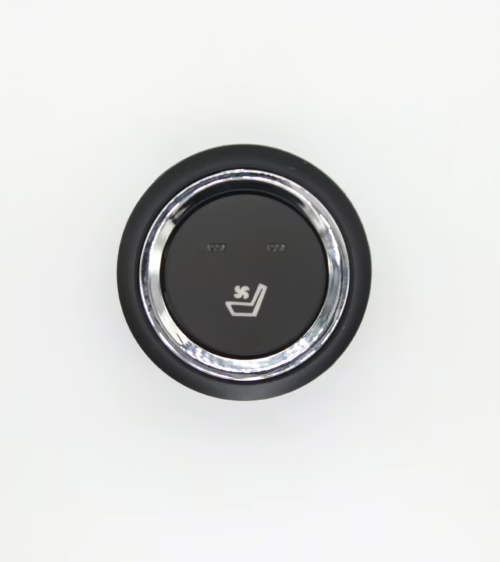
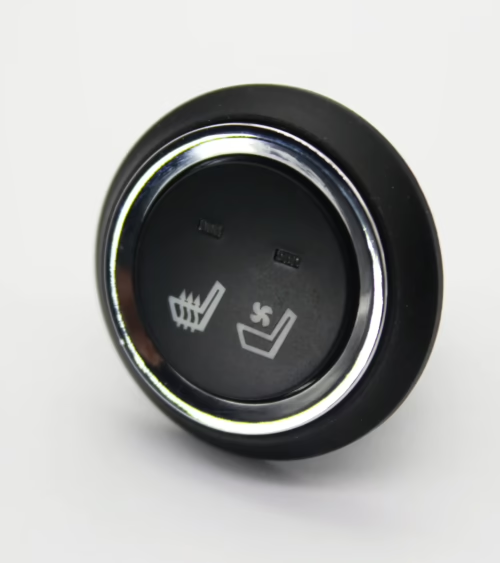
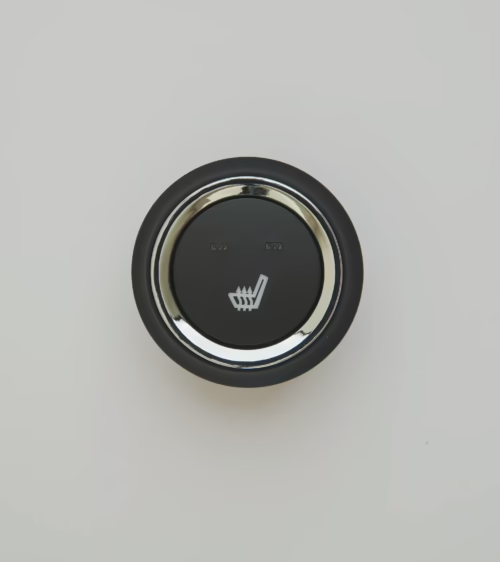
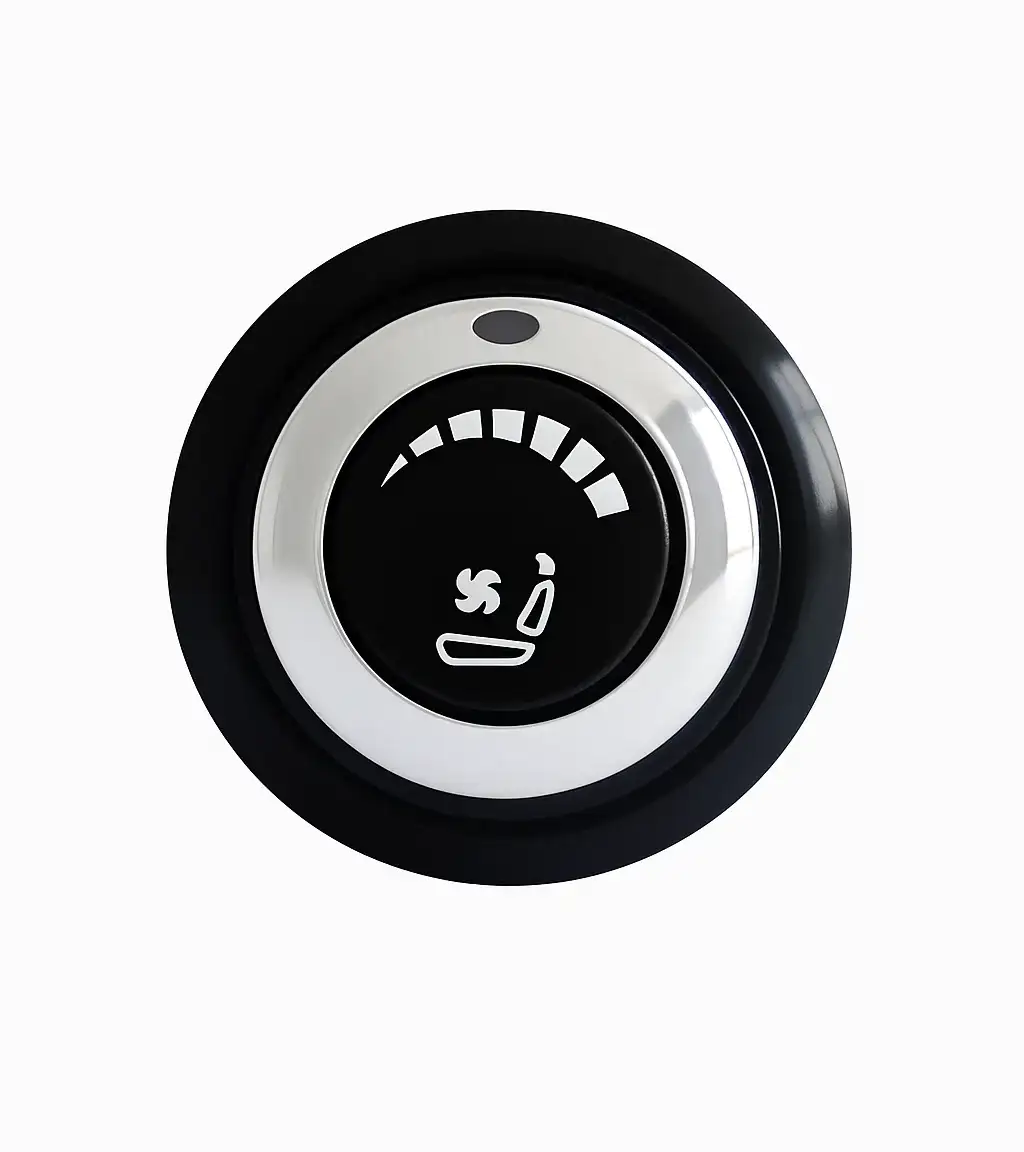
4. Switch and Control Compatibility
The pad is only half the user experience. The switch defines how the driver interacts with the system, and a mismatched switch can make a quality pad feel cheap.
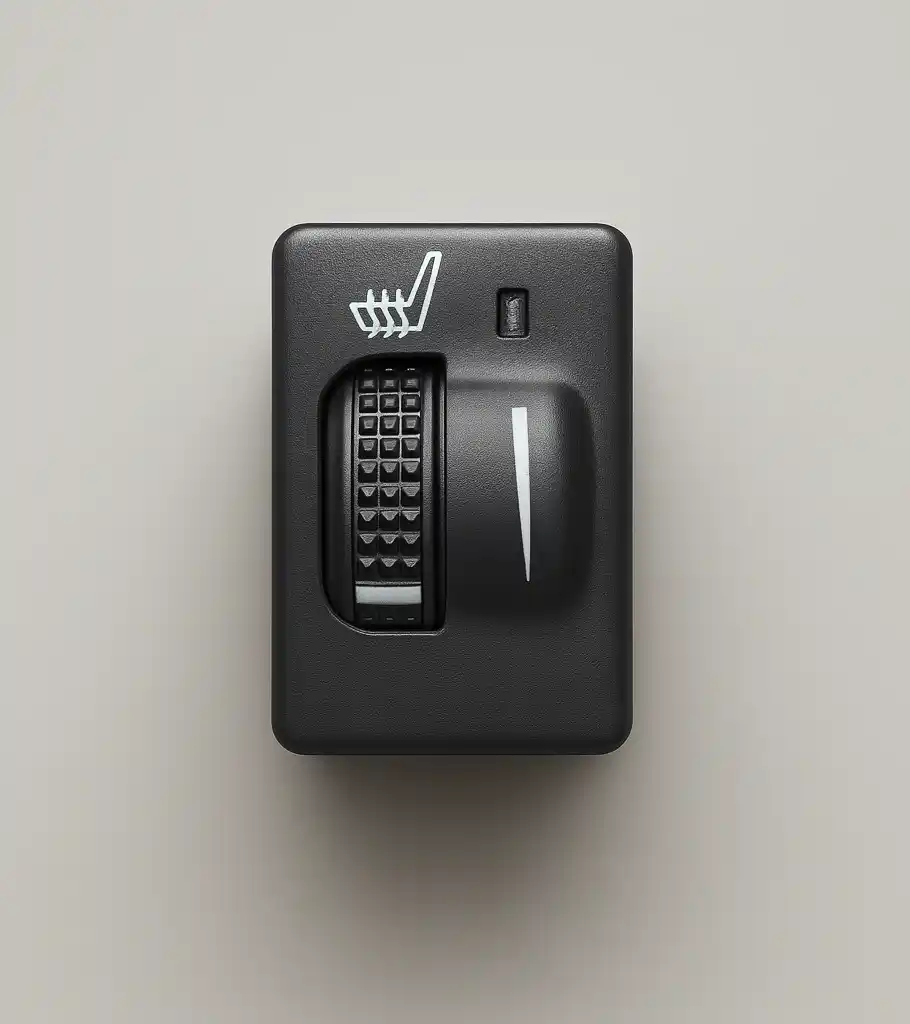
Universal kits typically ship with a round or rectangular rocker that requires a drilled hole in the seat trim or center console. Vehicle-specific installs are cleaner when the switch drops into an existing blank in the dash or door panel.
When specifying a system, confirm that the switch’s output logic matches the module or thermostat.
A simple two-position rocker that passes full battery voltage will not work with a module that expects a low-current signal input, and a membrane touch switch designed for a module will do nothing wired directly to a pad.
Browse our seat heater switch catalog to see the difference between direct-load rockers rated for the full pad current and signal-type switches intended for module-controlled systems.
Illuminated switches with a dedicated backlight wire are worth the small premium because they integrate with the vehicle’s dash lighting circuit instead of glowing at full brightness at night.
5. Pad Dimensions, Cut Zones and Seat Fitment
A pad that is too large folds at the edges, and a fold is where wire elements break and carbon fiber bus bars crack. Standard universal cushion pads measure roughly 280 mm by 480 mm, with backrest pads slightly narrower.
Many pads are printed with marked cut zones: areas of carrier material outside the element path that can be trimmed with scissors to clear seat sensors, lumbar mechanisms or side airbag modules.
Never cut through the element itself on a wire pad, and never cut across the bus bars on a carbon fiber pad.
Fitment also depends on how the pad will be anchored. Pads with a peel-and-stick adhesive backing hold position during upholstery reinstallation. Pads intended for hog-ring or listing-wire attachment need slots or reinforced edges so that the fasteners do not tear the carrier.
When supplying seat manufacturers, provide a DXF or PDF outline so the pad can be checked against the foam and trim pattern before the first sample is built.
6. Occupant Sensor and Airbag Interaction
Modern passenger seats contain more than foam and fabric. The front passenger seat in most vehicles sold in North America since 2006 includes an occupant classification sensor, either a pressure-sensitive bladder or a mat of force sensors, that tells the airbag module whether to deploy the passenger airbag.
Placing a heater pad directly on top of a bladder sensor can change the pressure reading and trigger an airbag warning light. Some occupant mats also use capacitive sensing that a conductive carbon pad can interfere with.
The correct practice is to install the heater pad above the sensor mat but below the upholstery, keep the pad’s bus bars and wire leads clear of the sensor’s connector, and verify the airbag readiness lamp after reassembly.
Seats with side-impact airbags in the backrest bolster need the backrest pad trimmed so it does not cross the airbag tear seam. These checks take a few minutes and prevent the most expensive category of installation complaint.
7. Durability Testing and Certification Marks
Ask any supplier for their flex cycle and thermal cycle test data. A credible aftermarket seat heater pad should survive at least 50,000 compression cycles under a weighted form that simulates a seated occupant, and at least 10,000 on-off thermal cycles without a change in resistance beyond a few percent.
The lead wire exit point is the most common failure location, so look for strain relief, a fabric reinforcement patch or a molded grommet where the leads leave the pad.
Certification marks matter for liability as well as marketing. Pads and controllers intended for North American vehicle use are commonly tested to UL or ETL requirements for electrical safety, and the complete system should be designed to survive the overvoltage and reverse-polarity conditions described in automotive electrical standards.
Suppliers who can show RoHS material declarations and a documented production test for continuity and insulation resistance on every pad are a much lower risk than those who can only provide a photograph of the product.
Installation Notes for Shops and Fleet Buyers
Even the best pad fails if installed poorly. Three habits prevent most field problems. First, dry-fit the pad on the bare foam and mark the lead routing before applying any adhesive, so the wires exit toward the seat’s existing harness path and not across a seat track.
Second, route the lead through a grommet or split loom wherever it passes a metal edge, since seat frames have sharp stamped edges that will cut insulation within a few thousand track adjustments.
Third, use a dedicated fused feed from a switched ignition source rather than tapping a lighting or accessory circuit, so the heater cannot run with the key off and drain the battery.
For fleet buyers equipping multiple vehicles, standardize on one pad family and one switch type across the fleet. Technicians learn the installation once, spare parts inventory stays small, and warranty records are easier to track.
You can browse the full range of seat heating products to compare pad sizes, control modules and harness options side by side before committing to a standard.
Frequently Asked Questions
How long should an aftermarket seat heater pad last?
A properly installed carbon fiber pad with a thermistor-controlled module should last the useful life of the seat, typically eight to twelve years of daily use.
Wire pads in a high-cycle application such as a delivery vehicle may need replacement after four to six years, usually because of a break near the seat edge or the lead exit.
Can a heater pad be installed under leather or perforated ventilated seats?
Yes. Leather conducts heat well, so the pad can run at standard wattage. Perforated and ventilated seats are more complex because the heater pad must not block the ventilation airflow path.
In those cases the pad is usually a dedicated perforated design, or the heater is integrated into the ventilation spacer layer. Confirm the seat construction before quoting a universal pad.
Will adding a heater pad affect the vehicle’s warranty or safety systems?
A heater pad does not void a vehicle warranty by itself, but damage caused by a poor installation is not covered by the vehicle manufacturer. The main safety consideration is the occupant classification sensor and side airbag described above.
Keep the pad clear of airbag seams and sensor bladders, and check that no warning lights are present after the installation.
Partner with Lucky Driver Inc. for OEM-Grade Seat Heating
Lucky Driver Inc. supplies aftermarket seat heater pads, control modules, switches and seat ventilation components to OEM seat manufacturers and aftermarket distributors across North America, backed by vertically integrated electro-thermal fabric production.
Whether you need a universal carbon fiber pad set for a distribution catalog or a custom-cut element matched to your seat pattern, our team can provide samples, test data and volume pricing.
Contact Lucky Driver Inc. to discuss your application and request a specification sheet for your next seat heating project.
Related Articles
- Seat Heater Kit Wiring Harness: 7 Things Installers Must Know
- Heated Seat Element Kit: 7 Things to Know Before You Buy
- Heated Seat Kit vs Heated Seat Cover: 6 Key Differences
- Two Seat Heated Seat Kit: 6 Things to Check Before Buying
- Heated Seat Pad Kit Installation: 7 Steps to Get It Right
Frequently Asked Questions About aftermarket seat heater pad
Procurement engineers evaluating aftermarket seat heater pad for OEM programs regularly ask the following questions. Answers cover specification, compatibility, certification, and sourcing for aftermarket seat heater pad requirements.
What voltage ratings are available for aftermarket seat heater pad?
Standard aftermarket seat heater pad configurations support 12 V DC for passenger vehicles and 24 V DC for commercial trucks. Selecting the correct aftermarket seat heater pad voltage at the design stage eliminates harness rework later. Lucky Driver maintains aftermarket seat heater pad inventory in both ratings for same-week shipment.
Which certifications apply to aftermarket seat heater pad production?
Aftermarket seat heater pad assemblies entering OEM programs typically require UL recognition, REACH compliance, and RoHS documentation. Lucky Driver holds certification records for every aftermarket seat heater pad variant and includes copies with sample and production shipments.
How is watt density specified for aftermarket seat heater pad?
Watt density for aftermarket seat heater pad is expressed in W/cm² and ranges from 0.04 to 0.12 depending on heat-up time requirements. Lower watt density aftermarket seat heater pad designs improve element longevity, while higher values suit cold-climate applications.
Lucky Driver engineering reviews aftermarket seat heater pad requirements and recommends watt density based on your seat platform.
What connector families are used with aftermarket seat heater pad?
Aftermarket seat heater pad harnesses are available with Molex, TE Connectivity, and Delphi connector families. Matching the aftermarket seat heater pad connector to the vehicle harness reduces assembly time and eliminates adapter cables. Specify your harness format when requesting a aftermarket seat heater pad quote from Lucky Driver.
What is the lead time for aftermarket seat heater pad samples?
Aftermarket seat heater pad samples from Lucky Driver’s North American warehouse ship within 3 to 5 business days for standard configurations. Custom aftermarket seat heater pad variants with modified pad geometry or connector pinouts require 4 to 6 weeks.
Contact Lucky Driver to confirm aftermarket seat heater pad availability before submitting your engineering schedule.