Drivers who want to add heated seats to Chevy Silverado trucks have more options today than a simple dealer upgrade.
Whether you own a base-trim work truck or a mid-level LT that skipped the heated seat package, the Silverado’s seat frames, wiring architecture, and factory connectors are well documented enough that a proper retrofit is a weekend project rather than a dealership-only service.
This guide covers five proven methods, the technical differences between OEM-style and universal kits, and the wiring, switch, and control module choices that determine long-term reliability.
1. Understand the Silverado’s Factory Wiring Provisions
Most Chevy Silverado trims built on the GM T1 platform (2019 and newer) share a common seat harness architecture regardless of whether heated seats were ordered from the factory.
GM frequently runs the same body wiring harness across trims to simplify assembly, which means the connector pigtail for the seat heater element is often present under the seat even on trucks without the heated seat option.
Before buying any kit, pull back the seat cushion and inspect the factory harness for an unused 2-pin or 4-pin connector near the seat frame. If it’s present, an OEM harness adapter kit is almost always the cleanest and least labor-intensive path.
- 2019+ Silverado 1500: shared T1 harness across most cloth and leather trims
- 2500HD/3500HD: similar architecture but different seat bracket dimensions
- Pre-2019 (K2XX platform) trucks: harness provisions vary more by trim level
2. Method One: OEM Wiring Harness and Factory-Style Pad Kit
The most durable approach uses a factory-spec heating pad matched to your exact seat bottom and seat back profile, paired with an OEM-style connector harness that taps into the existing body wiring.
This method preserves airbag occupant sensing in the seat cushion, since the pad is cut and positioned to avoid the seat weight sensor mat.
It also allows the factory heated seat switch (if your dash already has a blank switch cutout) to control the system natively through the body control module, rather than requiring an aftermarket toggle.
3. Method Two: Universal Heating Pad Retrofit Kits
For trucks without a factory switch provision or on older Silverado generations, a universal retrofit kit is the more practical choice. These kits include a seat bottom pad, a seat back pad, a wiring harness, and an inline control module.
Installation involves removing the seat, releasing the seat cover hog rings or clips, sliding the pad between the cover and the foam, and reinstalling the cover so the heating element sits directly against the occupant.
Pad quality matters here — carbon-fiber heating elements distribute heat more evenly and resist hot-spotting compared to older resistive wire mats, and they tolerate the repeated flexing of a seat cushion far better over the vehicle’s service life.
4. Selecting the Right Switch and Control Module
The heating element is only half the system.
The switch and control module regulate current and cycle the heat to hold a target temperature. Most modern designs use pulse-width modulation rather than simple on/off relay switching, which gives smoother multi-level settings — typically low, medium, and high — instead of one fixed output.
When choosing hardware for a Silverado retrofit, buyers have two paths:
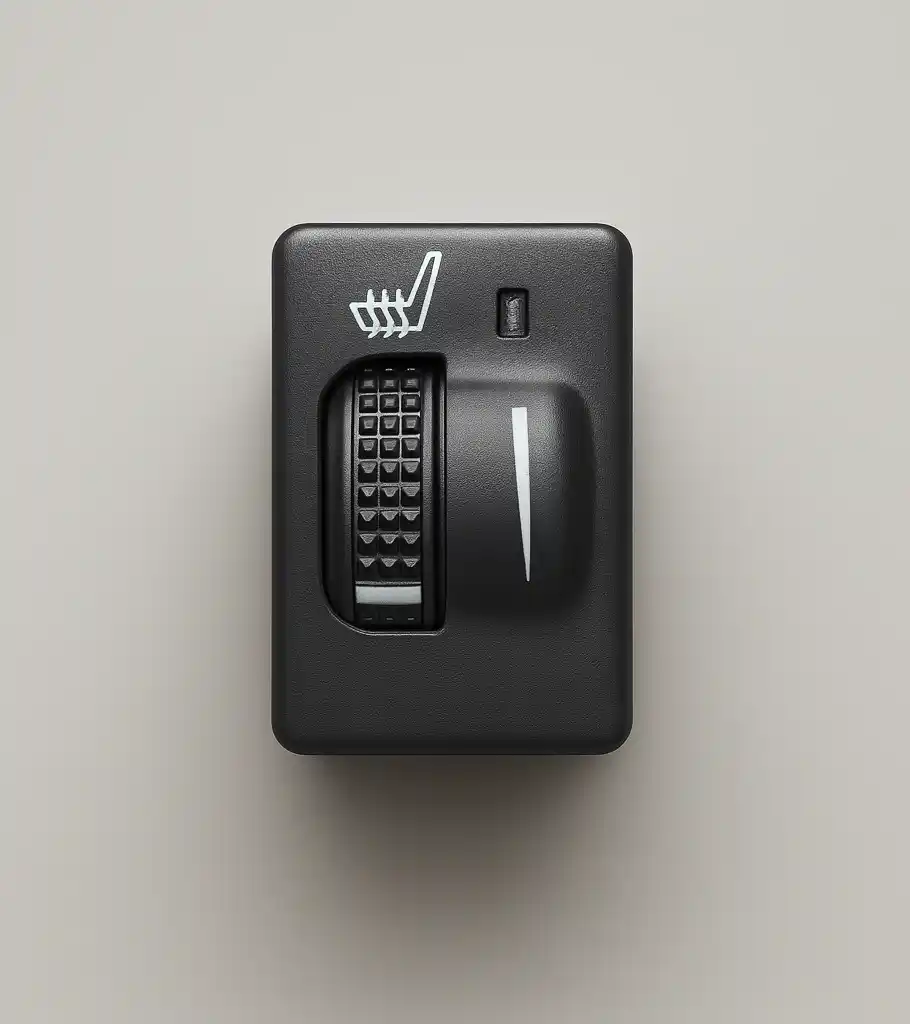
- Factory-style rocker switches that fit an existing dash blank and mimic GM’s OEM heated seat icon and detents
- Aftermarket rotary or push-button switches mounted in the console or on an add-on panel for trucks with no dash provision
Fitment and amperage rating both matter. A mismatched switch can either fail to reach full seat temperature or, worse, allow excess current draw that shortens the life of the heating element.
Buyers sourcing replacement hardware should compare amperage ratings and connector types carefully; browsing our seat heater switch catalog is a fast way to cross-reference OEM part numbers against compatible aftermarket switches before ordering.
5. Installing the Control Module and Fusing the Circuit
The control module is typically installed under the seat or behind the kick panel, wired to a switched 12V ignition source rather than a constant-power circuit, so the seat heaters cannot be left running with the truck off and drain the battery.
Every proper installation includes an inline fuse sized to the combined draw of both seat pads — most Silverado retrofit kits specify a 10A to 15A fuse per seat circuit.
Skipping the fuse, or tapping into an existing circuit that is already near its rated capacity, is the single most common cause of aftermarket heated seat failures and, in worse cases, wiring harness damage.
6. Adding Seat Ventilation Alongside Heating
Owners upgrading a work-trim Silverado often add cooled/ventilated seating at the same time as heating, since both systems share the same seat cover disassembly steps.
Ventilation kits use a fan module mounted beneath the seat cushion foam, drawing cabin air through perforated or mesh-backed leather to reduce heat buildup on hot days.
Combining a heating pad and a ventilation fan in one install session adds only marginal labor time over installing heating alone, since the seat is already out and the cover is already open.
7. Labor, Cost, and DIY Considerations
A DIY installation using a quality aftermarket kit generally costs a fraction of a dealer-installed OEM upgrade, with most of the labor time spent on seat removal, cover disassembly, and reassembly rather than the electrical work itself.
Trucks with leather seating surfaces require more care when releasing factory hog rings to avoid tearing the cover, while cloth seats are typically faster to open and reclose.
Total installation time for both front seats generally runs two to four hours for someone comfortable with basic trim removal and a multimeter.
Frequently Asked Questions
Will adding heated seats affect my Silverado’s airbag system?
No, as long as the heating pad is sized and positioned correctly. Seat cushions with occupant classification sensors have a defined sensor mat area, and quality kits are cut to avoid overlapping it.
Avoid oversized universal pads that cover the entire cushion without regard to sensor placement.
Can I use a factory heated seat switch with an aftermarket pad?
Only if the switch communicates through the same protocol the pad’s control module expects. Most aftermarket kits include a matched switch for this reason.
Mixing a factory switch with a non-OEM module usually requires a compatible interface module rather than a direct wire splice.
Do heated seat kits work on both 1500 and 2500HD/3500HD Silverado models?
Seat frame dimensions differ between the 1500 and the heavy-duty models, so pad sizing is not universal across the lineup. Confirm the kit is listed for your specific seat generation and cab configuration before purchasing.
Ready to upgrade your Silverado’s interior comfort? Lucky Driver Inc. supplies OEM-grade heating pads, switches, and control modules engineered for accurate fitment and long-term reliability — browse our full lineup of seat heating products to find the right kit for your truck.
Related Articles
- Add Heated Seats to Honda Civic: 5 Steps (2026 Guide)
- Add Heated Seats to Toyota Tacoma: 4 Proven Methods
- How to Add Heated Seats to Jeep Wrangler: 5 Steps (2026)
- Add Heated Seats to Ford F150: 3 Proven Methods (2026)
- Dodge Durango Seat Heater Switch: 5 Fixes for 2026 Models
Frequently Asked Questions About add heated seats to chevy silverado
Procurement engineers evaluating add heated seats to chevy silverado for OEM programs regularly ask the following questions. Answers cover specification, compatibility, certification, and sourcing for add heated seats to chevy silverado requirements.
What voltage ratings are available for add heated seats to chevy silverado?
Standard add heated seats to chevy silverado configurations support 12 V DC for passenger vehicles and 24 V DC for commercial trucks. Selecting the correct add heated seats to chevy silverado voltage at the design stage eliminates harness rework later.
Lucky Driver maintains add heated seats to chevy silverado inventory in both ratings for same-week shipment.
Which certifications apply to add heated seats to chevy silverado production?
add heated seats to chevy silverado assemblies entering OEM programs typically require UL recognition, REACH compliance, and RoHS documentation. Lucky Driver holds certification records for every add heated seats to chevy silverado variant and includes copies with sample and production shipments.
How is watt density specified for add heated seats to chevy silverado?
Watt density for add heated seats to chevy silverado is expressed in W/cm² and ranges from 0.04 to 0.12 depending on heat-up time requirements. Lower watt density add heated seats to chevy silverado designs improve element longevity, while higher values suit cold-climate applications.
Lucky Driver engineering reviews add heated seats to chevy silverado requirements and recommends watt density based on your seat platform.
What connector families are used with add heated seats to chevy silverado?
add heated seats to chevy silverado harnesses are available with Molex, TE Connectivity, and Delphi connector families. Matching the add heated seats to chevy silverado connector to the vehicle harness reduces assembly time and eliminates adapter cables.
Specify your harness format when requesting a add heated seats to chevy silverado quote from Lucky Driver.
What is the lead time for add heated seats to chevy silverado samples?
add heated seats to chevy silverado samples from Lucky Driver’s North American warehouse ship within 3 to 5 business days for standard configurations. Custom add heated seats to chevy silverado variants with modified pad geometry or connector pinouts require 4 to 6 weeks.
Contact Lucky Driver to confirm add heated seats to chevy silverado availability before submitting your engineering schedule.