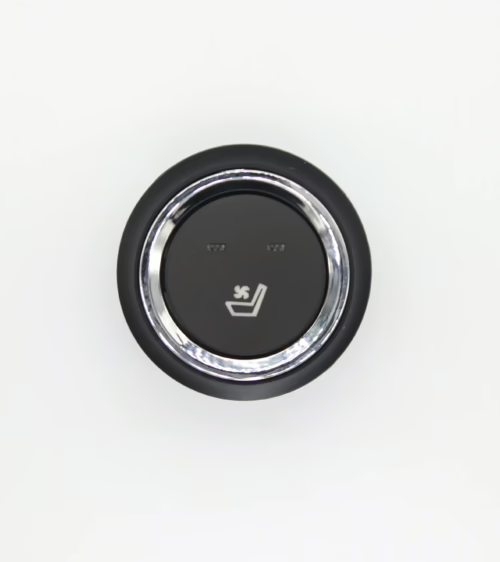
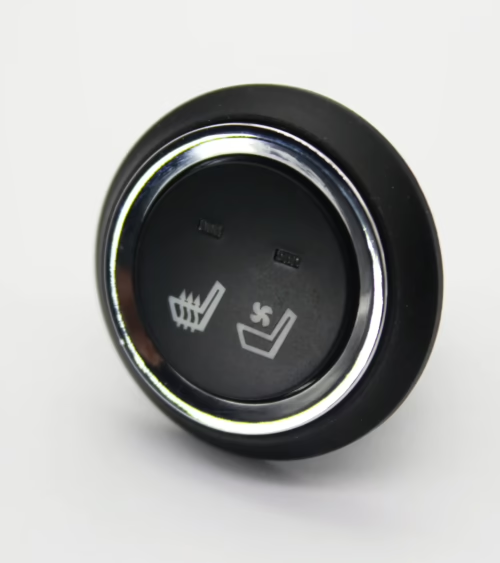
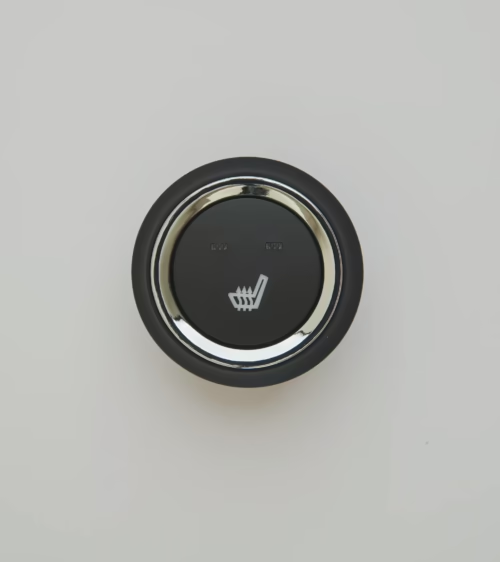
A malfunctioning Kia Sportage seat heater switch is one of the most common heated-seat complaints reported by Sportage owners, especially on 2017-2022 model years where the switch panel sits low on the center console and takes constant wear from knees, keys, and spilled drinks.
When the switch stops responding, the heating element itself is rarely at fault; in most cases the switch contacts, the wiring harness, or a blown fuse are the real culprits.
This guide walks through five practical fixes, from basic checks to a full switch replacement, so you can restore heat to your seats without an unnecessary trip to the dealership.
Understanding the Kia Sportage Seat Heater Switch System
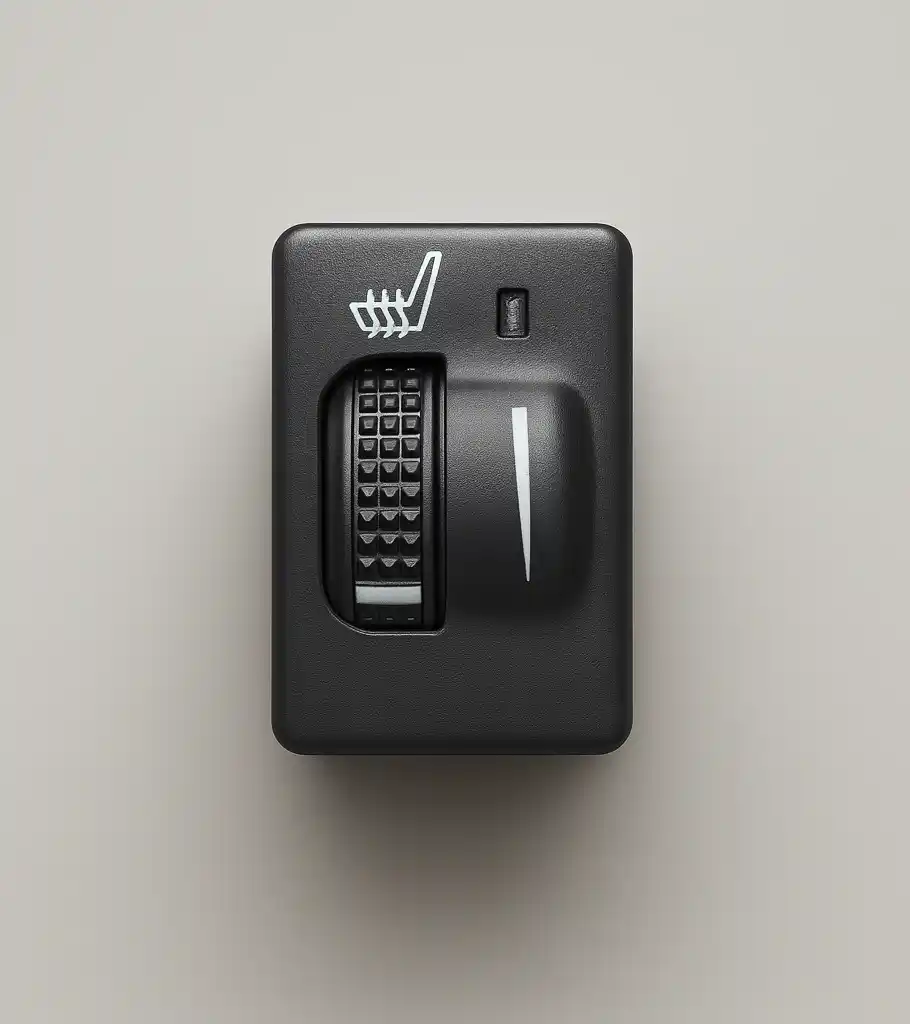
The Kia Sportage heated seat system is built around three core components:
- the seat heater switch
- the heating pad (installed under the seat cushion and backrest foam)
- a control circuit that regulates temperature
- usually through a simple resistor-based low/high setting rather than a dedicated electronic module. When you press the switch
- it completes a circuit that sends battery voltage through a PTC (positive temperature coefficient) heating element embedded in the seat pad. These elements rely on the same resistive heating principle used in countless automotive and household devices
- you can read more about the underlying physics in this overview of resistive (Joule) heating. Because the switch is the single point where the driver interacts with this circuit
- worn internal contacts or a cracked switch housing are the most frequent failure points in the entire system.
Common Symptoms of a Failing Seat Heater Switch
Before ordering parts, confirm that the symptoms actually point to the switch rather than the heating pad or wiring. Typical signs of a bad seat heater switch on the Sportage include:
- The indicator light on the switch illuminates, but the seat never warms up.
- The seat only heats on one setting (for example, high works but low does not).
- The switch feels loose, sticky, or fails to click into position.
- Heat works intermittently, especially when driving over bumps or turning the steering wheel near the console.
- No response at all, with no indicator light and no heat.
Intermittent heat that changes with vibration usually points to a wiring or connector issue rather than the switch itself, while a completely dead switch with no light is often a fuse problem. Isolating which category your symptom falls into will save significant diagnostic time.
Fix 1: Check the Fuse Box Before Anything Else
Start with the cheapest and fastest fix.
The Sportage heated seat circuit is protected by a dedicated fuse, typically located in the interior fuse panel under the dash on the driver’s side (consult your owner’s manual for the exact amperage and slot, since this varies by model year and trim).
Pull the fuse and visually inspect the metal strip inside; a blown fuse will show a broken or discolored filament. If both driver and passenger seat heaters stopped working simultaneously, a shared fuse is very likely the cause.
Replace it with an identical amperage fuse only; using a higher-rated fuse can allow excessive current to reach the heating element and create a fire risk.
Fix 2: Test the Switch with a Multimeter
If the fuse is intact, the next step is to test the switch itself for continuity. Remove the switch panel from the console (most Sportage trims use simple trim clips or two screws), disconnect the wiring harness, and set a multimeter to the continuity or resistance setting.
Probe the appropriate terminal pins while pressing each heat setting; a functioning switch should show continuity that changes predictably between low and high settings, while a failed switch will show no continuity or erratic readings regardless of position.
This test conclusively separates a switch problem from a downstream wiring or heating element problem, and it takes less than ten minutes with the console panel already removed.
Fix 3: Inspect and Repair the Wiring Harness
If the switch tests fine but the seat still will not heat, the wiring harness connecting the switch to the seat base is the next suspect.
Because this harness flexes every time the seat is adjusted forward, backward, or reclined, the wires nearest the seat rail hinge are prone to fatigue cracking over years of use. Pull back the connector boot near the seat rail and look for corrosion, loose pins, or visibly frayed insulation.
A multimeter set to continuity mode can trace the harness end-to-end; any segment that fails to show continuity should be spliced and resoldered, then sealed with heat-shrink tubing rather than plain electrical tape, which degrades quickly in the temperature swings under a seat cushion.
Fix 4: Replace the Seat Heater Switch
When testing confirms the switch itself has failed, replacement is straightforward and does not require touching the seat foam or heating pad.
Kia Sportage switch panels are typically a single sealed unit combined with the seat ventilation controls (on trims equipped with cooled seats), so the replacement part must match your exact trim level and model year.
For owners sourcing parts independently rather than through a dealer, our seat heater switch catalog lists OEM-fit options cross-referenced by trim and year, which avoids the common mistake of ordering a switch with the wrong connector pinout. Installation is a direct plug-and-play swap:
- disconnect the battery negative terminal
- remove the old switch
- connect the new harness
- test before reassembling the console trim.
Fix 5: Rule Out the Heating Element and Seat Wiring Junction
If the switch, fuse, and harness all test correctly, the issue likely lies in the heating pad itself or the junction connector where the seat wiring meets the vehicle harness under the seat.
Heating pads can develop hot spots or complete opens after years of compression cycles, particularly along the fold lines at the seat bottom bolster.
Testing the pad requires removing the seat from the vehicle and checking resistance directly at the pad’s connector; a reading of infinite resistance (open circuit) confirms a failed element, while a very low reading near zero ohms suggests an internal short.
Because this repair involves seat upholstery removal, most owners find it more cost-effective to replace the complete heating pad assembly rather than attempt a foam-level repair.
Choosing the Right Replacement Switch: OEM vs. Aftermarket
Once you’ve confirmed the switch needs replacement, the OEM-versus-aftermarket decision matters more for heated seat switches than for many other interior components, because the switch handles direct battery current rather than a low-voltage signal. Look for a few key specifications when comparing options:
- Connector pinout: must match your specific Sportage generation, since Kia revised the harness layout between the QL (2017-2022) and NQ5 (2023+) platforms.
- Current rating: the switch contacts must be rated to handle the full draw of the heating element, typically in the 5-8 amp range per seat.
- Indicator light compatibility: LED color and dimming behavior should match factory illumination for a seamless appearance.
- Housing fit: aftermarket switches that don’t match factory tolerances can rattle or sit unevenly in the console bezel.
For most owners, a direct-fit replacement switch designed specifically for the Sportage offers the best balance of cost and reliability compared to a generic universal switch that requires splicing new connectors.
If you’re also comparing heating pads, control modules, or ventilation components while you have the seat apart, it’s worth browsing our full range of seat heating and cooling products to source matching parts in one order.
Preventing Future Switch Failures
Once the repair is complete, a few habits extend the life of the new switch considerably. Avoid using the switch panel as a resting spot for keys, phones, or drink condensation, since moisture intrusion is a leading cause of internal contact corrosion.
Periodically vacuum around the console trim to prevent debris from working into the switch housing, and address any sticky or slow-responding switch behavior early rather than waiting for complete failure, since continued use of a failing switch can arc across the contacts and accelerate damage to the connector itself.
Frequently Asked Questions
Q:
- Why does my Kia Sportage seat heater switch light up but not produce heat?
A: This almost always indicates the switch contacts are passing power to the indicator light circuit but failing to close the higher-current heating circuit. Test the switch with a multimeter as described in Fix 2 - if continuity fails on the heat circuit specifically
- the switch needs replacement.
Q:
- Can I replace the seat heater switch myself
- or does it require a mechanic?
A: Most Sportage owners can replace the switch themselves in under 30 minutes with basic hand tools - since it is a plug-and-play component accessed by removing the console trim panel. No seat removal or upholstery work is required for a switch-only replacement.
Q: How much does a Kia Sportage seat heater switch replacement typically cost?
A: A direct-fit replacement switch is significantly less expensive than dealer labor charges for the same repair, since the part itself is inexpensive and installation requires no specialized tools when done as a DIY repair.
If your Kia Sportage seat heater switch has stopped working, don’t settle for cold seats through the winter.
Lucky Driver Inc. supplies OEM-fit seat heater switches, heating pads, and control modules engineered to match factory specifications, backed by the technical support to help you identify the right part for your exact trim and model year.
Browse our catalog or reach out to our team for help diagnosing your specific symptom before you buy.
Related Articles
- Kia Sorento Heated Seat Switch: 5 Fixes (2026 Guide)
- Hyundai Tucson Seat Heater Switch: 5 Fixes (2026 Guide)
- Hyundai Sonata Heated Seat Switch: 5 Fixes (2026 Guide)
- Hyundai Elantra Seat Heater Switch: 5 Fixes (2026 Guide)
- Subaru Crosstrek Heated Seats: 5 Fixes (2026 Guide)
Frequently Asked Questions About kia sportage seat heater switch
Procurement engineers evaluating kia sportage seat heater switch for OEM programs regularly ask the following questions. Answers cover specification, compatibility, certification, and sourcing for kia sportage seat heater switch requirements.
What voltage ratings are available for kia sportage seat heater switch?
Standard kia sportage seat heater switch configurations support 12 V DC for passenger vehicles and 24 V DC for commercial trucks. Selecting the correct kia sportage seat heater switch voltage at the design stage eliminates harness rework later.
Lucky Driver maintains kia sportage seat heater switch inventory in both ratings for same-week shipment.
Which certifications apply to kia sportage seat heater switch production?
kia sportage seat heater switch assemblies entering OEM programs typically require UL recognition, REACH compliance, and RoHS documentation. Lucky Driver holds certification records for every kia sportage seat heater switch variant and includes copies with sample and production shipments.
How is watt density specified for kia sportage seat heater switch?
Watt density for kia sportage seat heater switch is expressed in W/cm² and ranges from 0.04 to 0.12 depending on heat-up time requirements. Lower watt density kia sportage seat heater switch designs improve element longevity, while higher values suit cold-climate applications.
Lucky Driver engineering reviews kia sportage seat heater switch requirements and recommends watt density based on your seat platform.
What connector families are used with kia sportage seat heater switch?
kia sportage seat heater switch harnesses are available with Molex, TE Connectivity, and Delphi connector families. Matching the kia sportage seat heater switch connector to the vehicle harness reduces assembly time and eliminates adapter cables.
Specify your harness format when requesting a kia sportage seat heater switch quote from Lucky Driver.
What is the lead time for kia sportage seat heater switch samples?
kia sportage seat heater switch samples from Lucky Driver’s North American warehouse ship within 3 to 5 business days for standard configurations. Custom kia sportage seat heater switch variants with modified pad geometry or connector pinouts require 4 to 6 weeks.
Contact Lucky Driver to confirm kia sportage seat heater switch availability before submitting your engineering schedule.