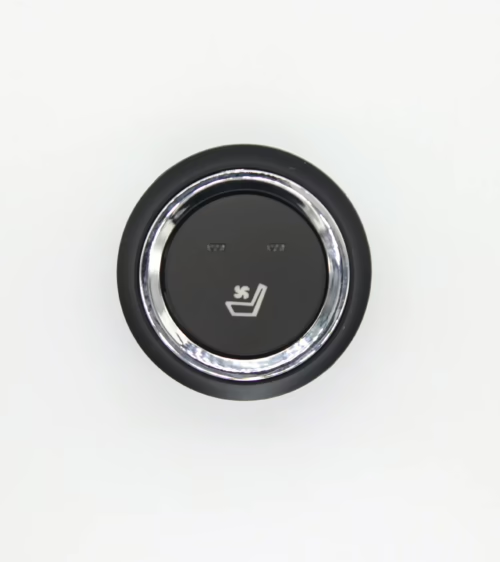
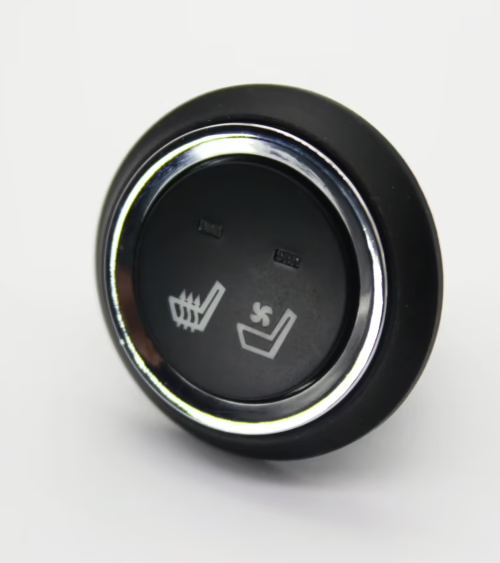
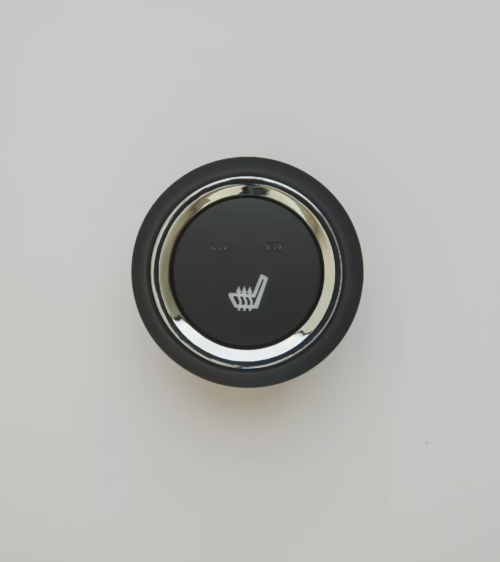
Seat ventilation systems improve occupant thermal comfort in warm climates by actively moving air through the seat cushion and backrest, reducing body-surface temperature and moisture at the seat contact area. Modern seat ventilation systems are available as OEM-integrated solutions built into the seat structure during manufacturing, and as aftermarket retrofit assemblies that can be added to vehicles without factory ventilation.
This guide covers the engineering principles, performance specifications, control integration requirements, and sourcing criteria that define a production-ready seat ventilation systems program.
1. How Seat Ventilation Systems Create Airflow
Seat ventilation systems use a centrifugal blower motor mounted inside the seat cushion or backrest to force air through a distributor plate and out through perforations in the seat cover. In a pull-through configuration, the blower draws air down through the cover perforations and exhausts it into the seat foam cavity, which communicates with the vehicle cabin.
In a push-through configuration — more common in premium OEM programs — conditioned cabin air is pulled from the vehicle interior and pushed upward through the seat structure to reach the cover surface.
The choice between pull and push configuration affects the comfort profile of seat ventilation systems significantly. Pull-through systems are simpler to package and lower in cost, but they move the body heat and humidity into the seat foam rather than expelling it.
Push-through systems require a dedicated inlet duct from the cabin or HVAC outlet but deliver significantly lower seat-surface temperature — typically 4 to 8 degrees C cooler than pull-through under the same ambient conditions.
2. Blower Motor Specifications for Seat Ventilation Systems
The blower motor is the core active component in seat ventilation systems and the primary driver of system cost, noise, and service life. OEM programs specify brushless DC centrifugal blowers operating at 12 V, drawing 3 to 8 A at full speed, with an RPM range of 1,500 to 4,500. Brushless designs are required for programs with service life targets above 10,000 operating hours — brushed motors typically reach 3,000 to 5,000 hours before commutator wear degrades performance.
Airflow output from seat ventilation systems blowers must be measured at the cover surface, not at the blower outlet, because distributor plate restriction and foam porosity significantly reduce delivered airflow. Effective seat ventilation systems deliver 25 to 60 liters per minute at the cover surface under occupant load. Below 25 liters per minute, moisture removal is insufficient for meaningful comfort improvement in high-humidity environments.
3. Distributor Plate Design and Cover Perforation Requirements
The distributor plate in seat ventilation systems is a rigid or semi-rigid plastic panel with a honeycomb, radial, or ladder channel pattern that diffuses blower output evenly across the cushion or backrest surface. Without effective distribution, seat ventilation systems produce localized cool or warm spots rather than a uniform comfort field.
The distributor plate must be matched to the blower airflow volume and the seat foam permeability — a plate designed for a 40 liter per minute blower will not distribute evenly if paired with a 20 liter per minute blower.
Cover perforation density and pattern have an equally large impact on seat ventilation systems performance. A minimum of 60 perforations per 100 square centimeters is generally required for meaningful airflow to reach the occupant. Leather and leatherette covers must be mechanically perforated — laser perforation produces cleaner edges but higher tooling cost.
Fabric covers typically provide sufficient air permeability without deliberate perforation, though open area must be verified through airflow testing under simulated occupant load.
4. Control Integration for Seat Ventilation Systems
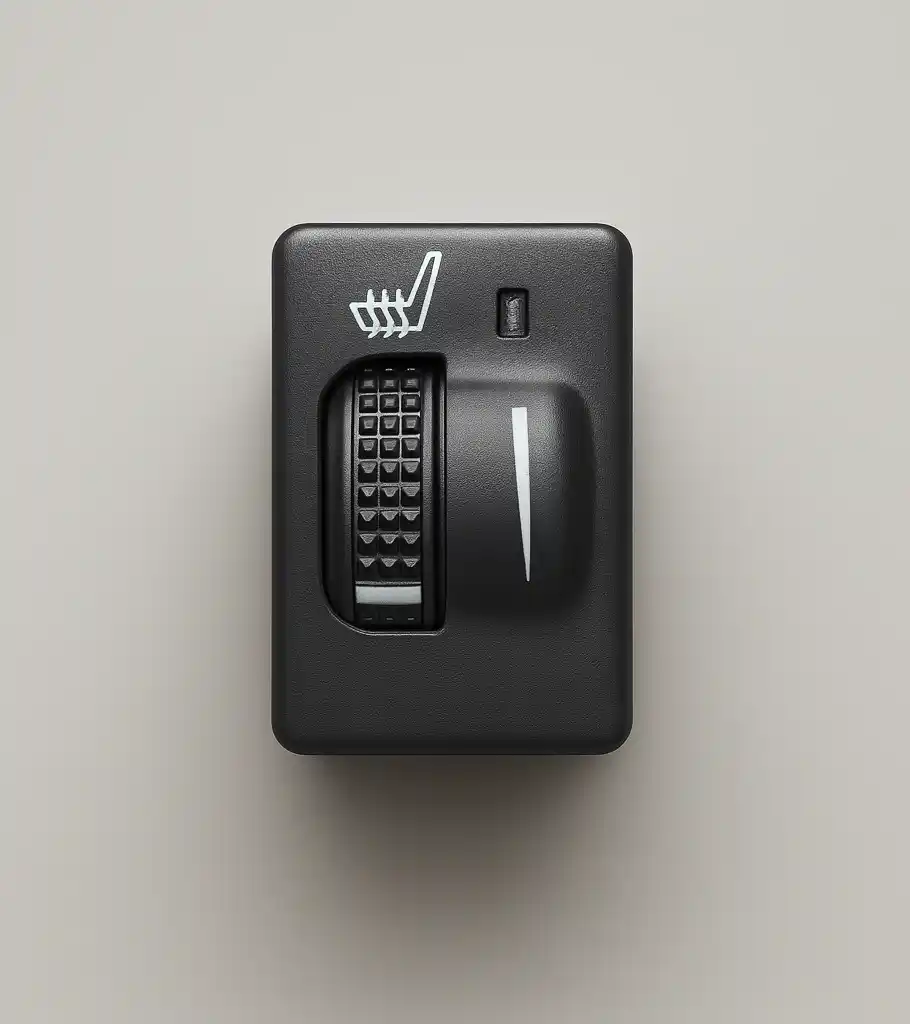
Seat ventilation systems in OEM programs are controlled through one of three architectures. Standalone switch-controlled systems use a simple 3-speed switch that connects the blower motor directly to a 12 V supply at different voltage levels or through a PWM driver.
LIN-bus integrated systems receive speed commands from the body control module or climate control unit over a serial bus, enabling seat ventilation systems integration with the vehicle infotainment screen and HVAC controls.
Combined heating-and-ventilation modules manage both seat heater and ventilation functions through a shared PCB, reducing harness complexity and connector count significantly.
5. OEM Qualification Requirements
Qualifying seat ventilation systems for an OEM seat program requires completing a structured validation sequence. Thermal mapping confirms surface temperature uniformity below the OEM delta specification — typically less than 5 degrees C across the full cushion area under steady state. Durability cycling validates blower motor and distributor plate performance over 2,000 hours of continuous operation.
EMC testing under CISPR 25 Class 5 confirms blower switching noise remains below the AM band threshold. NVH testing confirms blower radiated noise stays below 35 dB(A) at one meter in a 40 dB(A) cabin baseline for seat ventilation systems in production programs.
6. Aftermarket Retrofit Considerations for Seat Ventilation Systems
Retrofitting seat ventilation systems into vehicles without factory ventilation introduces three constraints that OEM programs avoid by designing the seat around the system from the start. Foam cavity depth must be sufficient for the blower assembly — most production blowers for seat ventilation systems require 18 to 22 mm of clearance, and many factory seats have less than this in the cushion center.
Cover perforation must be added to non-perforated covers, either through mechanical punching or cover replacement. Electrical integration must tap a switched ignition feed and operate independently without BCM reprogramming in most retrofit scenarios.
Frequently Asked Questions About Seat Ventilation Systems
Are seat ventilation systems worth the cost in moderate climates?
In climates where cabin temperatures regularly exceed 35 degrees C in summer, seat ventilation systems provide measurable comfort improvement and reduce driver fatigue on trips over 30 minutes. In mild climates where cabin temperatures rarely exceed 28 degrees C, the benefit is less pronounced and the cost-benefit calculation shifts toward lower-cost solutions such as perforated covers without active airflow.
Can seat ventilation systems be combined with seat heating?
Yes — combined heating-and-ventilation modules are common in OEM programs and increasingly available in aftermarket retrofit kits. The control module manages both functions simultaneously, with firmware that adjusts heater duty cycle to compensate for the cooling effect of ventilation airflow, maintaining a target surface temperature even with the blower active in the seat ventilation systems module.
What maintenance do seat ventilation systems require?
Seat ventilation systems in vehicles require periodic inspection of the cover perforations for lint or debris blockage, which reduces airflow and can cause the blower to overheat. Blow out the perforations with compressed air annually in dusty environments. The blower motor in properly designed seat ventilation systems requires no maintenance and is replaced as a unit if it fails.
Source Seat Ventilation Systems from Lucky Driver Inc.
Lucky Driver Inc. supplies seat ventilation systems components — blower assemblies, distributor plates, standalone controllers, and integrated heating-ventilation modules — to OEM seat manufacturers and aftermarket distributors across North America. Whether your program requires validated off-the-shelf seat ventilation systems components or a co-developed solution for a specific seat platform, Lucky Driver can support your project from initial specification through production qualification.
Contact Lucky Driver Inc. to request samples or a technical consultation for seat ventilation systems sourcing.
Seat Ventilation Systems: Summary
Effective seat ventilation systems combine a correctly specified blower motor, a well-designed distributor plate, appropriate cover perforation density, and a control architecture matched to the vehicle electronics. Lucky Driver Inc. maintains complete seat ventilation systems inventory for both OEM and aftermarket program requirements, with engineering support for thermal mapping and system integration questions.
Further Reading
Technical Glossary
NTC Thermistor: Negative Temperature Coefficient resistor used as the temperature feedback sensor in seat climate systems. Resistance decreases predictably as temperature rises, allowing the control module to calculate surface temperature and adjust duty cycle.
PWM (Pulse Width Modulation): The seat heater module switches the element circuit on and off at high frequency, varying the on-time ratio between 0% and 100% to achieve any intermediate power level without resistive loss in a series regulator.
LIN Bus: Low-speed serial protocol used in automotive seat climate systems for communication between the seat module and body control module. Operates at 20 kbit/s over a single wire, enabling infotainment-screen control and OBD-II fault code reporting.
IP54 Rating: Minimum ingress protection for seat climate components. The first digit (5) indicates dust protection; the second (4) indicates resistance to water splash from any direction — required for components exposed to beverage spills.
CISPR 25 Class 5: Most stringent automotive radiated and conducted emissions limit. Switching noise from heater PWM circuits must remain below defined limits from 0.15 MHz to 1 GHz to prevent audible AM radio interference.
PPAP: Production Part Approval Process. Requires dimensional reports, material certifications, and process capability data before a component enters production at an OEM facility. Most Tier-1 seat suppliers require full PPAP from upstream component suppliers before sourcing approval is granted.
Industry Standards and Compliance Reference
ISO 16750: Environmental conditions and testing for electrical and electronic equipment in road vehicles. Defines temperature cycling, humidity, vibration, and shock test profiles that seat climate components must survive without performance degradation or connector failure during a vehicle lifetime of 15 years or 240,000 kilometers.
SAE J1772: While primarily an EV charging standard, the 12 V auxiliary power architecture defined in SAE J1772 governs the operating voltage envelope that automotive seat accessories must tolerate — nominal 12 V, range 9–16 V, transient spikes to 24 V for 50 ms under load-dump conditions.
REACH and RoHS Compliance: European Union regulations restricting hazardous substances in electrical equipment. REACH limits 224 substances of very high concern (SVHCs). RoHS restricts lead, mercury, cadmium, hexavalent chromium, and four phthalates. OEM customers increasingly require full REACH and RoHS compliance declarations before approving suppliers.
IATF 16949:2016: Automotive quality management system standard derived from ISO 9001, adding automotive-specific requirements including control plans, process FMEA, production part approval, and customer-specific requirements. Tier-1 seat manufacturers typically require sub-tier component suppliers to hold IATF 16949 certification or to operate under an approved quality agreement.
UL 94 V-0 Flammability: Polymer components used in seat climate systems must meet UL 94 V-0 flammability classification — the specimen must self-extinguish within 10 seconds of flame removal, with no dripping of burning particles. This applies to connector housings, wire insulation jacketing, and control module enclosures.
You can find compatible parts in our replacement seat heater switches.
Related Articles
- How to Add Heated Seats to Any Car: 5-Step Aftermarket Installation Guide
- Seat Heater Switch Replacement: Identification, Sourcing, and Installation Guide
- Seat Ventilation System: How It Works, Components, and OEM Sourcing Guide
- How to Choose an Automotive Seat Heater Supplier: 7 Qualification Criteria