Choosing the right automotive seat heater supplier is one of the most consequential decisions an OEM engineer or vehicle program manager will make. A seat heater that fails in the field triggers warranty claims, recall risk, and brand damage that far outweighs the cost saved on unit price.
This guide outlines the seven criteria experienced OEM teams use when evaluating and selecting a seat heater component supplier.
1. IATF 16949 Certification Is Non-Negotiable
The first filter is certification. IATF 16949 is the international quality management standard for automotive production and service parts. A supplier without IATF 16949 certification cannot demonstrate the process control, traceability, and corrective action systems that automotive production demands.
Ask for the certificate, verify the scope covers the product lines you need, and confirm the certification body is IATF-recognized.
Lucky Driver Inc. operates under IATF 16949-certified processes covering seat heating elements, heating pads, resistance wires, and seat heater switches.
2. Heating Element Technology and Material Specification
Seat heaters use one of three primary element technologies: nichrome (NiCr) resistance wire, iron-chromium-aluminum (FeCrAl) alloy wire, or carbon fiber. Each has different thermal characteristics, flex fatigue life, and cost profiles. OEM engineers should request material data sheets, not just product brochures.
Key parameters include resistivity (Ω/m), operating temperature range, bend radius tolerance, and aging behavior under thermal cycling. A credible supplier will provide these specifications without hesitation and will support material substitution reviews if your program requires it.
3. Custom Tooling and Prototype Capability
No two vehicle seat geometries are identical. A capable seat heater supplier must offer custom heating pad design and tooling — not just catalog products. Evaluate whether the supplier has in-house die-cutting, lamination, and element-forming capabilities.
Ask for lead time on first-article samples (PPAP Level 3 is standard for OEM programs) and whether the supplier can accommodate mid-program design changes without re-tooling the entire pad.
Suppliers who rely entirely on third-party tooling houses introduce schedule risk that compounds through your program timeline.
4. Thermal Performance Validation and Testing Data
A seat heater supplier should be able to provide independently verified thermal performance data. Standard tests include surface temperature distribution mapping (thermocouple grid or IR imaging), heat-up time to target temperature, PTC self-regulation curves (if applicable), and cold-soak performance at -20°C or lower.
Ask whether the supplier tests to SAE J1539 or equivalent in-house standards. If testing is outsourced to a third-party lab, verify the lab’s accreditation. Performance claims without test data are not acceptable in an OEM context.
5. Production Capacity and Volume Scalability
A supplier that can deliver 500 prototype sets may not have the production infrastructure for 50,000 units per year. Before committing to a supplier, conduct a capacity audit or request a formal capacity statement.
Understand how capacity is allocated across their customer base, whether equipment is dedicated or shared, and what overtime or second-shift capacity looks like during peak demand.
Vehicle programs routinely exceed volume forecasts — your seat heater supplier must be able to scale without renegotiating lead times at every production ramp milestone.
6. Logistics Reliability and Supply Chain Transparency
For North American OEM programs sourcing from Asian component suppliers, logistics reliability is a structural concern. Evaluate the supplier’s track record on on-time delivery, their approach to safety stock and buffer inventory, and whether they offer bonded warehouse arrangements in your region. Lucky Driver Inc.
maintains inventory positions in the United States, enabling domestic fulfillment timelines compatible with JIT assembly schedules.
Understand the full supply chain: if the supplier sources heating element wire from a single sub-supplier with no qualification alternative, that single point of failure propagates directly into your program.
7. Engineering Support and Communication Responsiveness
The final criterion is often underweighted during supplier selection and overweighted during production:
- engineering support. An automotive seat heater is not a commodity. When a thermal management issue surfaces during vehicle validation
- you need a supplier whose engineering team can respond with root cause analysis
- design alternatives
- test data — not a sales representative reading from a product catalog
Evaluate responsiveness during the RFQ process itself. If the supplier takes two weeks to return a technical datasheet inquiry, that response pattern will persist into production support.
Working with Lucky Driver Inc.
Lucky Driver Inc. supplies automotive seat heating elements, custom heating pads, resistance wires, and seat heater switches to OEM and Tier-1 programs globally. Our product range covers PTC and resistance wire heating technologies, single and dual-zone configurations, and custom pad geometries for passenger vehicles, commercial vehicles, and specialty applications.
We support programs from initial engineering consultation through PPAP submission and production ramp. Contact our engineering team to discuss your program requirements.
Understanding PPAP and Production Part Approval
Beyond IATF 16949 certification, OEM programs typically require suppliers to complete a Production Part Approval Process (PPAP) before any components are used in production vehicles.
PPAP documentation for seat heater suppliers typically includes a design record, material specifications, dimensional results, initial process studies (Cpk data), measurement system analysis, and a control plan.
For seat heating elements and pads, dimensional conformance and resistance measurement capability are the most critical PPAP elements. A supplier who is unfamiliar with PPAP requirements or cannot produce the required documentation package is not ready for OEM program support.
Packaging and Logistics Requirements for OEM Supply
OEM seat heater component suppliers must meet specific packaging requirements to integrate cleanly into the seat manufacturer’s production line. This includes:
- returnable container programs where components are delivered in stackable trays that return to the supplier for reuse
- barcode or RFID labeling on each carton and individual component
- delivery scheduling aligned with Just-In-Time (JIT) production requirements
Seat heater suppliers who can only ship in standard export cartons on standard lead times are not suitable for JIT seat assembly supply. Lucky Driver Inc. works with OEM seat assembly customers to develop packaging and delivery programs matched to their production requirements.
Cost Structure and Commercial Terms for OEM Programs
OEM seat heater component pricing is typically negotiated on an annual basis with price-down expectations built into multi-year agreements. Unlike spot market purchases, OEM supply contracts include: piece price with annual price reduction commitments, tooling amortization terms, engineering change cost allocation, and scrap and warranty charge-back provisions.
Understanding these commercial terms before entering an OEM supply relationship is essential. Lucky Driver Inc. has experience with OEM commercial structures and can discuss program-specific terms with qualified seat assembly customers.
Continuous Improvement and Engineering Change Management
OEM seat heater programs run for multiple vehicle model years. Over the program life, engineering changes will arise from design updates, cost reduction initiatives, regulatory changes, or supplier-driven improvements.
A capable seat heater supplier must have a formal engineering change management process that ensures all changes are documented, approved by the customer before implementation, and validated before production deployment.
Unauthorized changes to seat heater components — even apparently minor changes like wire insulation material substitution — can affect vehicle certification and must go through the formal change process.
Frequently Asked Questions: Automotive Seat Heater Suppliers
What certifications should an automotive seat heater supplier have?
At minimum, IATF 16949 quality management system certification and ISO 9001. For North American programs, many OEMs also require ISO 14001 environmental certification. Product-level certifications depend on the market — UL certification for North America, CE marking for Europe.
Always request copies of current certificates and verify expiry dates directly with the certifying body.
How long does it take to get production-intent seat heater components?
For custom-specified components requiring new tooling, typical lead times are 12 to 16 weeks from design approval to first production-intent samples. For components within an existing product range requiring only dimensional customization, lead times of 6 to 8 weeks are more common.
Standard catalog items ship from stock. Plan tooling and lead times early in the program schedule to avoid critical path delays.
What is the typical price range for OEM seat heater pads and controllers?
Pricing varies significantly with volume, specification, and program duration. A simple resistance wire heating pad for a single seat zone typically costs to in production quantities. A carbon fiber pad for the same application is to .
A complete dual-zone controller module is typically to in production quantities. Aftermarket catalog kits for the retail market are priced differently than OEM program supply. Contact Lucky Driver Inc. for program-specific pricing based on your volume and specification requirements.
Partner with Lucky Driver Inc. for Your Seat Heater Program
Lucky Driver Inc. brings automotive seat heater engineering and supply experience to OEM programs and aftermarket distribution customers across North America.
Our product range covers heating pads in resistance wire and carbon fiber configurations, seat heater control modules for standalone and bus-integrated applications, complete heated seat kit assemblies for professional installation, and custom-specified components for OEM program supply.
We understand the quality, documentation, and delivery requirements of automotive supply programs and are equipped to support customers from initial design review through production launch and ongoing service. Contact us to discuss your specific seat heater program requirements and receive a technical and commercial proposal tailored to your needs.
Summary: Choosing the Right Automotive Seat Heater Supplier
Selecting the right automotive seat heater supplier requires evaluating quality systems, engineering depth, supply chain capability, and commercial terms simultaneously.
A supplier who performs well on product quality but lacks PPAP documentation capability, or who delivers on time but cannot support engineering changes, is not prepared for the full demands of an automotive supply program.
Lucky Driver Inc. brings comprehensive seat heater supply capability to OEM programs and aftermarket distribution customers. Contact us to discuss your program requirements and receive a proposal that addresses your specific technical and commercial needs.
Choosing the Right Automotive Seat Heater Supplier: Final Checklist
Selecting a qualified automotive seat heater supplier is a decision with long-term consequences for your vehicle program.
An automotive seat heater supplier that passes all seven criteria in this guide will deliver consistent thermal performance, complete certification documentation, and production capacity that does not create bottlenecks during high-demand build periods.
When evaluating any automotive seat heater supplier, prioritize IATF 16949 certification status above all other factors — an uncertified automotive seat heater supplier may appear competitive on price but will almost certainly create audit and liability exposure.
Contact Lucky Driver Inc. to receive a qualification package for our automotive seat heater supplier capabilities.
Further Reading
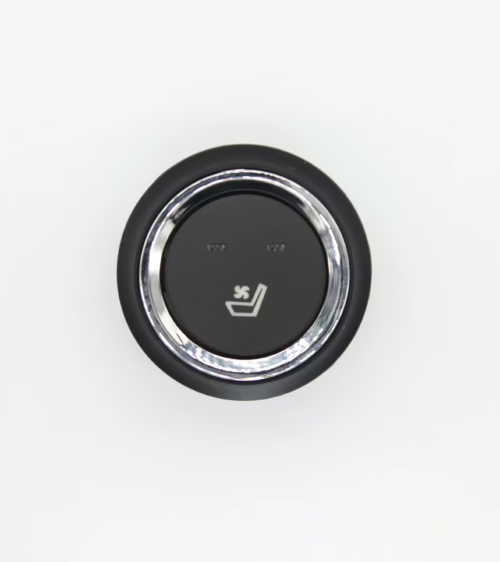
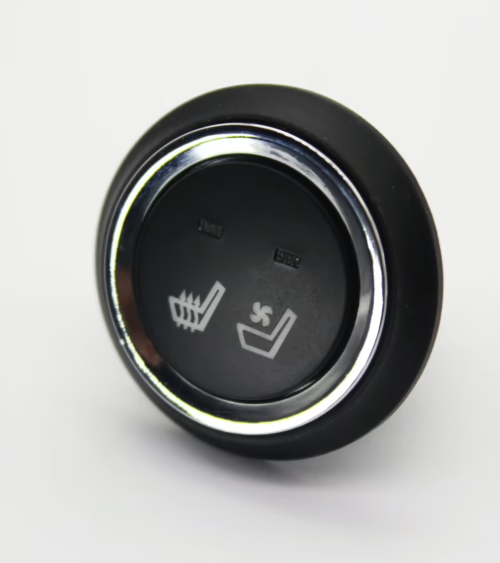
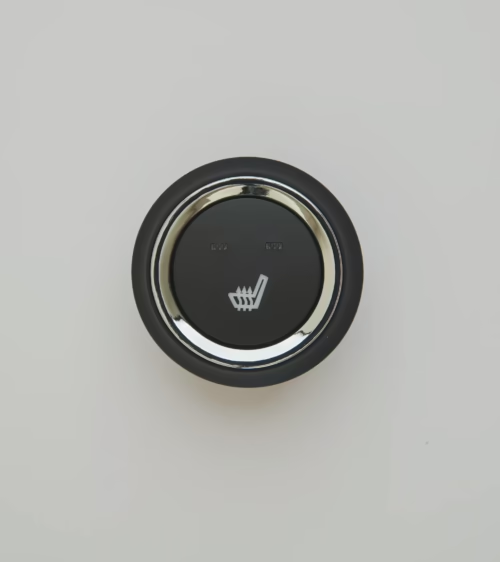
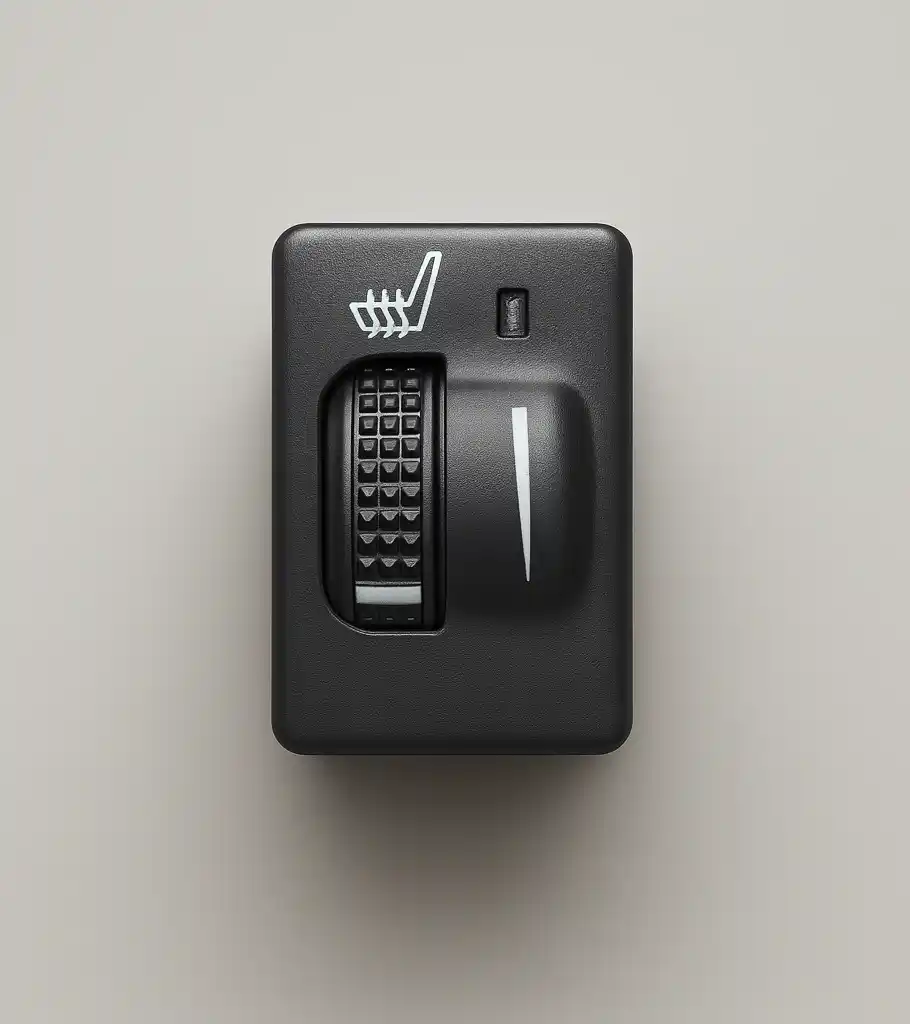
Need the hardware itself? Browse our seat heater switch catalog with US-based shipping.
New to the topic? Start with our seat heater guide.
Related Articles
- Car Seat Heating Pad OEM Guide
- Seat Heater Switch Manufacturer Guide
- Heated Seat Kit Wholesale Guide
- Seat Ventilation System Supplier Guide
Automotive Seat Heater Supplier Buying Guide
Choosing the right automotive seat heater supplier for your application starts with three questions: What is the operating voltage of the vehicle? What connector format does the existing harness use? And what certifications are required for the program?
Answering these before requesting quotes for automotive seat heater supplier saves weeks of back-and-forth with suppliers and avoids costly sample iterations that do not fit the production design.
The automotive seat heater supplier market includes both direct OEM manufacturers and distributors. OEM manufacturers of automotive seat heater supplier typically require minimum order quantities of 500 to 1,000 units and lead times of 6 to 10 weeks for custom configurations.
Distributors of automotive seat heater supplier stock standard configurations and can ship within one to five business days, making them the practical choice for prototype builds, replacement parts, and low-volume aftermarket programs.
When comparing automotive seat heater supplier options across suppliers, request the following documentation with each sample submission:
- a material compliance declaration confirming RoHS and REACH compliance
- a dimensional report confirming the part meets the approved drawing
- a functional test report demonstrating correct operation across the full operating voltage range
Suppliers that cannot provide this documentation for their automotive seat heater supplier should be deprioritized regardless of unit price, since missing documentation creates compliance risk at the OEM customer level.
Lucky Driver Inc. maintains North American inventory of automotive seat heater supplier and can provide all required qualification documentation for OEM programs.
Whether you need a single sample of automotive seat heater supplier for a prototype build or a production quantity with full PPAP documentation, Lucky Driver has the stock, the paperwork, and the engineering support to close your automotive seat heater supplier requirement efficiently.
Contact Lucky Driver Inc. to request automotive seat heater supplier samples, pricing, or technical specifications today.