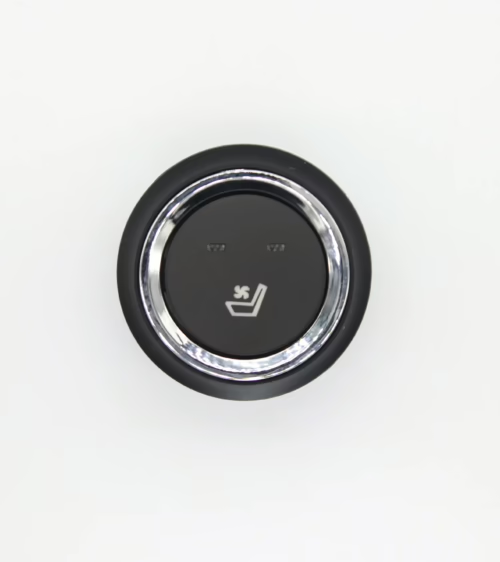
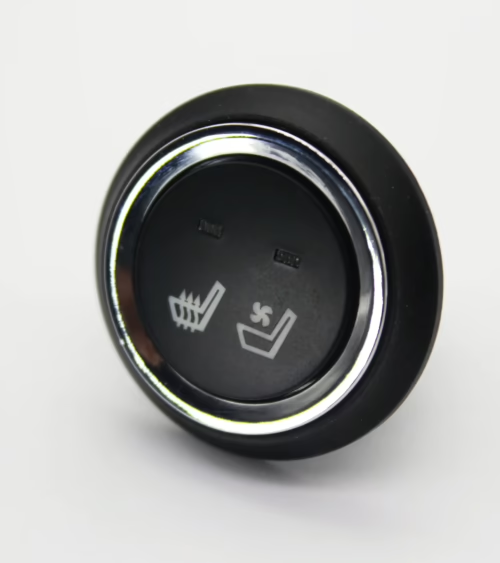
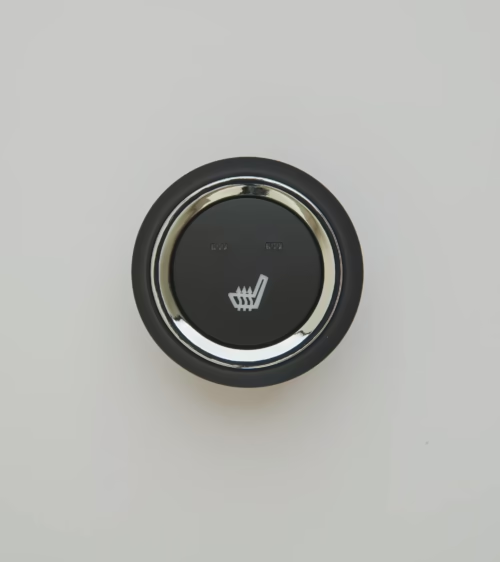
Seat ventilation system is the focus of this guide. Seat ventilation keeps the driver and passenger cool in warm weather by drawing or pushing air through the seat surface.
It is one of the most effective comfort features in vehicles driven in hot climates, significantly reducing the discomfort of sitting on a hot leather or vinyl seat.
This guide explains how seat ventilation works and what options exist for adding it to a vehicle that did not come with factory ventilation.
1. Active Seat Ventilation: How It Works
Active seat ventilation uses a small blower motor mounted in the seat structure to push or draw air through the seat foam and out through perforations in the trim cover.
The blower pulls air from inside the seat and exhausts it through the trim surface, creating a cooling airflow against the occupant. Most factory systems use a brushless DC blower motor running at two or three speed levels, controlled by a dashboard or console switch.
The key to effective ventilation is the combination of the blower output, the air distribution layer inside the seat, and the permeability of the trim material.
2. Passive Ventilation: What It Is and Why It Is Different
Passive seat ventilation uses perforated trim and open-cell foam to allow natural airflow without a powered blower. It is less effective than active ventilation but adds no electrical components. Some vehicles use passive ventilation in economy trim levels as a cost reduction measure.
For measurable comfort improvement in hot weather, active ventilation with a blower motor is required.
3. Combined Heating and Ventilation Systems
Many modern vehicles combine seat heating and seat ventilation in a single integrated system. The heating element and ventilation air channels share the same pad layer in the seat, with the control switch managing both functions. In hot weather, ventilation is used; in cold weather, heating is used.
The systems can sometimes run simultaneously at low levels. Lucky Driver Inc. designs and supplies integrated heating and ventilation seat modules for OEM programs and can discuss aftermarket integration options.
4. Adding Aftermarket Seat Ventilation
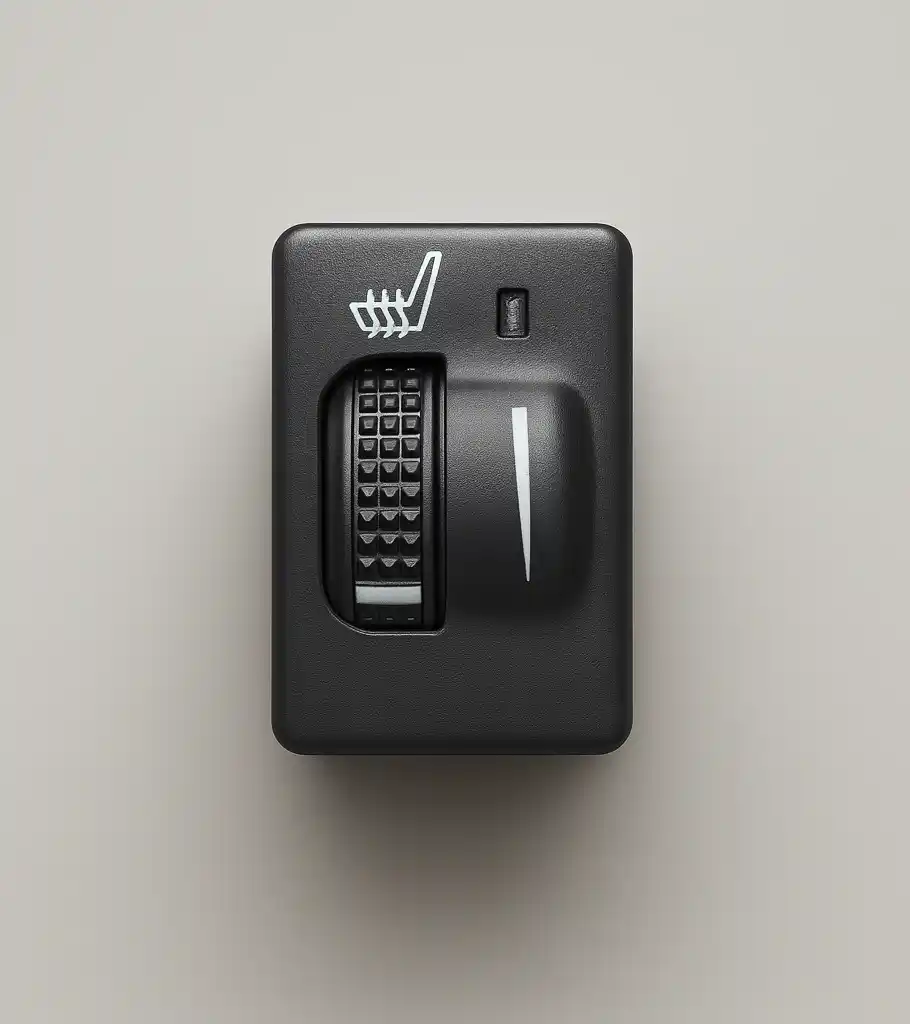
Aftermarket seat ventilation kits are available but more complex to install than heated seat kits. A ventilation kit requires:
- blower motor assembly
- air distribution pad (spacer fabric or formed foam channel)
- switch
- wiring harness
- trim modification for airflow exit holes if the existing trim is not perforated. For vehicles with leather or vinyl seating
- small perforation holes must be added to the trim surface — this is best done by a professional upholstery shop. For vehicles with existing perforated trim
- the installation is simpler
5. What to Expect from Aftermarket Ventilation
A properly installed aftermarket seat ventilation system provides noticeable cooling comfort in temperatures above 25 degrees Celsius. Heat-up of the seat surface after parking is reduced, and the airflow against the back and thighs significantly reduces perspiration discomfort during long drives.
Performance depends heavily on the blower motor quality and the airflow path design — low-cost kits with poor air distribution provide minimal benefit.
6. Integrated Heating and Ventilation: The Best Long-Term Solution
For maximum year-round comfort, the best solution is a seat module that provides both heating and ventilation. Lucky Driver Inc. supplies combined heating and ventilation modules that fit a range of seat platforms, allowing a single installation to cover both cold-weather and hot-weather comfort.
Contact us to discuss your seat application and we can recommend the appropriate module configuration.
Shop Seat Ventilation Systems
Lucky Driver Inc. supplies seat ventilation components and integrated heating-ventilation modules for aftermarket and OEM programs. Contact us for product specifications and availability.
Toyota Seat Heater Switch Connector and Terminal Specifications
When replacing a Toyota seat heater switch, terminal and connector compatibility is as important as the switch function itself. Toyota uses proprietary connector housings for seat heater switches that are specific to vehicle generation and model.
Common connector configurations include 6-pin connectors on pre-2015 models and 8-pin connectors on newer platforms with additional indicator signals.
Terminal pitch (the distance between contact pins) must match exactly — using a replacement switch with different pitch requires a pigtail adapter harness, which adds resistance to the circuit and a potential failure point.
When ordering a replacement switch, provide the connector part number from the original switch housing or confirm compatibility using the vehicle VIN and seat heater connector specifications from a Toyota factory service manual.
RAV4 Seat Heater Troubleshooting: System-Specific Notes
The Toyota RAV4 seat heater system has specific characteristics that affect troubleshooting on this popular model. On RAV4 models with the power seat option, the seat heater wiring routes through the seat track mechanism, where it is vulnerable to chafing on the track rails during seat adjustment.
This is a known wear point that can cause intermittent heater faults that are difficult to reproduce statically but appear consistently after seat adjustment.
On RAV4 Hybrid and PHEV models, the seat heater controller communicates with the climate control system, and heater fault codes are accessible through the G-scan diagnostic system or Toyota Techstream software.
On RAV4 models from 2019 and newer, the driver seat heater switch incorporates a ventilation control, and the switch must be compatible with both heating and ventilation control signals.
Camry and Corolla Seat Heater Switch Cross-Reference
Toyota Camry and Corolla seat heater switches share common electrical architectures across model years within a generation, which allows cross-reference to identify compatible replacement switches. The 2018-2023 Camry (XV70 platform) uses a switch assembly compatible with the same generation Avalon and Lexus ES.
The 2020-2023 Corolla (E210 platform) switch is compatible with the same-generation C-HR and Corolla Cross seat heater switches on vehicles configured with the heated seat option. Cross-referencing across compatible platforms can expand the supply of available replacement switches and may identify lower-cost alternatives to the model-specific part number.
Lucky Driver Inc. maintains cross-reference compatibility data for Toyota seat heater switches and can confirm compatibility for specific model and year combinations before purchase.
Preventing Common Installation Errors on Toyota Vehicles
Toyota heated seat switch replacements are straightforward but benefit from awareness of common installation errors.
The most frequent error is reversing the ignition supply and accessory supply wires — on Toyota seat heater circuits, the ignition supply must be connected to the correct terminal, or the heater will not function correctly.
The second common error is omitting the ground connection, which causes the indicator lights to be dim or absent even when the heater is operating.
The third error is incorrect thermistor routing after pad replacement — routing the thermistor wire on top of the pad rather than bonded against it causes the thermistor to read air temperature rather than pad temperature, disabling temperature-regulated operation. Lucky Driver Inc.
installation instructions for Toyota seat heater products include model-specific wiring diagrams that identify the ignition, accessory, and ground connections by wire color for the most common Toyota platforms.
Frequently Asked Questions: Car Seat Ventilation Systems
How much does it cost to add seat ventilation to a vehicle aftermarket?
Professional aftermarket seat ventilation installation is significantly more expensive than heated seat installation due to the complexity of integrating the air distribution layer and trim cover perforations.
A professional retrofit typically costs 0 to ,500 per seat depending on the seat design and the scope of trim work required. OEM-installed seat ventilation in new vehicle programs is designed in from the start, which is far more cost-effective than retrofitting.
For aftermarket applications, consider whether the installation cost is justified by the climate conditions and vehicle value.
Can I add both heated and ventilated seats to my vehicle at the same time?
Yes — combined heated and ventilated seat systems are available for aftermarket installation and OEM programs.
The heating element and ventilation blower can be integrated into the same seat cushion and backrest with a controller that manages both functions. The trim cover must be compatible with both the heating element surface temperature requirements and the air perforation requirements for ventilation.
Professional installation of combined systems requires a skilled upholstery shop experienced with both seat heating and ventilation integration.
Does seat ventilation work in winter, or only in summer?
Seat ventilation (moving air through the seat surface) provides cooling effect in warm weather. In cold weather, the ventilation airflow carries cold air against the body, which makes the seat feel colder, not warmer.
Most combined heating and ventilation systems include interlock logic that prevents the ventilation blower from operating when the heating element is active. In cold climates, the heating function is used in winter and the ventilation function is used in summer — the two functions serve complementary seasonal comfort needs.
Get Seat Ventilation System Information from Lucky Driver Inc.
Lucky Driver Inc. supports seat ventilation system supply for OEM seat programs and can advise on aftermarket ventilation retrofit options for specific vehicle and seat applications. Our technical team has experience with both standalone ventilation systems and combined heating and ventilation integration.
Contact us with your application details to receive technical guidance and product availability information for seat ventilation programs.
Seat Ventilation System: Retrofit Summary and Next Steps
A properly installed aftermarket seat ventilation system delivers a measurable reduction in seat-surface temperature and humidity within minutes of activation, making it one of the most impactful comfort upgrades available for vehicles in warm climates.
The seat ventilation system components that matter most for retrofit success are the blower assembly thickness (which determines installation feasibility in the existing foam cavity) and the controller’s ability to run independently without BCM integration. Lucky Driver Inc.
supplies seat ventilation system components — blower assemblies, distributor plates, standalone controllers, and perforated seat covers — for aftermarket programs and OEM new-seat builds.
Further Reading
Explore our universal seat heater switch options for direct-fit and universal applications.
Related Articles
- Seat Ventilation System Supplier Guide
- Seat Heater vs Seat Warmer
- How to Add Heated Seats to Any Car
- Seat Heater Installation Guide
Seat Ventilation System Buying Guide
Choosing the right seat ventilation system for your application starts with three questions: What is the operating voltage of the vehicle? What connector format does the existing harness use? And what certifications are required for the program?
Answering these before requesting quotes for seat ventilation system saves weeks of back-and-forth with suppliers and avoids costly sample iterations that do not fit the production design.
The seat ventilation system market includes both direct OEM manufacturers and distributors. OEM manufacturers of seat ventilation system typically require minimum order quantities of 500 to 1,000 units and lead times of 6 to 10 weeks for custom configurations.
Distributors of seat ventilation system stock standard configurations and can ship within one to five business days, making them the practical choice for prototype builds, replacement parts, and low-volume aftermarket programs.
When comparing seat ventilation system options across suppliers, request the following documentation with each sample submission:
- a material compliance declaration confirming RoHS and REACH compliance
- a dimensional report confirming the part meets the approved drawing
- a functional test report demonstrating correct operation across the full operating voltage range. Suppliers that cannot provide this documentation for their seat ventilation system should be deprioritized regardless of unit price
- since missing documentation creates compliance risk at the OEM customer level
Lucky Driver Inc. maintains North American inventory of seat ventilation system and can provide all required qualification documentation for OEM programs.
Whether you need a single sample of seat ventilation system for a prototype build or a production quantity with full PPAP documentation, Lucky Driver has the stock, the paperwork, and the engineering support to close your seat ventilation system requirement efficiently. Contact Lucky Driver Inc.
to request seat ventilation system samples, pricing, or technical specifications today.