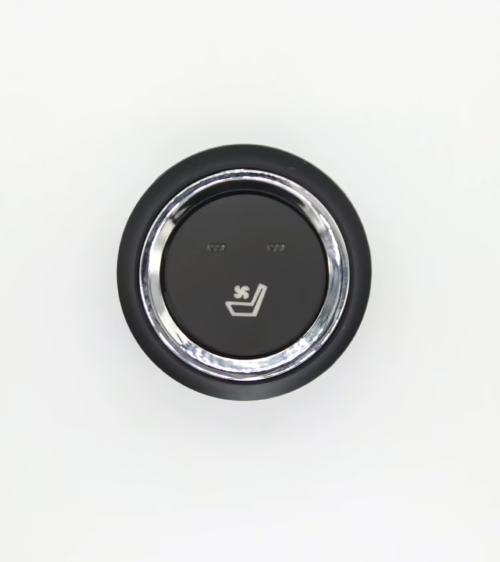
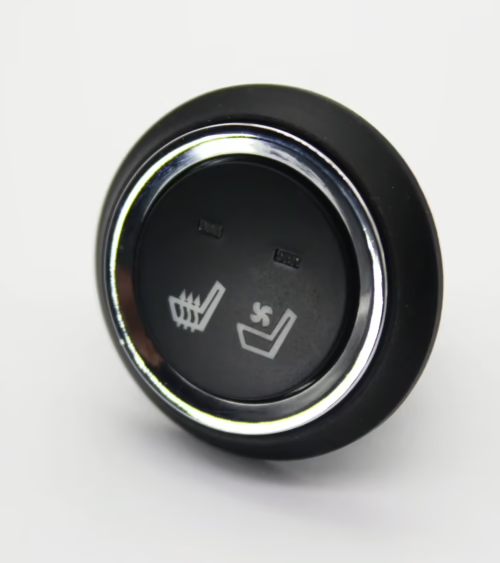
Seat heater vs seat warmer is the focus of this guide. The terms seat heater and seat warmer are often used interchangeably in the consumer market, but they describe products with meaningfully different performance characteristics. Understanding the distinction matters when specifying for OEM programs or evaluating aftermarket kits.
1. The Core Difference: Element Technology and Temperature Range
A seat heater uses a resistance wire or carbon fiber heating element embedded in or under the seat foam. It is designed to raise the surface temperature of the seat by 15 to 30 degrees Celsius above ambient within 3 to 5 minutes, and maintains that temperature via closed-loop control using a thermistor.
A seat warmer, in the consumer sense, typically refers to a surface-mounted pad placed on top of the seat trim, often without thermistor control.
2. Integration Method
Seat heaters are integrated into the seat structure, between the foam and trim cover in OEM applications, or under the trim cover in professional aftermarket installations. This provides efficient heat transfer and controlled watt density.
Surface-mounted seat warmers add bulk to the seating surface and often trap moisture under the pad surface.
3. Temperature Control
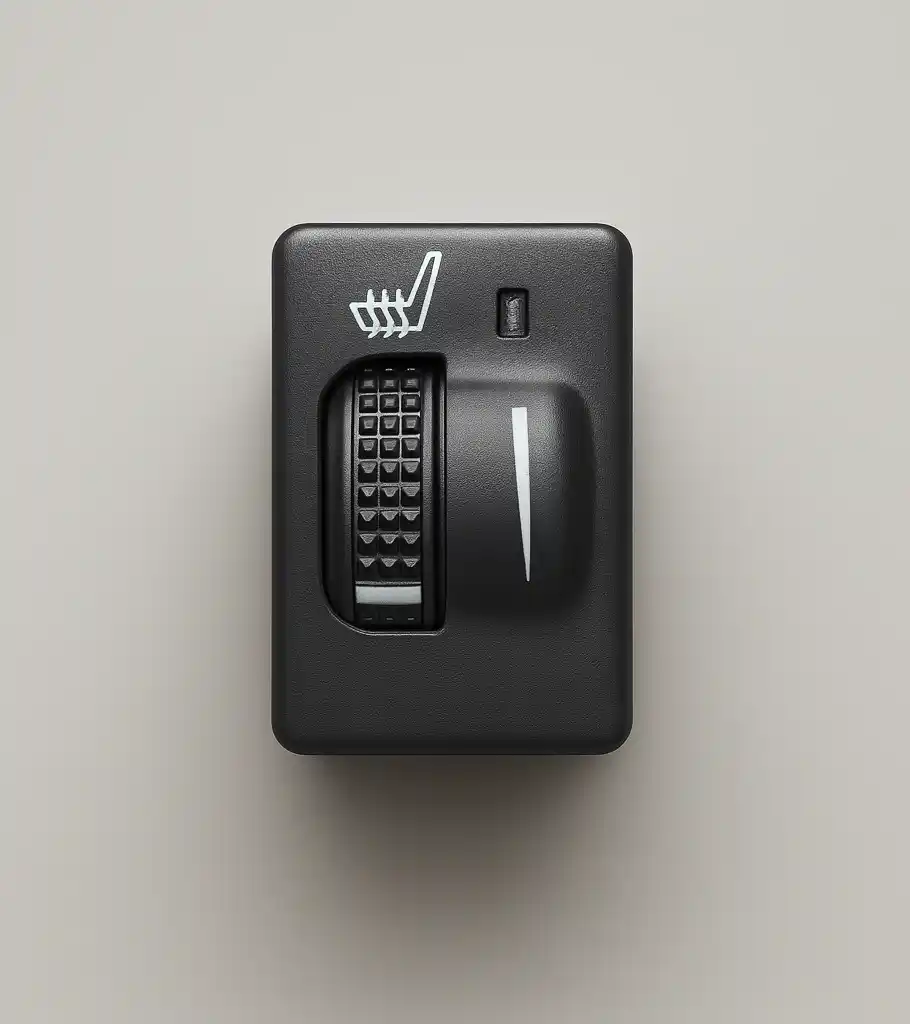
OEM seat heaters use a thermistor-based closed-loop control system with typically three selectable temperature set points. Surface-mounted warmers frequently lack thermistor control and rely on a bimetallic thermostat or simple timer, which provides less consistent comfort.
4. Voltage and Electrical Integration
Vehicle seat heaters are designed for 12V DC automotive electrical systems and are connected to ignition-switched circuits. Surface-mounted seat warmers are typically connected to a cigarette lighter socket or USB port, limiting their power output and requiring the occupant to manage a loose cable.
5. Which to Specify for OEM Programs
For any OEM or professional aftermarket application, specify an integrated seat heater. The integrated system provides better thermal performance, cleaner installation, proper temperature control, and a solution that meets automotive durability requirements. Lucky Driver Inc. supplies integrated seat heater systems for OEM seat programs and professional aftermarket installation.
6. Which to Specify for Retail Aftermarket
For customers who want a permanent solution with OEM-quality performance, professional installation of an integrated seat heater kit is the correct recommendation. Lucky Driver heated seat kits are designed for professional installation and are available through automotive accessory distributors.
Working with Lucky Driver Inc.
Lucky Driver Inc. manufactures integrated automotive seat heater systems for OEM and professional aftermarket programs. Contact us to discuss supply programs and product specifications.
Total Cost of Ownership Comparison
When comparing seat heater and surface-mounted seat warmer options for a fleet or institutional application, total cost of ownership is more relevant than purchase price.
A surface-mounted seat warmer costs less upfront but requires manual plug-in and removal by each user, creates a cord management problem, and typically needs replacement within 2 to 3 years due to cable wear.
An integrated seat heater has a higher installation cost but requires no user action, lasts the life of the vehicle with normal care, and provides consistent comfort performance.
For fleet vehicles driven by multiple drivers per day, integrated seat heaters deliver a significantly lower total cost per seat-hour of comfort over a 5-year vehicle life.
Diagnosing No-Heat Conditions in Luxury Vehicle Seat Warmers
When a luxury vehicle seat warmer produces no heat, systematic diagnosis is faster than trial-and-error component replacement. Begin with the control module: connect a diagnostic scanner and check for heater-related fault codes.
Most luxury vehicle seat heater systems — BMW, Mercedes, Audi, Lexus — log faults for open circuit (element failure), short circuit (insulation damage), and thermistor out-of-range conditions.
If a specific fault code is logged, it directs the diagnosis toward the element, the thermistor, or the module power supply. If no codes are present and the system does not activate at all, check module power supply and ground before condemning the module.
Intermittent Seat Heater Issues: Finding Thermal and Vibration-Related Faults
Intermittent seat heater failures — where heating works sometimes but not others — are often caused by wire chafing at articulation points, connector terminals with fretting corrosion, or element pad delamination causing intermittent open circuit.
To find these faults, wiggle the seat harness with the heater activated and observe whether the fault can be provoked.
Check connector terminals at the seat module, the seat track wiring passthrough, and the element connectors under the trim cover. Thermal cycling often causes connector terminals to expand and contract, gradually loosening the contact.
A terminal exhibiting fretting corrosion (dark oxidation on contact surface) should be cleaned or replaced rather than simply reseated.
Seat Heater Thermistor Replacement and Calibration
The seat thermistor controls the seat surface temperature by providing feedback to the heater controller. If the thermistor fails with a drift (reporting incorrect temperature) rather than an open or short circuit, the seat may overheat or fail to maintain adequate temperature without logging a fault code.
Thermistor replacement requires accessing the element assembly under the seat trim cover.
The replacement thermistor must match the original in both resistance value (typically 10K ohm NTC at 25°C) and resistance-temperature characteristic curve. Using a replacement thermistor with a different curve causes systematic temperature errors regardless of controller calibration. Lucky Driver Inc.
supplies OEM-compatible replacement thermistors for most common luxury seat heater applications.
Long-Term Reliability and Preventive Maintenance
Luxury vehicle seat heater systems do not require scheduled preventive maintenance under normal operating conditions. However, certain practices extend the service life of the heating components.
Avoid placing rigid objects on the heated seat surface — laptop computers, tool kits, and similar items concentrated on the seat apply point loads that can damage the heating element over time.
In high-humidity climates or in vehicles used near the ocean, periodic inspection of the wiring connectors under the seat for moisture intrusion is worthwhile.
If the vehicle is stored for extended periods without use, periodic operation of the seat heater (even in mild weather) helps prevent connector terminal oxidation. Lucky Driver Inc.
replacement components are available for all common luxury vehicle seat heater systems to support service intervals beyond the OEM parts warranty period.
Frequently Asked Questions: Seat Heater vs. Seat Warmer
Does a seat warmer use more power than a seat heater?
No — the terms are used interchangeably in most contexts. A product described as a seat warmer typically uses the same resistance wire or carbon fiber heating element technology as a product described as a seat heater.
Power consumption (wattage) depends on the element specification, not the product name.
Both seat warmers and seat heaters are controlled by thermistor-regulated controllers and fused at the vehicle power supply. If you see a difference in power consumption between two products, it reflects the element specification, not the naming convention.
How do I know if my vehicle already has heated seats from the factory?
Factory-installed heated seats are indicated by a heated seat button on the center console or instrument panel, typically with a seat icon and flame or coil symbol.
Check the vehicle build sticker (usually on the driver door jamb) for the options package that includes heated seats.
Review the vehicle window sticker or order sheet if available. Vehicles without the heated seat option from the factory can have aftermarket heated seat kits installed by a professional installer.
Is there a safety risk from sleeping or sitting for long periods on a heated seat?
Most automotive heated seat systems cycle off automatically when the seat surface reaches the target temperature.
Extended contact with a warm surface at temperatures above skin comfort range can cause erythema ab igne (heat rash) in some individuals, particularly those with reduced sensitivity from medications or health conditions.
Standard automotive heated seat temperature targets (34 to 40 degrees C at the seat surface) are designed to be safe for normal use durations. If you experience skin irritation from heated seat use, consult a healthcare provider.
Find the Right Seat Heating Solution at Lucky Driver Inc.
Lucky Driver Inc. offers a complete range of seat heating products for aftermarket installation and OEM supply, including resistance wire kits, carbon fiber kits, replacement switches, and control modules.
Whether you call it a seat heater or a seat warmer, our products deliver reliable, thermistor-controlled comfort heating for passenger vehicles, trucks, and specialty vehicles.
Contact us for product availability, compatibility information, and wholesale pricing.
Summary: Seat Heater vs. Seat Warmer
Whether you call it a seat heater or a seat warmer, the product provides the same benefit: thermistor-controlled resistive heating that warms the seat surface and improves occupant comfort in cold conditions. Lucky Driver Inc.
supplies seat heating products for aftermarket installation and OEM supply in both resistance wire and carbon fiber element configurations.
Contact us for product specifications, compatibility information, and pricing to support your specific seat heating application.
The correct terminology varies by region and context, but the product benefit is universal: a warm seat on a cold day significantly improves driving comfort and occupant satisfaction. Lucky Driver Inc.
supplies seat heater and seat warmer products across the terminology spectrum to customers who value reliable performance and professional installation support.
Seat Heater vs. Seat Warmer: Making the Right Decision
The seat heater vs seat warmer distinction matters most when specifying components for a vehicle program or advising a customer on an aftermarket upgrade.
In the seat heater vs seat warmer comparison, the key differentiator is not brand or marketing language but the underlying element technology and the control strategy used to regulate surface temperature.
Lucky Driver Inc. supplies both categories and can help OEM engineers and aftermarket installers identify the right solution for their seat heater vs seat warmer requirement based on vehicle platform, climate zone, and performance targets.
Further Reading
For sourcing, see our OEM-style seat heater switches available for immediate delivery.
New to the topic? Start with our seat heater guide.
Related Articles
- Seat Heater Installation Guide
- How to Add Heated Seats to Any Car
- Seat Heater Switch Replacement Guide
- Car Seat Heating Pad OEM Guide
For more information about seat heater components, installation best practices, and OEM supply programs, contact Lucky Driver Inc. Our team supports customers from component selection through production, with IATF 16949-certified manufacturing and dedicated engineering support available for all program types and volumes.
More About Heated Seat Control Module
When sourcing heated seat control module for a production or aftermarket seat program, the most important selection criteria are electrical compatibility, material certification, and supplier quality documentation.
Reliable heated seat control module components from a qualified supplier reduce warranty risk and simplify the qualification process for both OEM and aftermarket programs.
Lucky Driver Inc. maintains North American inventory of heated seat control module in standard and custom configurations, with same-week shipping for evaluation orders and engineering support for new program development.
Whether your application requires a drop-in replacement heated seat control module or a custom-specified solution, Lucky Driver has the stock and technical resources to support your requirements. Contact Lucky Driver Inc. today to request samples or pricing for heated seat control module.
Heated Seat Control Module: Quick Reference Guide
This quick reference summarizes the most important facts about heated seat control module for buyers and engineers evaluating options for a production or retrofit program. Every heated seat control module program begins with a specification review — confirm the electrical interface, connector format, and temperature rating before requesting samples.
heated seat control module components from Lucky Driver Inc. are tested to OEM standards and ship with full documentation. Whether you need a single evaluation unit or a production quantity of heated seat control module assemblies, the Lucky Driver team can quote within one business day.
Common questions from buyers sourcing heated seat control module for the first time: What certifications apply? What is the lead time? Can the heated seat control module be customized for a specific vehicle platform? The answers depend on the exact configuration — contact Lucky Driver Inc.
with your application details to get a precise answer for your heated seat control module requirement.
For aftermarket installers, heated seat control module from Lucky Driver includes all mounting hardware and a wiring diagram. For OEM programs, heated seat control module can be supplied with a custom connector, custom labeling, and a PPAP-ready quality package. Contact Lucky Driver Inc.
to request heated seat control module samples or pricing today.
Heated Seat Control Module Buying Guide
Choosing the right heated seat control module for your application starts with three questions: What is the operating voltage of the vehicle? What connector format does the existing harness use? And what certifications are required for the program?
Answering these before requesting quotes for heated seat control module saves weeks of back-and-forth with suppliers and avoids costly sample iterations that do not fit the production design.
The heated seat control module market includes both direct OEM manufacturers and distributors. OEM manufacturers of heated seat control module typically require minimum order quantities of 500 to 1,000 units and lead times of 6 to 10 weeks for custom configurations.
Distributors of heated seat control module stock standard configurations and can ship within one to five business days, making them the practical choice for prototype builds, replacement parts, and low-volume aftermarket programs.
When comparing heated seat control module options across suppliers, request the following documentation with each sample submission:
- a material compliance declaration confirming RoHS and REACH compliance
- a dimensional report confirming the part meets the approved drawing
- a functional test report demonstrating correct operation across the full operating voltage range
Suppliers that cannot provide this documentation for their heated seat control module should be deprioritized regardless of unit price, since missing documentation creates compliance risk at the OEM customer level.
Lucky Driver Inc. maintains North American inventory of heated seat control module and can provide all required qualification documentation for OEM programs.
Whether you need a single sample of heated seat control module for a prototype build or a production quantity with full PPAP documentation, Lucky Driver has the stock, the paperwork, and the engineering support to close your heated seat control module requirement efficiently.
Contact Lucky Driver Inc. to request heated seat control module samples, pricing, or technical specifications today.
Frequently Asked Questions About seat heater vs seat warmer
Procurement engineers evaluating seat heater vs seat warmer for OEM programs regularly ask the following questions. Answers cover specification, compatibility, certification, and sourcing for seat heater vs seat warmer requirements.
What voltage ratings are available for seat heater vs seat warmer?
Standard seat heater vs seat warmer configurations support 12 V DC for passenger vehicles and 24 V DC for commercial trucks. Selecting the correct seat heater vs seat warmer voltage at the design stage eliminates harness rework later.
Lucky Driver maintains seat heater vs seat warmer inventory in both ratings for same-week shipment.
Which certifications apply to seat heater vs seat warmer production?
seat heater vs seat warmer assemblies entering OEM programs typically require UL recognition, REACH compliance, and RoHS documentation. Lucky Driver holds certification records for every seat heater vs seat warmer variant and includes copies with sample and production shipments.
How is watt density specified for seat heater vs seat warmer?
Watt density for seat heater vs seat warmer is expressed in W/cm² and ranges from 0.04 to 0.12 depending on heat-up time requirements. Lower watt density seat heater vs seat warmer designs improve element longevity, while higher values suit cold-climate applications.
Lucky Driver’s engineering team reviews seat heater vs seat warmer requirements and recommends watt density based on your seat platform.
What connector families are used with seat heater vs seat warmer?
seat heater vs seat warmer harnesses are available with Molex, TE Connectivity, and Delphi connector families. Matching the seat heater vs seat warmer connector to the vehicle harness reduces assembly time and eliminates adapter cables.
Specify your harness format when requesting a seat heater vs seat warmer quote from Lucky Driver.
What is the lead time for seat heater vs seat warmer samples?
seat heater vs seat warmer samples from Lucky Driver’s North American warehouse ship within 3 to 5 business days for standard configurations. Custom seat heater vs seat warmer variants with modified pad geometry or connector pinouts require 4 to 6 weeks.
Contact Lucky Driver to confirm seat heater vs seat warmer availability before submitting your engineering schedule.