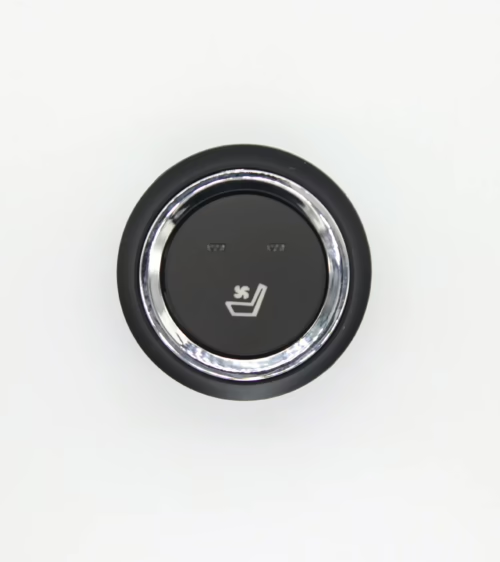
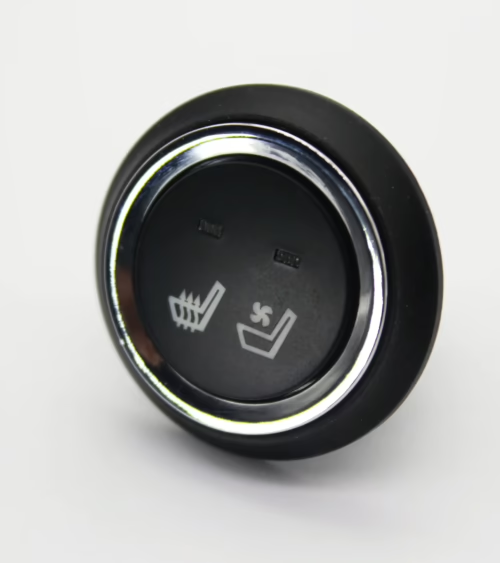
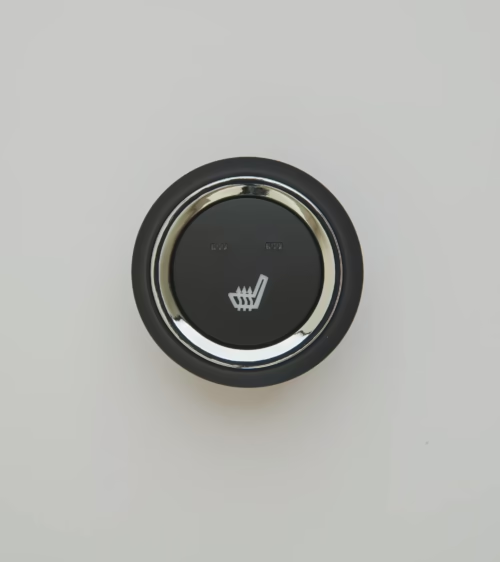
The Jeep Grand Cherokee seat heater switch is the primary control interface between the driver and the vehicle’s heated seat circuit. When it fails, the entire heating system goes dark — leaving you with cold seats on winter commutes regardless of how many times you press the button.
This guide explains how the switch works, how to identify the five most common failure signs, and how to replace it correctly on WK2 (2011–2021) and WL (2022–present) Grand Cherokee models without guessing your way through the diagnosis.
How the Seat Heater Switch Works in a Jeep Grand Cherokee
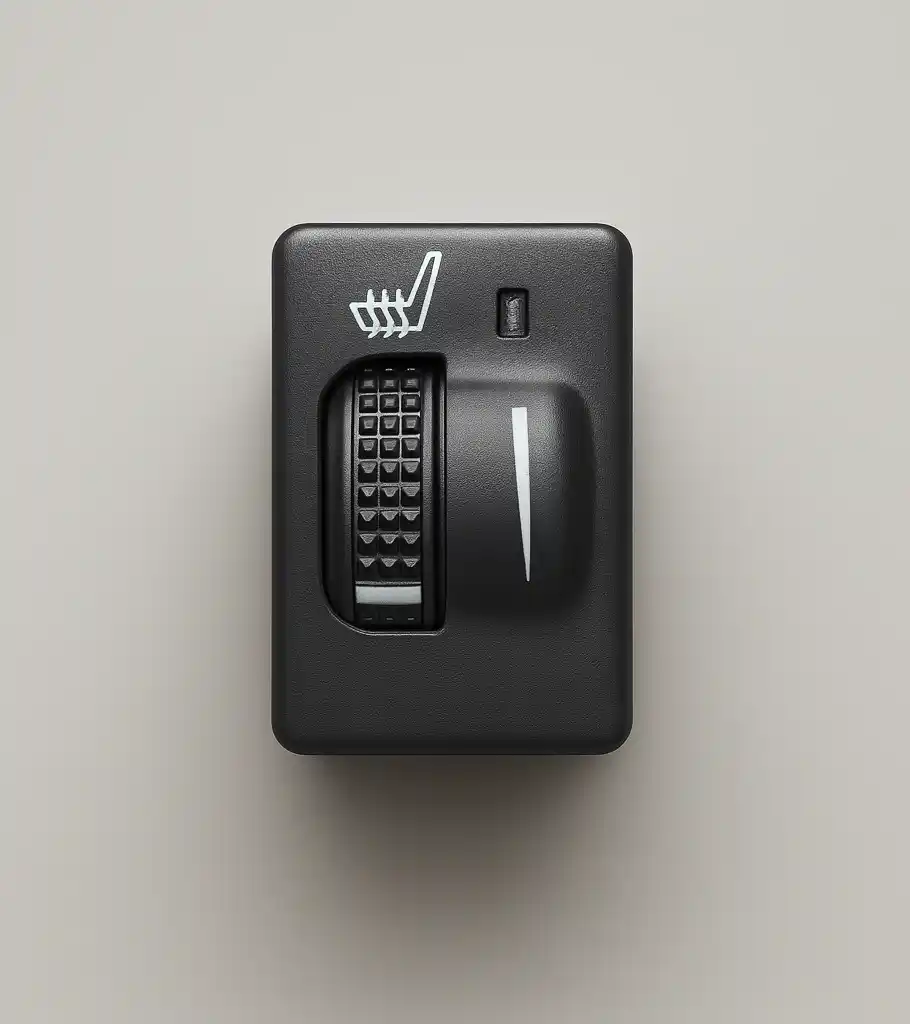
The seat heater switch does more than simply open and close a circuit. Most factory Grand Cherokee switches integrate a multi-stage switching relay and a small microcontroller that reads real-time feedback from a thermistor embedded in the seat cushion foam.
The thermistor monitors surface temperature and signals the switch’s internal logic to cycle the heating element between high, medium, and standby states — typically targeting 104°F (40°C) on high and 86°F (30°C) on low.
The switch receives a 12V supply from the Body Control Module (BCM) through a dedicated fuse — usually 15A or 20A depending on model year. Ground returns through the seat harness connector at the B-pillar.
When you press the switch, it closes the circuit and sends an enable signal to the seat heater control module mounted under the seat, which then regulates current flow through the carbon-fiber heating pads in the seat bottom and seatback cushion.
5 Signs Your Jeep Grand Cherokee Seat Heater Switch Is Failing
Identifying a bad switch early prevents hours of chasing wiring faults that do not exist. Watch for these five failure patterns before replacing any other component in the circuit:
- No heat on any setting: The switch indicator illuminates but no warmth is produced at either stage. This typically means the switch is receiving power but its internal contacts are not passing the enable signal to the control module.
- Switch LED does not illuminate: When the backlight is completely dead and heat is absent, suspect an open circuit inside the switch body itself or a blown upstream fuse rather than a fault in the heating element.
- Heat works on only one stage: The contacts for one heat level corrode or burn out while the other stage remains functional. You may have high heat with no low heat, or vice versa — a clear sign of internal contact wear rather than a wiring or element problem.
- Switch feels loose or registers inconsistently: Worn tactile mechanisms cause the switch to register a press intermittently. Heat cuts out without driver input, then works again after the button is pressed a second time. This intermittent behavior often worsens as the vehicle warms up.
- BCM stores a seat heater fault code: A scan with a compatible OBD-II tool may reveal codes such as B1249 (Seat Heater Switch Input High) or B1251 (Seat Heater Switch Input Low), pointing directly at the switch signal circuit rather than the element or module.
Which Grand Cherokee Years and Trims Are Most Affected
Switch failures are not evenly distributed across the Grand Cherokee lineup. WK2 models produced between 2014 and 2019 show the highest incident rate in owner forums and technical service bulletin data.
The switch design used during this production window used a dual-layer PCB with a conformal coating that proved susceptible to delamination in high-humidity climates, leading to internal short circuits and corroded contact traces.
Trim levels with the greatest exposure are Laredo E, Limited, and Overland, all of which offer heated front seats as standard-equipment features rather than optional add-ons.
The 2022-and-later WL generation moved to a capacitive-touch climate panel that integrates seat heating controls into the same glass-covered surface as the HVAC interface.
This design eliminates mechanical contact wear entirely, but introduces a different failure mode: moisture ingress beneath the capacitive layer causes ghost inputs or complete loss of touch response in the seat heater zone.
Diagnosis on WL vehicles requires software-based input monitoring rather than voltage probing at a physical switch connector.
How to Diagnose a Bad Seat Heater Switch
Before ordering a replacement, confirm the switch is actually the fault source. A systematic electrical check takes less than 30 minutes and eliminates every other component in the circuit from consideration.
- Step 1 — Check the fuse: Locate the seat heater fuse in the Integrated Power Module (IPM) under the hood. On most WK2 models this is fuse F58 or F59 (15A). A blown fuse suggests a short in the heating element or wiring harness, not the switch.
- Step 2 — Inspect the harness connector: Disconnect the switch connector and examine the pins for corrosion, bent terminals, or melted plastic. Oxidation at pin 3 (the enable output) is the most common finding on vehicles with more than 80,000 miles.
- Step 3 — Test switch supply voltage: With the ignition in the RUN position and the connector reconnected, backprobe the 12V supply pin. A healthy reading is 12.4–14.4V. No voltage means the BCM output or fuse is the failure point, not the switch.
- Step 4 — Measure switch enable output: Press the switch and backprobe the enable output pin. A functioning switch passes voltage to the control module on this line when activated. A dead output with a live supply pin confirms the switch contacts are open internally.
- Step 5 — Scan for stored DTCs: Even if spot voltages appear normal, stored BCM codes reveal intermittent switch faults that point-in-time measurements will miss. Clear the codes after diagnosis to confirm they do not immediately return.
Replacing the Seat Heater Switch: Step-by-Step
On WK2 Grand Cherokees, the seat heater switches are integrated into the lower center console switch bank alongside the heated steering wheel and rear seat heater controls. The entire panel pries out as a single unit; no fasteners are visible from the surface.
- Tools required: Plastic trim removal tool, T20 Torx driver, small flathead screwdriver, digital multimeter.
- Step 1: Disconnect the negative battery terminal and wait 60 seconds to allow BCM capacitors to discharge before touching any switch connectors.
- Step 2:
- Insert a plastic trim tool at the rear edge of the switch panel and apply gentle upward pressure. The panel is retained by four snap clips. Work forward along both sides — do not lever from the front edge
- as the clips there are closest to the decorative chrome trim.
- Step 3: Once the panel is free, depress the tab on each harness connector and pull straight back. Do not twist the connector housing or you risk bending the terminal pins.
- Step 4: Press the retaining tabs on the back of the individual switch module and push the switch forward out of the panel cutout.
- Step 5: Install the new switch, reconnect the harness connectors with an audible click, and snap the panel back into the console starting from the front edge.
- Step 6: Reconnect the battery, cycle the ignition to RUN, and verify both heat stages on both front seats before considering the job complete.
If you need a direct-fit replacement, our seat heater switch catalog includes OEM-equivalent and upgraded aftermarket options sized to Grand Cherokee connector pinouts with verified fitment data for each model year.
OEM vs. Aftermarket Switches: What to Know Before You Buy
OEM switches from Mopar carry part numbers in the 68-series (for example, 68110877AA covers certain WK2 Limited builds). They match the original illumination color, button travel, and tactile response exactly. The trade-off is cost: Mopar switches typically retail between $55 and $120 depending on the specific part number and trim fitment.
Quality aftermarket options are available at a lower price point, but connector compatibility is the critical variable. Grand Cherokee seat heater harness connectors use a Molex-style 6-pin or 8-pin housing depending on whether the switch controls a single or dual-stage heating circuit.
Verify pin count and terminal pitch against the part you are replacing before purchasing any third-party switch. Reputable suppliers will list the OEM cross-reference number and connector type in the product fitment data.
To compare specifications across multiple replacement options for the Grand Cherokee and other North American platforms, browse our full seat heating product lineup where each listing includes connector type, stage configuration, and OEM cross-reference numbers.
Preventing Premature Switch Failure
Most seat heater switch failures are preventable with straightforward electrical maintenance. Moisture is the primary enemy of the console switch bank. Address sunroof drain clogs promptly — pooled water migrates toward the center console through the floor carpet and reaches switch connectors long before the driver notices any dampness.
Applying a thin coat of dielectric grease to the harness connector pins during any switch reinstallation significantly reduces oxidation rates on vehicles in coastal, humid, or road-salt environments.
Avoid rapidly cycling the switch from high to off and back to high in quick succession. While the thermistor feedback circuit is designed to prevent over-temperature events, repeated high-frequency switching creates inrush current spikes that stress the internal switch contacts and shorten their service life.
Let the seat reach temperature on high, then switch down to low rather than toggling the circuit off entirely between uses.
Frequently Asked Questions
Q: My Grand Cherokee seat heater indicator light comes on but the seat stays cold. Is the switch bad?
A:
- Not necessarily. An illuminated indicator confirms the switch is receiving power
- but the heating element itself or the under-seat control module could be the actual failure point. Perform the enable output voltage test described in Step 4 of the diagnostic section above. If the switch is passing voltage on the enable pin when pressed
- the switch is functioning and the fault lies downstream — most likely a failed heating element
- which will read an open circuit (infinite resistance) on a multimeter rather than the expected 2–5 ohms.
Q: Can I replace just one seat heater switch, or do I need to replace both driver and passenger sides at the same time?
A:
- Replace only the failed switch. The driver-side and passenger-side seat heater circuits are electrically independent
- with separate fuses
- separate control modules
- separate harness runs. There is no shared component between the two sides that would require replacing both switches simultaneously. Replacing the working switch is an unnecessary expense.
Q: How do I know if my Grand Cherokee has a separate seat heater control module or if the switch itself is the module?
A:
- On WK2 Grand Cherokees produced from 2011 through most of 2021
- the switch and control module are separate components. The switch sits in the console panel and only passes signals
- a small relay-based module mounted under the seat frame handles current regulation to the heating pads. On WL-generation vehicles (2022 and newer) and some late WK2 refresh models
- seat heating logic is absorbed into the BCM or HVAC control head — there is no standalone module under the seat
- only the panel interface and BCM firmware. If you find no harness connector under the seat cushion when you look
- you have an integrated-control vehicle.
Lucky Driver Inc. supplies seat heater switches, heating elements, control modules, and wiring harness connectors for the Jeep Grand Cherokee and a broad range of North American vehicles.
Whether you are an independent repair shop sourcing a single replacement switch or an OEM seat manufacturer specifying components for a new build program, our technical team can match the correct part to your application and connector type. Contact us for volume pricing, OEM samples, and technical specifications.
Related Articles
- Jeep Wrangler Heated Seat Switch: 2026 Complete Repair Guide
- Ram 1500 Heated Seat Switch: 2026 Complete Repair Guide
- GMC Sierra Heated Seat Switch: 2026 Complete Repair Guide
- Chevy Tahoe Heated Seat Switch: 2026 Complete Repair Guide
- Chevy Equinox Seat Heater Switch: 2026 Complete Repair Guide
Frequently Asked Questions About jeep grand cherokee seat heater switch
Procurement engineers evaluating jeep grand cherokee seat heater switch for OEM programs regularly ask the following questions. Answers cover specification, compatibility, certification, and sourcing for jeep grand cherokee seat heater switch requirements.
What voltage ratings are available for jeep grand cherokee seat heater switch?
Standard jeep grand cherokee seat heater switch configurations support 12 V DC for passenger vehicles and 24 V DC for commercial trucks. Selecting the correct jeep grand cherokee seat heater switch voltage at the design stage eliminates harness rework later.
Lucky Driver maintains jeep grand cherokee seat heater switch inventory in both ratings for same-week shipment.
Which certifications apply to jeep grand cherokee seat heater switch production?
jeep grand cherokee seat heater switch assemblies entering OEM programs typically require UL recognition, REACH compliance, and RoHS documentation. Lucky Driver holds certification records for every jeep grand cherokee seat heater switch variant and includes copies with sample and production shipments.
How is watt density specified for jeep grand cherokee seat heater switch?
Watt density for jeep grand cherokee seat heater switch is expressed in W/cm² and ranges from 0.04 to 0.12 depending on heat-up time requirements. Lower watt density jeep grand cherokee seat heater switch designs improve element longevity, while higher values suit cold-climate applications.
Lucky Driver engineering reviews jeep grand cherokee seat heater switch requirements and recommends watt density based on your seat platform.
What connector families are used with jeep grand cherokee seat heater switch?
jeep grand cherokee seat heater switch harnesses are available with Molex, TE Connectivity, and Delphi connector families. Matching the jeep grand cherokee seat heater switch connector to the vehicle harness reduces assembly time and eliminates adapter cables.
Specify your harness format when requesting a jeep grand cherokee seat heater switch quote from Lucky Driver.
What is the lead time for jeep grand cherokee seat heater switch samples?
jeep grand cherokee seat heater switch samples from Lucky Driver’s North American warehouse ship within 3 to 5 business days for standard configurations. Custom jeep grand cherokee seat heater switch variants with modified pad geometry or connector pinouts require 4 to 6 weeks.
Contact Lucky Driver to confirm jeep grand cherokee seat heater switch availability before submitting your engineering schedule.