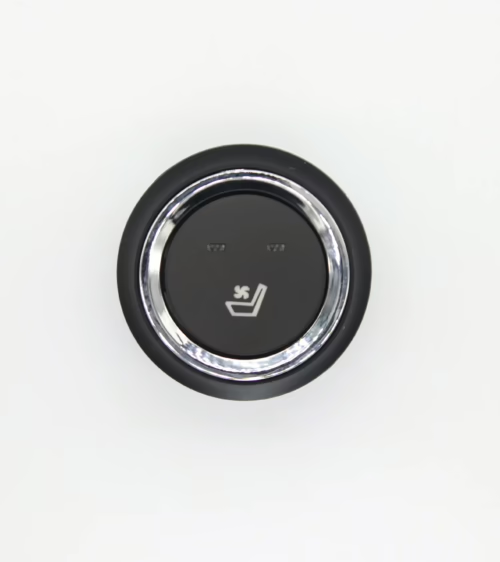
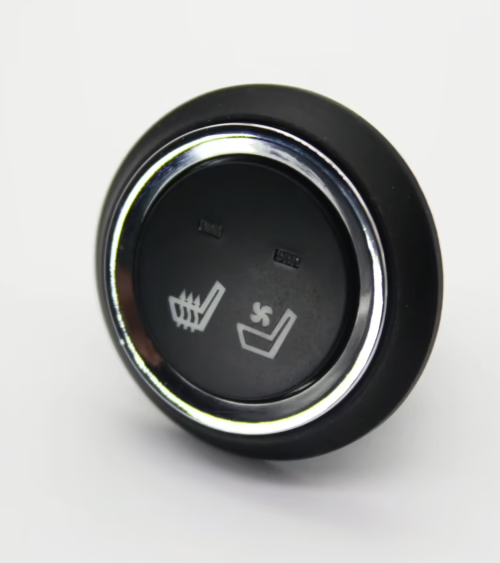
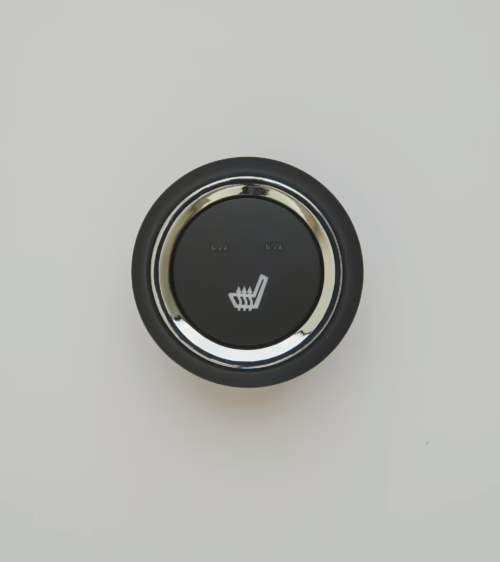
When the Chevy Equinox seat heater switch stops responding, the entire seat heating circuit becomes unusable regardless of the condition of the heating element or control module.
The switch is the driver’s only interface to the seat heater system, and even a partially failed switch—one that no longer cycles between heat levels—noticeably reduces cold-weather comfort.
This 2026 guide covers every Equinox generation from 2010 through 2024, including systematic diagnostic steps, correct part selection, a complete replacement procedure, and practical tips for preventing premature switch failure.
How the Chevy Equinox Seat Heater Switch Works
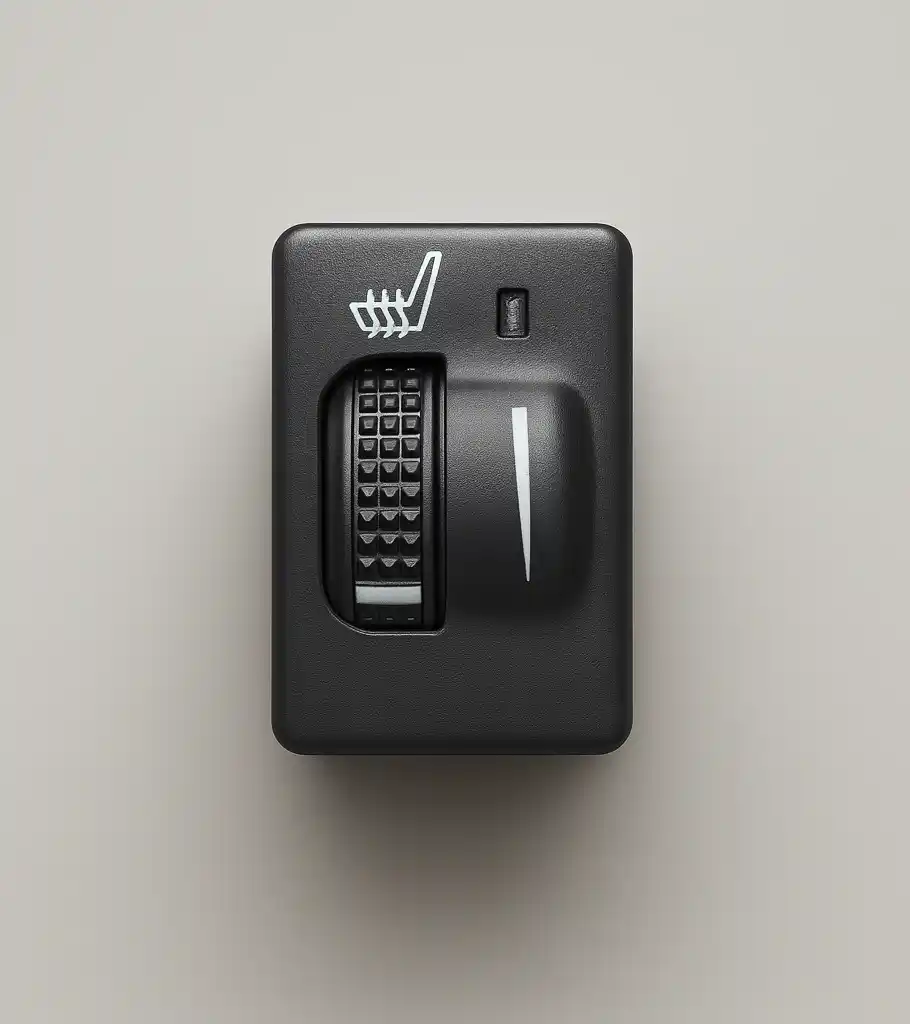
The Equinox seat heater switch is a latching rocker that cycles through three positions:
- high heat
- low heat
- off. Each active position is indicated by amber LEDs embedded in the switch face. Critically
- the switch carries only low-amperage signal current—it does not directly power the heating element. The actual heating load is managed by the seat heater control module (SHCM)
- which reads the switch signal and activates the resistive wire element woven into the seat foam.
A thermistor embedded near the seat surface monitors temperature and feeds data back to the SHCM. If the surface temperature exceeds a calibrated limit, the module reduces power to the element automatically, regardless of switch position.
This architecture means the switch, the SHCM, and the heating element can each fail independently. A failed switch cannot be compensated for by any downstream component, but a failed element or module will produce no heat even with a perfectly functional switch in place.
Equinox Trim Levels and Model Years with Heated Seats
Seat heaters are not standard equipment on every Equinox configuration. Before ordering a replacement switch, confirm your vehicle was factory-equipped with the feature.
- 2010–2017 (first generation): LT and LTZ trims with the optional heated seat package include the switch, wiring harness, SHCM, and heating elements. The base LS trim does not receive this equipment from the factory.
- 2018–2024 (second generation): Premier and RS trims include heated front seats as standard. The LT trim adds them through the Comfort and Convenience package. L and LS trims are not equipped.
If your Equinox has blank snap-in bezels where the switches would sit, the vehicle was not factory-equipped. A full retrofit requires the switches, SHCM, wiring harness extensions, and seat heating elements—installing only the switch alone will have no effect on an unequipped vehicle.
Common Symptoms of a Failing Seat Heater Switch
Identifying switch failure specifically—rather than SHCM or element failure—prevents purchasing the wrong part. The following symptoms point to the switch itself:
- No LED illumination on any setting: Pressing the switch produces no visual response, even with the fuse confirmed intact and the ignition in the RUN position.
- Heat on one level only: The switch activates high or low heat but not both, indicating that one internal contact set has failed while the other remains functional.
- Intermittent operation correlated with temperature or vibration: The seat heats normally on smooth roads or warm days but cuts out on rough pavement or in extreme cold, suggesting a mechanical crack developing in the internal contact mechanism.
- Loose, mushy, or non-clicking feel: Physical wear of the tactile mechanism has exceeded its service life and the switch no longer holds its position reliably.
One symptom that does not indicate switch failure:
- LEDs illuminate normally but the seat produces no heat. In this case the switch is outputting the correct signal and the fault is downstream in the SHCM
- heating element
- or thermistor wiring. Do not replace the switch for this symptom without further circuit testing.
Diagnosing the Switch Before Ordering Parts
Modern automotive seat heating systems, as covered in the Wikipedia overview of heated seats, use resistive element technology controlled by low-voltage signal circuits—making systematic multimeter testing an efficient way to isolate faults without replacing parts speculatively. Follow this sequence in order:
- Check the fuse first: The Equinox has a dedicated 15 A or 20 A seat heater fuse depending on model year, located in the underhood fuse block or instrument panel fuse center. A blown fuse is the most common cause of complete system failure and costs nothing to address.
- Verify switched power at the connector: With the ignition in RUN and the switch harness connector unplugged, probe the appropriate cavity for 12 V reference. No voltage indicates an upstream wiring or secondary fuse issue, not a failed switch.
- Test switch continuity off-vehicle: Remove the switch and disconnect it from the harness. Using the continuity function, probe the terminal pairs for each heat level while pressing the switch through each position. An open circuit on any position confirms switch failure.
- Inspect connector terminals: Spread or corroded terminals at the switch connector mimic switch failure. Clean with electrical contact cleaner, re-seat any spread pins with a terminal pick, and retest before ordering a replacement.
Tools and Parts Required for Replacement
Collecting everything in advance prevents leaving the trim panel disassembled while searching for a missing tool.
- Plastic panel removal tools—avoid metal pry bars that scratch or crack the console trim
- T15 and T20 Torx bit drivers
- Phillips #2 screwdriver
- Digital multimeter for post-installation verification
- Electrical contact cleaner spray
- Replacement seat heater switch matched to your Equinox generation and trim level
The 2010–2017 and 2018–2024 Equinox generations use different connector families, so pin count and connector body shape must match your removed switch exactly. Our replacement seat heater switches are listed by vehicle fitment to simplify selection—confirm the connector profile against your removed unit before placing an order.
Step-by-Step Switch Removal and Replacement
On most Equinox trims, the seat heater switches sit in the lower center console panel immediately forward of the gear selector. Premier trims may integrate them into the center stack panel. Allow 20 to 40 minutes for the complete procedure.
- Step 1: Disconnect the negative battery cable and wait two minutes for body control module capacitors to discharge before handling any electrical connectors.
- Step 2: Insert a plastic trim tool at the lower edge of the switch panel. Apply firm rearward pressure to release the panel clips, working around the perimeter rather than prying at a single point to avoid cracking the trim.
- Step 3: With the panel loose, disconnect the wiring harness connector by pressing the release tab on the connector body and pulling it straight out. Never pull on the wire bundle itself—doing so stretches or breaks the terminal crimps inside the connector.
- Step 4: Release the switch from its bezel by depressing the two locking tabs on opposite sides of the switch body simultaneously and pushing the switch forward through the bezel opening.
- Step 5: Orient the new switch correctly—the connector tab must face the same direction as on the removed switch—and press it firmly into the bezel until both locking tabs click audibly into position.
- Step 6: Reconnect the wiring harness connector until it clicks locked. A connector that seats without clicking is not fully engaged and will cause intermittent contact.
- Step 7: Reinstall the trim panel by aligning each clip point individually and pressing them in sequence before applying final seating pressure across the panel face.
- Step 8: Reconnect the negative battery cable.
Testing and Resetting After Installation
With the battery reconnected, turn the ignition to RUN without starting the engine and press the new switch to the high heat position. Both LEDs should illuminate immediately.
Place your palm flat on the seat surface and verify warmth developing within 60 to 90 seconds—the resistive element reaches operating temperature quickly on the high setting.
If the LEDs illuminate but no heat develops, the switch is functioning correctly and the fault lies in the SHCM, heating element, or thermistor circuit. Use a scan tool to retrieve any stored B-series diagnostic trouble codes from the body control module before condemning downstream components.
After a battery disconnect, some 2018–2024 Equinox models require a power window express-up re-learn:
- lower each window fully
- then hold the window switch in the up position for two full seconds after the glass reaches the top of its travel. This restores one-touch window operation and does not affect any other vehicle settings or radio presets.
Frequently Asked Questions
Can I substitute a seat heater switch from a Chevrolet Traverse or GMC Terrain into my Equinox?
Some switches share a similar bezel footprint across GM platforms, but the connector pinout and LED driver voltage are often platform-specific. Installing an incompatible switch risks routing an out-of-specification voltage signal into the SHCM input, which can damage the module.
Always verify the exact GM part number against Equinox-specific service information before cross-applying a switch from another vehicle line.
My Equinox has blank panels where the switches should be. Can I retrofit the full heated seat system?
Yes, but installing switches alone will have no effect. A complete retrofit requires the seat heater control module, wiring harness pigtails connecting the SHCM to the seat harness and switch cavities, and the resistive heating elements bonded to the seat foam.
The body control module must also detect a valid SHCM on the appropriate communication bus before enabling the seat heater function in the vehicle software. All components should be sourced from the same Equinox generation and installed with reference to the vehicle-specific wiring diagram.
How many actuations should a replacement seat heater switch handle before failing?
A quality replacement switch rated for the Equinox application is designed for 80,000 to 120,000 actuations under normal conditions—roughly equivalent to the remaining service life of most vehicles when the original switch first fails.
Premature failure before 50,000 actuations usually indicates a wiring problem placing out-of-specification voltage on the signal line, or physical damage from liquid reaching the switch contact surfaces through the console panel gaps.
Inspect the upstream circuit and check the console area for spill entry points if a replacement switch fails before its expected service interval.
Lucky Driver Inc. supplies OEM-grade seat heater switches and complete heating system components to repair shops, distributors, and fleet operators across North America. If you are ready to source your replacement parts, browse our full seat heating product lineup for components tested to GM vehicle specifications.
Contact our technical team directly for fitment confirmation, volume pricing, or OEM supply inquiries.
Related Articles
- Chevy Silverado Heated Seat Switch: 2026 Complete Repair Guide
- Ford Escape Heated Seat Switch: 2026 Complete Repair Guide
- The Lucky Driver’s 7-Point Guide to Seat Heater Systems in 2026
- Ford Explorer Seat Heater Switch: 2026 Complete Repair Guide
- Ford F150 Heated Seat Switch: 2026 Complete Repair Guide
Frequently Asked Questions About chevy equinox seat heater switch
Procurement engineers evaluating chevy equinox seat heater switch for OEM programs regularly ask the following questions. Answers cover specification, compatibility, certification, and sourcing for chevy equinox seat heater switch requirements.
What voltage ratings are available for chevy equinox seat heater switch?
Standard chevy equinox seat heater switch configurations support 12 V DC for passenger vehicles and 24 V DC for commercial trucks. Selecting the correct chevy equinox seat heater switch voltage at the design stage eliminates harness rework later.
Lucky Driver maintains chevy equinox seat heater switch inventory in both ratings for same-week shipment.
Which certifications apply to chevy equinox seat heater switch production?
chevy equinox seat heater switch assemblies entering OEM programs typically require UL recognition, REACH compliance, and RoHS documentation. Lucky Driver holds certification records for every chevy equinox seat heater switch variant and includes copies with sample and production shipments.
How is watt density specified for chevy equinox seat heater switch?
Watt density for chevy equinox seat heater switch is expressed in W/cm² and ranges from 0.04 to 0.12 depending on heat-up time requirements. Lower watt density chevy equinox seat heater switch designs improve element longevity, while higher values suit cold-climate applications.
Lucky Driver engineering reviews chevy equinox seat heater switch requirements and recommends watt density based on your seat platform.
What connector families are used with chevy equinox seat heater switch?
chevy equinox seat heater switch harnesses are available with Molex, TE Connectivity, and Delphi connector families. Matching the chevy equinox seat heater switch connector to the vehicle harness reduces assembly time and eliminates adapter cables.
Specify your harness format when requesting a chevy equinox seat heater switch quote from Lucky Driver.
What is the lead time for chevy equinox seat heater switch samples?
chevy equinox seat heater switch samples from Lucky Driver’s North American warehouse ship within 3 to 5 business days for standard configurations. Custom chevy equinox seat heater switch variants with modified pad geometry or connector pinouts require 4 to 6 weeks.
Contact Lucky Driver to confirm chevy equinox seat heater switch availability before submitting your engineering schedule.