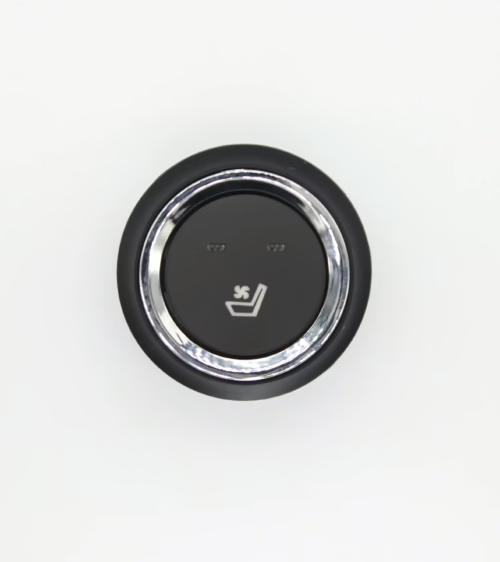
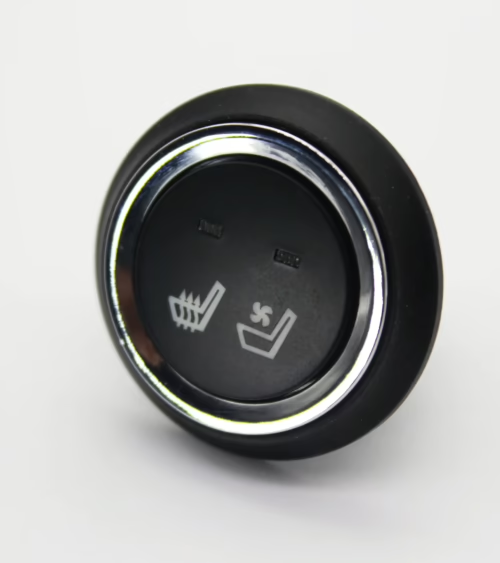
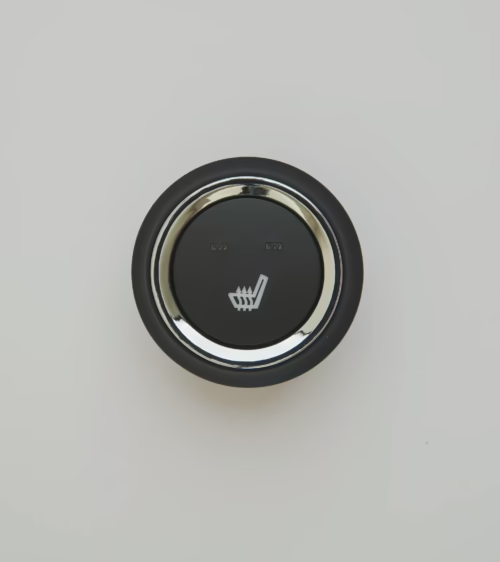
If your Chevy Tahoe heated seat switch no longer responds when you press it, you are dealing with one of the most common interior electrical complaints on the 2000–2024 Tahoe platform.
The switch is a low-cost component, but diagnosing it correctly before ordering parts saves time and money — the real fault is often the seat heater element, the fuse, or the body control module rather than the switch itself.
This guide walks you through the full diagnostic and replacement process so you can restore warm seats before the next cold morning.
How the Chevy Tahoe Seat Heater Circuit Is Designed
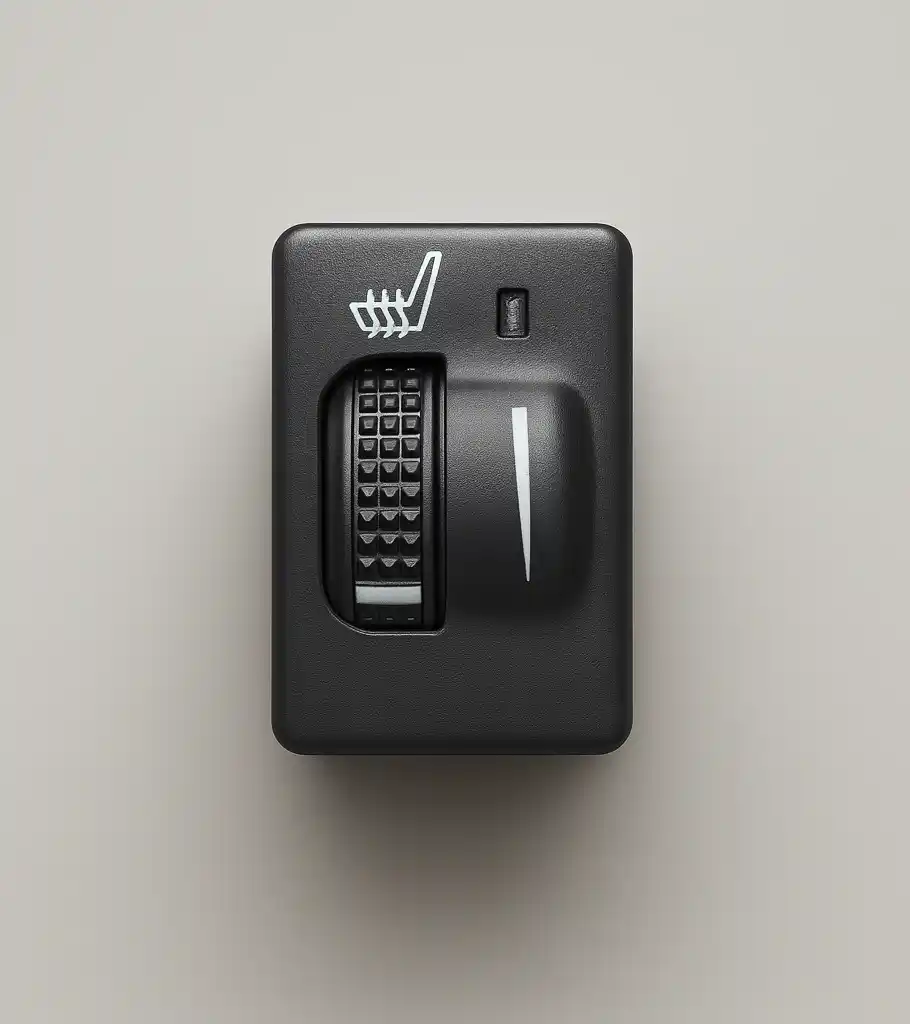
The Tahoe seat heater system consists of four main components:
- the rocker switch mounted in the center console or instrument panel
- a seat climate control module (SCCM) on 2007-and-later trucks
- a resistive heating element woven into the seat cushion and backrest foam
- a thermistor embedded in the mat that feeds temperature data back to the control module so the heater cycles on and off to maintain a preset target of roughly 38–42 °C.
- On pre-2007 Tahoes the circuit is simpler: the switch routes battery voltage directly through an inline fuse to the heating element with no feedback loop.
Understanding which generation you own matters for diagnosis. A 2003 Tahoe switch is a two-speed rocker that completes a direct high-current circuit; a 2019 Tahoe switch sends a low-voltage logic signal to the BCM, which then commands the SCCM.
Testing procedures differ significantly between the two architectures, so confirm your model year before starting work.
Symptoms of a Failing Heated Seat Switch
Recognizing the correct failure pattern narrows your diagnosis before you pull a single trim panel:
- No heat on any setting: The heating element never warms up regardless of which button you press. This points to the switch, the fuse, or the element — work through them in that order.
- Heat stuck on maximum: The seat gets hot and stays hot with no temperature cycling. On SCCM-equipped trucks this usually means the switch is sending a continuous signal instead of a momentary one, or the SCCM itself has failed.
- Indicator light works but no heat: The illuminated icon on the switch lights up but the seat stays cold. The switch logic circuit is intact, but the power circuit to the element has an open fault — check the fuse and element resistance first.
- Intermittent heat: The seat heats up unpredictably. A cracked solder joint inside the switch or a corroded connector pin is the most common cause on high-mileage trucks.
- Only one heat level responds: On a two-speed switch, if the low setting works but high does not, one of the internal switch contacts has failed selectively.
Diagnostic Steps Before You Order Parts
Replacing the switch without confirming it is faulty wastes money. Work through this sequence first:
- Check the fuse: On most Tahoe generations the seat heater fuse is a 25 A or 30 A blade fuse in the underhood fuse block. Locate it using the diagram printed on the underside of the fuse block cover.
- A blown fuse is the single most common cause of total seat heater failure and costs under one dollar to correct.
- Measure switch output voltage:
- With the ignition on and the switch pressed
- probe the switch output terminals with a digital multimeter. On a direct-circuit Tahoe you should see battery voltage at the output wire. On a signal-based system you should see a 5 V or 12 V logic pulse. No output with good input voltage confirms the switch has failed internally.
- Test the heating element resistance: Disconnect the element harness connector under the seat. A healthy seat cushion element typically reads 2–4 ohms; a backrest element reads 3–6 ohms. An open circuit or a reading below 1 ohm indicates a failed element, not the switch.
- Scan for DTCs: On 2007+ Tahoes, connect an OBD-II scanner and read HVAC or body module codes. Codes like B0085 (Heated Seat Module) point to the control module rather than the switch itself, and replacing the switch will not resolve them.
How to Remove and Replace the Chevy Tahoe Heated Seat Switch
Once you have confirmed the switch is at fault, replacement takes about 20 minutes with basic hand tools:
- Step 1 — Disconnect the battery: Remove the negative cable and wait two minutes to discharge the airbag capacitors. The center console area on the Tahoe sits close to side-curtain airbag harnesses; working with the battery connected risks accidental deployment.
- Step 2 — Remove the center console trim: On 2000–2006 Tahoes, the switch panel pries out with a trim tool starting at a rear corner. On 2007–2014 trucks, two Phillips screws behind the armrest lid hold the top trim piece. The 2015–2020 generation uses snap-fit clips around the perimeter of the climate control cluster.
- Step 3 — Disconnect the switch connector: Press the locking tab on the multi-pin connector and pull it straight back. Do not pry with a screwdriver — you will crack the locking tab and force a bezel replacement.
- Step 4 — Release the switch from the bezel: Most Tahoe switch bezels use side-release plastic clips. Squeeze both sides of the switch body with your fingers and push it forward through the panel opening.
- Step 5 — Install and test: Snap the replacement switch into the bezel until you hear both clips engage, reconnect the harness, reinstall the trim panel, and reconnect the battery. Verify both heat levels before reassembling the armrest lid.
For a direct-fit replacement, browse our seat heater switch catalog for options sorted by Tahoe year and trim level — no universal adapters or wiring modifications required.
OEM vs. Aftermarket Seat Heater Switches
Genuine GM switches carry part numbers in the 13577xxx or 84xxx series depending on the generation and are built to the same tolerances as the original assembly.
They are the correct choice when the switch is under warranty, the truck is low-mileage, or you need an exact appearance match in the interior.
Aftermarket switches cost significantly less and perform identically when built to the correct specification. Evaluate any aftermarket option against these criteria:
- a current rating of at least 15 A on the power contacts
- gold-plated signal contacts to resist corrosion
- a molded connector that matches the factory harness terminal pitch exactly. Avoid generic no-brand switches that do not specify contact material or rated cycle life — undersized contacts arc under load and fail within a single season.
If your diagnosis revealed more than one failed component, you can browse our complete seat heating product lineup, which includes replacement heating pads, temperature sensors, and control modules alongside switches — all organized by vehicle application so you can confirm fitment before purchasing.
Wiring Notes for 2015–2024 Tahoe Owners
The fifth-generation Tahoe (2015–2020) and the sixth-generation (2021–2024) moved seat heater control into the HVAC head unit or the infotainment-integrated climate panel. On these trucks the physical switch is a capacitive-touch zone or haptic button rather than a mechanical rocker.
If the touch zone stops responding, the failure is almost always in the climate control head unit itself, not a separately replaceable switch module.
Before condemning the head unit, verify that the software calibration is current. A GM TIS2Web software update resolves false non-responsive touch panels on a number of 2021–2023 Tahoes without any hardware replacement.
Also confirm that the heated seat option was factory-installed rather than a dealer-added accessory — aftermarket installation wiring uses non-standard connector positions that require different diagnostic steps.
For 2015–2020 trucks that still use a physical rocker on the outboard side of the center console, the replacement procedure mirrors the 2007–2014 process.
The connector is a six-pin Metri-Pack 150 series plug; do not substitute a 280-series plug — the terminal bore sizes are different and an improper fit causes intermittent contact failure within weeks of installation.
Preventing Future Switch Failures
The two most common causes of premature switch failure on the Tahoe are moisture intrusion and excessive cycling caused by rapidly toggling between heat levels. These practices extend switch service life significantly:
- Apply a thin layer of dielectric grease to the connector terminals at every switch replacement to block moisture migration and prevent galvanic corrosion between dissimilar metals.
- Allow the heating element to reach operating temperature before switching between settings. Rapid cycling causes the internal contacts to arc under load, accelerating contact wear.
- Keep liquid spills away from the center console. Even small volumes of water that reach the switch body can corrode the printed circuit board inside the housing within a single winter season.
- In humid climates, running the seat heater on the lowest setting for five minutes as the vehicle warms up drives residual moisture out of the connectors and foam mat before it can condense on the switch contacts.
Frequently Asked Questions
Can a bad heated seat switch drain the battery on a Chevy Tahoe?
Yes, in specific failure modes. A switch that sticks in the closed position keeps the heating element energized with the ignition off.
A single seat cushion element draws roughly 5–8 A continuously; overnight that represents 40–64 Ah of draw, which is enough to discharge a standard 70 Ah battery before morning.
If your Tahoe has a slow parasitic drain, check whether the seat heater relay stays energized with the key removed before testing the battery or alternator.
Why does my Tahoe seat heater work in winter but shut off immediately in summer?
The SCCM uses the embedded thermistor to prevent the seat from overheating.
In very hot weather, the ambient temperature of the seat foam may already be near the control module’s cut-off threshold before you press the switch. The heater turns on briefly, the thermistor reads a temperature close to the target, and the module shuts off almost immediately.
This is normal thermal protection behavior, not a switch fault. If the same behavior occurs on cool days, suspect a thermistor that has drifted out of calibration or a heating element that generates excessive heat in a localized zone.
Are the driver and passenger heated seat switches interchangeable on the Tahoe?
On most 2000–2014 Tahoes they share the same GM part number and are physically identical. Swap them to see whether the fault follows the switch or stays with the seat.
On 2015+ trucks with a shared climate panel, the switches are not individual units and cannot be swapped independently. Always confirm interchangeability using the GM parts catalog with your specific VIN before ordering a replacement.
If cold seats have become a daily frustration, Lucky Driver Inc. stocks direct-fit heated seat switches and complete seat heater repair kits engineered for the Tahoe’s specific wiring architecture. Our components ship from US inventory, so you are not waiting weeks for an overseas shipment when temperatures drop.
Reach out to our technical team with your VIN for fitment confirmation before you buy.
Related Articles
- Chevy Equinox Seat Heater Switch: 2026 Complete Repair Guide
- Chevy Silverado Heated Seat Switch: 2026 Complete Repair Guide
- Ford Escape Heated Seat Switch: 2026 Complete Repair Guide
- The Lucky Driver’s 7-Point Guide to Seat Heater Systems in 2026
- Ford Explorer Seat Heater Switch: 2026 Complete Repair Guide
Frequently Asked Questions About chevy tahoe heated seat switch
Procurement engineers evaluating chevy tahoe heated seat switch for OEM programs regularly ask the following questions. Answers cover specification, compatibility, certification, and sourcing for chevy tahoe heated seat switch requirements.
What voltage ratings are available for chevy tahoe heated seat switch?
Standard chevy tahoe heated seat switch configurations support 12 V DC for passenger vehicles and 24 V DC for commercial trucks. Selecting the correct chevy tahoe heated seat switch voltage at the design stage eliminates harness rework later.
Lucky Driver maintains chevy tahoe heated seat switch inventory in both ratings for same-week shipment.
Which certifications apply to chevy tahoe heated seat switch production?
chevy tahoe heated seat switch assemblies entering OEM programs typically require UL recognition, REACH compliance, and RoHS documentation. Lucky Driver holds certification records for every chevy tahoe heated seat switch variant and includes copies with sample and production shipments.
How is watt density specified for chevy tahoe heated seat switch?
Watt density for chevy tahoe heated seat switch is expressed in W/cm² and ranges from 0.04 to 0.12 depending on heat-up time requirements. Lower watt density chevy tahoe heated seat switch designs improve element longevity, while higher values suit cold-climate applications.
Lucky Driver engineering reviews chevy tahoe heated seat switch requirements and recommends watt density based on your seat platform.
What connector families are used with chevy tahoe heated seat switch?
chevy tahoe heated seat switch harnesses are available with Molex, TE Connectivity, and Delphi connector families. Matching the chevy tahoe heated seat switch connector to the vehicle harness reduces assembly time and eliminates adapter cables.
Specify your harness format when requesting a chevy tahoe heated seat switch quote from Lucky Driver.
What is the lead time for chevy tahoe heated seat switch samples?
chevy tahoe heated seat switch samples from Lucky Driver’s North American warehouse ship within 3 to 5 business days for standard configurations. Custom chevy tahoe heated seat switch variants with modified pad geometry or connector pinouts require 4 to 6 weeks.
Contact Lucky Driver to confirm chevy tahoe heated seat switch availability before submitting your engineering schedule.