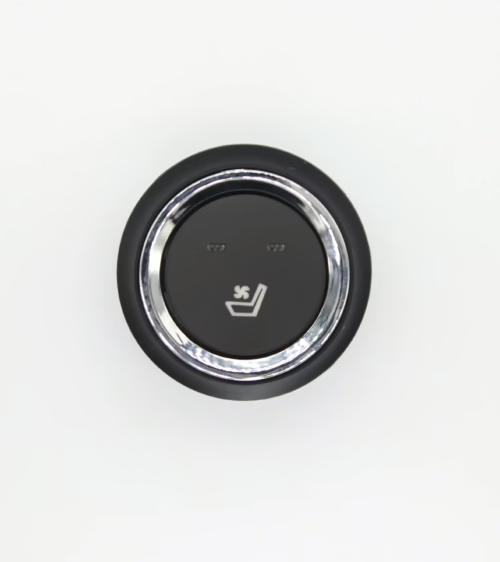
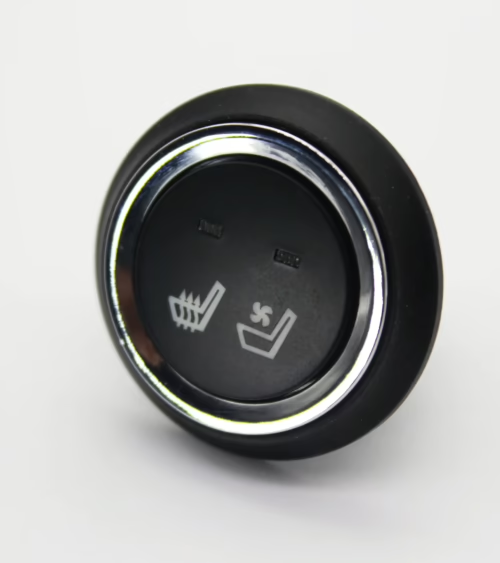
When Subaru Crosstrek heated seats stop warming up, the cause is usually one of a handful of predictable failure points:
- a worn switch
- a blown fuse
- a damaged heating pad
- or a corroded connector. This guide walks through how the system works
- the most common problems Crosstrek owners report
- five practical fixes you can perform with basic hand tools
- whether you drive a 2013 first-generation model or a current 2026 trim.
How Subaru Crosstrek Heated Seats Work
The Crosstrek’s factory heated seat system uses a resistive heating pad bonded to the seat foam beneath the upholstery, typically one pad for the seat cushion and a second for the seat back.
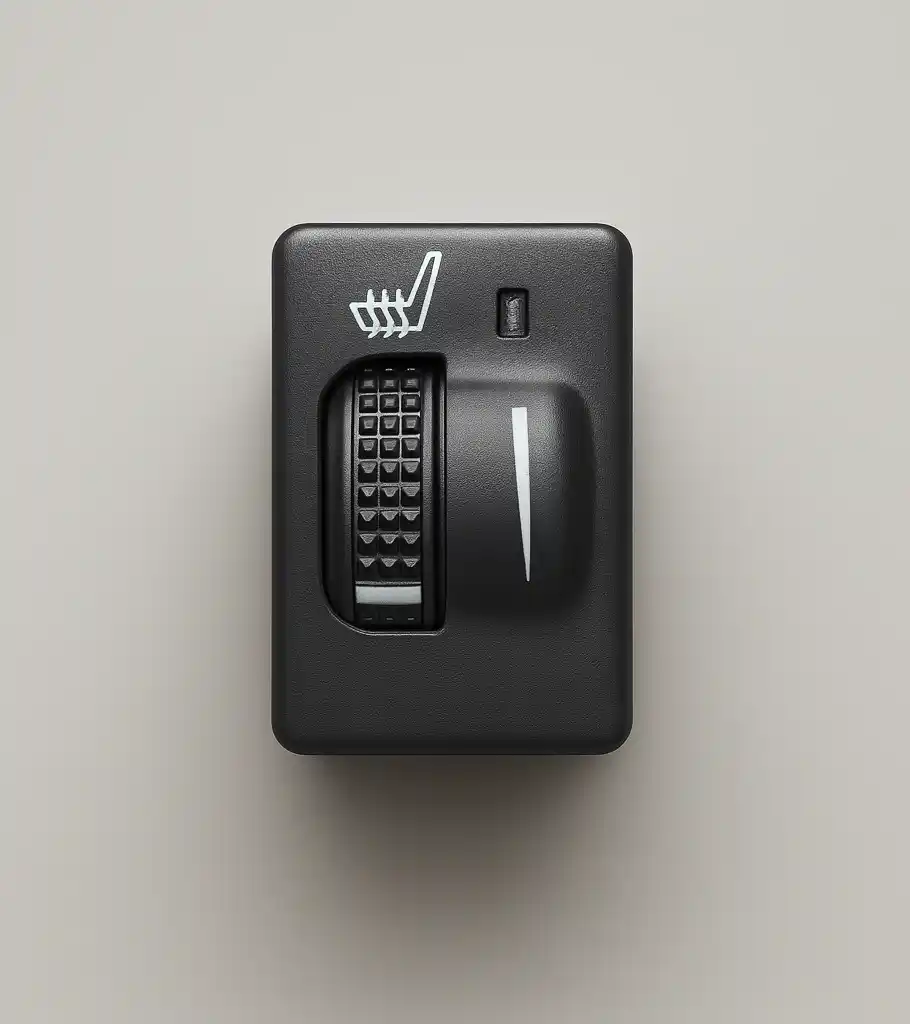
Current flows from the battery through a fuse, into a dash-mounted switch, and then through a relay or integrated control module to the pad.
Most Subaru pads use self-regulating heating elements built around a positive temperature coefficient (PTC) thermistor, which increases resistance as it warms, naturally limiting output and preventing overheating without needing a separate temperature sensor loop.
The dash switch commonly offers two or three heat settings, and later Crosstrek models integrate the heated seat controls into the climate control touchscreen rather than a physical rocker switch.
Understanding this circuit path matters because it tells you where to start troubleshooting: switch, fuse, wiring harness, connector, or pad, in roughly that order of likelihood based on repair frequency.
Common Subaru Crosstrek Heated Seat Problems
Owners of the Crosstrek across model years report a fairly narrow set of recurring complaints:
- One seat heats while the other does not, pointing to a switch or pad failure isolated to a single side.
- The seat heats intermittently, especially over bumps, which usually indicates a loose connector or a cracked wire in the harness under the seat.
- The seat gets hot in one spot but not evenly, a sign the heating element has a broken segment.
- Neither seat heats at all, which is more likely a shared fuse or ground fault than a coincidental double switch failure.
- A burning smell or the seat heater tripping a fuse repeatedly, which signals a short in the pad or wiring that needs immediate attention.
Isolating which category your issue falls into determines whether the fix takes ten minutes or a full seat teardown.
Fix 1: Diagnosing a Heated Seat That Won’t Turn On
Start with the simplest checks before removing any trim. Confirm the ignition is on and the switch light illuminates when pressed; if the indicator light doesn’t come on at all, the fault is almost certainly upstream in the fuse or power feed.
If the light comes on but the seat stays cold, the fault is more likely downstream in the pad or its connector. Check the Crosstrek’s fuse box, located under the dash on the driver’s side, for the heated seat fuse rated according to your model year’s owner’s manual.
A blown fuse that immediately blows again after replacement indicates a short circuit further down the line and should not simply be re-fused repeatedly.
Fix 2: Replacing a Faulty Seat Heater Switch
The dash-mounted or console-mounted switch is the single most common failure point because it sees constant thumb pressure and years of dust intrusion into its contacts.
Symptoms of a failing switch include a light that flickers, a setting that won’t hold, or a switch that requires several presses to register.
To confirm the switch is at fault, use a multimeter to check for continuity across its terminals in each heat position; inconsistent readings confirm worn internal contacts. Replacement is straightforward on most Crosstrek trims:
- the switch panel typically pries out with a trim tool
- the connector unplugs without cutting any wires. Keeping replacement seat heater switches on hand as a direct-fit OEM-style part saves a diagnostic trip if you already suspect the switch based on symptoms.
Fix 3: Testing and Replacing the Heating Element or Pad
If the switch and fuse both test good but the seat still won’t warm, the heating pad itself may have an open circuit. Testing requires removing the seat bottom or back cover, which involves detaching hog rings or hidden clips along the seam.
With the pad exposed, a multimeter set to resistance mode should show a value in the tens of ohms across the pad’s leads; an open reading (infinite resistance) confirms a broken heating wire, usually at a stress point near a seam or bolster.
Because these pads are laminated into the foam and wired through the factory harness, most technicians replace the entire pad assembly rather than attempting a wire splice, since a splice inside seat foam is prone to re-failing under repeated flexing and seat occupancy cycles.
Fix 4: Checking Fuses, Wiring, and Connectors
Intermittent heat, especially heat that cuts out when the seat is adjusted or when passengers shift position, almost always traces back to the wiring harness that runs from the seat frame to the body harness under the seat rail.
This connector sees repeated flexing every time the seat slides forward and back on its tracks, and over years of use the wires can fatigue and crack inside their insulation even though the outer jacket looks intact.
Wiggle-test the harness at the connector while someone watches the seat heater indicator; a flicker during movement confirms a wiring fault rather than a pad or switch problem.
Corroded ground points under the seat or at the body chassis can also cause both erratic operation and reduced heat output, so cleaning and re-torquing ground straps is worth doing before condemning a pad.
Fix 5: Preventing Future Failures and Extending Heated Seat Life
A few habits meaningfully extend the service life of Crosstrek heated seats. Avoid using seat covers that trap heat against the pad without airflow, since sustained high temperature accelerates insulation breakdown on the heating wire.
Address minor upholstery tears promptly, since moisture intrusion through a torn seam is a leading cause of corroded pad connections. If you tow cargo or frequently adjust seat position under load, periodically inspect the under-seat harness for chafing against the seat track.
Finally, when a repair is due, using OEM-spec parts rather than generic universal heating pads improves fitment against the Crosstrek’s factory foam contours and reduces the chance of hot spots or premature wire fatigue.
Owners doing their own maintenance can browse seat heating pads, switches, and control modules sized specifically for Subaru applications.
Frequently Asked Questions
Q: Why does only one of my Subaru Crosstrek’s heated seats work?
A: A single-side failure almost always points to that seat’s individual switch, pad, or connector rather than a shared component, since the driver and passenger circuits are electrically independent downstream of the fuse box.
Q: How long do Subaru Crosstrek heated seats typically last before needing repair?
A: Most factory heating pads last 8 to 12 years under normal use, though switches often fail sooner due to mechanical wear from daily button presses, especially in high-mileage or fleet-driven vehicles.
Q:
- Can I install a heated seat kit if my Crosstrek trim didn’t come with the option?
A: Yes - aftermarket heated seat kits designed for the Crosstrek’s seat dimensions can be added
- though proper installation requires routing wiring to a switched power source and mounting a compatible switch
- which is best done by someone comfortable with basic automotive electrical work.
If your Subaru Crosstrek’s heated seats have gone cold, the fix is usually a simple part swap once the fault is correctly diagnosed. Lucky Driver Inc.
supplies OEM-fit seat heater switches, heating pads, and control modules engineered for Subaru applications, backed by technical support for installers and DIY owners alike. Contact Lucky Driver Inc. today to find the right part for your Crosstrek and get your seats warm again.
Related Articles
- Subaru Forester Heated Seat Switch: 5 Fixes (2026 Guide)
- Subaru Outback Seat Heater Switch: 5 Fixes (2026 Guide)
- Nissan Rogue Heated Seat Switch: 5 Fixes (2026 Guide)
- Nissan Altima Seat Heater Switch: 5 Fixes (2026 Guide)
- 5 Signs Your Jeep Grand Cherokee Seat Heater Switch Is Bad
Frequently Asked Questions About subaru crosstrek heated seats
Procurement engineers evaluating subaru crosstrek heated seats for OEM programs regularly ask the following questions. Answers cover specification, compatibility, certification, and sourcing for subaru crosstrek heated seats requirements.
What voltage ratings are available for subaru crosstrek heated seats?
Standard subaru crosstrek heated seats configurations support 12 V DC for passenger vehicles and 24 V DC for commercial trucks. Selecting the correct subaru crosstrek heated seats voltage at the design stage eliminates harness rework later. Lucky Driver maintains subaru crosstrek heated seats inventory in both ratings for same-week shipment.
Which certifications apply to subaru crosstrek heated seats production?
subaru crosstrek heated seats assemblies entering OEM programs typically require UL recognition, REACH compliance, and RoHS documentation. Lucky Driver holds certification records for every subaru crosstrek heated seats variant and includes copies with sample and production shipments.
How is watt density specified for subaru crosstrek heated seats?
Watt density for subaru crosstrek heated seats is expressed in W/cm² and ranges from 0.04 to 0.12 depending on heat-up time requirements. Lower watt density subaru crosstrek heated seats designs improve element longevity, while higher values suit cold-climate applications.
Lucky Driver engineering reviews subaru crosstrek heated seats requirements and recommends watt density based on your seat platform.
What connector families are used with subaru crosstrek heated seats?
subaru crosstrek heated seats harnesses are available with Molex, TE Connectivity, and Delphi connector families. Matching the subaru crosstrek heated seats connector to the vehicle harness reduces assembly time and eliminates adapter cables. Specify your harness format when requesting a subaru crosstrek heated seats quote from Lucky Driver.
What is the lead time for subaru crosstrek heated seats samples?
subaru crosstrek heated seats samples from Lucky Driver’s North American warehouse ship within 3 to 5 business days for standard configurations. Custom subaru crosstrek heated seats variants with modified pad geometry or connector pinouts require 4 to 6 weeks.
Contact Lucky Driver to confirm subaru crosstrek heated seats availability before submitting your engineering schedule.