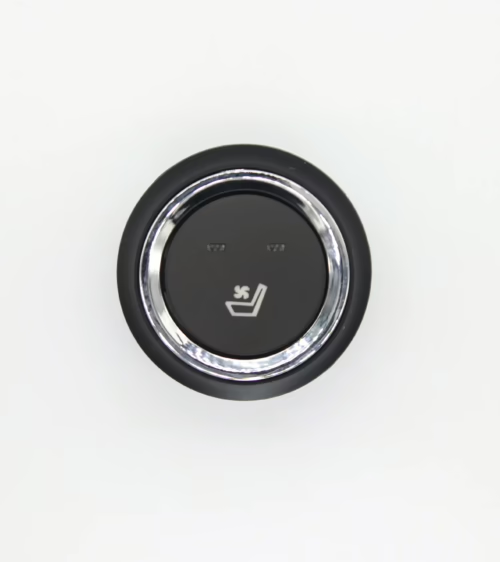
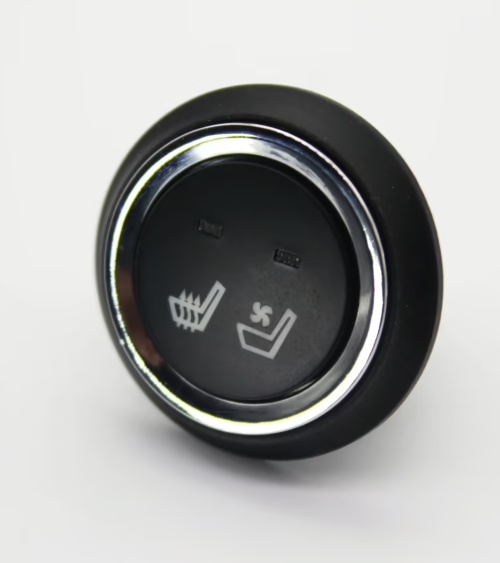
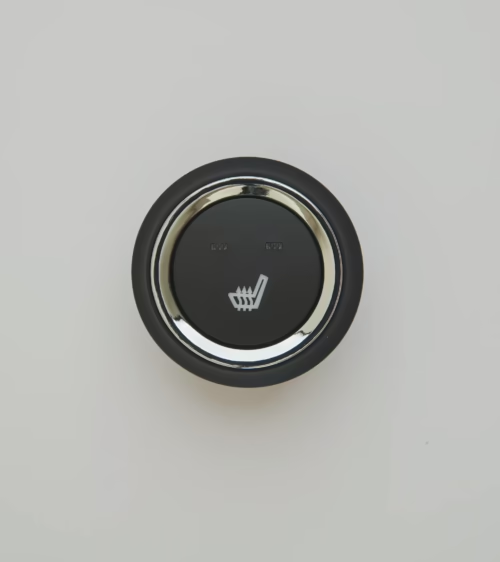
A malfunctioning Hyundai Elantra seat heater switch is one of the most common winter complaints owners bring to service bays, and the good news is that most failures trace back to a small handful of root causes that are inexpensive to diagnose and repair.
Whether your heated seats stopped working entirely, warm on only one setting, or the indicator light flickers, this guide walks through five practical fixes. It also explains how the switch interacts with the rest of the heating circuit and when deeper electrical work is needed.
Understanding the Hyundai Elantra Seat Heater Switch System
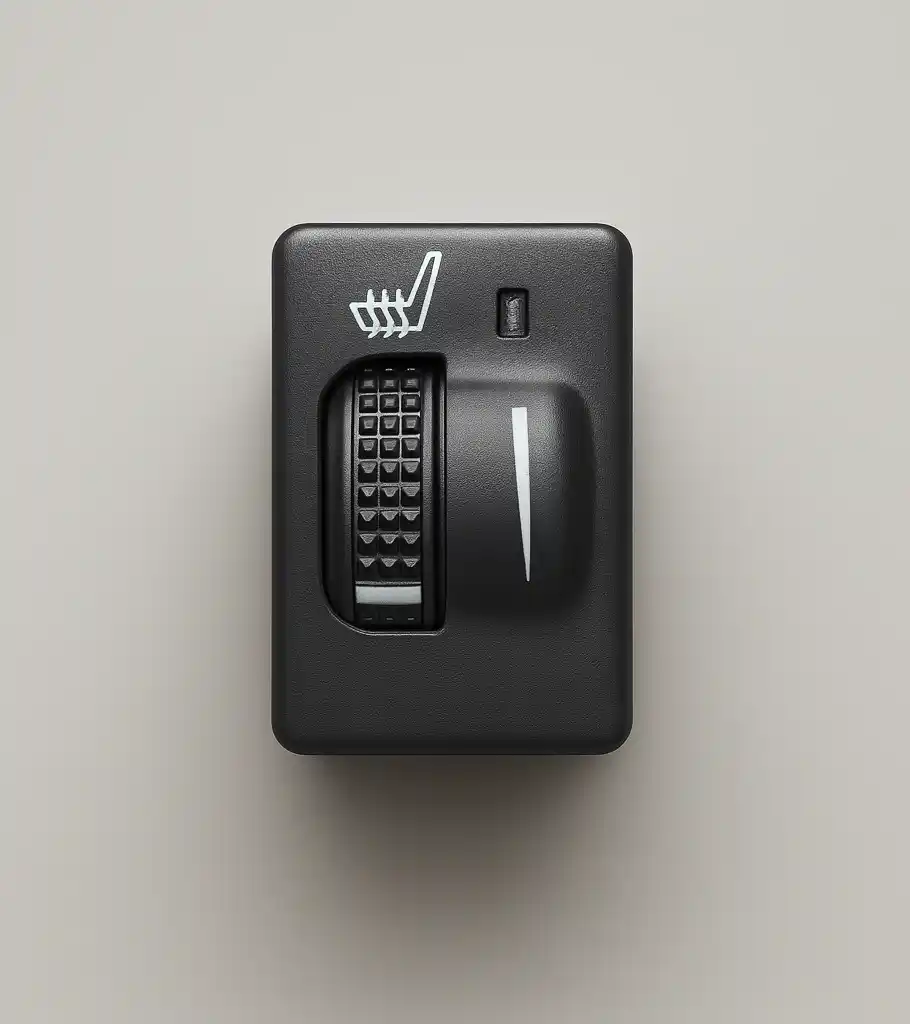
The seat heater switch on a Hyundai Elantra is not just a simple on/off toggle. It is a low-voltage control module that sends a signal to a heater control unit, which in turn regulates current flow to the resistive heating pads embedded in the seat cushion and backrest.
Most Elantra trims from 2011 onward use a two- or three-stage switch with an integrated LED indicator, mounted directly on the center console or seat trim panel depending on model year.
Inside the switch assembly, a small circuit board reads button presses and communicates either through a direct wired connection or a low-speed CAN signal to the body control module.
Temperature regulation inside the heating pad itself typically relies on a thermistor, a resistor whose resistance changes predictably with temperature, allowing the control circuit to cycle the heating element on and off to maintain a target seat surface temperature.
When the switch, the thermistor, or the wiring between them degrades, the entire heating function can fail even if the seat pad itself is undamaged. Understanding this layered system is the first step to correctly diagnosing where a repair actually needs to happen.
5 Common Causes of Seat Heater Switch Failure
Before replacing any parts, it helps to know which failure points are statistically most likely in an Elantra’s heated seat circuit.
- Worn switch contacts: Repeated button presses over years of use wear down the internal contact points, causing intermittent or dead settings.
- Broken wiring harness connector: The connector under the seat that links the switch to the heating pad is exposed to seat rail movement and can crack or corrode.
- Blown fuse: The heated seat circuit runs through a dedicated fuse in the interior fuse box, which can blow from a short in the pad or wiring.
- Failed heating element: The pad itself can develop a break in its resistive wiring, especially near frequently flexed seams.
- Faulty ground connection: A loose or corroded ground point under the seat frame can starve the entire circuit of a stable return path.
Isolating which of these five is responsible determines whether you need a $20 switch, a $8 fuse, or a full pad replacement, so working through the diagnostic steps below before ordering parts saves both time and money.
How to Diagnose a Faulty Seat Heater Switch
Start with the simplest checks first. Turn the ignition on, press the switch, and listen for the audible click of the relay or control unit engaging.
If there is no click and no LED illumination, check the fuse box first since a blown fuse produces identical symptoms to a dead switch.
If the fuse is intact, use a multimeter to test for voltage at the switch connector with the key on; the presence of battery voltage at the input pin but no output signal when pressed strongly indicates the switch itself has failed internally.
If voltage is present and the switch clicks normally but the seat still does not warm, move to the seat pad connector under the cushion and test resistance across the heating element leads.
A reading of infinite resistance means an open circuit in the pad, while a reading near zero ohms suggests a short. Both conditions point to the heating pad rather than the switch, and swapping the switch in that scenario will not resolve the issue.
This step-by-step elimination process is the same approach used by dealership technicians and prevents unnecessary part purchases.
Step-by-Step Replacement Guide
Once you’ve confirmed the switch is the failure point, replacement is a straightforward job that most owners can complete in under 30 minutes with basic hand tools.
- Disconnect the negative battery terminal to prevent electrical shorts while working near the console wiring.
- Carefully pry the trim panel or console bezel housing the switch using a plastic trim tool to avoid scratching the surrounding dash material.
- Disconnect the wiring harness clip from the back of the old switch, noting the orientation for reinstallation.
- Install the new switch, seating the harness connector until it clicks fully into place.
- Snap the trim panel back into position, reconnect the battery, and test all heat settings before closing up the console.
For owners who prefer not to guess at part fitment, Lucky Driver Inc.
maintains a range of replacement seat heater switches tested for direct OEM fitment on Elantra models, and browsing our seat heater switch catalog ahead of time makes it easy to match connector type and button configuration to your exact trim year before you start disassembly.
OEM vs Aftermarket Switches: What to Choose
Genuine Hyundai OEM switches offer guaranteed connector and button-label matching, but they typically carry a higher price and longer lead time through dealership parts counters.
Quality aftermarket switches, when sourced from a supplier that manufactures to OEM tolerances, deliver identical electrical performance at a lower cost and are often in stock for immediate shipping.
The key factor is not brand name but connector pin count, mounting bracket shape, and voltage rating — mismatches in any of these three areas will cause fitment issues even if the switch physically resembles the original.
When evaluating a replacement part, confirm that the supplier tests switches against the same electrical load specifications used in automotive seat heating circuits, since undersized internal contacts will overheat and fail again within a season.
Reputable suppliers document their switches’ current rating and cycle-life testing, which is a reliable indicator of long-term durability regardless of whether the part is OEM-branded or a validated aftermarket equivalent.
Maintenance Tips to Extend Switch Life
A few habits meaningfully extend the service life of any seat heater switch. Avoid using excessive force when pressing buttons, since the internal contacts are rated for normal fingertip pressure, not aggressive punching.
Keep the console area free of spilled liquids, as moisture intrusion around the switch bezel is a leading cause of premature contact corrosion.
If your Elantra sits outdoors in freezing climates, allow the cabin to reach a moderate temperature before running the seat heater at its highest setting for extended periods, since rapid thermal cycling accelerates wear on both the switch contacts and the heating element’s solder joints.
Periodically inspecting the wiring harness under the seat for chafing, especially after seat position adjustments or aftermarket seat cover installations, also catches developing problems before they cause a full switch or pad failure.
These small maintenance habits, combined with using a properly rated replacement part when failure does occur, typically keep a heated seat system running reliably for the life of the vehicle.
When to Replace the Entire Heating System
In rare cases, particularly on higher-mileage Elantras, a failing switch is accompanied by a degraded heating pad or a control module nearing the end of its service life.
If you’ve replaced the switch and confirmed proper voltage delivery but the seat still fails to heat consistently, testing the pad’s resistance value against manufacturer specifications will confirm whether the element itself needs replacement.
In that situation, it is often more cost-effective to source a complete heating kit rather than replacing components piecemeal, and shoppers looking to compare full pad-and-switch bundles can browse our full range of seat heating products to find a kit matched to their Elantra’s seat design.
Frequently Asked Questions
Q: Can I replace the Hyundai Elantra seat heater switch myself without special tools?
A: Yes. The job requires only a plastic trim removal tool and basic hand tools, and most owners complete it in under 30 minutes without needing a lift or specialty diagnostic equipment.
Q:
- Why does my Elantra’s seat heater switch light up but the seat doesn’t get warm?
A: This usually means the switch itself is functioning correctly and the fault lies downstream - most often in the heating pad’s resistive element or a broken wire between the switch and the pad connector.
Q:
- Is a used seat heater switch from a salvage yard a safe replacement option?
A: Used switches can work - but they carry unknown wear on internal contacts and no warranty. A new
- properly rated replacement switch is generally a safer investment given how inexpensive the part is relative to labor time.
If your Hyundai Elantra’s seat heater switch has stopped working reliably, don’t spend another cold morning without heat. Lucky Driver Inc.
supplies precision-tested seat heater switches, control modules, and heating pads designed to OEM specifications for a wide range of vehicles, backed by a team that understands the full heated seat circuit from switch to pad.
Explore our catalog today and get your Elantra’s seat heat back to full function with a part built to last.
Related Articles
- Subaru Crosstrek Heated Seats: 5 Fixes (2026 Guide)
- Subaru Forester Heated Seat Switch: 5 Fixes (2026 Guide)
- Subaru Outback Seat Heater Switch: 5 Fixes (2026 Guide)
- Nissan Rogue Heated Seat Switch: 5 Fixes (2026 Guide)
- Nissan Altima Seat Heater Switch: 5 Fixes (2026 Guide)
Frequently Asked Questions About hyundai elantra seat heater switch
Procurement engineers evaluating hyundai elantra seat heater switch for OEM programs regularly ask the following questions. Answers cover specification, compatibility, certification, and sourcing for hyundai elantra seat heater switch requirements.
What voltage ratings are available for hyundai elantra seat heater switch?
Standard hyundai elantra seat heater switch configurations support 12 V DC for passenger vehicles and 24 V DC for commercial trucks. Selecting the correct hyundai elantra seat heater switch voltage at the design stage eliminates harness rework later.
Lucky Driver maintains hyundai elantra seat heater switch inventory in both ratings for same-week shipment.
Which certifications apply to hyundai elantra seat heater switch production?
hyundai elantra seat heater switch assemblies entering OEM programs typically require UL recognition, REACH compliance, and RoHS documentation. Lucky Driver holds certification records for every hyundai elantra seat heater switch variant and includes copies with sample and production shipments.
How is watt density specified for hyundai elantra seat heater switch?
Watt density for hyundai elantra seat heater switch is expressed in W/cm² and ranges from 0.04 to 0.12 depending on heat-up time requirements. Lower watt density hyundai elantra seat heater switch designs improve element longevity, while higher values suit cold-climate applications.
Lucky Driver engineering reviews hyundai elantra seat heater switch requirements and recommends watt density based on your seat platform.
What connector families are used with hyundai elantra seat heater switch?
hyundai elantra seat heater switch harnesses are available with Molex, TE Connectivity, and Delphi connector families. Matching the hyundai elantra seat heater switch connector to the vehicle harness reduces assembly time and eliminates adapter cables.
Specify your harness format when requesting a hyundai elantra seat heater switch quote from Lucky Driver.
What is the lead time for hyundai elantra seat heater switch samples?
hyundai elantra seat heater switch samples from Lucky Driver’s North American warehouse ship within 3 to 5 business days for standard configurations. Custom hyundai elantra seat heater switch variants with modified pad geometry or connector pinouts require 4 to 6 weeks.
Contact Lucky Driver to confirm hyundai elantra seat heater switch availability before submitting your engineering schedule.