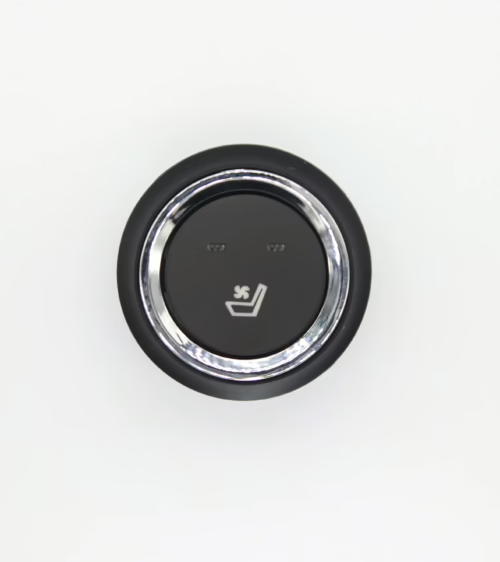
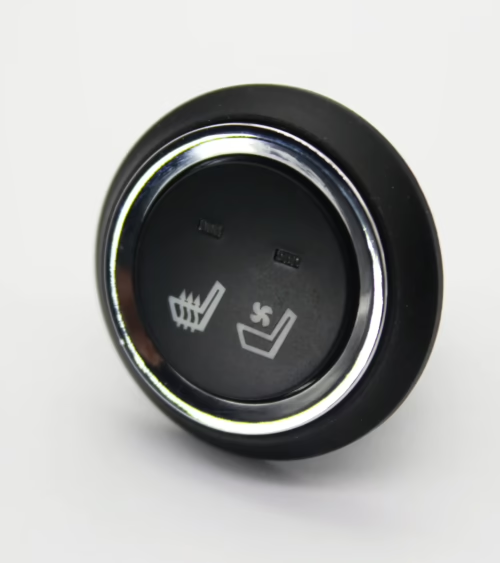
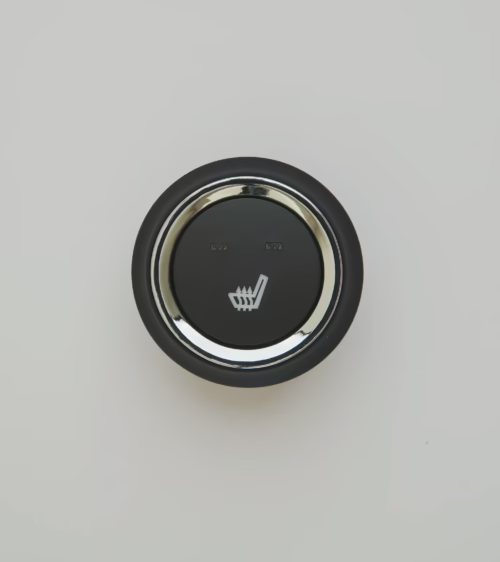
A faulty Mercedes C-Class seat heater switch is one of the most common comfort complaints owners bring to independent shops and dealerships alike, especially on W204 and W205 chassis models that see regular winter use.
When the switch fails, the seat heater element itself is almost always fine — the problem sits in the switch contacts, the wiring harness, or the control logic feeding it.
This guide walks through five practical fixes, from basic diagnostics to full switch replacement, so you can restore heated seating without unnecessary dealer visits.
Why the Seat Heater Switch Matters in Your C-Class
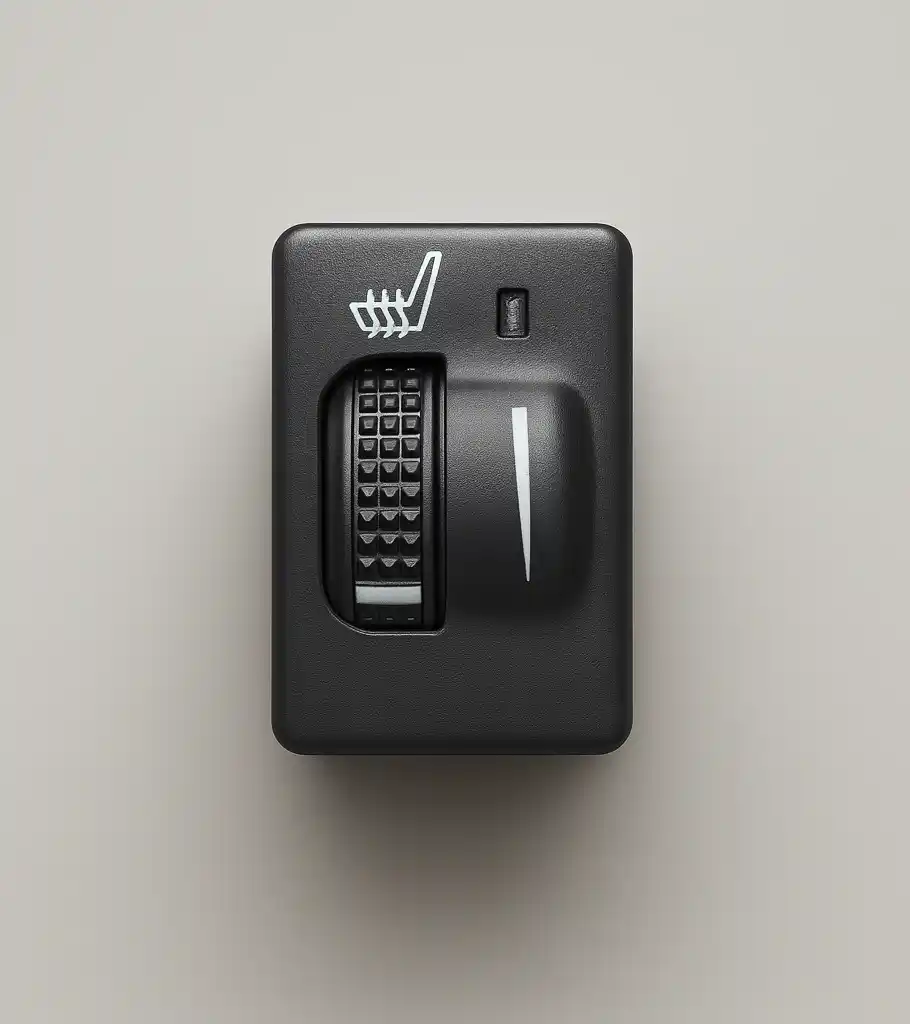
The seat heater switch is not a simple on/off toggle.
In most C-Class models it is a multi-position rocker or rotary dial that sends a variable resistance or PWM signal to the seat heater control module, which then regulates current to the heating element embedded in the seat cushion and backrest.
Many factory seat heaters use a PTC thermistor element, which increases resistance as it warms, providing a self-limiting heat curve so the seat cannot overheat even if the switch is stuck on high.
Because the switch is the interface between driver intent and this self-regulating circuit, any degradation in its internal contacts directly translates to inconsistent or absent heat, even when the seat pad and wiring downstream are in perfect condition.
Common Failure Symptoms
Before diving into repairs, it helps to identify which failure pattern you are dealing with, since each points to a different root cause.
- Switch illuminates but seat never warms up
- Only one heat level (usually high) works, others do nothing
- Heat comes on intermittently, cutting out over bumps or after long drives
- Switch backlight is dead but heat function still works
- No response at all — no light, no heat, no click
Intermittent heat tied to vibration almost always points to worn internal contacts or a cracked solder joint on the switch’s circuit board, while a complete no-response condition is more likely a blown fuse, failed control module, or a wiring break.
Fix 1: Inspect and Clean the Switch Contacts
Start with the least invasive fix. Remove the switch panel from the center console or seat trim (procedure varies slightly between W204, W205, and W206 generations, but most panels pop out with a trim tool once you release the retaining clips).
Once removed, disconnect the harness connector and visually inspect the contact points on the back of the switch. Dust, oxidation, and worn conductive rubber pads are common after 8-10 years of service.
A short burst of electronics-safe contact cleaner, followed by gentle actuation of the switch 15-20 times, restores continuity in a surprising number of cases. This fix costs nothing beyond a can of cleaner and resolves intermittent or single-level failures more often than owners expect.
Fix 2: Test the Switch with a Multimeter
If cleaning does not resolve the issue, confirm the switch itself is at fault before replacing anything downstream. With the switch disconnected from the harness, set a multimeter to continuity or resistance mode and probe the terminals while cycling through each heat level.
A functioning switch should show a distinct, stable resistance value or continuity state for each position, with no flickering as you hold the switch steady.
If the reading jumps erratically or drops to open circuit on one or more positions, the switch has failed internally and needs replacement rather than further cleaning. This step also rules out the switch entirely if all positions test correctly, redirecting your diagnosis toward the harness or control module.
Fix 3: Check the Wiring Harness and Connectors
Seat wiring harnesses flex every time the seat moves on its rails, and after years of use the repeated flexing can fatigue individual strands near the seat base connector.
With the switch confirmed good, backprobe the harness connector at the seat base with the ignition on and the switch engaged, checking for the expected voltage or ground signal at each pin per the wiring diagram for your model year.
A common failure point is the yellow or brown ground wire bundle near the seat track pivot, where insulation cracks from repeated flex cycles. Repairing a broken wire with solder and heat-shrink, rather than crimp connectors, gives a more durable fix in this vibration-prone location.
Fix 4: Replace the Seat Heater Control Module
On many C-Class variants, particularly W205 and later, the seat heater switch communicates over a low-voltage signal to a small control module (sometimes integrated into the seat control unit) that actually switches the higher current to the heating element.
If the switch tests good and the harness carries the correct signal to the module, but the seat still will not heat, the module itself is the likely failure point. These modules are prone to relay wear and solder joint fatigue from years of thermal cycling under the seat.
Module replacement typically requires removing the seat cushion trim to access the unit, and it is worth checking Mercedes technical service bulletins for your specific model year, since some C-Class generations had known module supply issues addressed under extended warranty programs.
Fix 5: Install a Genuine Replacement Switch
When testing confirms the switch itself has failed, replacement is the most reliable long-term fix. Aftermarket switches vary widely in build quality, and a poorly made unit can reintroduce the same contact wear problems within a year.
Sourcing from a supplier that manufactures OEM-spec parts, rather than generic universal switches, ensures correct pin-out, detent feel, and backlight color matching for your interior trim. Lucky Driver Inc.
stocks replacement seat heater switches built to match factory fitment and electrical specifications for Mercedes C-Class applications, so the new switch drops into the existing harness without splicing or adapter connectors. Installation is a direct swap:
- disconnect the battery
- remove the old switch
- connect the new unit
- verify all heat levels before reassembling the trim panel.
Preventive Maintenance Tips
Once the seat heater is working again, a few habits extend the life of the new switch and surrounding components. Avoid resting heavy objects on the switch panel, which accelerates wear on the internal contact springs.
Keep the console area free of spilled liquids, since moisture ingress is a leading cause of premature switch corrosion. If you notice the heat level dropping inconsistently again, address it early with contact cleaner before the underlying wear progresses to a full switch failure.
For owners managing a small fleet or a shop handling multiple C-Class repairs, it is worth keeping a spare switch and a section of seat harness pigtail on hand, since both are common wear items across the model line.
Frequently Asked Questions
Q:
- Can I replace the seat heater switch myself
- or does it require a dealer visit?A: Most C-Class seat heater switches are accessible with basic trim removal tools and a multimeter for testing. No specialized programming is typically required since the switch is a passive signal device
- making this a reasonable DIY repair for anyone comfortable with basic electrical diagnostics.
Q:
- Why does only the driver’s seat heater switch fail while the passenger side works fine?A: Driver-side switches see more frequent use and are exposed to more spills and debris from ingress and egress
- which accelerates contact wear compared to the passenger side. This asymmetric wear pattern is normal and does not indicate a broader electrical fault.
Q:
- Is a non-working seat heater switch covered by warranty on a used C-Class?A: Coverage depends on the vehicle’s age and any extended warranty or certified pre-owned protection in place. Since seat heater switches are considered a wear item on higher-mileage vehicles
- many warranties treat them as excluded after the initial coverage period
- making aftermarket replacement the practical option for older cars.
If your Mercedes C-Class seat heater switch has stopped working reliably, don’t let cold seats become a daily annoyance. Lucky Driver Inc.
supplies precision-matched seat heater switches, control modules, and heating elements engineered for OEM fitment — browse our full seat heating product lineup to find the exact part your C-Class needs and get warm seats back this season.
Related Articles
- BMW 3 Series Heated Seat Switch: 7 Fixes (2026 Guide)
- Lexus RX350 Seat Heater Switch: 5 Fixes (2026 Guide)
- VW Tiguan Heated Seat Switch: 5 Fixes (2026 Guide)
- Volkswagen Jetta Seat Heater Switch: 5 Common Fixes (2026)
- Mazda CX-5 Heated Seat Switch: 5 Fixes (2026 Guide)
Frequently Asked Questions About mercedes c class seat heater switch
Procurement engineers evaluating mercedes c class seat heater switch for OEM programs regularly ask the following questions. Answers cover specification, compatibility, certification, and sourcing for mercedes c class seat heater switch requirements.
What voltage ratings are available for mercedes c class seat heater switch?
Standard mercedes c class seat heater switch configurations support 12 V DC for passenger vehicles and 24 V DC for commercial trucks. Selecting the correct mercedes c class seat heater switch voltage at the design stage eliminates harness rework later.
Lucky Driver maintains mercedes c class seat heater switch inventory in both ratings for same-week shipment.
Which certifications apply to mercedes c class seat heater switch production?
mercedes c class seat heater switch assemblies entering OEM programs typically require UL recognition, REACH compliance, and RoHS documentation. Lucky Driver holds certification records for every mercedes c class seat heater switch variant and includes copies with sample and production shipments.
How is watt density specified for mercedes c class seat heater switch?
Watt density for mercedes c class seat heater switch is expressed in W/cm² and ranges from 0.04 to 0.12 depending on heat-up time requirements. Lower watt density mercedes c class seat heater switch designs improve element longevity, while higher values suit cold-climate applications.
Lucky Driver engineering reviews mercedes c class seat heater switch requirements and recommends watt density based on your seat platform.
What connector families are used with mercedes c class seat heater switch?
mercedes c class seat heater switch harnesses are available with Molex, TE Connectivity, and Delphi connector families. Matching the mercedes c class seat heater switch connector to the vehicle harness reduces assembly time and eliminates adapter cables.
Specify your harness format when requesting a mercedes c class seat heater switch quote from Lucky Driver.
What is the lead time for mercedes c class seat heater switch samples?
mercedes c class seat heater switch samples from Lucky Driver’s North American warehouse ship within 3 to 5 business days for standard configurations. Custom mercedes c class seat heater switch variants with modified pad geometry or connector pinouts require 4 to 6 weeks.
Contact Lucky Driver to confirm mercedes c class seat heater switch availability before submitting your engineering schedule.