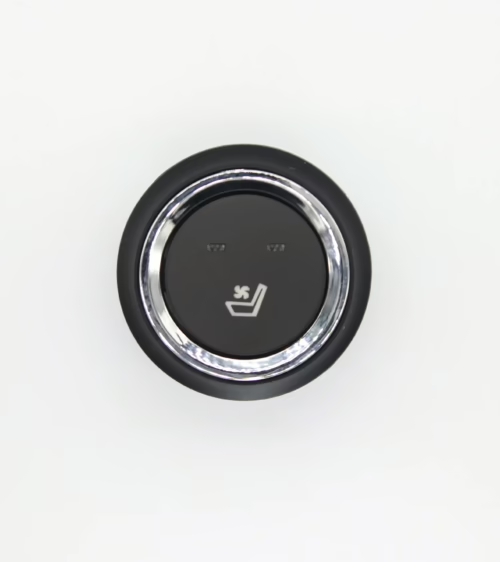
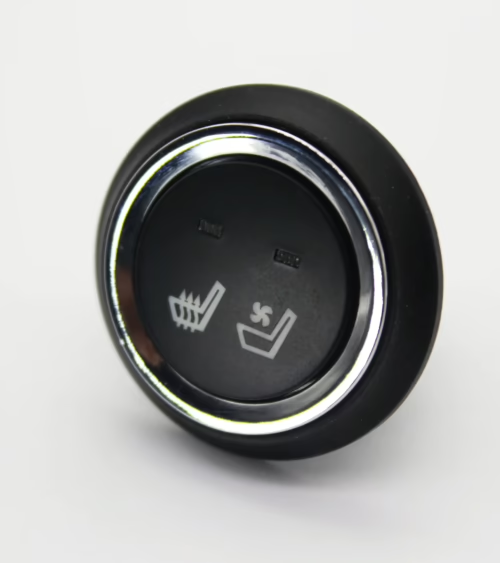
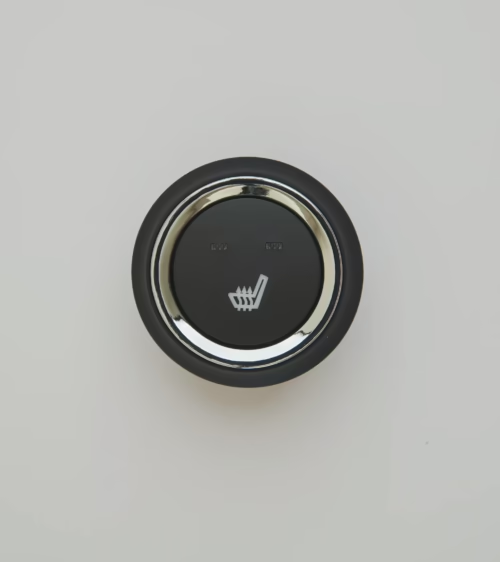
A VW Tiguan heated seat switch that fails to respond, sticks on one heat level, or triggers a dashboard warning is one of the most common comfort-system complaints owners bring to independent shops and VW dealerships alike.
Because the switch sits at the intersection of the driver interface, the seat heating element, and the body control module, a single fault can look like several different problems depending on which Tiguan generation you own.
This guide walks through five practical fixes, the diagnostic logic behind each one, and where to source reliable replacement parts when the switch itself is the culprit.
How the Tiguan Heated Seat Circuit Works
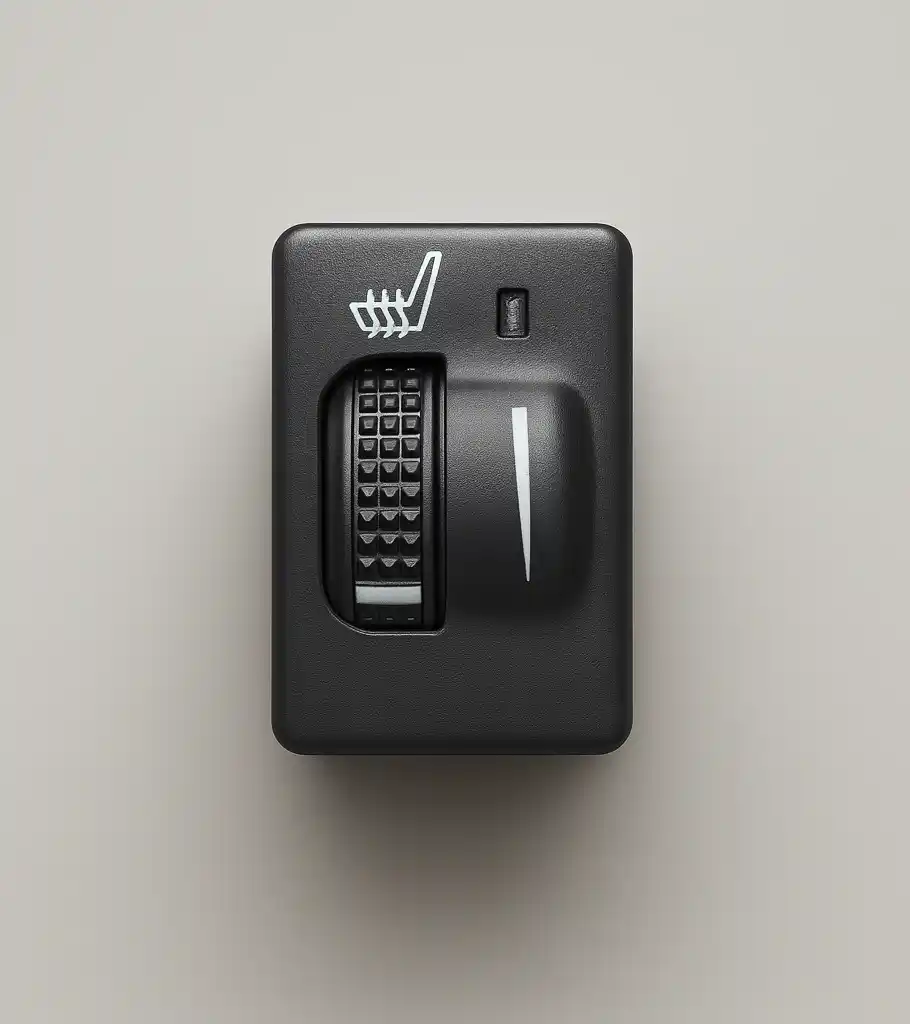
Volkswagen’s heated seat system uses a low-voltage circuit that runs from the seat heater switch, through the vehicle’s body control module (or a dedicated seat heater control module on later models), to a heating pad embedded in the seat cushion and backrest foam.
Most Tiguan trims use a resistive wire or carbon-fiber heating element paired with a thermistor that reports seat surface temperature back to the control module, allowing the system to cycle power and hold a consistent heat level rather than running at full output continuously.
When any link in that chain degrades — the switch contacts, the wiring harness under the seat rail, or the thermistor itself — the symptom is usually the same from the driver’s seat:
- the button lights up but nothing happens
- or the seat heats unevenly and then shuts off.
Fix 1: Confirm the Switch Is Actually the Fault
Before ordering parts, isolate the switch from the rest of the circuit. Turn the ignition to accessory power, press the heated seat button, and listen or feel for a faint click and warmth building over 60 to 90 seconds.
If the indicator light illuminates but the seat never warms, the switch may still be sending a signal — the fault is more likely downstream in the pad or module.
If the light itself does not illuminate at all, that points to a dead switch, a blown fuse, or a broken ground. A basic continuity check with a multimeter across the switch terminals, with the connector unplugged, confirms whether the switch is passing current when pressed.
This single test prevents the most common mistake owners make: replacing a switch that was never actually broken.
Fix 2: Check Fuses and Grounds Before Replacing Anything
Volkswagen routes the heated seat circuit through a dedicated fuse in the interior fuse panel, typically located behind a trim panel near the driver’s left knee.
A blown fuse produces the exact same symptom as a failed switch — no light, no heat, no response — so this should be the first physical check, not the last.
Inspect the fuse visually or test it with a multimeter for continuity, and replace it with an identical amperage rating if it has failed.
While the panel is open, check the ground strap connections near the seat base as well; corrosion or a loosened ground bolt under the seat rail is a frequent cause of intermittent heating that mechanics initially misdiagnose as a bad switch.
Fix 3: Inspect the Wiring Harness Under the Seat
The wiring harness that connects the switch, module, and seat pad runs through a flexible pigtail near the seat rail, and this is the highest-wear point in the entire circuit because it flexes every time the seat is adjusted forward or back.
Over years of use, the copper strands inside that pigtail can fatigue and break internally while the outer insulation still looks intact, which is why a visual inspection alone often misses the fault.
Wiggle the harness gently near the connector while the seat heater is active and watch for the indicator light flickering or the heat cutting in and out — that motion-sensitive behavior is a strong signal of a fractured wire rather than a switch or pad failure.
Repairing this section usually means splicing in a new harness segment rather than replacing the entire seat wiring assembly.
Fix 4: Test the Seat Heating Pad and Thermistor
If the switch and wiring test clean but the seat still will not warm, the heating pad or its integrated thermistor is the likely point of failure.
These pads are thin resistive elements bonded to the foam under the seat trim, and they can develop hot spots, cold spots, or complete opens after repeated compression cycles from years of getting in and out of the vehicle.
A technician can measure resistance across the pad’s connector pins and compare the reading to VW’s published specification for that seat position; a reading of infinite resistance indicates an open circuit in the pad itself, while a reading well outside spec suggests a partially failed element.
Pad replacement requires removing the seat cover, which is a more involved repair than swapping a switch, so confirming the pad is genuinely at fault before disassembly saves significant labor time.
Fix 5: Replace the Switch With a Direct-Fit OEM-Grade Part
When testing confirms the switch itself has failed — cracked internal contacts, a worn rocker mechanism, or a dead LED indicator — replacement is straightforward on most Tiguan trims. The switch is part of a climate control panel or a standalone rocker assembly that unclips without disturbing the wiring harness.
Matching the exact connector pinout and button labeling to your model year is critical, because VW revised the switch design across the Tiguan’s production run, and a mismatched part will not seat properly or may not communicate correctly with the body control module. Lucky Driver Inc.
maintains a catalog of replacement seat heater switches built to OEM fitment and electrical specifications, which removes the guesswork of cross-referencing part numbers from a salvage yard listing.
When to Escalate Beyond the Switch
Some Tiguan heated seat faults are not isolated to a single component.
If both front seat heaters fail at once, or the fault appears alongside other electrical symptoms such as a dead seat memory function, suspect the body control module or a shared supply circuit rather than two switches failing together.
In these cases, a dealership-level diagnostic scan is worth the cost before replacing any individual part, since module-level faults can throw fault codes that a basic multimeter check will not reveal. Owners should also weigh part quality carefully during any repair:
- aftermarket electrical components that don’t meet automotive-grade tolerances for temperature cycling and vibration resistance tend to fail again within a year
- turning a one-time fix into a recurring expense.
Frequently Asked Questions
Q: Why does my VW Tiguan heated seat switch light up but the seat never gets warm?
A: This usually means the switch is sending a signal correctly but the fault lies downstream — most often a broken wire in the under-seat harness or a failed heating pad.
Check harness continuity and pad resistance before replacing the switch itself.
Q:
- Can I replace a VW Tiguan heated seat switch myself?
A: Yes - on most Tiguan trims the switch unclips from the dash or console panel without needing to remove the seat
- making it a straightforward DIY swap as long as the replacement part matches your model year’s connector and pinout.
Q: How long do VW heated seat pads typically last?
A: Heating pads generally last the life of the vehicle under normal use, but repeated compression from years of entry and exit can eventually create hot spots or open circuits, particularly on the driver’s side.
If your diagnostic points to a failed switch, harness, or pad, don’t gamble on a poorly-matched part that fails again within months. Lucky Driver Inc.
supplies OEM-grade seat heater switches, control modules, and heating elements engineered to automotive electrical standards — browse our full range of seat heating products to find the exact fit for your Tiguan and get your seat heat working reliably again.
Related Articles
- Volkswagen Jetta Seat Heater Switch: 5 Common Fixes (2026)
- Mazda CX-5 Heated Seat Switch: 5 Fixes (2026 Guide)
- Kia Sportage Seat Heater Switch: 5 Fixes (2026 Guide)
- Kia Sorento Heated Seat Switch: 5 Fixes (2026 Guide)
- Hyundai Tucson Seat Heater Switch: 5 Fixes (2026 Guide)
Frequently Asked Questions About vw tiguan heated seat switch
Procurement engineers evaluating vw tiguan heated seat switch for OEM programs regularly ask the following questions. Answers cover specification, compatibility, certification, and sourcing for vw tiguan heated seat switch requirements.
What voltage ratings are available for vw tiguan heated seat switch?
Standard vw tiguan heated seat switch configurations support 12 V DC for passenger vehicles and 24 V DC for commercial trucks. Selecting the correct vw tiguan heated seat switch voltage at the design stage eliminates harness rework later.
Lucky Driver maintains vw tiguan heated seat switch inventory in both ratings for same-week shipment.
Which certifications apply to vw tiguan heated seat switch production?
vw tiguan heated seat switch assemblies entering OEM programs typically require UL recognition, REACH compliance, and RoHS documentation. Lucky Driver holds certification records for every vw tiguan heated seat switch variant and includes copies with sample and production shipments.
How is watt density specified for vw tiguan heated seat switch?
Watt density for vw tiguan heated seat switch is expressed in W/cm² and ranges from 0.04 to 0.12 depending on heat-up time requirements. Lower watt density vw tiguan heated seat switch designs improve element longevity, while higher values suit cold-climate applications.
Lucky Driver engineering reviews vw tiguan heated seat switch requirements and recommends watt density based on your seat platform.
What connector families are used with vw tiguan heated seat switch?
vw tiguan heated seat switch harnesses are available with Molex, TE Connectivity, and Delphi connector families. Matching the vw tiguan heated seat switch connector to the vehicle harness reduces assembly time and eliminates adapter cables.
Specify your harness format when requesting a vw tiguan heated seat switch quote from Lucky Driver.
What is the lead time for vw tiguan heated seat switch samples?
vw tiguan heated seat switch samples from Lucky Driver’s North American warehouse ship within 3 to 5 business days for standard configurations. Custom vw tiguan heated seat switch variants with modified pad geometry or connector pinouts require 4 to 6 weeks.
Contact Lucky Driver to confirm vw tiguan heated seat switch availability before submitting your engineering schedule.