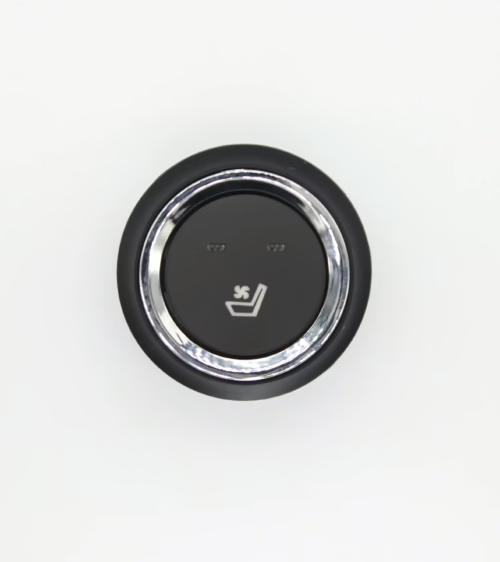
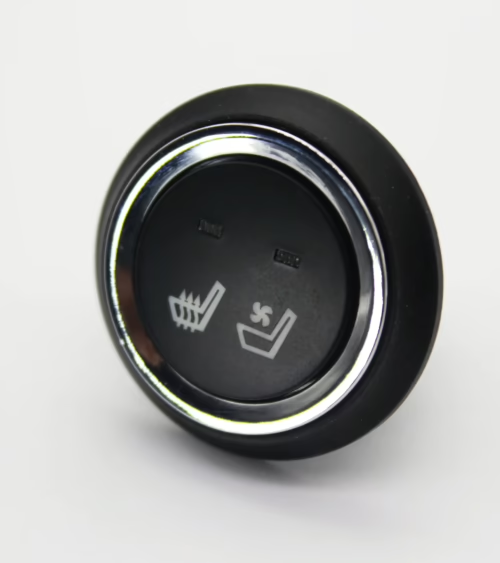
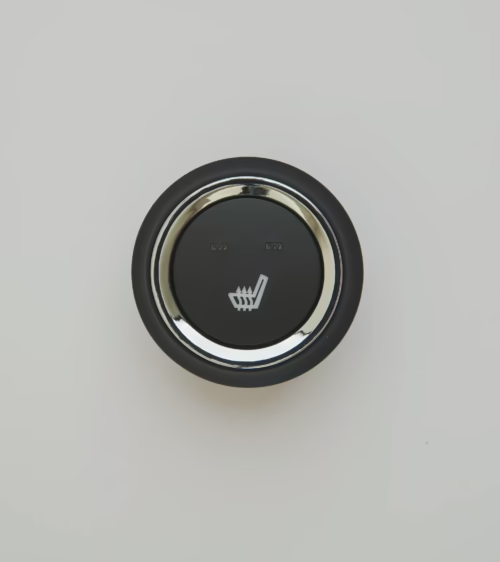
A malfunctioning Volkswagen Jetta seat heater switch is one of the most common comfort-system complaints owners bring to VW service bays, especially once a vehicle passes the five-year mark.
Whether the switch light won’t illuminate, the heat cycles intermittently, or nothing happens at all when the button is pressed, the root cause is usually traceable to one of a handful of well-documented failure points.
This guide walks through how the Jetta’s seat heating circuit is built, the symptoms that point to a bad switch versus a bad heating element, five diagnostic steps a technician or confident DIYer can follow, and what to consider when sourcing a replacement part.
How the Jetta Seat Heater Switch System Works
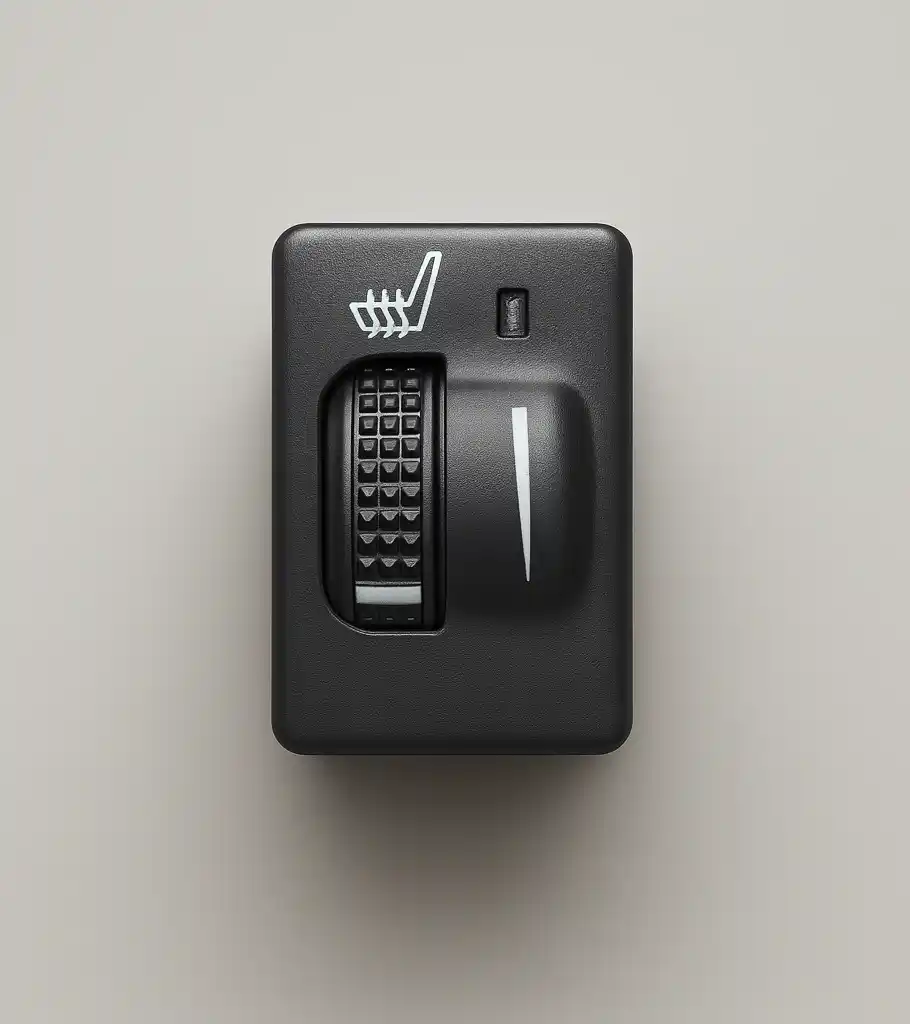
On most Jetta generations (MK5 through MK7.5), the seat heater switch is a momentary or rocker-style button integrated into the lower dash or center stack, wired to a dedicated seat heater control module rather than directly to the heating pad.
Pressing the switch sends a low-voltage signal to the control module, which then applies switched power to the heating element inside the seat cushion and backrest.
Many newer Jetta trims route this signal over the vehicle’s internal data network rather than a dedicated hard wire, meaning the switch itself is really a small input device reporting a button state to the module.
This architecture is one reason a switch can “feel” broken when the actual fault lies downstream in the control module or the heating pad’s temperature sensor.
Common Symptoms of a Failing Seat Heater Switch
Not every seat heating complaint originates at the switch. Before ordering parts, it helps to separate switch-specific symptoms from heating element or wiring symptoms:
- Indicator light does not illuminate at all when pressed, even briefly
- Light illuminates but no heat is produced on either level
- Switch works intermittently, requiring several presses to engage
- Only one heat level (low or high) functions, while the other does nothing
- Switch is physically stuck, cracked, or the button no longer springs back
- Heat comes on but never turns off, even after the switch is pressed again
A switch that lights up but produces no heat often points to a downstream fault in the pad or wiring harness rather than the switch itself, while a switch with no light response at all is a stronger indicator of a failed switch or a blown fuse feeding it.
5 Steps to Diagnose a Volkswagen Jetta Seat Heater Switch Problem
Follow this sequence before assuming the switch needs replacement. Each step rules out a specific failure point.
- Step 1 – Check the fuse. Consult the owner’s manual fuse diagram for the seat heater circuit, typically located in the dash-mounted fuse box. A blown fuse will disable the switch entirely, including the indicator light.
- Step 2 – Test both seats. If the driver and passenger switches fail simultaneously, the problem is more likely a shared fuse, ground, or module fault than two coincidentally failed switches.
- Step 3 – Listen and feel for click response. A working switch should give tactile feedback. A mushy or silent press often means worn internal contacts.
- Step 4 – Use a multimeter at the switch connector. With the switch disconnected, check for continuity across the terminals as the button is pressed through each heat level. No continuity confirms an internally failed switch.
- Step 5 – Scan for stored fault codes. On Jettas where the switch talks digitally to the seat heater control module, a scan tool shows whether the module sees a valid switch signal or an open circuit — which separates a switch fault from a module fault.
- This is especially useful on vehicles using a CAN bus architecture, where the switch input is transmitted as digital data rather than a simple analog voltage signal.
If the switch fails the continuity test in Step 4 but the fuse, wiring, and module all check out, replacement is the correct next step.
Replacing the Seat Heater Switch: What to Expect
Physical replacement is generally straightforward on the Jetta. The switch panel is usually held in place by spring clips and can be gently pried free with a plastic trim tool to avoid scratching the surrounding dash finish.
Once removed, the wiring harness connector unclips from the back of the switch, and the new unit snaps in using the reverse procedure. No special tools are required beyond a trim panel removal tool, and the job typically takes under 20 minutes per switch.
It’s worth confirming the connector pin-out matches your specific Jetta trim and model year before ordering, since switch part numbers vary between the standard two-level heat switches and the three-level or heated-and-ventilated combination switches used on higher trims.
Buyers replacing a failed unit should compare pin count and connector shape against the original part rather than relying on model year alone, since mid-cycle refreshes sometimes changed the switch housing without changing the trim name.
OEM vs Aftermarket Seat Heater Switches
Owners facing a failed switch generally choose between a dealer-sourced OEM part and a quality aftermarket equivalent. OEM switches guarantee an exact factory fit and connector match but typically carry a higher price and longer lead time through a dealership parts counter.
Aftermarket switches, when sourced from a supplier that manufactures directly for OEM seat platforms, can offer the same connector geometry and electrical specification at a lower cost and faster turnaround. Lucky Driver Inc.
supplies replacement seat heater switches engineered to match factory wiring harnesses and heat-level logic, which means installation follows the same plug-and-play process as an OEM part without the dealership markup.
If you also need a matching heating pad or control module while the seat is already apart, it’s worth a few minutes to browse the full catalog of seat heating components and address the whole circuit in one service visit.
Preventing Future Seat Heater Switch Failures
Switch failures are rarely random. A few habits extend the service life of both the switch and the heating circuit behind it:
- Avoid pressing the switch with excessive force; the internal contacts are rated for light momentary pressure
- Keep liquids away from the switch area, since spills are a leading cause of corroded internal contacts
- Address a flickering indicator light early rather than continuing to operate a switch showing intermittent behavior
- Have the seat heating circuit inspected during any seat upholstery or seat rail service, since technicians occasionally disturb the wiring harness during unrelated repairs
Routine inspection during scheduled maintenance is far cheaper than diagnosing a full circuit failure after months of intermittent operation have masked the original fault.
Cost and Time Expectations for Repair
Parts cost for a replacement switch is typically modest compared to labor at a dealership, and most independent shops can complete the diagnosis and swap within an hour when the fault is isolated to the switch itself.
DIY installation eliminates labor cost entirely for owners comfortable removing dash trim panels. Where costs escalate is when the seat heater control module or the in-seat heating element itself needs replacement, both of which involve more extensive disassembly of the seat structure.
This is precisely why the diagnostic sequence in this guide emphasizes confirming the switch as the actual point of failure before ordering parts, since a module or pad-level fault will not be resolved by a new switch alone.
Frequently Asked Questions
Q:
- Can a bad seat heater switch drain my Jetta’s battery?A: It’s uncommon but possible if the switch fails in a way that keeps the heating circuit permanently powered rather than fully open. If the seat feels warm with the vehicle off
- disconnect the battery and have the circuit inspected promptly.
Q:
- Why does only the passenger seat heater switch work and not the driver’s side?A: Each seat typically runs on an independent switch
- harness branch
- heating pad
- so a single-side failure almost always points to that seat’s specific switch
- connector
- or pad rather than a shared circuit issue.
Q: Is it safe to drive with a malfunctioning seat heater switch?
A: Yes, a failed switch does not affect vehicle drivability or safety systems. The seat heating circuit is isolated from steering, braking, and powertrain functions, so the only impact is loss of heating comfort.
If your Volkswagen Jetta’s seat heater switch has failed the diagnostic checks above, Lucky Driver Inc. supplies precision-matched seat heater switches, heating pads, and control modules built to OEM specifications for a wide range of Volkswagen and other vehicle platforms.
Reach out to our team for help identifying the correct part number for your Jetta’s trim and model year, and get your seat heating restored without the dealership wait.
Related Articles
- Mazda CX-5 Heated Seat Switch: 5 Fixes (2026 Guide)
- Kia Sportage Seat Heater Switch: 5 Fixes (2026 Guide)
- Kia Sorento Heated Seat Switch: 5 Fixes (2026 Guide)
- Hyundai Tucson Seat Heater Switch: 5 Fixes (2026 Guide)
- Hyundai Sonata Heated Seat Switch: 5 Fixes (2026 Guide)
Frequently Asked Questions About volkswagen jetta seat heater switch
Procurement engineers evaluating volkswagen jetta seat heater switch for OEM programs regularly ask the following questions. Answers cover specification, compatibility, certification, and sourcing for volkswagen jetta seat heater switch requirements.
What voltage ratings are available for volkswagen jetta seat heater switch?
Standard volkswagen jetta seat heater switch configurations support 12 V DC for passenger vehicles and 24 V DC for commercial trucks. Selecting the correct volkswagen jetta seat heater switch voltage at the design stage eliminates harness rework later.
Lucky Driver maintains volkswagen jetta seat heater switch inventory in both ratings for same-week shipment.
Which certifications apply to volkswagen jetta seat heater switch production?
volkswagen jetta seat heater switch assemblies entering OEM programs typically require UL recognition, REACH compliance, and RoHS documentation. Lucky Driver holds certification records for every volkswagen jetta seat heater switch variant and includes copies with sample and production shipments.
How is watt density specified for volkswagen jetta seat heater switch?
Watt density for volkswagen jetta seat heater switch is expressed in W/cm² and ranges from 0.04 to 0.12 depending on heat-up time requirements. Lower watt density volkswagen jetta seat heater switch designs improve element longevity, while higher values suit cold-climate applications.
Lucky Driver engineering reviews volkswagen jetta seat heater switch requirements and recommends watt density based on your seat platform.
What connector families are used with volkswagen jetta seat heater switch?
volkswagen jetta seat heater switch harnesses are available with Molex, TE Connectivity, and Delphi connector families. Matching the volkswagen jetta seat heater switch connector to the vehicle harness reduces assembly time and eliminates adapter cables.
Specify your harness format when requesting a volkswagen jetta seat heater switch quote from Lucky Driver.
What is the lead time for volkswagen jetta seat heater switch samples?
volkswagen jetta seat heater switch samples from Lucky Driver’s North American warehouse ship within 3 to 5 business days for standard configurations. Custom volkswagen jetta seat heater switch variants with modified pad geometry or connector pinouts require 4 to 6 weeks.
Contact Lucky Driver to confirm volkswagen jetta seat heater switch availability before submitting your engineering schedule.