Adding heated seats for leather seats is one of the most popular upgrades for drivers who want the comfort of a heated cabin without replacing their factory upholstery.
Leather is naturally well suited to seat heating because it conducts and retains warmth efficiently, but getting a safe, long-lasting installation requires the right heating element, the right seat heater switch, and a few upholstery-specific precautions.
This guide covers what OEM seat manufacturers, upfitters, and aftermarket installers need to know before adding heat to leather seating surfaces.
Why Leather Seats Are Ideal for Heated Seat Installation
Leather has a denser, more uniform surface than cloth or vinyl, which allows heat to transfer evenly from the heating pad to the seating surface without hot spots.
Genuine leather and most leatherette (PU/PVC) upholstery also tolerate the low, steady temperatures produced by automotive seat heaters far better than fabrics that trap moisture.
Because leather is often a premium trim option, those seats are also more likely to have removable covers with hog rings or hook-and-loop backing. That makes it easier to slide a heating pad between the foam and the cover without cutting the upholstery.
That said, leather’s tighter grain also means it dissipates heat differently than cloth, so heating pad wattage and element spacing must be matched to the upholstery type to avoid uneven warm-up or long-term cracking of the leather finish.
How Seat Heating Elements Work Under Leather Upholstery
Automotive seat heaters use resistive heating elements, typically thin wire or carbon-fiber ribbon, that convert electrical current into heat. Many designs incorporate a PTC thermistor as a self-regulating temperature sensor, so the element’s resistance rises as it warms, naturally limiting output and preventing hot spots under the leather.
This matters for leather specifically, because leather has a lower heat tolerance threshold than the foam padding underneath it, and sustained overheating can dry out or discolor the hide over time.
Quality heating pads for leather applications are rated for a maximum surface temperature, usually in the 95-105°F (35-40°C) range, and include a thermal cutoff switch as a safety backup in case the primary thermostat fails.
5 Factors to Consider Before Adding Heated Seats to Leather
Before purchasing a heated seat kit for a leather interior, evaluate these five factors:
- Seat foam density: Firmer OEM leather seat foam distributes heat more evenly than aftermarket bucket seat foam, which can create pressure points.
- Element flexibility: Leather seats with pronounced bolsters and contours need a heating element that flexes without cracking at the seams.
- Wattage per zone: Larger leather seat backs typically require 30-45W heating pads to reach comfortable temperature within a 3-5 minute warm-up window.
- Switch and control compatibility: The heater needs a control interface, whether a factory-style rocker switch or a retrofit module, that matches the vehicle’s 12V wiring and fuse capacity.
- Access to the upholstery seam: Leather seats with hog-ring or hook-and-loop seams allow non-destructive installation, while bonded leather covers may require cutting and re-sealing.
Carbon Fiber vs Wire Heating Elements for Leather Seats
Two heating element technologies dominate the seat heater market:
- woven carbon-fiber pads and coiled resistive wire elements. Carbon-fiber elements are thinner
- more flexible
- distribute heat more evenly across a larger surface area
- which makes them a strong fit for leather seats where visible ridges or lumps under the hide would be noticeable. Wire elements are more affordable and have a long track record of reliability
- but the individual wire strands can create faint pressure lines under thinner leather over years of use.
For leather bucket seats with pronounced bolsters, a segmented carbon-fiber pad that follows the seat’s contour typically outperforms a single flat wire mat, both in comfort and in long-term durability of the leather surface above it.
Choosing the Right Seat Heater Switch and Control Module
The heating element is only half the system. A reliable switch or control module determines how consistently the seat reaches and holds temperature, and how easy it is for the driver to operate.
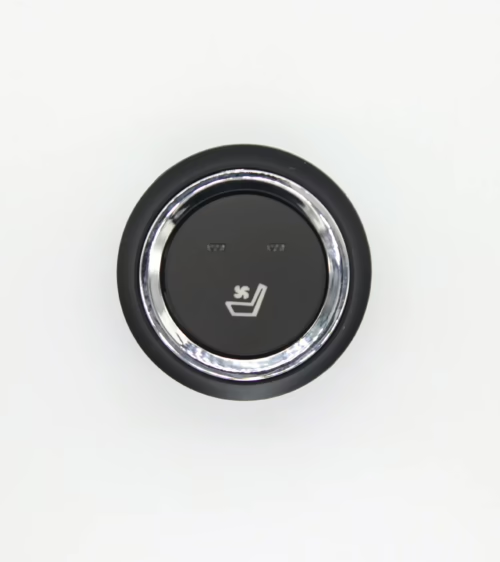
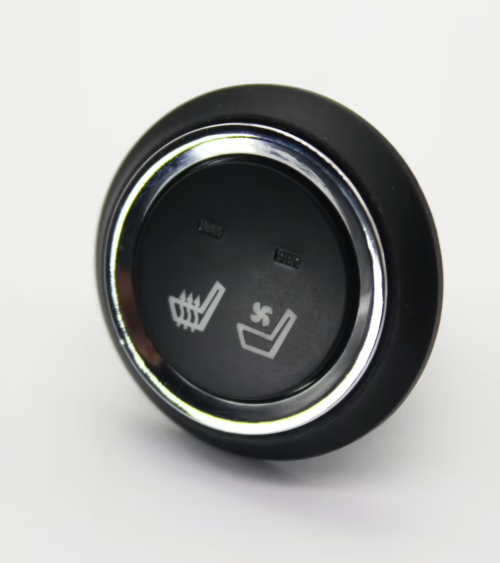
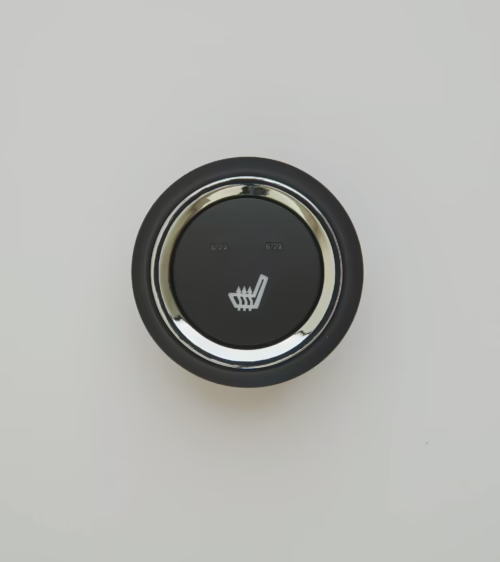
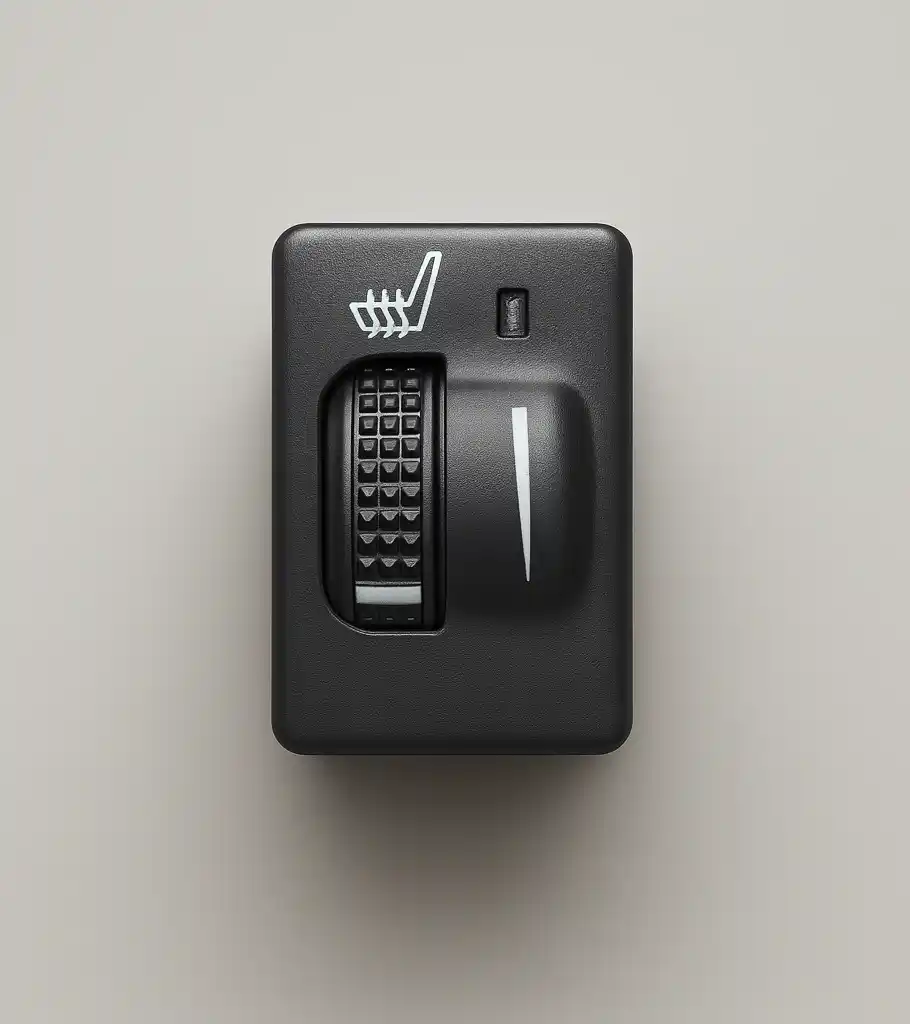
Factory-style rocker switches with two or three heat settings are the most common retrofit option and integrate cleanly into a leather seat’s console or dash trim.
For installers upgrading multiple vehicles, browsing a dedicated seat heater switch catalog makes it easier to match connector types, amperage ratings, and mounting styles to the specific seat and vehicle platform.
Some newer installations use a control module with an integrated timer or automatic shut-off, which is particularly useful for leather seats since it prevents the surface from being exposed to sustained heat if a driver forgets to turn the system off.
Installation Considerations for Leather-Specific Seats
Installing heated seats in a leather interior differs from cloth installation in a few key ways. First, leather seat covers are usually secured with hog rings, clips, or hook-and-loop strips rather than sewn-in channels, so the cover typically needs to be pulled back rather than unstitched.
Second, because leather is less forgiving of adhesive residue, installers should use low-tack mounting tape or the pad’s factory-sewn tabs rather than aggressive spray adhesives that can bleed through and stain the underside of the hide.
Third, wiring harnesses should be routed and secured away from high-flex areas of the seat back and bottom, since repeated flexing near a leather seam can accelerate wear at the stitch line.
Finally, always test the heating pad’s fit and function before the leather cover is fully reinstalled. Confirming even heat distribution and correct switch operation at this stage avoids having to remove a re-fitted leather cover to troubleshoot a wiring issue later.
Maintenance and Longevity Tips for Heated Leather Seats
Once installed, heated seats generally add minimal maintenance burden to a leather interior, provided a few habits are followed. Avoid running the heater on its highest setting for extended periods in warm climates, since leather conditioners and finishes can break down faster under repeated high heat exposure.
Clean and condition the leather on a normal schedule, but choose leather conditioners that state they are safe for use over heating elements, as some heavier waxes can insulate the surface and slow warm-up times.
If a seat heater stops working, check the fuse and switch connections before assuming the heating pad itself has failed, since switch and wiring faults are a far more common failure point than the element.
With correct wattage selection, a flexible heating pad, and a properly rated switch, a heated seat installation can run reliably in a leather seat for the life of the vehicle.
Aftermarket vs OEM Heated Seat Kits for Leather
Drivers and installers generally choose between OEM-style replacement kits, built to match a specific vehicle’s factory seat heater footprint and connector, and universal aftermarket kits designed to fit a wide range of seat shapes.
OEM-style kits offer a closer match to factory heat-up time and switch appearance, which matters most in leather interiors where trim consistency is part of the vehicle’s premium feel.
Universal kits cost less and work across more vehicles, but require more careful pad placement to avoid uneven heating under thicker leather bolsters.
For shops handling multiple makes and models, stocking both kit types and matching them to each customer’s leather seat profile produces more consistent results than committing to a single universal solution for every job.
Frequently Asked Questions
Will heated seats damage leather over time?
Properly rated seat heaters with thermostatic control do not damage leather under normal use.
Damage typically occurs only when a heating element runs at excessive temperatures for extended periods without a thermal cutoff, which is why choosing a pad with a built-in temperature sensor matters for leather applications.
Can I add heated seats to leather seats that didn’t come with them from the factory?
Yes. Aftermarket heated seat kits are designed to install under most leather seat covers using the existing seams, and do not require replacing the leather itself in most cases.
How long does it take a heated leather seat to warm up?
Most quality heating pads reach a comfortable seating temperature within 3 to 5 minutes on the highest setting, though thicker leather and denser foam can add slightly to warm-up time compared to cloth seats.
Whether you’re outfitting a single vehicle or sourcing components for a production line of leather-trimmed seats, Lucky Driver Inc. supplies heating pads, switches, and control modules engineered for reliable performance under real-world use.
Explore our full range of seat heating products to find the right fit for your leather seat installation, or contact our team for OEM-grade sourcing support.
Related Articles
- Universal Heated Seat Kit Installation: 6 Steps for 2026
- DIY Heated Seat Install: 7 Steps to Do It Right (2026)
- Heated Seat Installation Near Me: 5 Ways to Find a Pro (2026)
- Aftermarket Heated Seats Cost: 2026 Guide to 5 Price Tiers
- Heated Seat Retrofit Kit: A 7-Step Buyer’s Guide (2026)
Frequently Asked Questions About heated seats for leather seats
Procurement engineers evaluating heated seats for leather seats for OEM programs regularly ask the following questions. Answers cover specification, compatibility, certification, and sourcing for heated seats for leather seats requirements.
What voltage ratings are available for heated seats for leather seats?
Standard heated seats for leather seats configurations support 12 V DC for passenger vehicles and 24 V DC for commercial trucks. Selecting the correct heated seats for leather seats voltage at the design stage eliminates harness rework later.
Lucky Driver maintains heated seats for leather seats inventory in both ratings for same-week shipment.
Which certifications apply to heated seats for leather seats production?
heated seats for leather seats assemblies entering OEM programs typically require UL recognition, REACH compliance, and RoHS documentation. Lucky Driver holds certification records for every heated seats for leather seats variant and includes copies with sample and production shipments.
How is watt density specified for heated seats for leather seats?
Watt density for heated seats for leather seats is expressed in W/cm² and ranges from 0.04 to 0.12 depending on heat-up time requirements. Lower watt density heated seats for leather seats designs improve element longevity, while higher values suit cold-climate applications.
Lucky Driver engineering reviews heated seats for leather seats requirements and recommends watt density based on your seat platform.
What connector families are used with heated seats for leather seats?
heated seats for leather seats harnesses are available with Molex, TE Connectivity, and Delphi connector families. Matching the heated seats for leather seats connector to the vehicle harness reduces assembly time and eliminates adapter cables.
Specify your harness format when requesting a heated seats for leather seats quote from Lucky Driver.
What is the lead time for heated seats for leather seats samples?
heated seats for leather seats samples from Lucky Driver’s North American warehouse ship within 3 to 5 business days for standard configurations. Custom heated seats for leather seats variants with modified pad geometry or connector pinouts require 4 to 6 weeks.
Contact Lucky Driver to confirm heated seats for leather seats availability before submitting your engineering schedule.