The aftermarket heated seats cost for a typical two-seat installation ranges from about $50 for a basic single-stage kit to over $400 for a dual-zone, multi-stage system installed by a professional shop.
The final number depends on which components you buy, whether you install the system yourself, and how much labor a shop charges to disassemble and reassemble your seats. This guide breaks down every cost variable so you can budget accurately before ordering parts.
What Determines the Price of an Aftermarket Heated Seat Kit
Every heated seat kit is built from the same core parts:
- a carbon-fiber or wire-loop heating pad
- a control switch or module
- wiring harnesses
- fuse taps. Price differences come from pad quality
- the number of heat settings
- whether the kit includes a seat-back pad in addition to a seat-bottom pad
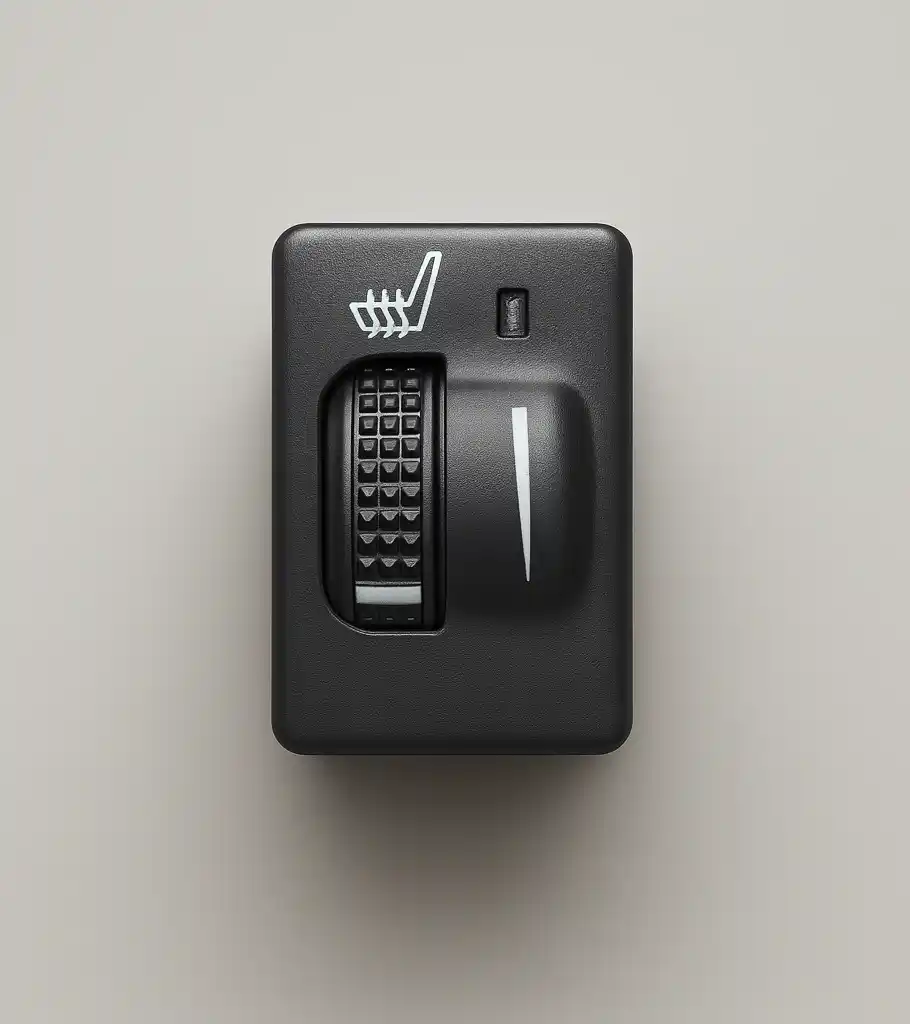
- whether the switch is a simple rotary dial or an OEM-style illuminated button. Kits sourced directly from a seat heater manufacturer typically cost less than the same components sold under a retail auto-parts brand
- because there are fewer distribution markups.
Price Tier 1: Basic Single-Seat, Single-Stage Kits ($50-$90)
Entry-level kits include one seat-bottom pad, a two-wire rotary or toggle switch, and a wiring harness. These systems offer a single heat output level with no temperature regulation beyond an on/off switch.
They are the cheapest way to add warmth to a driver’s seat but lack the graduated heat control and durability features found in higher tiers. Expect a thinner heating element and a shorter expected service life, typically 3-5 years of regular use.
Price Tier 2: Multi-Stage Dual-Seat Kits ($120-$220)
This is the most common purchase for aftermarket installs. A dual-seat kit with 3-stage heat settings (low/medium/high) covers both front seats and usually includes both seat-bottom and seat-back pads.
Multi-stage control requires a more sophisticated switch assembly and a thermostat or timer circuit to prevent overheating, which adds to the parts cost.
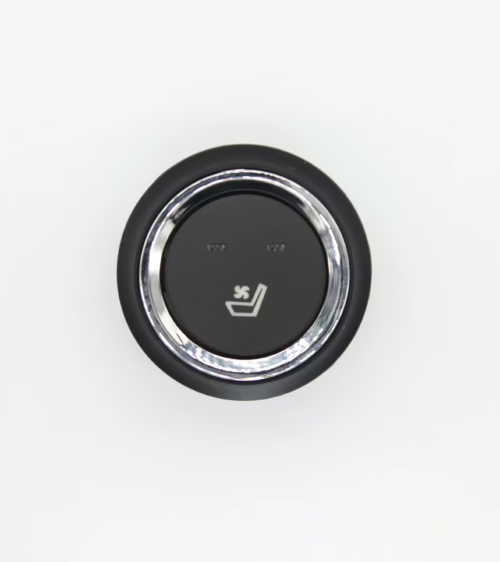
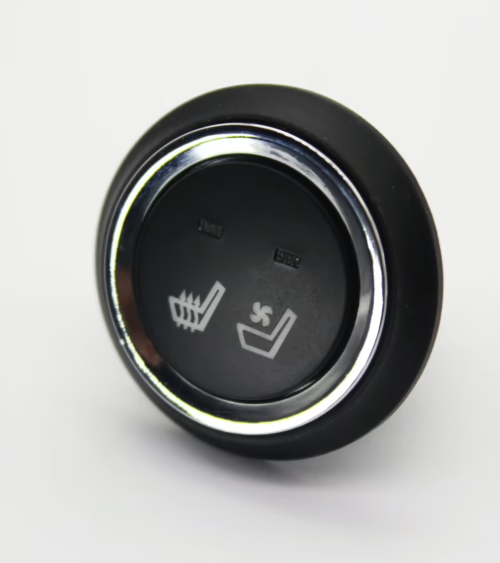
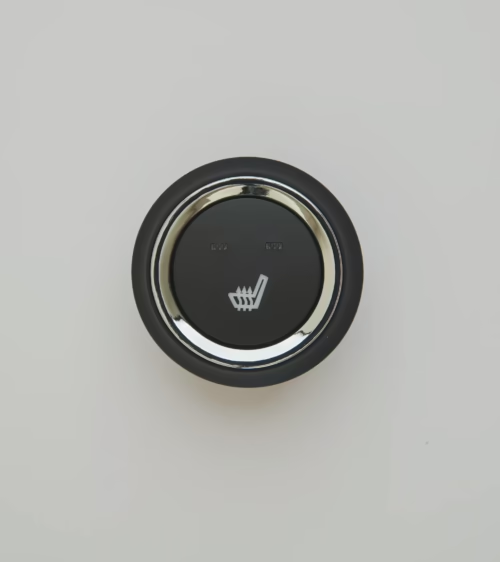
Buyers who want a factory-like feel should look for replacement seat heater switches with backlit icons that match the OEM dash aesthetic, since these blend into the interior far better than universal rotary dials.
Price Tier 3: OEM-Style Modules and Ventilated Combo Kits ($200-$400+)
At the top end, kits use a dedicated seat heater control module rather than a simple switch-to-pad circuit. These modules regulate current more precisely, support CAN-bus integration on newer vehicles, and often pair heating with seat ventilation blowers for climate-controlled seating.
Combo heated-and-ventilated kits cost more because they require a blower motor, ducting, and a perforated cover-compatible pad in addition to the heating element and control electronics. Fleet buyers and seat manufacturers integrating these modules at scale should evaluate module compatibility with existing seat wiring before purchase.
Installation Labor Costs: DIY vs. Professional Shop
Parts are only half the aftermarket heated seats cost equation.
DIY installation is free beyond tool costs (a hog ring pliers set and basic wiring tools run $20-$40), but requires removing the seat cover, stapling or clipping the pad to the foam, and routing wiring to a fused power source.
A professional installer typically charges $75-$150 per seat for labor, since seat disassembly, foam fitting, and cover re-tensioning take 1-2 hours per seat when done correctly. Leather seats generally cost more to install into than cloth, because leather covers are less forgiving of stretching and re-stapling.
Heating Element Technology and Why It Affects Price
Two heating element types dominate the aftermarket:
- wire-loop elements and carbon-fiber elements. Wire-loop pads are less expensive to manufacture but create a rigid heat pattern that some users feel through thin seat covers. Carbon-fiber pads flex with the seat foam
- distribute heat more evenly
- resist fatigue cracking from repeated compression
- which is why they typically carry a 15-30% price premium. Both technologies rely on Joule heating
- where electrical resistance in the element converts current into heat
- the difference in cost reflects element durability and heat distribution quality rather than the underlying physics.
Hidden Costs to Budget For
Buyers often underestimate secondary costs. A fuse tap kit or add-a-circuit adapter ($10-$15) is needed if the vehicle doesn’t have a spare accessory circuit. Seat covers can tear during removal on older vehicles, adding replacement cost if the material has degraded.
Vehicles with seat-mounted airbags require extra care during disassembly, and some installers charge more for airbag-equipped seats due to the added liability and precision required. Warranty coverage also varies:
- kits bought from a seat heater specialist often carry longer parts warranties than generic kits bundled through general auto retailers
- which can offset a slightly higher upfront price.
How to Get the Best Value
The most cost-effective approach is matching kit tier to actual use. A commuter who wants basic warmth on cold mornings doesn’t need a CAN-bus module built for OEM integration; a single-stage or basic multi-stage kit covers that need at a fraction of the cost.
Shoppers upgrading several vehicles, outfitting a fleet, or replacing failed factory elements should compare pad gauge, switch build quality, and warranty side by side rather than on price alone. A cheap pad that fails in two years costs more than a mid-tier pad lasting eight.
Reviewing a full catalog of seat heating pads and kits before deciding helps identify which combination of pad size, wattage, and control type fits your specific seat and budget.
FAQ
How much does it cost to add heated seats aftermarket?
Most drivers spend $120-$220 on a dual-seat, multi-stage kit plus $150-$300 in professional installation labor if not installing it themselves, for a total of roughly $270-$520 per vehicle.
Is it cheaper to install heated seats myself?
Yes. DIY installation eliminates the $75-$150 per-seat labor charge, leaving only the kit price and basic tools, though it requires comfort with seat disassembly and wiring.
Do aftermarket heated seats cost more to run than factory ones?
No. Aftermarket pads draw comparable current to factory-installed heating elements, typically 4-6 amps per seat on high, so the added load on the vehicle’s electrical system is negligible.
Whether you need a single replacement pad, a full dual-zone kit, or bulk components for a fleet or OEM integration project, Lucky Driver Inc. supplies seat heating pads, switches, and control modules built for reliable, long-term performance.
Contact our team to find the right kit for your vehicle and budget.
Related Articles
- Heated Seat Retrofit Kit: A 7-Step Buyer’s Guide (2026)
- Add Heated Seats to Chevy Silverado: 5 Proven Methods (2026)
- Add Heated Seats to Honda Civic: 5 Steps (2026 Guide)
- Add Heated Seats to Toyota Tacoma: 4 Proven Methods
- How to Add Heated Seats to Jeep Wrangler: 5 Steps (2026)
Frequently Asked Questions About aftermarket heated seats cost
Procurement engineers evaluating aftermarket heated seats cost for OEM programs regularly ask the following questions. Answers cover specification, compatibility, certification, and sourcing for aftermarket heated seats cost requirements.
What voltage ratings are available for aftermarket heated seats cost?
Standard aftermarket heated seats cost configurations support 12 V DC for passenger vehicles and 24 V DC for commercial trucks. Selecting the correct aftermarket heated seats cost voltage at the design stage eliminates harness rework later. Lucky Driver maintains aftermarket heated seats cost inventory in both ratings for same-week shipment.
Which certifications apply to aftermarket heated seats cost production?
aftermarket heated seats cost assemblies entering OEM programs typically require UL recognition, REACH compliance, and RoHS documentation. Lucky Driver holds certification records for every aftermarket heated seats cost variant and includes copies with sample and production shipments.
How is watt density specified for aftermarket heated seats cost?
Watt density for aftermarket heated seats cost is expressed in W/cm² and ranges from 0.04 to 0.12 depending on heat-up time requirements. Lower watt density aftermarket heated seats cost designs improve element longevity, while higher values suit cold-climate applications.
Lucky Driver engineering reviews aftermarket heated seats cost requirements and recommends watt density based on your seat platform.
What connector families are used with aftermarket heated seats cost?
aftermarket heated seats cost harnesses are available with Molex, TE Connectivity, and Delphi connector families. Matching the aftermarket heated seats cost connector to the vehicle harness reduces assembly time and eliminates adapter cables. Specify your harness format when requesting a aftermarket heated seats cost quote from Lucky Driver.
What is the lead time for aftermarket heated seats cost samples?
aftermarket heated seats cost samples from Lucky Driver’s North American warehouse ship within 3 to 5 business days for standard configurations. Custom aftermarket heated seats cost variants with modified pad geometry or connector pinouts require 4 to 6 weeks.
Contact Lucky Driver to confirm aftermarket heated seats cost availability before submitting your engineering schedule.