A boat seat heater turns a cold, damp helm seat into a comfortable place to stand watch during early-morning fishing trips, late-season cruising, or any outing where air and water temperatures drop faster than the sun does.
Unlike automotive seat heaters, marine seat heating systems have to survive salt spray, humidity, vibration, and constant UV exposure, which means the components, wiring, and installation methods differ in important ways.
This guide covers the 5 core things boat owners and marine upholstery shops need to know before adding heat to a helm chair, bench seat, or fighting chair in 2026.
1. Why Boat Seats Need a Different Heating Approach Than Cars
Car seat heaters live inside a dry, climate-controlled cabin. A boat seat heater lives in an environment where salt fog, bilge moisture, and direct rain are routine. That changes three design priorities:
- the heating pad’s moisture resistance
- the wiring’s corrosion resistance
- the switch’s sealing rating. A heating element built for automotive interiors will typically use standard crimp connectors and unsealed switch housings that corrode quickly in a marine environment. Marine-grade kits instead use tinned copper wire
- heat-shrink butt connectors
- switches rated to withstand splash and spray
- since a boat’s electrical system is exposed to conditions a car’s never sees.
2. Core Components of a Marine Seat Heating System
Every boat seat heater installation is built from the same basic components, regardless of boat size or seat style:
- Heating pad or element — a flexible resistive wire or carbon-fiber grid sewn or laminated into a pad shaped for the seat bottom and back cushion.
- Wiring harness — marine-tinned wire that resists corrosion better than standard automotive-grade copper wire.
- Temperature controller — a switch or module that regulates heat output, often with multiple settings (low, medium, high).
- Power connection — a fused tap into the boat’s 12V or 24V DC electrical system, ideally routed through its own breaker.
- Waterproof sealing — connectors, switch housings, and pad edges sealed against moisture intrusion.
Boat owners upgrading an existing seat, or shops fitting out a custom console, generally source the pad and switch as separate components rather than a single pre-molded assembly, since seat shapes on boats vary far more than on cars.
3. Heating Element Types: Resistive Wire vs. Carbon Fiber
Two heating element technologies dominate the seat heater market. Resistive wire elements use a coiled or looped nichrome-style wire sewn into a fabric pad; they are inexpensive, durable, and simple to repair if a section fails.
Carbon-fiber elements use a flat conductive fabric that distributes heat more evenly across the pad’s surface and tends to have a lower profile, which matters on thinly bolstered helm seats and fighting chairs.
Both types rely on basic resistive heating principles, converting electrical current into heat as it passes through a conductor with a defined resistance.
For marine use, the deciding factor is usually flex durability — a boat seat pad gets folded, sat on at odd angles, and exposed to more mechanical stress than a car seat, so element flexibility and stitch pattern matter as much as raw wattage.
4. Sizing Wattage and Voltage for a Boat’s Electrical System
Most recreational boats run on a 12V DC house battery bank, though larger vessels use 24V systems.
Seat heater pads are typically rated 20W to 45W per position at full output. Matching pad voltage to the boat’s system is non-negotiable: a 12V pad on a 24V circuit overheats and fails quickly, and a 24V pad on 12V never produces usable heat.
Installers should also calculate the added draw against the boat’s total house load, particularly on smaller battery banks shared with livewell pumps, chartplotters, and stereo systems.
A typical two-seat helm installation draws under 6 amps combined at full heat, which is manageable on most boats but still deserves its own fused circuit rather than piggybacking off an existing accessory line.
5. Switches, Controllers, and Sealing for Marine Environments
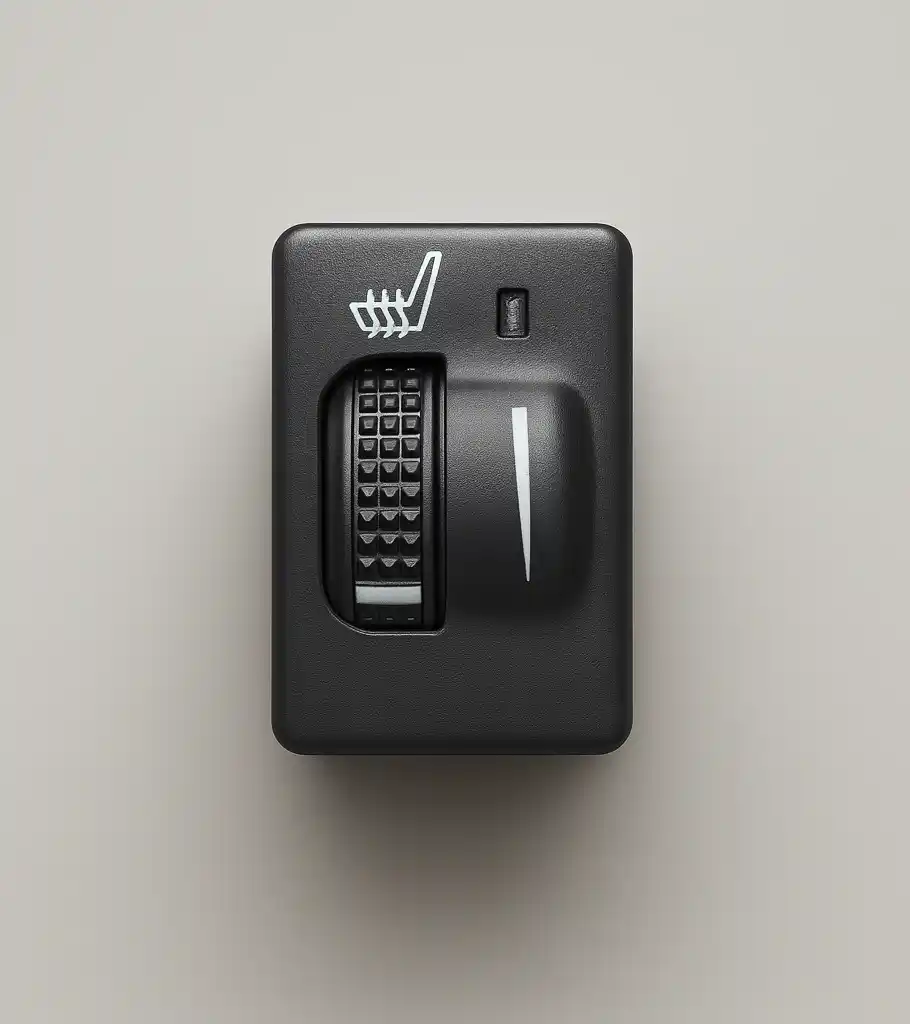
The switch is often the first component to fail on a poorly specified boat seat heater installation, because standard automotive rocker switches aren’t sealed against spray and humidity.
Marine installations should use a switch or controller rated for wet locations, mounted where it won’t take direct wave spray, with wiring runs sealed at every connection point.
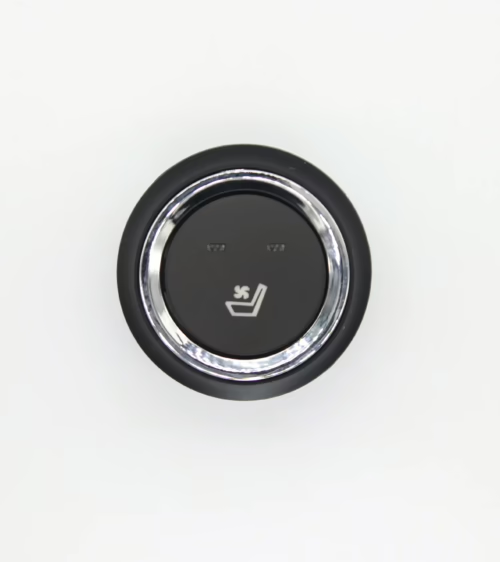
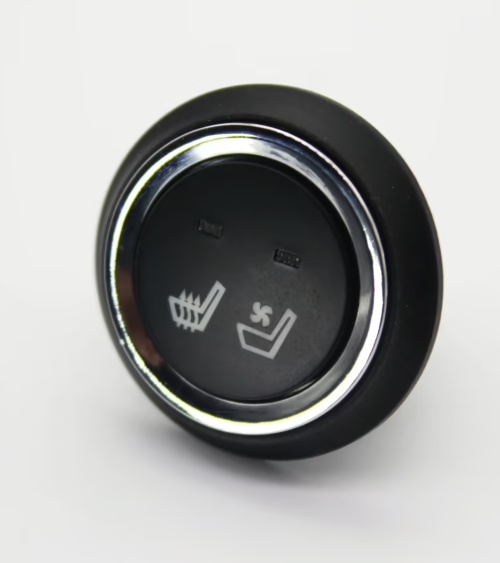
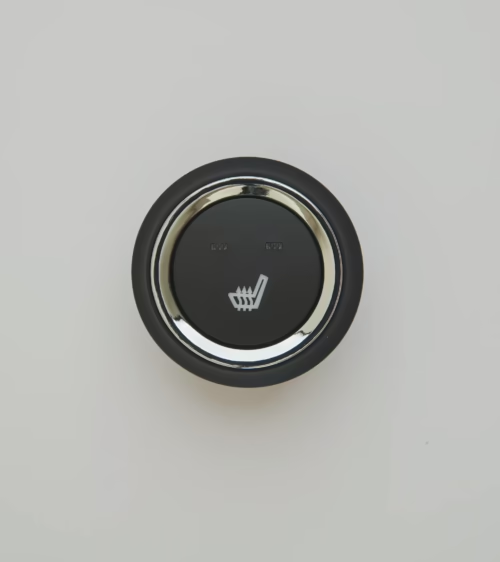
Many upholstery shops standardize on a single switch platform across their automotive and marine seat heating jobs, sourcing marine-rated seat heater switches that offer multiple heat settings and a sealed housing rated for splash exposure.
This keeps wiring diagrams and troubleshooting consistent whether the shop is heating a truck bench seat or a center console helm chair.
6. Installation: Mounting Pads Without Damaging Marine Upholstery
Marine upholstery is typically vinyl or marine-grade fabric over closed-cell foam, both of which respond differently to adhesives and stitching than automotive leather or cloth.
The most durable installations sew the heating pad into a channel between the foam and the outer cover rather than gluing it directly to the foam, since adhesive bonds can fail under repeated UV and moisture cycling.
For do-it-yourself installers working on an existing seat, a slit-and-reinsert method — opening a seam, inserting the pad against the foam, and re-stitching — preserves the factory upholstery look better than surface-mounting a pad on top of the cushion.
Wiring should be routed through existing pedestal or base channels where possible, with enough slack to allow the seat to swivel or fold without pulling on the harness.
7. Maintenance and Troubleshooting in a Saltwater Environment
Salt is the primary long-term threat to any boat seat heater installation. Connectors and switch contacts should be inspected each season for corrosion, and any exposed metal at a crimp or terminal benefits from a light coat of marine-grade dielectric grease.
If a seat heater stops working, the most common causes, in order of likelihood, are a blown fuse, a corroded ground connection, a failed switch, and — least commonly — a break in the heating element itself.
Testing with a multimeter at the harness connector before assuming the pad has failed saves unnecessary reupholstering. Boat owners maintaining several heated seats across a vessel typically keep a spare switch on hand, since it is the single most failure-prone component in a marine heating circuit.
FAQ
Can I install a car seat heater kit in my boat?
Automotive kits usually work electrically on a 12V boat system, but their unsealed connectors and switches are not built for salt spray and humidity. They fail faster afloat than marine-rated components.
How much power does a boat seat heater draw?
A single seat pad typically draws 1.5 to 3.5 amps at 12V on high, depending on wattage. A two-seat helm installation usually stays under 6 amps combined, but it should still run on its own fused circuit.
Will a seat heater work on a vinyl boat seat?
Yes.
Vinyl seats can be heated the same way as fabric or leather seats, though the pad is usually sewn between the foam and the outer cover rather than glued directly to vinyl, since adhesive bonds under vinyl are more prone to failure from heat cycling.
Lucky Driver Inc. supplies seat heating pads, marine-rated switches, and control modules to OEM seat manufacturers, marine upholstery shops, and aftermarket installers across North America.
Whether you’re outfitting a single helm chair or specifying heated seating across a full production line, browse our full range of seat heating products to find the right pad, switch, and controller combination for your next installation.
Related Articles
- RV Heated Seats: 6 Things to Know Before You Upgrade (2026)
- How to Add Heated Seats to a Truck: 7 Steps for 2026
- Heated Seats for Cloth Seats: 7 Things to Know (2026)
- Heated Seats for Leather Seats: 5 Things to Know (2026)
- Universal Heated Seat Kit Installation: 6 Steps for 2026
Frequently Asked Questions About boat seat heater
Procurement engineers evaluating boat seat heater for OEM programs regularly ask the following questions. Answers cover specification, compatibility, certification, and sourcing for boat seat heater requirements.
What voltage ratings are available for boat seat heater?
Standard boat seat heater configurations support 12 V DC for passenger vehicles and 24 V DC for commercial trucks. Selecting the correct boat seat heater voltage at the design stage eliminates harness rework later. Lucky Driver maintains boat seat heater inventory in both ratings for same-week shipment.
Which certifications apply to boat seat heater production?
boat seat heater assemblies entering OEM programs typically require UL recognition, REACH compliance, and RoHS documentation. Lucky Driver holds certification records for every boat seat heater variant and includes copies with sample and production shipments.
How is watt density specified for boat seat heater?
Watt density for boat seat heater is expressed in W/cm² and ranges from 0.04 to 0.12 depending on heat-up time requirements. Lower watt density boat seat heater designs improve element longevity, while higher values suit cold-climate applications.
Lucky Driver engineering reviews boat seat heater requirements and recommends watt density based on your seat platform.
What connector families are used with boat seat heater?
boat seat heater harnesses are available with Molex, TE Connectivity, and Delphi connector families. Matching the boat seat heater connector to the vehicle harness reduces assembly time and eliminates adapter cables. Specify your harness format when requesting a boat seat heater quote from Lucky Driver.
What is the lead time for boat seat heater samples?
boat seat heater samples from Lucky Driver’s North American warehouse ship within 3 to 5 business days for standard configurations. Custom boat seat heater variants with modified pad geometry or connector pinouts require 4 to 6 weeks. Contact Lucky Driver to confirm boat seat heater availability before submitting your engineering schedule.