Adding rv heated seats to a motorhome, travel trailer, or fifth wheel is one of the most practical upgrades an owner can make, especially for those who camp in shoulder seasons or colder climates where cabin heat takes time to reach the driver and passenger area.
Unlike household furniture, RV seating sits close to large windows, thin sidewalls, and drafty door seams, so a heated seat pad can deliver comfort long before the rig’s furnace has caught up.
This guide covers how these systems work, what to look for in components, and how to plan an installation that holds up to the vibration and power constraints unique to RVs.
Why RV Heated Seats Matter for Full-Time and Weekend Travelers
Recreational vehicles are built for weight savings and interior volume, not thermal mass. Cab and lounge seating is typically foam over a metal or composite frame with minimal insulation underneath, which means seat surfaces read cold even when the ambient cabin temperature feels reasonable.
For full-time RVers who drive in early morning or late fall conditions, a heated seat cuts the time-to-comfort dramatically compared to waiting on dash vents or a propane furnace cycle. Weekend campers benefit too:
- a cold vinyl or leatherette dinette bench in an unheated trailer overnight is uncomfortable until the seat itself is warmed
- not just the surrounding air.
How RV Seat Heating Systems Work
Most aftermarket and OEM seat heaters use a flexible heating pad embedded with resistance wire or a carbon fiber element, laid under the seat cushion and backrest upholstery.
Current passing through the element generates heat via resistive (Joule) heating, and a built-in or inline temperature sensor regulates output so the pad doesn’t overheat the foam or upholstery.
Many modern pads use PTC (positive temperature coefficient) elements, which self-limit their resistance as they warm, providing a built-in safety margin without relying solely on an external thermostat.
This matters in an RV environment where the system may run unattended for extended periods while driving or parked with the engine off.
12V vs. 24V Systems: What RV Owners Need to Know
Class B and Class C motorhomes, along with most travel trailers, run on a 12V house and chassis system, so seat heater pads and switches need to be rated for 12V DC operation.
Larger Class A coaches and some European-chassis diesel pushers use 24V electrical architecture, which requires a pad and controller specifically rated for that voltage — using a 12V-rated element on a 24V circuit will overheat the pad and can damage the wiring harness.
Before ordering any heating kit, confirm your coach’s house voltage and chassis voltage separately, since some RVs run a 12V house system off a 24V chassis through a converter, and the seat circuit may be tapped from either side depending on how the coach was wired at the factory.
Choosing the Right Heating Element: Carbon Fiber vs. Resistance Wire
Resistance wire elements are the traditional choice:
- durable
- inexpensive
- easy to route around seat contours
- though they concentrate heat in a coil pattern rather than spreading it evenly. Carbon fiber heating pads distribute warmth more uniformly across the seat surface and tend to be thinner and more flexible
- making them a better fit for RV cushions with molded foam bolsters or slim-profile captain’s chairs common in newer motorhomes. Carbon fiber elements also tend to be more tolerant of repeated flexing
- which is relevant in an RV where seats see more folding
- reclining
- swiveling than a typical passenger car seat. For owners replacing a worn factory pad
- matching the original element type simplifies wiring since the connector pinout and current draw usually carry over.
Switches and Controls: Matching the Right Interface to Your Rig
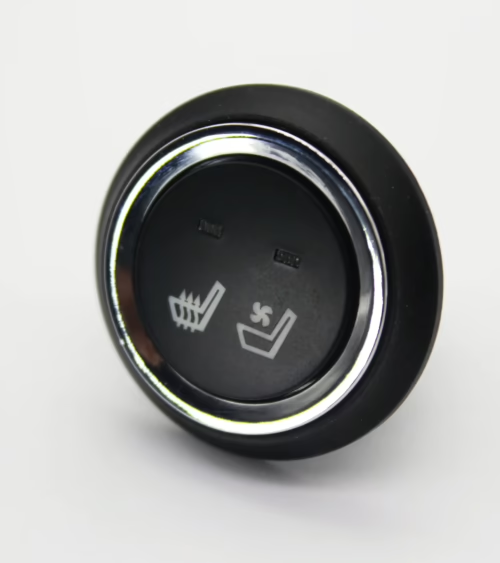
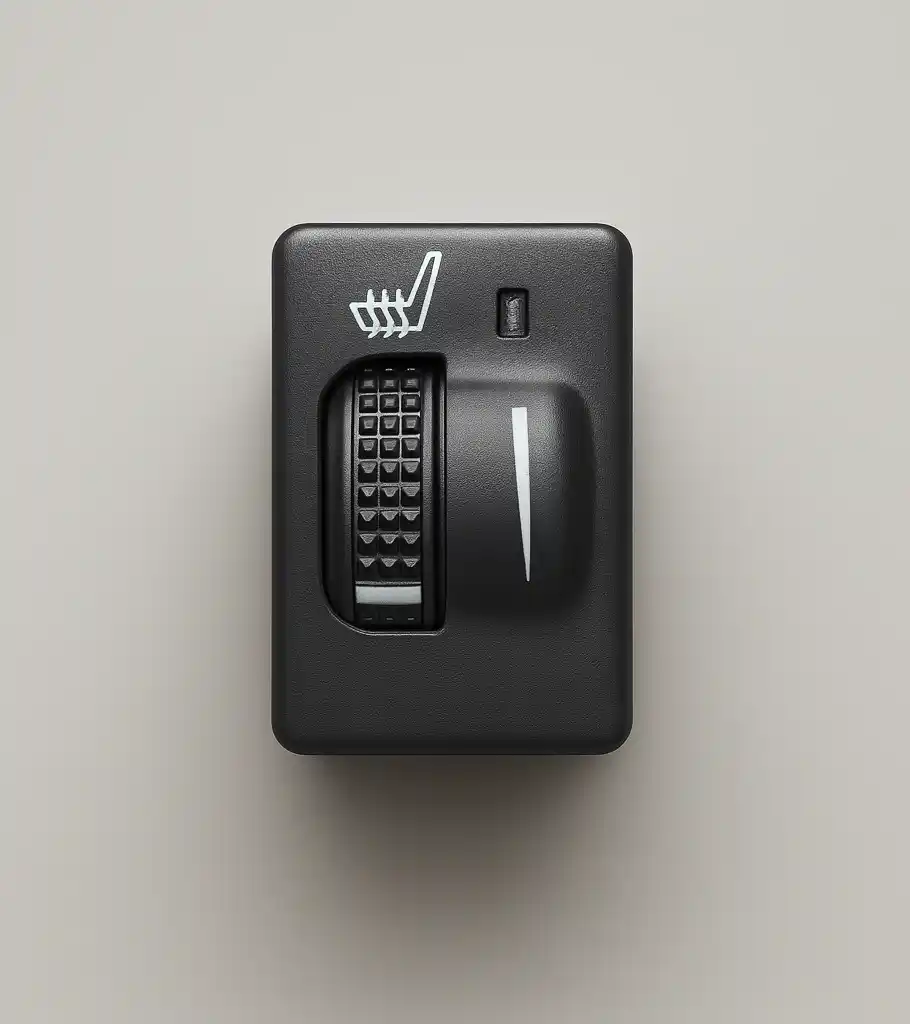
Control options range from simple two-stage toggle switches to multi-level rotary dials and dash-integrated buttons that mimic factory automotive styling.
RV dash and console layouts vary widely by manufacturer, so panel cutout size and switch housing depth should be checked against the dash thickness before purchase — many coach dashboards use thinner composite panels than a production vehicle, which limits how deep a switch body can sit.
Owners upgrading from a single-stage kit to a variable-heat system often look at replacement seat heater switches that offer multiple heat levels and LED indicators, which make it easier to gauge output without waiting to feel the seat warm up.
Keep in mind that switch amperage rating must match or exceed the combined draw of both the driver and passenger pads if a single switch controls both sides.
Installation Considerations for RVs, Motorhomes, and Trailers
RV seating comes in more configurations than a typical car interior — swivel captain’s chairs, jackknife sofas that convert to sleeping surfaces, dinette benches, and fixed cab seats all present different mounting and wiring challenges.
Swivel and reclining seats need enough slack in the wiring harness to accommodate full range of motion without straining the pad’s connector, and any wiring that crosses a seat base pivot point should be routed through a protective sleeve to prevent chafing over years of use.
For dinette and sofa applications, the heating pad should be sized to the actual cushion dimensions rather than a generic bucket-seat template, since RV cushions are frequently custom-cut and don’t match automotive seat contours.
Owners planning a full refresh often browse a full lineup of seat heating pads and kits to find element sizes that fit non-standard RV cushions rather than forcing an automotive-shaped pad into a bench seat.
Power Draw, Battery Health, and Off-Grid Use
A typical two-stage seat heater pad draws between 1.5 and 5 amps per seat at 12V, depending on heat setting and pad size, which is a meaningful load for RVs running on house batteries while boondocking.
Running heated seats off the chassis battery while the engine is off is generally fine for short stretches, but wiring the pads to the house battery bank with a fused, switched circuit is the safer long-term approach so seat heaters don’t compete with engine-start reserve.
Owners with lithium house banks and adequate solar or generator charging capacity will barely notice the added draw, but those running smaller AGM setups should factor seat heater usage into their overall power budget alongside lighting, water pump, and refrigerator loads, particularly during multi-day dry camping.
Always route seat heater circuits through an appropriately rated fuse near the power source, not just at the switch, to protect the wiring run in the event of a short.
Frequently Asked Questions
Can I install heated seats in any RV, or are some seats not compatible?
Most foam-cushioned seats, including captain’s chairs, dinette benches, and sofa seating, can accept a heating pad kit.
The main limitations are extremely thin foam (under about half an inch), which can make the heating element noticeable underfoot or under the seat, and seats with built-in massage or lumbar air bladders, which need careful pad placement to avoid interference.
Do RV heated seats draw too much power to run while boondocking?
Not typically. A single pad on low or medium settings draws roughly the same current as an interior LED light fixture.
The bigger consideration is running both driver and passenger seats on high for extended periods on a small battery bank, which is manageable with basic power planning.
Will a 12V seat heater kit work in a 24V motorhome?
No. A 12V-rated pad connected to a 24V circuit will run hotter than designed and can fail prematurely or pose a fire risk.
Confirm your coach’s chassis and house voltage before ordering, and select a kit rated for that specific voltage.
Whether you’re outfitting a new build, restoring a used motorhome, or just tired of a cold dinette bench, getting voltage, element type, and switch specification right up front decides whether the seat heater lasts for years or has to be redone.
Lucky Driver Inc. supplies seat heating pads, switches, and control modules built for the demands of automotive and RV applications alike — reach out to our team to find the right kit for your rig’s seating layout and electrical system.
Related Articles
- How to Add Heated Seats to a Truck: 7 Steps for 2026
- Heated Seats for Cloth Seats: 7 Things to Know (2026)
- Heated Seats for Leather Seats: 5 Things to Know (2026)
- Universal Heated Seat Kit Installation: 6 Steps for 2026
- DIY Heated Seat Install: 7 Steps to Do It Right (2026)
Frequently Asked Questions About rv heated seats
Procurement engineers evaluating rv heated seats for OEM programs regularly ask the following questions. Answers cover specification, compatibility, certification, and sourcing for rv heated seats requirements.
What voltage ratings are available for rv heated seats?
Standard rv heated seats configurations support 12 V DC for passenger vehicles and 24 V DC for commercial trucks. Selecting the correct rv heated seats voltage at the design stage eliminates harness rework later. Lucky Driver maintains rv heated seats inventory in both ratings for same-week shipment.
Which certifications apply to rv heated seats production?
rv heated seats assemblies entering OEM programs typically require UL recognition, REACH compliance, and RoHS documentation. Lucky Driver holds certification records for every rv heated seats variant and includes copies with sample and production shipments.
How is watt density specified for rv heated seats?
Watt density for rv heated seats is expressed in W/cm² and ranges from 0.04 to 0.12 depending on heat-up time requirements. Lower watt density rv heated seats designs improve element longevity, while higher values suit cold-climate applications.
Lucky Driver engineering reviews rv heated seats requirements and recommends watt density based on your seat platform.
What connector families are used with rv heated seats?
rv heated seats harnesses are available with Molex, TE Connectivity, and Delphi connector families. Matching the rv heated seats connector to the vehicle harness reduces assembly time and eliminates adapter cables. Specify your harness format when requesting a rv heated seats quote from Lucky Driver.
What is the lead time for rv heated seats samples?
rv heated seats samples from Lucky Driver’s North American warehouse ship within 3 to 5 business days for standard configurations. Custom rv heated seats variants with modified pad geometry or connector pinouts require 4 to 6 weeks. Contact Lucky Driver to confirm rv heated seats availability before submitting your engineering schedule.