Cloth seats are far more common in daily-driver vehicles than leather, yet many shoppers assume heating elements only belong under leather trim. In reality, heated seats for cloth seats are a well-established aftermarket and OEM category, and Lucky Driver Inc.
ships cloth-compatible heating pads, switches, and control modules to distributors across North America every week. This guide covers seven things buyers, installers, and OEM sourcing teams should know before adding heat to a cloth-upholstered seat.
1. Why Cloth Seats Behave Differently Than Leather
Cloth upholstery is woven, breathable, and typically backed by a foam layer and a scrim or non-woven fabric rather than the dense, low-porosity surface of leather or vinyl. This affects heat transfer in two ways.
First, cloth allows more airflow, so heat generated at the pad surface dissipates slightly faster than it does under leather, which means cloth-seat heating elements are often tuned to run marginally warmer or use a denser heating wire pattern to compensate.
Second, cloth seams and pleats flex more than leather during normal use, so the heating pad and its wiring harness need to tolerate repeated bending without the wire breaking or the connector pulling loose.
A pad engineered for leather can technically be installed under cloth, but a pad designed specifically for cloth applications accounts for both of these variables from the start.
2. How Seat Heater Pads Generate and Distribute Heat
Most automotive seat heaters rely on resistive heating elements, either a woven carbon-fiber heating panel or an insulated nichrome wire laid in a serpentine pattern across the seat cushion and backrest.
When current passes through the element, electrical resistance converts electrical energy directly into heat, a principle known as Joule heating.
Carbon-fiber panels distribute heat more evenly across a wider surface and tend to be thinner, which matters under cloth because thin cushions can telegraph pad texture through the fabric if the element is too rigid or bulky.
Wire-element pads are more affordable and remain a common choice for aftermarket kits, particularly when paired with a PTC (positive temperature coefficient) thermistor that self-limits current draw as the pad warms, reducing the risk of hot spots or overheating.
3. Choosing the Right Wattage and Heat Zones for Cloth
Wattage selection is one of the most common mistakes buyers make when retrofitting cloth seats.
A pad rated too low will feel underwhelming through the thicker foam padding typically used under cloth trim, while a pad rated too high can create localized hot spots that cloth upholstery does not dissipate as quickly as leather.
For most sedans and light trucks, a 45-55W cushion pad paired with a 35-45W backrest pad on a two-stage or three-stage controller delivers noticeable warmth within 60-90 seconds without overheating the fabric.
Dual-zone pads that separate the seat bottom and backrest into independent circuits are worth the modest cost increase, since they let the driver dial in cushion heat and backrest heat separately, which cloth seats benefit from more than leather due to their generally thicker cushion stack.
4. Matching Switches and Control Modules to the Vehicle
The heating pad is only half of the system. The switch and control module determine how heat cycles on and off, how many temperature stages are available, and whether the system integrates with the vehicle’s existing dash lighting and CAN bus signaling.
Aftermarket installers replacing a factory switch or adding heat to a vehicle that never had it should confirm amperage rating, dash cutout size, and illumination color before ordering. Lucky Driver Inc.
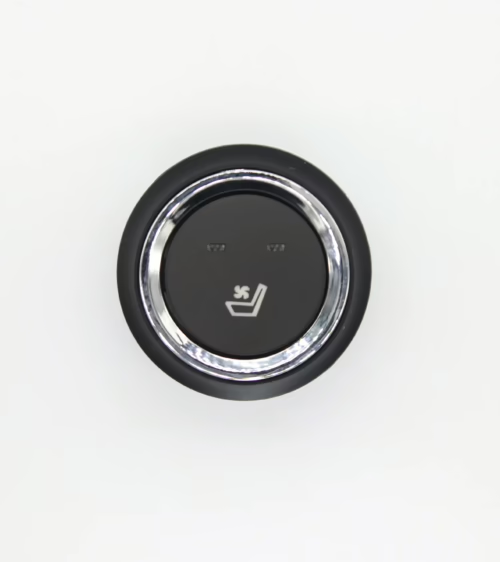
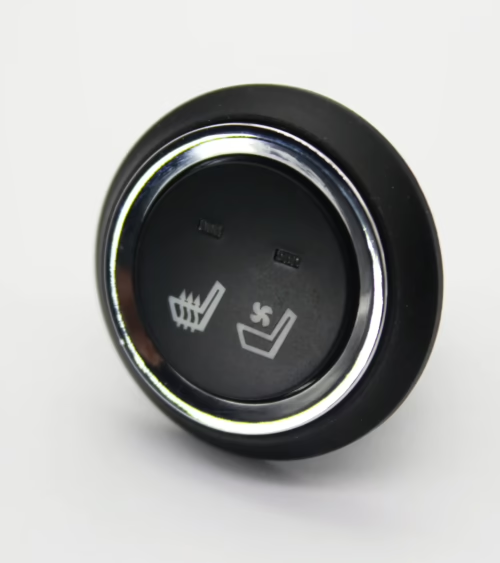
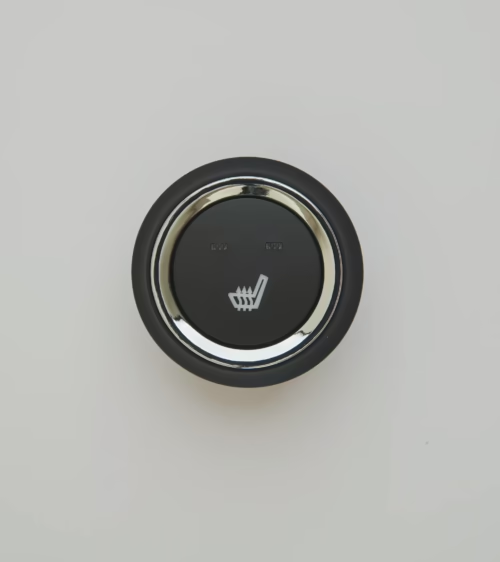
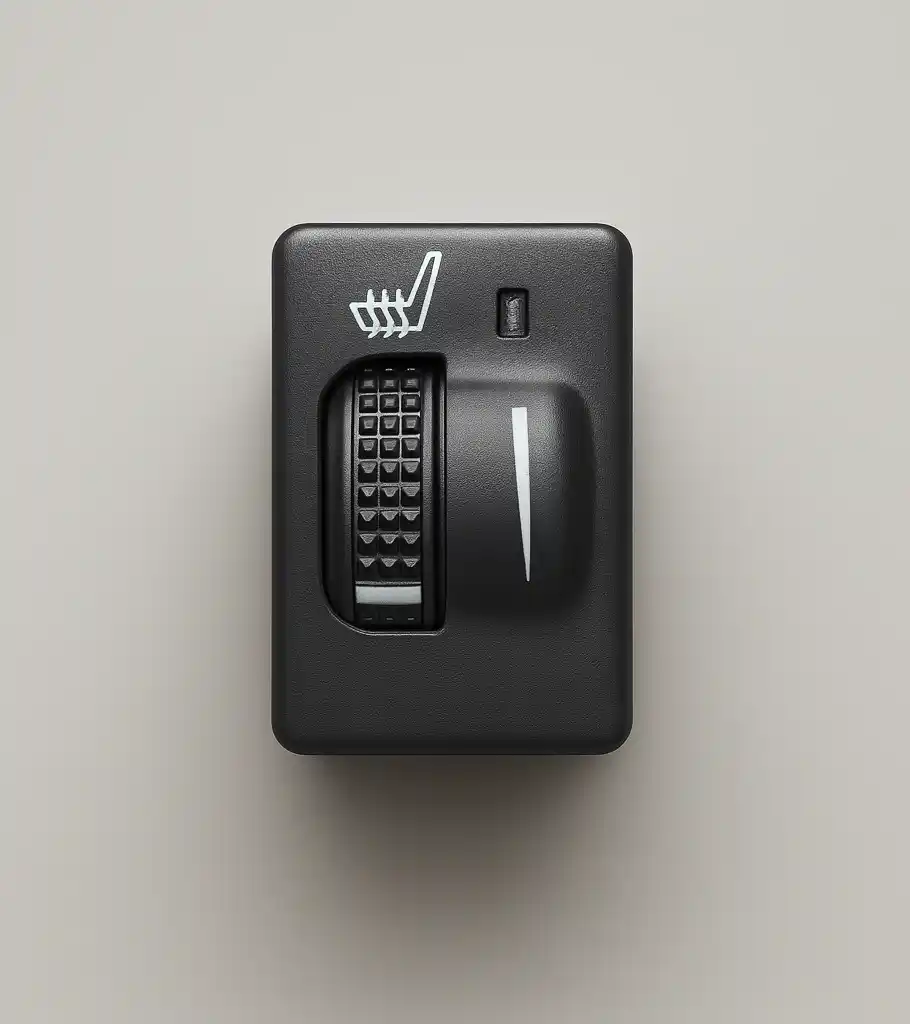
stocks a wide range of replacement seat heater switches covering rocker-style, round-knob, and OEM-matched connector patterns, which simplifies sourcing for shops handling multiple vehicle makes.
For fleet or OEM programs, a dedicated control module with programmable auto-shutoff timers is generally a better fit than a basic on/off switch, since it reduces battery drain risk on vehicles that sit for extended periods.
5. Installation Considerations Specific to Cloth Upholstery
Installing a heating pad under cloth follows the same general sequence as leather:
- remove the seat
- detach the cover from the retaining hooks or hog rings
- place the pad against the foam
- reattach the cover. The differences show up in the details. Cloth covers are usually held by more hog rings and J-clips than leather covers
- so installers should budget extra time and have replacement rings on hand
- since cloth backing tends to fray if rings are reused after being pried open. Adhesive spray should be applied sparingly on the foam side facing the pad
- not directly onto the cloth backing
- to avoid stiffening the fabric or causing visible bunching once the seat is reassembled. Wiring should be routed and secured away from the seat track and recliner mechanism
- connectors should be tested for continuity before the cover goes back on
- since re-opening a fully reassembled cloth seat to troubleshoot a bad connection is far more time-consuming than it is with leather.
6. Safety, Certification, and Long-Term Durability
Any heating element installed in a seating position is a safety-relevant component, and quality suppliers design and test their pads against automotive electrical and thermal safety practices consistent with SAE guidance for in-vehicle wiring and electrical loads.
Overheat protection, typically a thermal fuse or self-regulating PTC element, should be a non-negotiable feature rather than an optional upgrade, since a stuck-on heating circuit under cloth can scorch fabric or, in rare cases, pose a fire risk.
Buyers evaluating suppliers should ask directly whether pads carry overheat protection, what the rated cycle life is (measured in on/off cycles, not just calendar years), and whether the wiring harness is rated for automotive temperature extremes rather than general-purpose electronics.
Sourcing teams evaluating a new supplier should also request sample test data covering thermal cycling, vibration resistance, and connector pull-force, since these are the failure modes most likely to surface after a pad has been in service for a year or more rather than during initial installation.
These questions apply equally to individual consumers upgrading a single vehicle and to OEM seat manufacturers qualifying a new heating pad supplier for a production program.
7. Combining Heating with Seat Ventilation on Cloth Seats
Cloth and ventilated seating are increasingly paired together, especially on trims where manufacturers want to offer year-round comfort without stepping up to leather.
Combining a heating pad with a ventilation fan assembly under cloth requires more careful component selection than heating alone, since the two systems share limited space within the cushion foam and must not interfere with each other’s airflow or heat path.
Ventilated seat systems typically use a thin blower unit connected to perforated or mesh-backed sections of the seat, and the heating element needs to be positioned so it does not block the airflow channels the fan relies on.
On cloth seats, the mesh or perforated ventilation inserts usually sit at the center of the cushion and backrest. Heating pads for combination systems are therefore cut with a center cutout, or split into side panels that heat around the ventilation zone.
Suppliers building combination kits should test both systems together, not independently, since a heating pad that passes a standalone thermal test can still create airflow resistance that reduces the ventilation fan’s effectiveness once both are installed in the same cushion.
Aftermarket vs. OEM Sourcing for Cloth-Seat Heating
Consumers retrofitting a single vehicle typically shop aftermarket kits that bundle a pad, switch, and wiring harness for a straightforward DIY install.
OEM seat manufacturers and Tier 1 suppliers, by contrast, need a partner that can supply heating pads engineered to a specific seat foam profile, in production volumes, with consistent lot-to-lot quality and documentation. Lucky Driver Inc. supports both channels:
- individual buyers and independent shops can browse our full lineup of seat heating pads and kits
- while seat manufacturers and distributors working on larger programs can request custom pad dimensions
- wattage
- connector specifications to match an existing cloth seat platform. Fleet operators and rental companies sourcing cloth-seat heating retrofits at scale should also factor in warranty terms
- since a supplier offering at least a two-year warranty on both the heating pad and the switch signals confidence in cycle-life testing
- while unusually short or vague warranty language is often a sign that overheat protection and connector durability have not been validated under real-world duty cycles. Either path benefits from starting with a supplier that understands the specific demands cloth upholstery places on heating hardware
- rather than adapting a leather-first product as an afterthought.
Frequently Asked Questions
Can any seat heater kit be installed under cloth seats?
Most universal kits are cloth-compatible, but pads with a flexible, low-profile element and reinforced wiring handle the flexing and thicker foam of cloth seats better than pads built for firmer leather trim.
Will a heating pad make a cloth seat feel lumpy or change its texture?
A properly sized, thin-profile pad installed flat against the foam with light adhesive should not be noticeable through cloth upholstery.
Bunching or lumps usually indicate an oversized pad, excess adhesive, or a pad that was folded rather than trimmed to fit the cushion contour.
How long does a seat heater pad last under cloth upholstery?
Quality automotive-grade pads with overheat protection are typically rated for tens of thousands of on/off cycles, which corresponds to several years of daily use.
Cloth seats do not shorten pad lifespan compared to leather; failure is more commonly tied to wiring fatigue at the connector than to the upholstery type.
Ready to add heat to a cloth-seated vehicle or source heating components for a production seat program? Contact Lucky Driver Inc. to discuss the right pad, switch, and control module combination for your application.
Related Articles
- Heated Seats for Leather Seats: 5 Things to Know (2026)
- Universal Heated Seat Kit Installation: 6 Steps for 2026
- DIY Heated Seat Install: 7 Steps to Do It Right (2026)
- Heated Seat Installation Near Me: 5 Ways to Find a Pro (2026)
- Aftermarket Heated Seats Cost: 2026 Guide to 5 Price Tiers
Frequently Asked Questions About heated seats for cloth seats
Procurement engineers evaluating heated seats for cloth seats for OEM programs regularly ask the following questions. Answers cover specification, compatibility, certification, and sourcing for heated seats for cloth seats requirements.
What voltage ratings are available for heated seats for cloth seats?
Standard heated seats for cloth seats configurations support 12 V DC for passenger vehicles and 24 V DC for commercial trucks. Selecting the correct heated seats for cloth seats voltage at the design stage eliminates harness rework later.
Lucky Driver maintains heated seats for cloth seats inventory in both ratings for same-week shipment.
Which certifications apply to heated seats for cloth seats production?
heated seats for cloth seats assemblies entering OEM programs typically require UL recognition, REACH compliance, and RoHS documentation. Lucky Driver holds certification records for every heated seats for cloth seats variant and includes copies with sample and production shipments.
How is watt density specified for heated seats for cloth seats?
Watt density for heated seats for cloth seats is expressed in W/cm² and ranges from 0.04 to 0.12 depending on heat-up time requirements. Lower watt density heated seats for cloth seats designs improve element longevity, while higher values suit cold-climate applications.
Lucky Driver engineering reviews heated seats for cloth seats requirements and recommends watt density based on your seat platform.
What connector families are used with heated seats for cloth seats?
heated seats for cloth seats harnesses are available with Molex, TE Connectivity, and Delphi connector families. Matching the heated seats for cloth seats connector to the vehicle harness reduces assembly time and eliminates adapter cables.
Specify your harness format when requesting a heated seats for cloth seats quote from Lucky Driver.
What is the lead time for heated seats for cloth seats samples?
heated seats for cloth seats samples from Lucky Driver’s North American warehouse ship within 3 to 5 business days for standard configurations. Custom heated seats for cloth seats variants with modified pad geometry or connector pinouts require 4 to 6 weeks.
Contact Lucky Driver to confirm heated seats for cloth seats availability before submitting your engineering schedule.