Anyone who has climbed onto a tractor before sunrise in January knows that a frozen vinyl seat makes a long shift miserable before the work even starts.
A tractor seat heater fixes the problem at the source, warming the operator through direct conduction instead of waiting for a cab heater to catch up — assuming the machine has a cab at all. But agricultural equipment is a punishing application:
- constant low-frequency vibration
- moisture
- dust
- electrical systems that may run at 12 or 24 volts. Specifying the wrong pad or wiring it carelessly leads to early element failure
- blown fuses
- or worse.
This guide covers the seven things that matter most when selecting and installing seat heating on a tractor, whether you are retrofitting a single utility machine or sourcing components for a seat production line.
1. Why a Tractor Is the Harshest Environment for Seat Heating
An automotive-grade heated seat lives a sheltered life compared to one on a tractor. Three stress factors dominate in agricultural use:
- Vibration and seat travel. Most tractor seats sit on a mechanical or air suspension that strokes several inches over rough ground. Every stroke flexes the heater’s lead wires and the element itself, so poor strain relief fails quickly.
- Moisture and UV. Open-station tractors leave the seat exposed to rain, dew, pressure washing, and direct sunlight. Water intrusion corrodes connectors and degrades element insulation.
- Dust and temperature extremes. Field dust works into unsealed switches and connectors, and the equipment may sit outdoors through -20°F nights and 100°F afternoons, cycling every material in the seat.
Consumer-grade 12V heated cushions sold for cars rarely survive a season of this. Purpose-built pads with reinforced lead exits, sealed connections, and vibration-tolerant element layouts are worth the modest cost difference.
2. How a Tractor Seat Heater Actually Works
A seat heater is a thin resistive element — alloy wire or carbon fiber strands — laminated between layers of nonwoven fabric or laminated foam.
When current flows through the element, electrical energy converts to heat through Joule heating, and the pad’s serpentine element pattern spreads that heat evenly across the seating surface.
The pad mounts directly under the seat trim cover, above the foam, so warmth reaches the operator within one to three minutes.
Temperature is regulated one of two ways. Simpler pads use a bimetallic thermostat wired in series with the element:
- it opens at a preset temperature
- typically around 104–113°F (40–45°C)
- closes again as the pad cools. More sophisticated systems embed an NTC thermistor and hand regulation to an electronic control module
- which enables multiple heat levels and tighter temperature control. Most tractor retrofits pair a cushion pad and a backrest pad wired in parallel and controlled by a single switch
- keeping the system simple and field-serviceable.
3. Match the Heater to a 12V or 24V Electrical System
Before ordering anything, confirm the machine’s system voltage at the battery. Most North American compact and utility tractors run 12V negative-ground systems, but many older diesels, some European models, and a good share of large construction and forestry equipment run 24V.
This matters because element resistance is designed for a specific voltage. Power follows P = V²/R, so connecting a 12V pad to a 24V system quadruples the wattage — the pad overheats, the insulation cooks, and in the worst case the seat foam becomes a fire risk.
The reverse mistake, a 24V pad on 12V, simply produces a quarter of the rated heat and feels dead.
On a 24V machine, use a pad wound for 24V or feed a 12V pad through an appropriately rated DC-DC converter. Also check alternator capacity:
- some small tractors ship with 40A alternators already loaded by lights and cab fans
- so budget the heater’s draw into the total before adding circuits.
4. Carbon Fiber vs. Alloy Wire Heating Elements
The two dominant element technologies each have a place in off-highway seating:
- Alloy wire (typically copper-nickel) is the proven workhorse. It has a predictable resistance, pairs cleanly with simple bimetal thermostats, tolerates repeated flexing when properly laid out, and is easy to repair-diagnose with a multimeter.
- Carbon fiber heats up faster, spreads warmth over wider strands, and is highly flexible, which suits deeply contoured cushions. Its drawback is at the terminations: the junction between carbon strands and copper lead wires needs robust crimping and strain relief to survive vibration.
For agricultural seating, either works if the pad is engineered for the duty cycle, but the failure mode to design against is fatigue at solder joints and lead exits — exactly where suspension movement concentrates stress.
Whichever element type you choose, insist on overheat protection in the pad itself, not just in the switch. You can compare both element constructions when you browse our full seat heating product lineup, which lists element type, voltage, and wattage for every pad.
5. Power Draw, Fusing, and Wiring Best Practices
A typical cushion-plus-backrest set for one seat draws 30–60W, or roughly 2.5–5A on a 12V system. That is modest, but it deserves a properly built circuit:
- Dedicated fused feed. Run the heater from a 7.5A or 10A fuse (sized to the pad’s rating), not spliced into a lighting circuit.
- Ignition-switched power. Feed the circuit through a relay triggered by the key-on circuit so the heater cannot drain the battery overnight — a real concern on machines that sit for weeks between uses.
- Adequate wire gauge and ground. 18 AWG handles most single-seat loads; use a clean chassis ground point, not a corroded seat-frame bolt.
- Service loop at the seat. Leave enough slack for full suspension stroke and seat fore-aft travel, loom the harness, and keep it clear of pinch points under the seat base.
Ten extra minutes on wiring is the difference between a heater that lasts ten seasons and one that fails the first winter.
6. Switches and Temperature Control
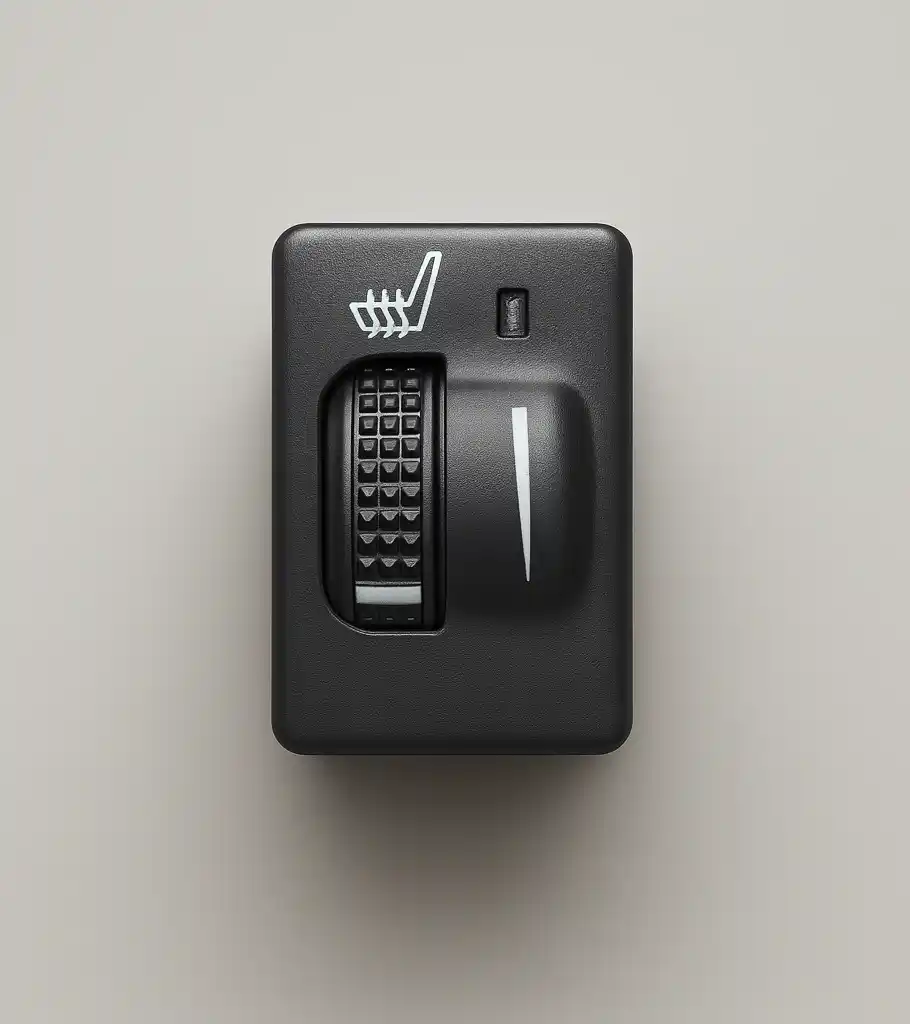
The control interface takes more abuse on a tractor than the pad does. Gloved hands, dust, and moisture kill flimsy switches, so choose a sealed rocker or push-button unit with a positive tactile click and an indicator lamp the operator can see in daylight.
A high/low rocker is the most popular configuration:
- high for fast warm-up
- low for sustained comfort
- with the in-pad thermostat providing the safety ceiling on both settings.
Mount the switch where the operator can reach it without looking — the seat base skirt, fender console, or armrest are common locations. Panel-mount rockers need a simple rectangular cutout and spade terminals, which keeps installation quick.
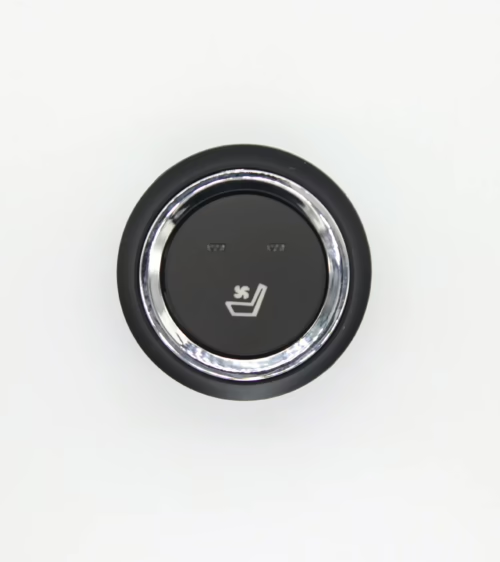
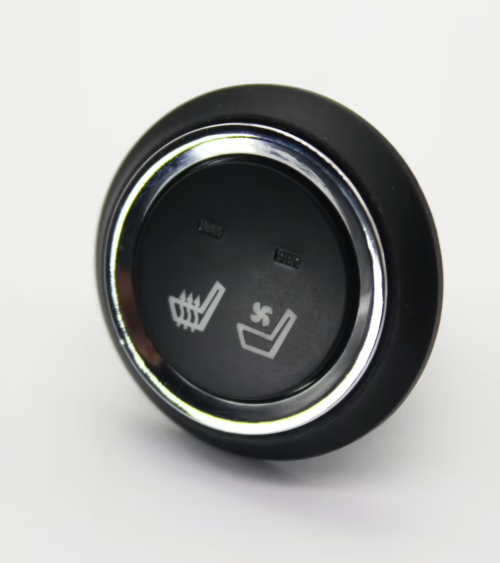
If you are replacing a failed OEM control or adding heat to a bare seat, our seat heater switch catalog covers round and rectangular rockers in single-level and hi/lo configurations, including illuminated versions for cab machines used before dawn.
7. Installing on Suspension and Air-Ride Seats
Installation is straightforward if you respect the seat’s construction. The usual sequence:
- unbolt the seat from the suspension base
- release the trim cover (hog rings or J-channel retainers on most ag seats)
- lay the pad flat on the foam. Position it under the primary contact zone
- keep it clear of hog-ring trenches and deep contour lines
- never fold or crease the element — a crease concentrates heat and stress in one spot. Most pads carry pressure-sensitive adhesive backing to prevent migration under the cover.
Route the lead wire out through an existing trim gap, secure it to the seat frame with the suspension at full droop so movement never tensions the wire, and connect through a weather-sealed connector if the machine is open-station.
Before final reassembly, verify element resistance with a multimeter against the datasheet value and run the heater for ten minutes to confirm even warmth.
On open-station tractors, add a waterproof seat cover or specify a pad rated for moisture exposure; a soaked seat should be dried before the heater is used hard.
Tractor Seat Heater FAQ
How much power does a tractor seat heater use?
A typical cushion-and-backrest set draws 30–60W, about 2.5–5A at 12V. That is well within the reserve of most tractor charging systems, but always add up existing loads — work lights, cab blower, monitors — before wiring a new circuit on a small-alternator machine.
Can I put a seat heater on an open-station tractor that sits in the rain?
Yes, with precautions. Use a pad with sealed lead exits, weatherproof connectors, and an in-line thermostat, and protect the seat with a waterproof cover when parked. Let a soaked seat drain and dry before running the heater at full output for extended periods.
Will a 12V seat heater work on a 24V tractor?
Not safely. At 24V, a 12V pad dissipates four times its rated wattage and will overheat. Use a 24V-rated pad or step the supply down with a DC-DC converter sized for the heater’s current draw.
Whether you are building heated seats into a production run of agricultural seating or upgrading a single tractor for winter work, Lucky Driver Inc. supplies the components to do it right:
- 12V and 24V heating pads in alloy wire and carbon fiber constructions
- sealed hi/lo switches
- electronic control modules
- all engineered for high-vibration off-highway use. Contact our team for OEM specifications
- samples
- or aftermarket distributor pricing
- get your operators warm before the next cold season starts.
Related Articles
- Golf Cart Heated Seats: 7 Things to Know Before You Buy (2026)
- UTV Heated Seat Kit: 5 Things to Know Before You Buy (2026)
- Boat Seat Heater: 5 Things to Know for 2026
- RV Heated Seats: 6 Things to Know Before You Upgrade (2026)
- How to Add Heated Seats to a Truck: 7 Steps for 2026
Frequently Asked Questions About tractor seat heater
Procurement engineers evaluating tractor seat heater for OEM programs regularly ask the following questions. Answers cover specification, compatibility, certification, and sourcing for tractor seat heater requirements.
What voltage ratings are available for tractor seat heater?
Standard tractor seat heater configurations support 12 V DC for passenger vehicles and 24 V DC for commercial trucks. Selecting the correct tractor seat heater voltage at the design stage eliminates harness rework later. Lucky Driver maintains tractor seat heater inventory in both ratings for same-week shipment.
Which certifications apply to tractor seat heater production?
tractor seat heater assemblies entering OEM programs typically require UL recognition, REACH compliance, and RoHS documentation. Lucky Driver holds certification records for every tractor seat heater variant and includes copies with sample and production shipments.
How is watt density specified for tractor seat heater?
Watt density for tractor seat heater is expressed in W/cm² and ranges from 0.04 to 0.12 depending on heat-up time requirements. Lower watt density tractor seat heater designs improve element longevity, while higher values suit cold-climate applications.
Lucky Driver engineering reviews tractor seat heater requirements and recommends watt density based on your seat platform.
What connector families are used with tractor seat heater?
tractor seat heater harnesses are available with Molex, TE Connectivity, and Delphi connector families. Matching the tractor seat heater connector to the vehicle harness reduces assembly time and eliminates adapter cables. Specify your harness format when requesting a tractor seat heater quote from Lucky Driver.
What is the lead time for tractor seat heater samples?
tractor seat heater samples from Lucky Driver’s North American warehouse ship within 3 to 5 business days for standard configurations. Custom tractor seat heater variants with modified pad geometry or connector pinouts require 4 to 6 weeks. Contact Lucky Driver to confirm tractor seat heater availability before submitting your engineering schedule.