Golf cart heated seats turn a cold morning tee time, a winter neighborhood errand, or a late-season hunting run into a comfortable ride instead of an endurance test. But a golf cart is not a car:
- it runs on a 36V
- 48V
- or 72V battery pack
- its cab is open to the weather
- its bench seats are built differently from automotive buckets. Those three differences drive almost every buying and installation decision. This guide covers the seven things that actually matter when you spec
- buy
- or install golf cart heated seats — from DC-DC converters to element chemistry to real-world battery draw.
1. Golf Cart Heated Seats Are Not Just Car Kits
Most aftermarket heated seat kits are engineered around automotive assumptions:
- a regulated 12V electrical system
- an enclosed climate-controlled cabin
- contoured foam bucket seats. A golf cart violates all three. The traction pack runs at 36V or 48V (72V on some lithium carts)
- the cab is open or semi-open
- the seat is typically a flat vinyl-covered bench with a removable bottom cushion.
That means a kit that works fine in a sedan can fail quickly in a cart.
Automotive pads sized for a bucket seat cushion may not cover a bench properly, leaving cold zones or forcing the installer to trim the pad — which can sever heating circuits if the pad is not designed with trimmable margins. Vinyl upholstery also behaves differently from cloth or leather:
- it conducts heat to the occupant quickly
- which is good
- but it shows wrinkles and telegraphing from a poorly bonded pad. Look for pads specified for powersports or universal bench applications
- with element layouts that match the seating surface you actually have.
2. Know Your Voltage: 36V, 48V, and the DC-DC Reducer
Nearly all quality heating pads are built for 12V DC. To run them on a 36V or 48V cart, you need a DC-DC converter (voltage reducer) — not a tap across part of the battery string.
Tapping two 6V batteries in a lead-acid pack to get 12V is a common shortcut, and it chronically discharges those two batteries more than the rest. The resulting pack imbalance shortens the life of the entire string and can strand the cart.
Size the converter with headroom. Two 45W pads draw about 7.5A at 12V on high; if the same converter also feeds lights, a stereo, or USB ports, a 15A to 20A unit is the practical minimum.
On lithium carts, confirm the converter’s input range covers the pack’s full charge voltage — a nominal 48V lithium pack can sit near 58V off the charger, which exceeds the input rating of some budget reducers.
If your cart already has a factory-installed accessory converter, check its rated output and existing loads before adding heaters to it.
3. Heating Element Technology: Alloy Wire vs. Carbon Fiber
Both mainstream element types work on the same physical principle — current passing through a resistive conductor generates heat, a phenomenon known as Joule heating — but they behave differently in service.
Alloy resistance wire (typically copper-nickel) offers a stable, predictable resistance over its life, tolerates repeated flex cycles well, and fails in a detectable way:
- a broken conductor simply opens the circuit rather than creating a concentrated hot spot. Carbon fiber elements warm up faster and are very flexible
- but localized damage can raise resistance unevenly in one area of the weave.
Whichever element you choose, insist on two protections in the pad itself:
- A bimetal thermostat that cycles the element to hold surface temperature in a safe comfort band
- A one-shot thermal fuse that permanently opens the circuit if the thermostat fails
On an unattended cart parked in a shed, that redundant protection is not optional — it is the difference between a failed heater and a fire risk.
4. What Heated Seats Really Cost You in Battery Range
The range penalty is smaller than most owners expect. Two seat positions on high draw roughly 90W to 100W total. Referred to a 48V pack, that is about 2A — compared with the 50A to 100A the drive motor pulls under load.
Over a two-hour outing with the heaters cycling, expect roughly 2Ah to 4Ah consumed from a pack rated at 100Ah or more. In other words, the heaters cost you a few percent of range, not a few holes.
The bigger cold-weather factor is the battery itself. Lead-acid packs deliver 20% to 30% less usable capacity near freezing than at room temperature, so the cart that comfortably did 36 holes in September may struggle in January regardless of accessories. Practical habits help:
- run the heaters on high for the first five minutes
- then drop to low
- switch off during long stops. A pad with a proper thermostat already cycles power automatically once the seat reaches temperature
- so steady-state draw is well below the nameplate wattage.
5. Weatherproofing: Moisture Is the Main Killer
Open cabs see rain, morning dew, splash from wet turf, and — hardest of all on electrics — pressure washing. Most heated seat failures in carts trace back to water in a connector or a chafed wire, not the element itself. Build the installation to keep water out from day one:
- Use sealed or weatherproof connectors at every junction, not open spade terminals
- Form a drip loop in the harness below each connector so water runs away from the contacts
- Route wiring high along the seat frame, away from the floor pan where water pools
- Fuse the circuit within a few inches of the converter output, sized to the pad specification
- Choose a switch with a sealed body or rubber boot if it mounts on an exposed panel
UV exposure matters too: harness insulation and switch bezels rated for outdoor use resist the cracking and fading that ordinary interior-grade parts develop within a season or two of sun.
6. Switches, Controllers, and Temperature Regulation
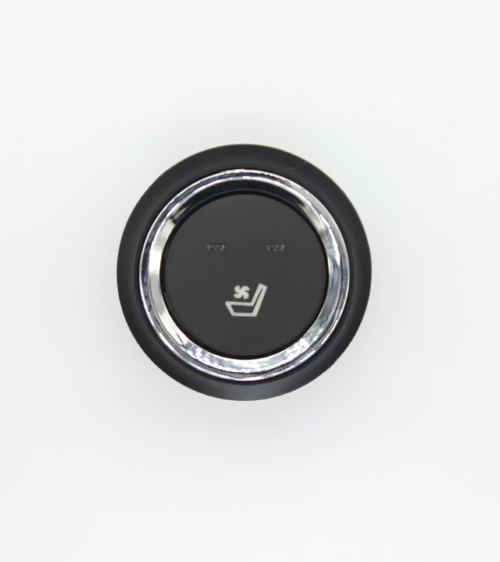
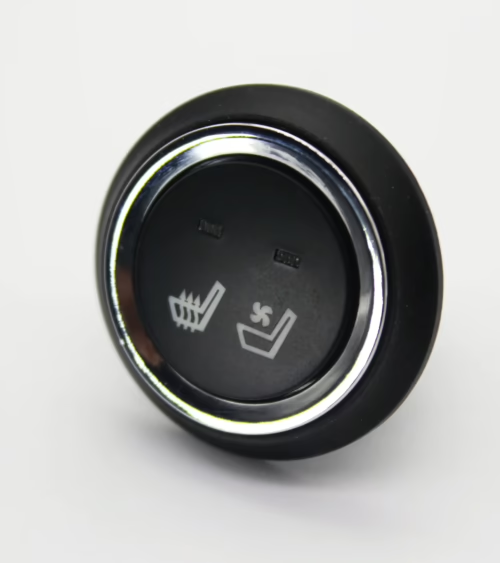
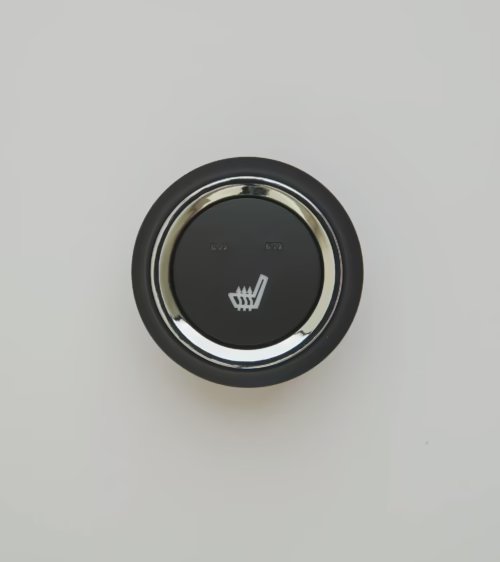
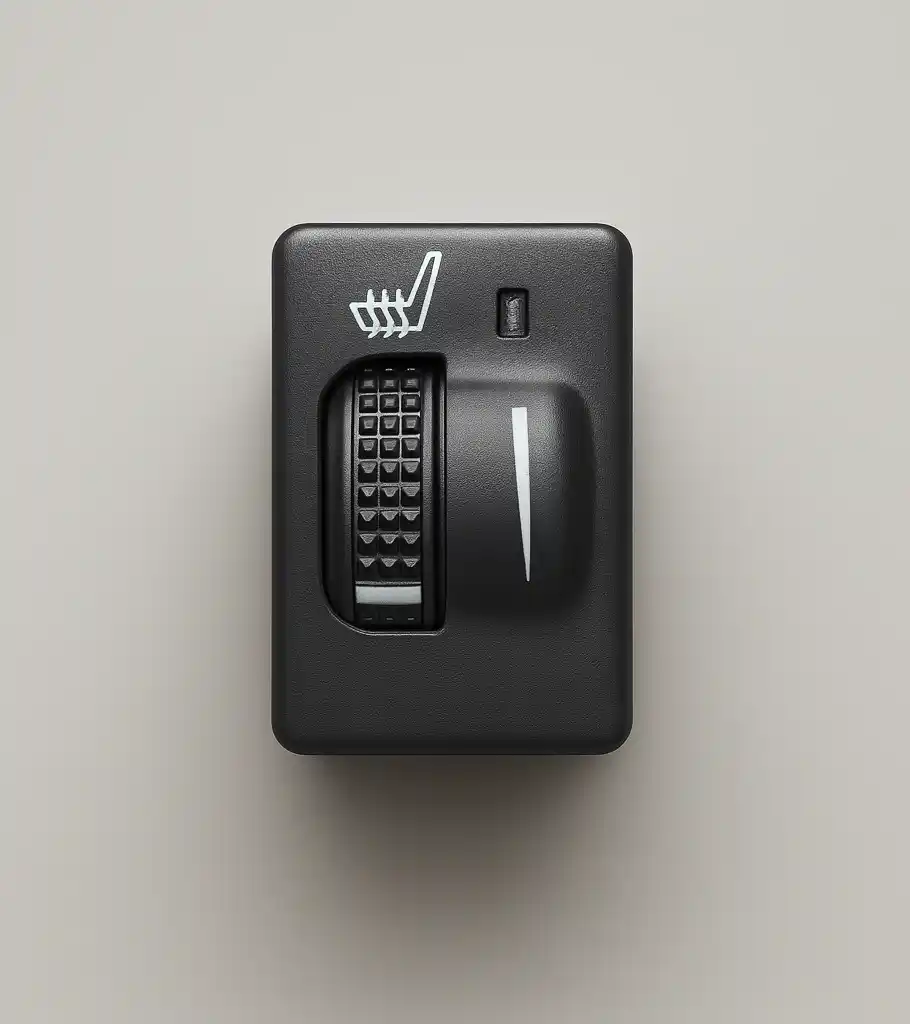
The control side deserves as much attention as the pad. The most common setup is a round or rocker Hi/Off/Lo switch per seating position, with an LED indicator so the driver can see at a glance that a heater was left on.
High typically energizes the full element circuit while low switches in a series resistance or a reduced-duty circuit, cutting power roughly in half.
Illuminated switches earn their keep on carts used at dawn or dusk, and panel-mount round switches drop neatly into a drilled hole in the seat frame or dash without a custom bracket.
If an original control fails or you want dual-zone control on a bench, replacement seat heater switches in standard panel cutout sizes make the repair a ten-minute job rather than a rewiring project.
For fleet or rental carts, a controller module with an auto-off timer is worth specifying: it eliminates the single most common failure mode, which is a heater left on overnight slowly working the converter and pack.
7. Installing Heating Pads in a Bench Seat
A cart bench is one of the easier heated seat installations because the bottom cushion usually lifts straight off the frame. The sequence that produces a clean, durable result:
- Remove the seat bottom and backrest, and release the vinyl staples along the rear edge only — full removal is rarely necessary
- Dry-fit the pad on the foam, centered under each occupant position, and confirm the harness exits toward the frame, not the seam
- Bond the pad with its adhesive backing, working from center outward so no fold or crease crosses a heating element
- Re-stretch the vinyl, re-staple, and power-test both heat levels before bolting the seat back down
- Sleeve all wiring in loom, secure it every few inches, and verify nothing contacts moving suspension or pedal linkages
Test current draw with a clamp meter if you have one:
- a reading far below specification suggests a damaged element
- one far above suggests a wiring fault — both easier to fix before final assembly. If you are selecting parts
- you can browse complete seat heating pads
- switches
- control modules to match pad dimensions and wattage to your bench before you order.
Frequently Asked Questions
Will heated seats drain my golf cart batteries? Not meaningfully. Two positions on high draw about 90W to 100W — roughly 2A from a 48V pack — versus the 50A-plus the drive motor uses. Over a typical outing that is a low-single-digit percentage of pack capacity.
Cold weather itself reduces lead-acid capacity far more than the heaters do.
Can I wire 12V heating pads directly to my 48V cart? No. Connecting a 12V pad across a 48V pack will destroy the pad, and tapping a 12V section of a lead-acid string unbalances the pack and shortens its life.
Use a properly sized DC-DC converter — 15A to 20A output covers two pads plus typical accessories.
Are heated seats safe on a cart stored outdoors? Yes, if the pad includes both a cycling thermostat and a one-shot thermal fuse, the circuit is fused at the source, and all connections are sealed with drip loops.
An auto-off timer or an indicator-lit switch adds a further safeguard against heaters left on unattended.
Lucky Driver Inc. supplies seat heating pads, seat heater switches, control modules, and seat ventilation systems to OEM seat manufacturers and aftermarket distributors across North America.
Whether you are building heated bench seats into a production run or stocking retrofit kits for golf cart dealers, our engineering team can help you match element layout, wattage, and controls to your application. Contact Lucky Driver Inc. today to discuss samples, specifications, and volume pricing.
Related Articles
- UTV Heated Seat Kit: 5 Things to Know Before You Buy (2026)
- Boat Seat Heater: 5 Things to Know for 2026
- RV Heated Seats: 6 Things to Know Before You Upgrade (2026)
- How to Add Heated Seats to a Truck: 7 Steps for 2026
- Heated Seats for Cloth Seats: 7 Things to Know (2026)
Frequently Asked Questions About golf cart heated seats
Procurement engineers evaluating golf cart heated seats for OEM programs regularly ask the following questions. Answers cover specification, compatibility, certification, and sourcing for golf cart heated seats requirements.
What voltage ratings are available for golf cart heated seats?
Standard golf cart heated seats configurations support 12 V DC for passenger vehicles and 24 V DC for commercial trucks. Selecting the correct golf cart heated seats voltage at the design stage eliminates harness rework later. Lucky Driver maintains golf cart heated seats inventory in both ratings for same-week shipment.
Which certifications apply to golf cart heated seats production?
golf cart heated seats assemblies entering OEM programs typically require UL recognition, REACH compliance, and RoHS documentation. Lucky Driver holds certification records for every golf cart heated seats variant and includes copies with sample and production shipments.
How is watt density specified for golf cart heated seats?
Watt density for golf cart heated seats is expressed in W/cm² and ranges from 0.04 to 0.12 depending on heat-up time requirements. Lower watt density golf cart heated seats designs improve element longevity, while higher values suit cold-climate applications.
Lucky Driver engineering reviews golf cart heated seats requirements and recommends watt density based on your seat platform.
What connector families are used with golf cart heated seats?
golf cart heated seats harnesses are available with Molex, TE Connectivity, and Delphi connector families. Matching the golf cart heated seats connector to the vehicle harness reduces assembly time and eliminates adapter cables. Specify your harness format when requesting a golf cart heated seats quote from Lucky Driver.
What is the lead time for golf cart heated seats samples?
golf cart heated seats samples from Lucky Driver’s North American warehouse ship within 3 to 5 business days for standard configurations. Custom golf cart heated seats variants with modified pad geometry or connector pinouts require 4 to 6 weeks.
Contact Lucky Driver to confirm golf cart heated seats availability before submitting your engineering schedule.