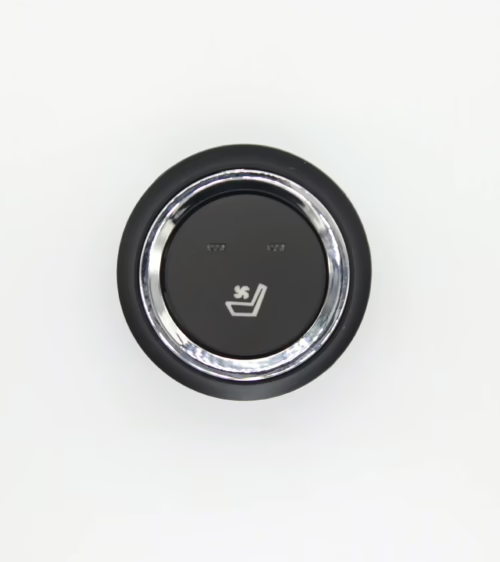
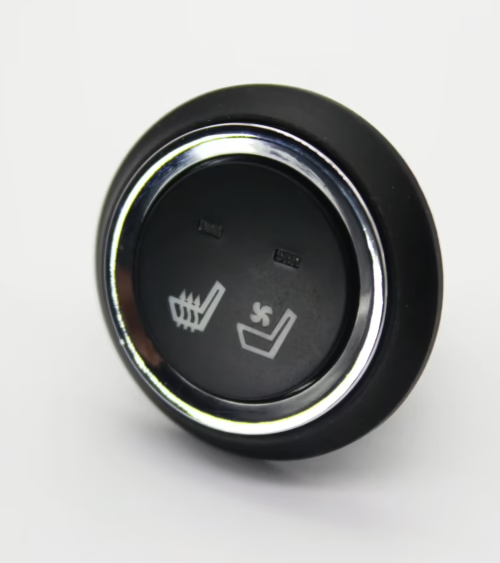
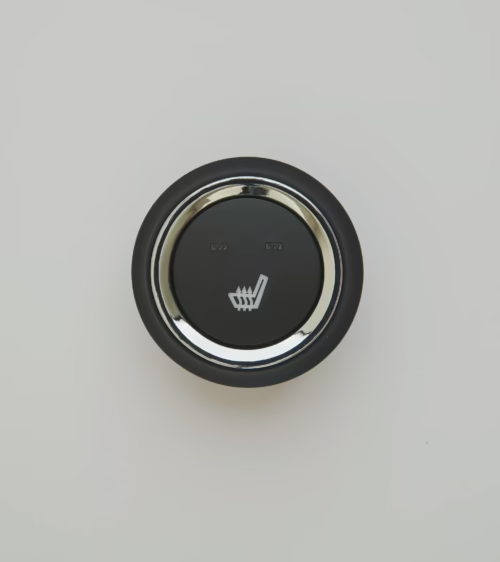
A two seat heated seat kit is the most common aftermarket setup for adding seat heat to a vehicle that left the factory without it. You don’t buy two separate single-seat kits.
You get matched heating pads, two switches and one shared wiring harness that runs both front seats from a single fused power feed. For distributors, upfitters and seat shops, a reliable kit and a problem kit differ in six areas:
- what’s in the box
- how the heating element is built
- the electrical design
- the controls
- the safety protection and how the kit installs. This guide covers each one in practical
- technical terms.
1. What a Two Seat Heated Seat Kit Should Include
A complete kit treats the driver and passenger seats as two independent heating zones that share one power supply. Before you commit to a supplier, confirm that the package contains the following:
- Four heating pads: a cushion pad and a backrest pad for each seat, sized to fit inside the seating surface and clear of the bolsters.
- Two control switches: one per seat, so each occupant sets their own heat level.
- A main harness with a relay and an inline fuse: the relay carries the heating current, and the fuse protects the feed wire.
- Pad-to-switch sub-harnesses: sealed or latching connectors that won’t vibrate loose under the seat.
- Mounting hardware: adhesive backing on the pads, cable ties, ring terminals and grommets for routing.
Check that the pads within each seat are matched in resistance. The cushion and backrest pads are usually wired in parallel or in series, depending on the design. If their resistance values drift too far apart, one surface runs noticeably hotter than the other.
A quality kit holds tight resistance tolerances and prints the nominal value on the pad label or spec sheet, so installers can verify each pad with a multimeter before closing up the seat.
2. Carbon Fiber vs. Alloy Wire Heating Elements
Every seat heating pad works on Joule heating: current flows through a resistive conductor and the conductor turns electrical energy into heat. Kits differ in the conductor they use.
Carbon fiber elements use carbon filament tows woven or laminated into a flexible carrier, with copper bus conductors along the edges. Heat spreads evenly across the whole surface.
Carbon fiber tolerates repeated flexing, and because the parallel strands share the current, a single broken filament does not kill the pad. Some universal carbon designs can be trimmed along marked edges to fit narrower seats. Never cut through the bus conductors or the termination area.
Alloy wire elements use a fine resistance wire, often a copper alloy, stitched or bonded in a serpentine pattern onto a nonwoven backing. Many factory seat heaters use this construction because it is thin, cheap and gives a predictable resistance.
The weak point is that the wire is usually one continuous series circuit, so a single break caused by heavy creasing or an improper cut leaves the whole pad cold.
For aftermarket two-seat kits, carbon fiber is popular because it is forgiving during installation and holds up well in seats that see heavy daily use. Wire elements work well when the pad is designed for a specific seat and installed exactly as engineered.
3. Electrical Load, Fusing, and Wiring for Two Seats
A typical seat heater draws roughly 3 to 5 amps per seat on its high setting, which works out to about 35 to 60 watts. Running both seats on high therefore puts a combined load of about 6 to 10 amps on the vehicle’s 12-volt system.
That is modest compared with the alternator’s output, but it is enough to matter if the wiring is undersized or tapped into the wrong circuit.
Remember that “12 volt” is a nominal figure. With the engine running, the system typically sits between 13.5 and 14.4 volts. A resistive pad’s power follows P = V²/R, so a pad rated at 12 volts dissipates about 44 percent more power at 14.4 volts.
Well-engineered kits account for this in their pad resistance and thermostat settings, which is one reason not to mix pads and controllers from unrelated kits.
- Use the relay: trigger it from an ignition-switched source and draw the heating current from a fused battery or distribution-point feed, not from an existing accessory circuit.
- Size the fuse to the kit: follow the manufacturer’s fuse rating, which is commonly in the 15 to 20 amp range for a two-seat harness.
- Respect wire gauge: the main feed is typically 14 or 16 AWG, depending on run length and total current.
- Ground properly: connect to clean, bare chassis metal, not to a painted bracket or seat track.
- Avoid SRS wiring: never tap into yellow airbag harnesses or connectors.
4. Switch Options and Control Logic
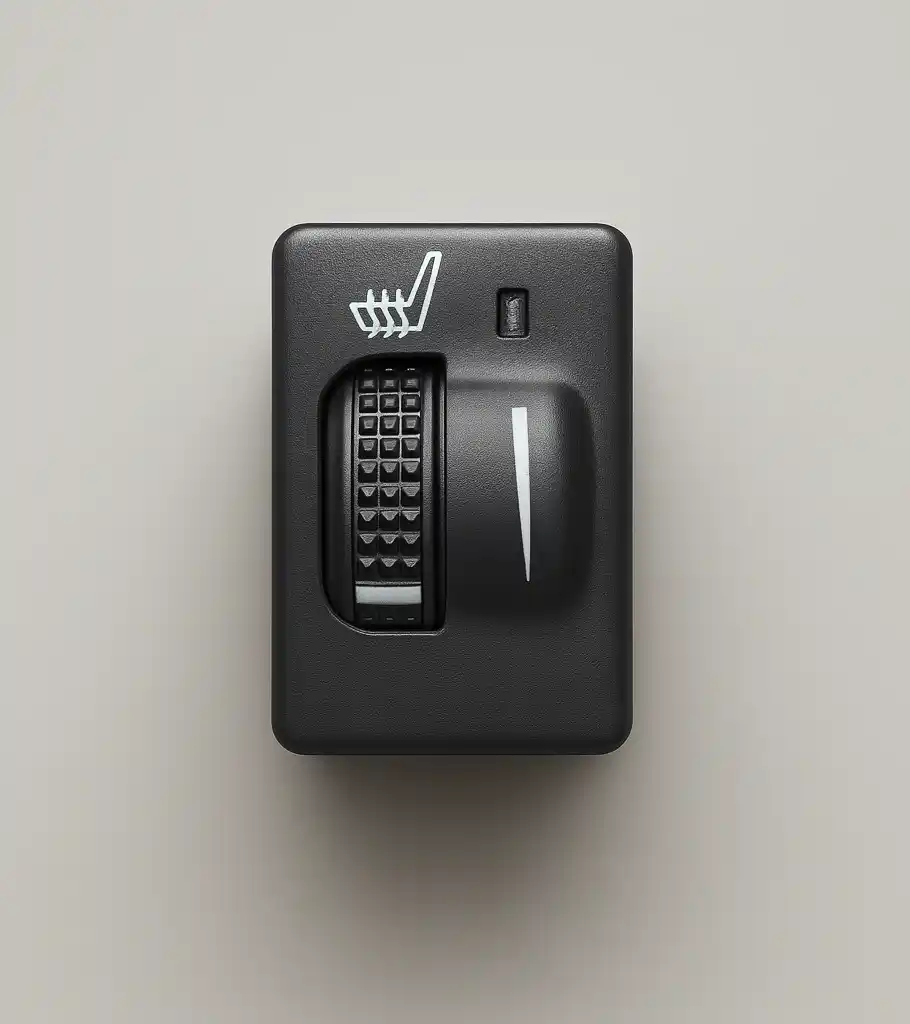
The switch is the only part of the kit the occupant touches every day, so it shapes how the product is perceived. A two-seat kit uses one of three common control styles:
- Rocker switches with HI/OFF/LO positions, often backlit, which fit a rectangular cutout in a console or dash blank.
- Round push-button switches that step through three or five heat levels and show an LED level indicator.
- Rotary switches with a dial that suits retro or utility interiors.
How the heat levels are produced matters as much as the switch style. Basic kits create HI and LO by switching the cushion and backrest pads between parallel and series connections, or by adding a dropping resistor.
Better kits use an electronic control module with pulse-width modulation (PWM), which sets the average power precisely, wastes less energy as heat in the switch and can add features such as an auto-off timer or a high-to-low step-down after a set period.
If you are sourcing controls separately or replacing worn units, our seat heater switch selection covers rocker, round and multi-level designs for both OEM and aftermarket applications.
Before you order, check the panel cutout dimensions, the illumination color against the vehicle’s interior lighting and whether the switch connector matches the kit harness. A mismatch on any of these turns a two-hour job into a full day.
5. Safety: Thermostats, Overheat Protection, and Airbag Seats
Overheat protection is not optional. Most aftermarket pads include a bimetallic thermostat on each heating circuit. It opens at a preset temperature and closes again once the pad cools, which keeps the surface temperature within a safe band even if the switch stays on high for a long drive.
Module-controlled kits often add an NTC thermistor so the controller can regulate temperature continuously instead of cycling on and off.
When you evaluate a kit, ask the supplier:
- Where the thermostat or sensor sits on each pad, and how many are used per seat.
- What happens if the sensor fails, and whether the controller shuts off the heat or keeps heating.
- Whether the harness and connectors use flame-retardant materials suitable for vehicle interiors.
The passenger seat needs particular care. Many modern vehicles fit an occupant classification system in the front passenger seat, either a pressure bladder or a sensor mat under the cushion, which tells the airbag controller whether an adult, child or empty seat is present.
These systems support the advanced airbag requirements of FMVSS 208. A heating pad must never be placed in a way that interferes with that sensor, and seats with side airbags must keep the deployment seam completely clear.
Installers should follow the vehicle’s service information, disconnect the battery and observe the specified wait time before working near SRS connectors.
6. Installation Considerations for Two Front Seats
Installing a two-seat kit is mostly upholstery work combined with careful wiring. The usual sequence is:
- remove the seats
- release the trim cover from the foam by opening the hog rings or clips
- place each pad adhesive-side down on the foam within the main seating area. Keep the pads away from deep seams
- fold lines and bolsters
- where constant flexing shortens element life. Do not fold or crease a pad to make it fit.
Before reinstalling the trim, measure each pad’s resistance and compare it with the specification. Then bench-test the full circuit with the switches connected. Finding a fault at this stage takes minutes. Finding it after the cover is back on means stripping the seat again.
Route the harness under the carpet or along existing wiring channels, protect any pass-through with a grommet and leave enough slack for the seat to travel its full range on the tracks.
Upholstery material affects how the heat feels. Cloth seats transfer heat quickly, while thick leather or leatherette with dense padding takes longer to warm up.
A thinner pad with a higher power density can make up for that, which is a useful point for distributors who serve both truck and premium passenger-car markets.
Frequently Asked Questions
Can one switch control both seats in a two seat heated seat kit?
It is technically possible to wire both seats to a single switch, but the standard and recommended layout uses one switch per seat. Drivers and passengers rarely want the same heat level, and an unoccupied passenger seat should not be heating needlessly.
Independent switches also make troubleshooting simpler, because a fault on one side doesn’t affect the other.
Will a two-seat heated seat kit drain my battery?
Not when it is installed correctly. If the relay is triggered by an ignition-switched source, the heaters cannot run with the vehicle off.
Battery drain problems almost always come from kits wired straight to constant battery power without a relay, or with the trigger tapped into a circuit that stays live after shutdown.
Can I install heating pads in seats with side airbags or occupant sensors?
Often yes, but only if the pads stay well clear of the airbag deployment seam and do not interfere with the passenger occupant classification sensor. Check the vehicle’s service information before you begin.
For seats with complex sensor systems, a professional installer familiar with SRS procedures is the safest choice.
Whether you are stocking kits for retail, supplying upfitters or building heated seats into an OEM program, Lucky Driver Inc. supplies seat heating pads, seat heater switches, control modules and seat ventilation systems to customers across North America.
You can browse our complete range of seat heating products or contact our team to discuss specifications, volume pricing and component matching for your application.
Related Articles
- Heated Seat Pad Kit Installation: 7 Steps to Get It Right
- Universal Heated Seat Kit 12V: 7 Things to Check in 2026
- Carbon Fiber Heated Seat Kit: 7 Facts Buyers Should Know
- Heated Seat Kit With Switch: 7 Things to Know in 2026
- Seat Heater Kit for Cars: 7 Things to Check Before You Buy
Frequently Asked Questions About two seat heated seat kit
Procurement engineers evaluating two seat heated seat kit for OEM programs regularly ask the following questions. Answers cover specification, compatibility, certification, and sourcing for two seat heated seat kit requirements.
What voltage ratings are available for two seat heated seat kit?
Standard two seat heated seat kit configurations support 12 V DC for passenger vehicles and 24 V DC for commercial trucks. Selecting the correct two seat heated seat kit voltage at the design stage eliminates harness rework later.
Lucky Driver maintains two seat heated seat kit inventory in both ratings for same-week shipment.
Which certifications apply to two seat heated seat kit production?
two seat heated seat kit assemblies entering OEM programs typically require UL recognition, REACH compliance, and RoHS documentation. Lucky Driver holds certification records for every two seat heated seat kit variant and includes copies with sample and production shipments.
How is watt density specified for two seat heated seat kit?
Watt density for two seat heated seat kit is expressed in W/cm² and ranges from 0.04 to 0.12 depending on heat-up time requirements. Lower watt density two seat heated seat kit designs improve element longevity, while higher values suit cold-climate applications.
Lucky Driver engineering reviews two seat heated seat kit requirements and recommends watt density based on your seat platform.
What connector families are used with two seat heated seat kit?
two seat heated seat kit harnesses are available with Molex, TE Connectivity, and Delphi connector families. Matching the two seat heated seat kit connector to the vehicle harness reduces assembly time and eliminates adapter cables.
Specify your harness format when requesting a two seat heated seat kit quote from Lucky Driver.
What is the lead time for two seat heated seat kit samples?
two seat heated seat kit samples from Lucky Driver’s North American warehouse ship within 3 to 5 business days for standard configurations. Custom two seat heated seat kit variants with modified pad geometry or connector pinouts require 4 to 6 weeks.
Contact Lucky Driver to confirm two seat heated seat kit availability before submitting your engineering schedule.