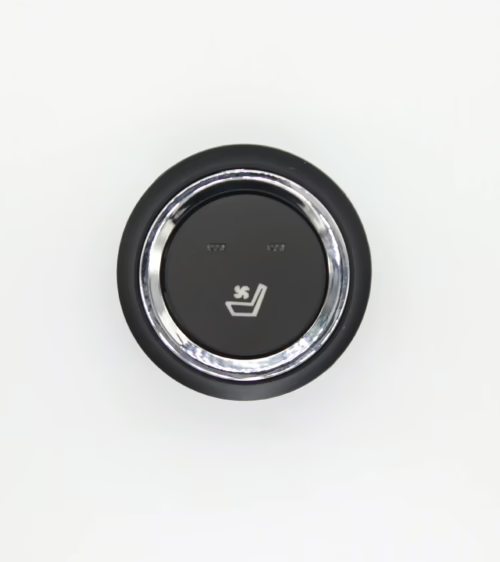
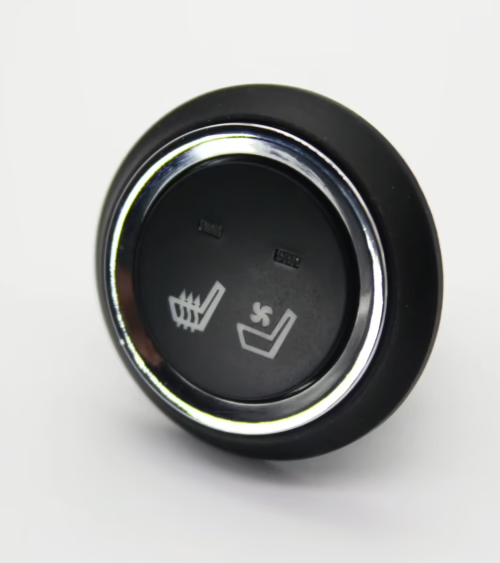
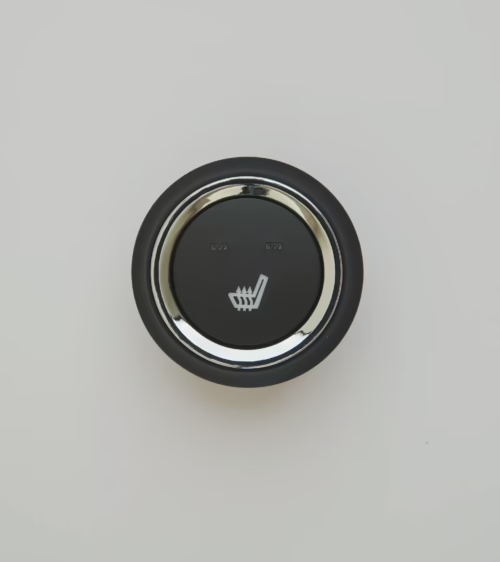
A seat heater kit for cars bundles everything required to add heated seating to a vehicle that left the factory without it:
- heating pads for the cushion and backrest
- an operator switch
- a wiring harness with relay and fuse
- and—in better kits—a dedicated control module with temperature feedback. The difference between a kit that works quietly for ten years and one that fails in the first winter comes down to a handful of measurable specifications.
- This guide walks through the seven things worth checking before you buy
- whether you are an installer retrofitting a single vehicle or a distributor sourcing kits by the pallet.
1. What a Complete Seat Heater Kit Should Include
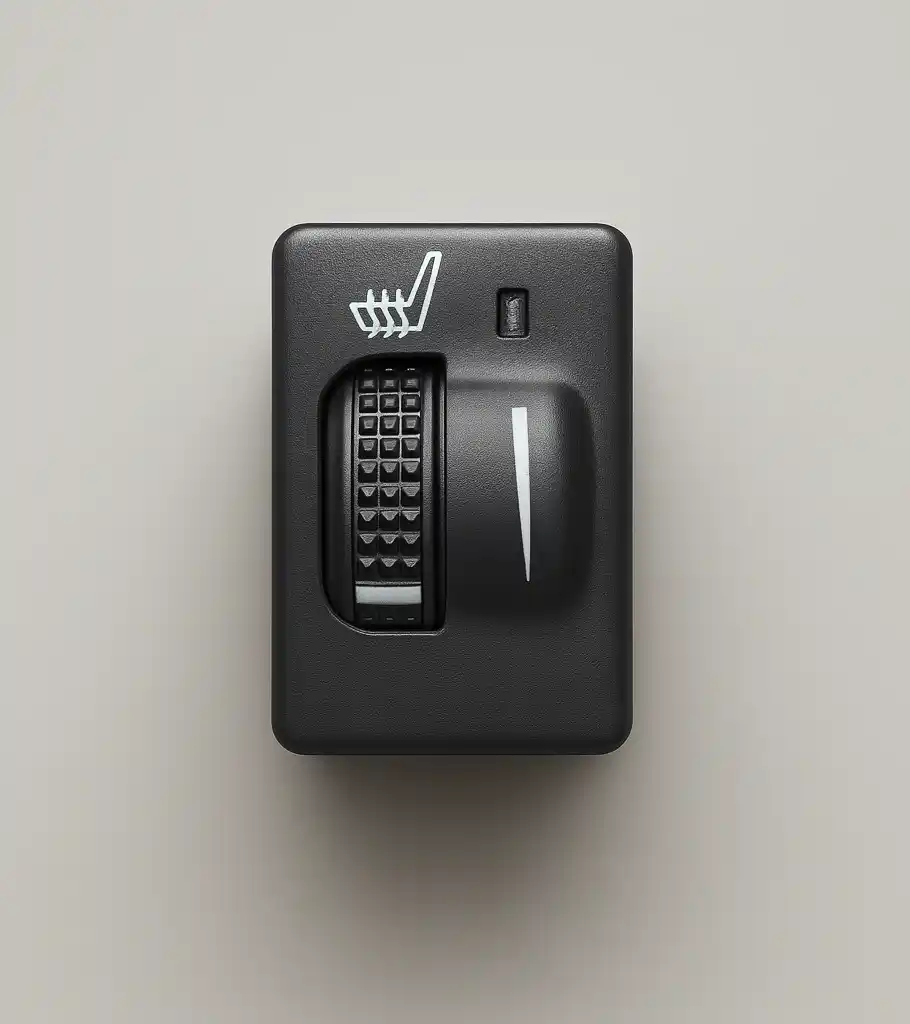
At minimum, a per-seat kit should contain two heating pads (one for the seat cushion, one for the backrest, wired in series or parallel depending on design), a switch, a relay, an inline fuse or fuse tap, and a harness long enough to route from under the seat to the dash or console.
Kits intended for professional installation often add a thermostat or NTC thermistor embedded in the cushion pad, connectors that mate without soldering, and zip ties or adhesive anchors for strain relief.
Watch for kits that omit the relay. A relay-less design pushes the full heating current through the switch contacts, which dramatically shortens switch life and can cause the switch housing to soften over time.
Also confirm that the pads are sized for automotive seats rather than generic chair dimensions—cushion pads typically run around 480 by 280 millimeters, with backrest pads slightly narrower.
Pads that are too large end up folded at the bolsters, creating hot spots and flex-fatigue points where the element will eventually break.
2. Heating Element Type: Carbon Fiber vs. Alloy Wire
The two dominant element technologies are carbon fiber bundles and metal alloy wire (usually copper-nickel or copper-clad). Carbon fiber elements distribute heat across many parallel filaments, so a single broken filament barely changes output; the element degrades gracefully rather than failing open.
They also tolerate the repeated flexing of seat foam better than solid wire.
Alloy wire elements are cheaper and heat up slightly faster, but a single break anywhere in the circuit kills the entire pad, and wire elements concentrate heat along the wire path, which some occupants perceive as striping.
For retrofit kits sold to end users, carbon fiber is generally the safer specification because installation handling is less controlled.
For OEM seat programs where the pad is laminated into the trim under process control, both technologies are viable and the decision usually comes down to cost targets and warranty data.
Either way, ask the supplier for flex-cycle test results—a quality pad should survive at least 50,000 compression cycles without resistance drift beyond 10 percent.
3. Switches and Control Logic
The switch is the part of the kit the driver touches every day, and it is also the most common warranty return.
A basic high/low rocker with an indicator LED is adequate for budget kits, but multi-level switches (typically three heat levels plus off) paired with a control module give noticeably better comfort because the module can regulate pad temperature using thermistor feedback instead of simply switching voltage.
Closed-loop control holds the seat surface near a target temperature—usually 36 to 42 degrees Celsius depending on the level selected—rather than letting it climb until the occupant reaches down to shut it off.
Check the switch’s current rating against the kit’s actual load. If the kit uses a relay, the switch only carries coil current and almost any automotive-grade switch will do; if not, the switch contacts must be rated for the full pad current with margin. Fitment matters too:
- round hole-mount switches suit universal installs
- while rectangular panel-mount styles can replace factory blanks for a cleaner result. If you are replacing a failed unit rather than installing a full kit
- our catalog of replacement seat heater switches covers both universal and vehicle-specific form factors.
4. Power Draw, Wiring, and Fusing
A typical 12-volt kit draws 40 to 50 watts for the cushion pad and 30 to 40 watts for the backrest, so a single seat pulls roughly 6 to 8 amps on high.
Heated seats work by Joule heating—current passing through a resistive element converts electrical energy directly to heat—which means the current draw is continuous whenever the pads are energized, not just during warm-up on simpler kits.
Size the circuit accordingly. Two seats on one circuit can approach 16 amps, so a shared feed needs 12 AWG wire and a 20-amp fuse; a single seat is comfortable on 14 AWG with a 15-amp fuse.
The feed must be ignition-switched, either from an accessory circuit via the relay coil or from a fuse-tap on an ignition-controlled slot, so the seats cannot drain the battery if left on overnight. Grounding deserves equal attention:
- a ring terminal on a cleaned chassis stud under the seat beats a self-tapping screw into painted metal
- which is a classic source of intermittent operation and flickering indicator LEDs.
5. Installation in Five Steps
A competent installer can retrofit one seat in 60 to 90 minutes. The sequence is consistent across most vehicles:
- Remove the seat. Disconnect the battery first, wait for any airbag capacitors to discharge, then unbolt the seat and unplug its connectors before lifting it out.
- Open the trim. Release the hog rings or J-clips holding the seat cover, peel it back far enough to expose the foam on the cushion and backrest.
- Fit the pads. Position each pad flat on the foam, avoiding occupancy-sensor mats and trench lines where listing wires pull the cover down. Secure with the supplied adhesive, then route the pad leads through existing foam channels.
- Wire the circuit. Mount the relay under the seat, run the fused power feed, connect the switched trigger, ground, switch, and pads per the kit diagram, and protect every pass-through with grommets.
- Test before reassembly. Reconnect the battery, verify both heat levels on both pads, confirm the pads shut off with ignition, and check that no harness section is pinched by seat tracks through their full travel.
The most common installer error is laying a pad over a seat occupancy sensor. Doing so can alter the sensor’s readings and affect airbag deployment logic, so always locate the sensor mat first and position the heating pad according to the kit instructions.
6. Safety Features and Compliance
Quality kits include at least two layers of overheat protection:
- a thermostat or thermal fuse bonded to the pad that opens around 70 to 85 degrees Celsius
- and—on module-controlled kits—software limits that cut power if the thermistor reads out of range or goes open-circuit. Some kits add a timer that steps high down to a lower level after 10 to 15 minutes
- mirroring OEM behavior and reducing the low-temperature burn risk for occupants with reduced sensation.
On the materials side, pad substrates and insulation should meet FMVSS 302 flammability requirements, and the assembled pad should pass a dielectric withstand (hipot) test to confirm insulation integrity between the element and the seat frame.
Distributors sourcing kits in volume should request the supplier’s test reports for flex cycling, hipot, salt-spray on connectors, and thermal cycling rather than relying on a datasheet claim. A supplier that manufactures its own elements can usually produce these reports immediately; a trading company often cannot.
7. Universal Kits vs. Vehicle-Specific Kits
Universal kits trade fitment precision for coverage:
- one SKU serves hundreds of models
- which is why they dominate distributor catalogs. They work well in cloth and leather seats with conventional foam
- but they require installer judgment around bolsters
- sensors
- ventilation perforations. Vehicle-specific kits include pads die-cut to the exact seat pattern
- connectors that mate with factory harnesses
- switches that drop into OEM blank locations—at two to three times the unit cost and with inventory complexity to match.
For shops, a practical middle path is stocking universal pad sets alongside a range of switch styles so each install can be finished to look factory. For fleet and upfitter work, standardizing on one well-documented universal kit cuts training time and makes troubleshooting consistent across the fleet.
You can browse our full range of seat heating products to compare pad dimensions, wattages, and switch options side by side before committing to a stocking order.
Frequently Asked Questions
How much power does a seat heater kit use, and will it strain my alternator? A single seat draws roughly 70 to 90 watts on high—about 6 to 8 amps at 12 volts. Any modern alternator handles this easily; even two seats on high add less load than a rear-window defogger.
The only vehicles where load planning matters are older cars with alternators under 60 amps that already run auxiliary equipment.
Can heating pads be installed in leather or ventilated seats? Leather and vinyl seats are actually ideal because the material conducts heat to the occupant efficiently.
Ventilated seats are more involved: the pad must either be a perforated design matched to the airflow holes or positioned so it does not block the ventilation layer. Standard solid pads should not be laid over perforated leather on ventilated seats.
How long should a quality kit last? A carbon fiber pad with a relay-switched circuit and closed-loop control should outlast the seat trim—ten years of daily use is a reasonable expectation.
The usual failure points are wire elements broken at flex points, switches carrying full load without a relay, and grounds that corrode. Choosing a kit that addresses those three points is the single biggest predictor of service life.
Lucky Driver Inc. supplies seat heating pads, switches, control modules, and complete seat heater kits to OEM seat manufacturers and aftermarket distributors across North America, backed by in-house element manufacturing and full test documentation.
If you are evaluating kits for a product line, a fleet program, or distribution, contact Lucky Driver Inc. for samples, specifications, and volume pricing—we will match the right pad, switch, and control architecture to your application.
Related Articles
- Seat Climate Control Module Supplier: 7 Specs for 2026
- Heated Seat Components Distributor: 7 Criteria for 2026
- Seat Heater Switch Supplier: 7 Specs to Verify in 2026
- Automotive Seat Heating Supplier North America: 7 Checks
- Seat Heater Pads Bulk: 7 Specs to Verify in 2026
Frequently Asked Questions About seat heater kit for cars
Procurement engineers evaluating seat heater kit for cars for OEM programs regularly ask the following questions. Answers cover specification, compatibility, certification, and sourcing for seat heater kit for cars requirements.
What voltage ratings are available for seat heater kit for cars?
Standard seat heater kit for cars configurations support 12 V DC for passenger vehicles and 24 V DC for commercial trucks. Selecting the correct seat heater kit for cars voltage at the design stage eliminates harness rework later.
Lucky Driver maintains seat heater kit for cars inventory in both ratings for same-week shipment.
Which certifications apply to seat heater kit for cars production?
seat heater kit for cars assemblies entering OEM programs typically require UL recognition, REACH compliance, and RoHS documentation. Lucky Driver holds certification records for every seat heater kit for cars variant and includes copies with sample and production shipments.
How is watt density specified for seat heater kit for cars?
Watt density for seat heater kit for cars is expressed in W/cm² and ranges from 0.04 to 0.12 depending on heat-up time requirements. Lower watt density seat heater kit for cars designs improve element longevity, while higher values suit cold-climate applications.
Lucky Driver engineering reviews seat heater kit for cars requirements and recommends watt density based on your seat platform.
What connector families are used with seat heater kit for cars?
seat heater kit for cars harnesses are available with Molex, TE Connectivity, and Delphi connector families. Matching the seat heater kit for cars connector to the vehicle harness reduces assembly time and eliminates adapter cables.
Specify your harness format when requesting a seat heater kit for cars quote from Lucky Driver.
What is the lead time for seat heater kit for cars samples?
seat heater kit for cars samples from Lucky Driver’s North American warehouse ship within 3 to 5 business days for standard configurations. Custom seat heater kit for cars variants with modified pad geometry or connector pinouts require 4 to 6 weeks.
Contact Lucky Driver to confirm seat heater kit for cars availability before submitting your engineering schedule.