If you are asking how much does a heated seat kit cost, the honest answer depends on what is inside the box and who is buying it.
A basic universal two-seat aftermarket kit retails for roughly $40 to $120 in 2026, a quality carbon fiber kit with an OEM-style switch runs $120 to $300, and a professionally installed retrofit typically lands between $350 and $700 per pair of seats.
On the B2B side, seat manufacturers and distributors buying heating pads, switches, and control modules as separate components pay a fraction of those retail figures per unit, but only at volume.
This guide breaks down every cost driver so you can budget accurately whether you are outfitting one vehicle or specifying a component for a production seat program.
Heated Seat Kit Price Ranges at a Glance
Heated seat pricing splits into four tiers, and the gaps between them are driven mostly by element technology, switch quality, and installation.
- Entry-level universal kits ($40 to $120): Resistive wire elements, a simple rocker or push-button switch, and an unfused or minimally fused harness. Sold as one or two seat sets, mostly online.
- Mid-range carbon fiber kits ($120 to $300): Carbon fiber or woven carbon elements, a two-stage or three-stage switch, a relay or electronic controller, and a fused harness. This is the sweet spot for most aftermarket shops.
- Vehicle-specific retrofit kits ($200 to $500): Pads shaped to a particular seat frame, a switch that fits the factory blank, and plug-and-play connectors. Common for trucks and SUVs where the heated option was not ordered from the factory.
- Professionally installed ($350 to $700 per pair): Kit plus two to four hours of upholstery labor per vehicle. Dealers and restyling shops quote in this range, sometimes higher for leather seats or vehicles with side airbags in the seat bolsters.
Factory-ordered heated seats on a new vehicle are usually bundled into a trim package, so the standalone cost is hidden. When broken out, OEM heated front seats typically add $300 to $600 to the MSRP, which gives you a useful benchmark for comparing retrofit value.
What Is Inside a Heated Seat Kit
A complete kit for one seat normally contains two heating pads, one for the cushion and one for the backrest, wired in series or parallel to a single connector.
The pads are joined to a harness that includes an in-line fuse, a relay or electronic control module, and a switch. Some kits add a thermostat or thermal fuse embedded in the pad as a redundant overheat cutoff.
Higher-end kits include foam spacer tape, hog rings or adhesive for mounting, and a wiring diagram specific to the switch.
Each of these parts has its own cost curve. In a typical mid-range kit, the heating pads account for about 40 to 50 percent of the component cost, the switch and controller about 30 to 40 percent, and the harness, fusing, connectors, and packaging make up the rest.
That proportion matters when you are deciding where to save and where to spend. Cutting cost on the pads shortens service life. Cutting cost on the controller removes overheat protection. Cutting cost on connectors increases warranty claims from intermittent connections.
Heating Element Type: Carbon Fiber vs. Resistive Wire
Element technology is the single biggest driver of kit price and long-term reliability. Both types work by Joule heating, where current passing through a resistance converts electrical energy into heat, but they behave very differently under flexing and repeated loading.
- Alloy wire elements: A thin copper-alloy or nickel-chromium wire is stitched or laminated onto a nonwoven carrier in a serpentine pattern. They are inexpensive to produce and easy to repair, but a single wire break kills the entire pad.
- Typical rated power is 30 to 45 watts per pad, and heat is concentrated along each wire path, so warm-up feels uneven on thin cushions.
- Carbon fiber elements: Bundles of carbon filament, or a woven carbon fabric, spread current across a wide area. Because each bundle contains thousands of filaments, a few broken strands have almost no effect on output. Carbon fiber pads are thinner, heat more evenly, and tolerate far more flex cycles.
- They cost roughly 1.5 to 2.5 times as much as wire pads at the same wattage.
For a consumer buying one kit, the carbon fiber premium is usually $40 to $80 for a pair of seats and pays for itself in avoided failures. For a seat manufacturer, the decision is more nuanced.
Carbon fiber is the standard for OEM programs with 10-year durability targets, while wire elements remain acceptable for low-cost aftermarket cushions, work vehicles, and powersports seats where the replacement cost is low and the seat itself is not expected to last a decade.
Switches, Controllers, and Wiring Harness Costs
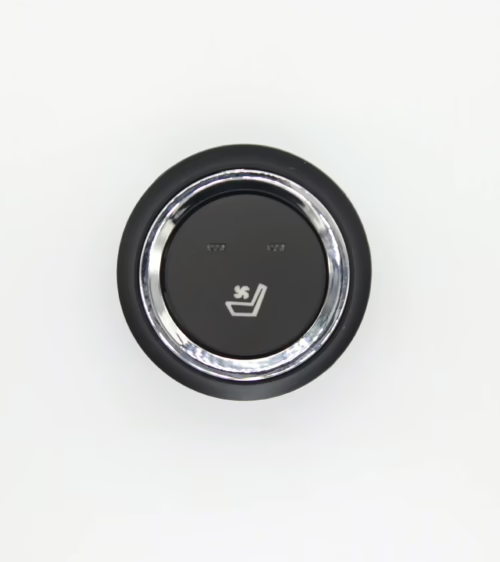
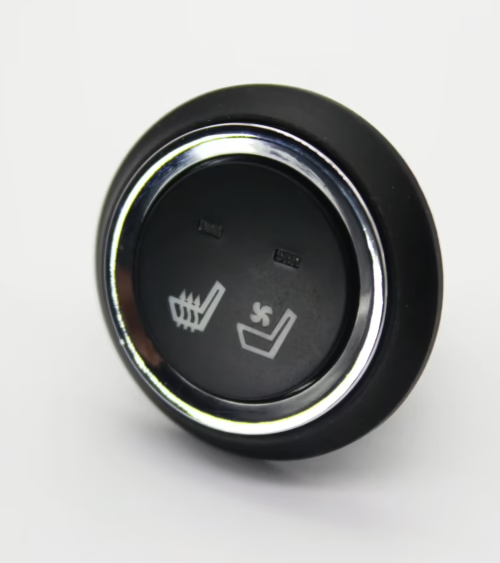
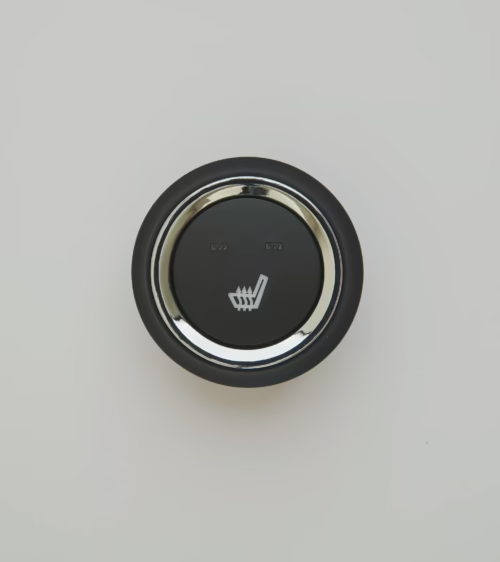
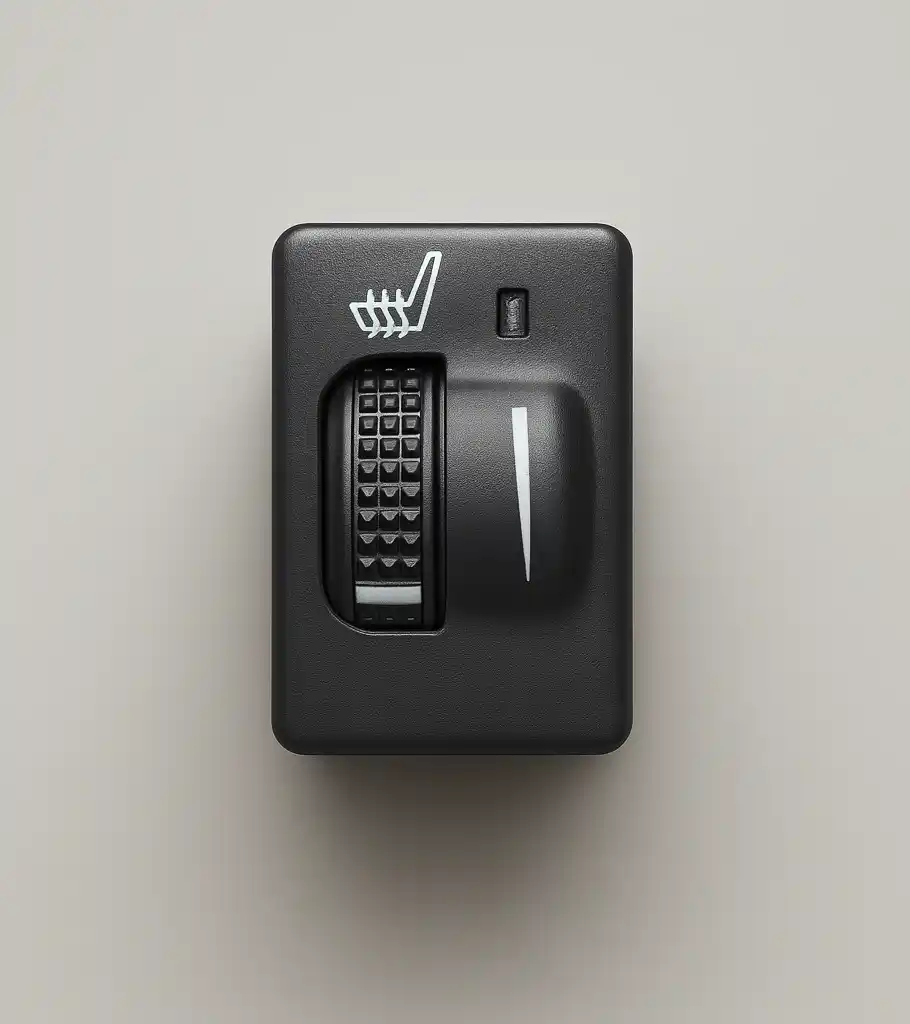
The switch is the part the end user touches every day, and it is where cheap kits most often disappoint. A basic single-stage rocker switch costs a few dollars and simply closes the circuit.
A two-stage or three-stage switch with illuminated indicators adds a resistor network or small logic board and can cost two to four times as much.
Switches shaped to match a vehicle’s factory blank, with the correct backlighting color and the correct detent feel, command a further premium because tooling is amortized across a smaller volume.
Behind the switch, the controller determines how heat is regulated. The simplest kits use a relay and rely on the pad’s own thermostat.
Better kits use an electronic control module that reads a thermistor in the pad and cycles power to hold a target surface temperature, usually in the 36 to 42 degree Celsius range.
Modules with pulse-width modulation, timer auto-off, and over-current shutdown add a few dollars of silicon but remove the most common failure modes.
Shops that service a lot of retrofits keep a stock of replacement seat heater switches on hand because a failed switch is the most frequent warranty return, and swapping it is far cheaper than replacing a pad.
The harness is often overlooked in pricing but matters for safety. A two-seat system drawing 7 to 9 amps total needs 16 or 14 AWG feed wire, a properly rated fuse within 18 inches of the power source, and sealed connectors if the harness routes under carpet.
Kits that ship with 18 or 20 AWG wire and a bare inline fuse holder are saving pennies at the expense of a fire risk.
Installation Labor and Hidden Costs
Labor is frequently the largest line item for a retrofit. Removing a seat, stripping the cover, positioning two pads without wrinkles, reinstalling the cover with correct hog ring tension, and routing a harness to a switched 12-volt source takes an experienced upholsterer 1.5 to 2 hours per seat.
Shop rates in most US metro areas run $90 to $150 per hour, so plan on $270 to $600 of labor for a pair of seats. Leather or perforated covers, memory-foam cushions, and seats with integrated side airbags push toward the upper end.
Hidden costs to budget for include:
- Switch mounting: If no factory blank exists, drilling the console or dash and installing a bezel adds $20 to $60 in parts and time.
- Occupant classification sensors: Many passenger seats have a weight-sensing mat for airbag suppression. Installing a pad over or under it incorrectly can trigger an airbag fault, and clearing the code or replacing a damaged mat can cost several hundred dollars.
- Fusing and relays: Kits that omit a relay need one added at install, typically $10 to $25.
- Warranty labor: If a pad fails after installation, the labor to open the seat again is often not covered by the kit manufacturer.
Aftermarket Kit vs. OEM Retrofit vs. Factory Option
Buyers often compare three paths. An aftermarket universal kit is the cheapest upfront and works in nearly any seat, but the switch rarely matches the interior and the pads may need trimming.
An OEM retrofit uses genuine or OEM-equivalent pads and the original switch part number, so the result is indistinguishable from a factory build, but parts alone can cost $250 to $500 and availability for older platforms is spotty.
The factory option is only available at the time of purchase and is usually bundled with other features you may not want.
From a total cost of ownership perspective, a mid-range carbon fiber aftermarket kit installed by a competent shop delivers about 90 percent of the factory experience for roughly 60 to 70 percent of the factory package price. For fleet operators and used vehicle dealers, that math is compelling.
For restoration and high-end custom work, the OEM retrofit path is worth the premium because the switch integration and pad fit are exact.
How Volume Pricing Works for Seat Manufacturers and Distributors
Retail kit prices tell you little about what a component actually costs at scale. When a seat manufacturer or aftermarket distributor sources pads, switches, and modules separately, pricing is quoted per unit at tiered quantities, and the curve is steep.
Moving from sample quantities to a few hundred units typically cuts the per-pad price by 30 to 50 percent.
Moving from hundreds to tens of thousands of units per year, with a committed annual forecast, can cut it again by a similar margin because the supplier can dedicate laminating and sewing capacity and buy carbon fiber and nonwoven carrier in bulk.
Several factors beyond quantity drive the quote:
- Custom pad geometry: A universal rectangle is cheapest. A die-cut shape with notches for seat bolsters, trench cutouts, and a specific lead exit point requires a cutting die and a first-article approval cycle.
- Connector specification: Specifying an automotive-grade sealed connector from a major brand rather than a generic housing adds cost per unit but eliminates a common field failure.
- Compliance testing: OEM programs usually require flammability testing to FMVSS 302, salt spray on connectors, and flex cycle testing of the element. Those reports are built into the piece price or billed as one-time engineering charges.
- Packaging and labeling: Bulk cartons for a seat plant cost less than individually bagged and barcoded retail units for a distributor.
For buyers evaluating a new supplier, the practical first step is to review the standard product range and request samples before discussing custom tooling.
You can browse our full range of seat heating pads, switches, and control modules to see current specifications and starting price points before requesting a volume quote.
Frequently Asked Questions
Is a $50 heated seat kit worth buying?
For a work truck, an older vehicle, or a short-term fix, a $50 wire-element kit can be acceptable if you add a proper fuse and relay.
For a daily driver you plan to keep for years, the carbon fiber upgrade and a better switch are worth the extra $40 to $80, because a wire pad failure means opening the seat a second time.
How much does it cost to replace just the heating pad or just the switch?
A single replacement pad typically costs $20 to $60 for aftermarket and $60 to $150 for OEM, plus one to two hours of labor to open the seat.
A switch alone is usually $15 to $80 depending on whether it is a universal unit or a vehicle-specific part, and it can often be replaced in under 30 minutes without removing the seat.
Why do seat manufacturers pay so much less per unit than consumers?
Consumer kits include packaging, retail margin, marketing, and the cost of bundling pads, switch, harness, and instructions into a single SKU. A seat plant buys unpackaged pads to a drawing, in cartons, on a forecast, and handles switch and harness sourcing separately.
Removing those layers and committing to volume is what drives the per-unit price down.
Lucky Driver Inc. supplies carbon fiber and alloy wire seat heating pads, seat heater switches, electronic control modules, and seat ventilation systems to OEM seat manufacturers and aftermarket distributors across North America.
If you are costing out a new seat program, a retrofit product line, or a replacement part inventory, contact Lucky Driver Inc. for current tiered pricing, samples, and technical drawings.
Related Articles
- Heated Seat Cushion 12V: 7 Specs to Check Before You Buy
- US Automotive Seat Heater Market: 7 Trends Shaping 2026
- Seat Heater Pad Thickness: 7 Factors Engineers Must Check
- Heated Seat Pad Size Chart: 7 Dimensions to Measure First
- Aftermarket Seat Heater Pad: 7 Specs to Check Before You Buy
Frequently Asked Questions About how much does a heated seat kit cost
Procurement engineers evaluating how much does a heated seat kit cost for OEM programs regularly ask the following questions. Answers cover specification, compatibility, certification, and sourcing for how much does a heated seat kit cost requirements.
What voltage ratings are available for how much does a heated seat kit cost?
Standard how much does a heated seat kit cost configurations support 12 V DC for passenger vehicles and 24 V DC for commercial trucks. Selecting the correct how much does a heated seat kit cost voltage at the design stage eliminates harness rework later.
Lucky Driver maintains how much does a heated seat kit cost inventory in both ratings for same-week shipment.
Which certifications apply to how much does a heated seat kit cost production?
How much does a heated seat kit cost assemblies entering OEM programs typically require UL recognition, REACH compliance, and RoHS documentation. Lucky Driver holds certification records for every how much does a heated seat kit cost variant and includes copies with sample and production shipments.
How is watt density specified for how much does a heated seat kit cost?
Watt density for how much does a heated seat kit cost is expressed in W/cm² and ranges from 0.04 to 0.12 depending on heat-up time requirements. Lower watt density how much does a heated seat kit cost designs improve element longevity, while higher values suit cold-climate applications.
Lucky Driver engineering reviews how much does a heated seat kit cost requirements and recommends watt density based on your seat platform.
What connector families are used with how much does a heated seat kit cost?
How much does a heated seat kit cost harnesses are available with Molex, TE Connectivity, and Delphi connector families. Matching the how much does a heated seat kit cost connector to the vehicle harness reduces assembly time and eliminates adapter cables.
Specify your harness format when requesting a how much does a heated seat kit cost quote from Lucky Driver.
What is the lead time for how much does a heated seat kit cost samples?
How much does a heated seat kit cost samples from Lucky Driver’s North American warehouse ship within 3 to 5 business days for standard configurations. Custom how much does a heated seat kit cost variants with modified pad geometry or connector pinouts require 4 to 6 weeks.
Contact Lucky Driver to confirm how much does a heated seat kit cost availability before submitting your engineering schedule.