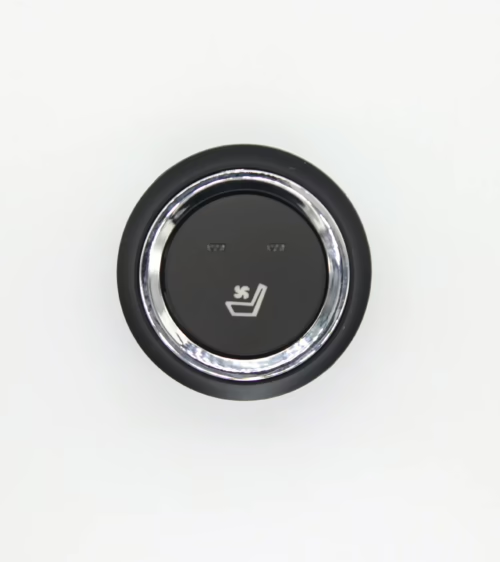
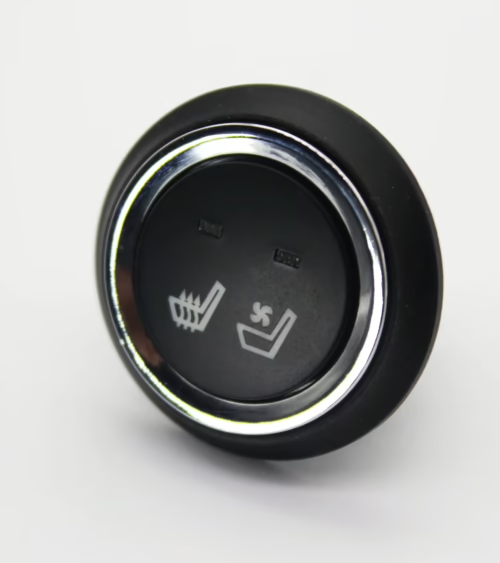
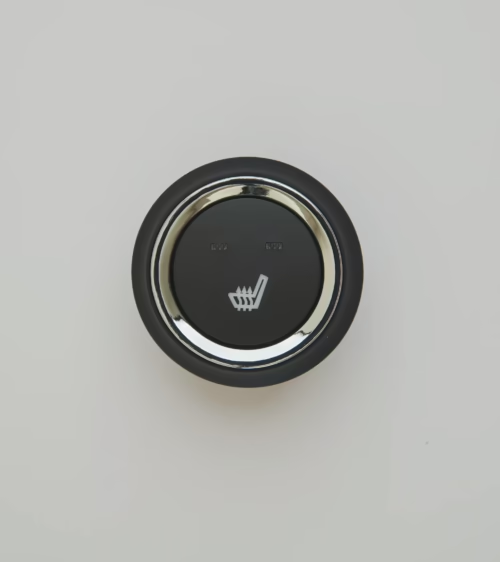
If your BMW 3 Series heated seat switch has stopped responding, produces only one heat level, or lights up without warming the seat at all, you’re dealing with one of the most common comfort-system complaints across the E90, F30, and G20 generations.
This guide walks through how the switch and its control circuit actually work, the seven most common failure symptoms, how to diagnose the problem before spending money on parts, and where to source a reliable replacement switch for your chassis and model year.
How the BMW 3 Series Heated Seat Switch System Works
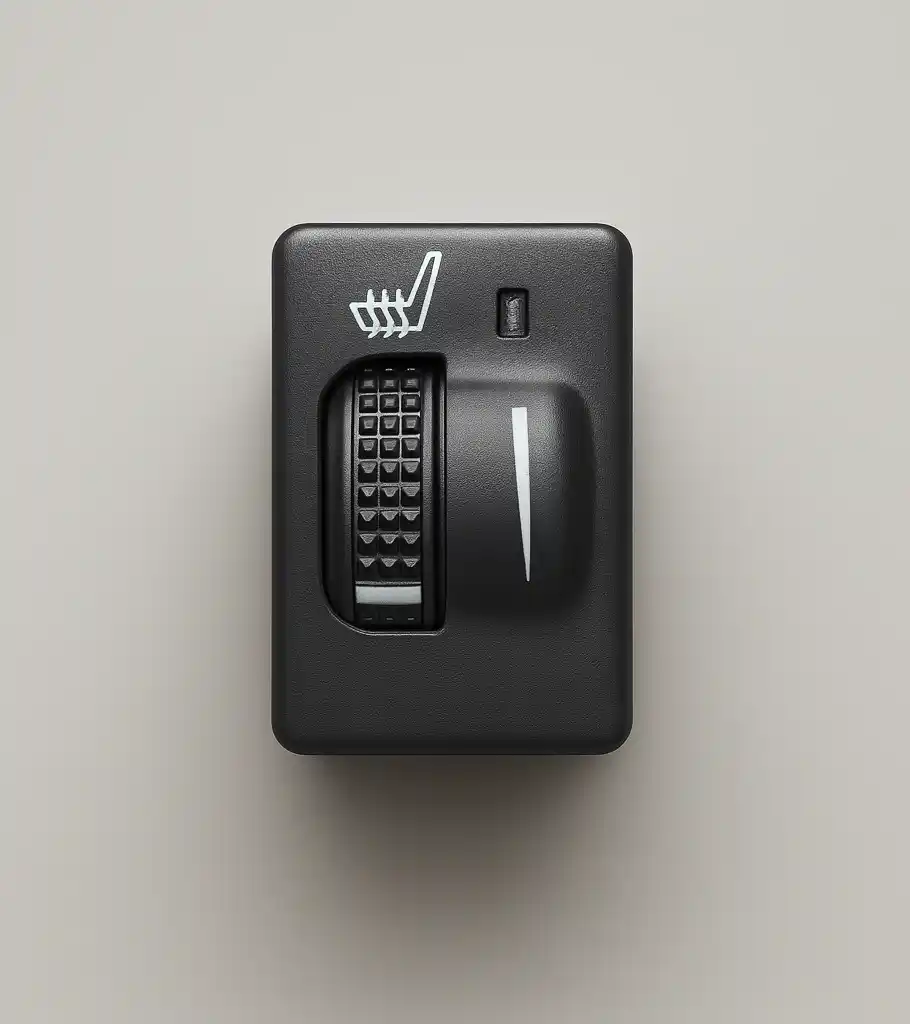
Unlike older analog systems that ran power directly through a rocker switch, most BMW 3 Series models built after 2006 use a low-voltage signal switch that communicates with a seat heater control module rather than switching high current itself.
The physical switch sends a request over the vehicle’s data bus, and a separate module — often integrated into the seat base or footwell junction box — actually energizes the heating element inside the seat cushion and backrest.
This distributed design is part of a broader shift toward networked vehicle electronics, where dozens of modules exchange short data frames instead of each function having its own dedicated high-current wiring.
That communication backbone is commonly implemented using a Controller Area Network (CAN bus), which lets the switch, the seat module, and the instrument cluster all confirm the current heat level without a tangle of dedicated wires running the length of the car.
Because the switch itself carries only a small signal current, it fails differently than a traditional 12V rocker switch. Contact wear, cracked solder joints on the internal circuit board, and moisture intrusion around the switch housing are far more common failure modes than a burned-out contact.
7 Signs Your Heated Seat Switch Is Failing
- No response at all — pressing the switch produces no indicator light and no heat, suggesting a dead switch, blown fuse, or open circuit at the connector.
- Indicator light on, no heat — the switch is sending a signal but the seat module isn’t energizing the heating pad, which often points to the pad itself or the module rather than the switch.
- Only one heat level works — a common symptom on aging E90 and F30 switches where one internal contact position has worn out while others still function.
- Intermittent operation — heat cuts in and out while driving, frequently caused by a cracked solder joint that opens and closes with vibration and temperature changes.
- Switch feels loose or sticks — physical wear in the switch housing itself, common after 8-10 years of daily use.
- Both seats fail simultaneously — this points away from the switch and toward a shared fuse, relay, or the body control module rather than an individual switch.
- Switch works but seat overheats or stays on — usually a stuck relay or failed thermostat sensor in the seat pad, not the switch, but worth ruling out before replacing the switch.
Step-by-Step Diagnosis Before Replacement
Before ordering a new switch, confirm the fault is actually in the switch and not downstream in the seat pad or module. Start by checking the relevant fuse in the footwell or trunk fuse box, since a blown fuse produces symptoms identical to a dead switch.
Next, use a multimeter to verify the switch is receiving reference voltage at its connector with the ignition on — no voltage at the connector means the problem is wiring or a fuse, not the switch itself.
If voltage is present but the switch produces no output signal when pressed, the switch itself is the likely culprit.
On models with onboard diagnostics accessible through OBD-II, a fault code referencing the seat heater circuit can help confirm whether the seat module is even receiving a request from the switch, which narrows the problem down before you remove any trim panels.
OEM vs. Aftermarket Switch Options
BMW dealers sell the factory switch assembly, typically at a premium price that reflects OEM sourcing and packaging rather than a meaningfully different part. Aftermarket suppliers manufacture equivalent switches to the same electrical specification, fit, and connector pattern, often at a significantly lower cost.
For fleet operators, independent repair shops, and cost-conscious owners, a quality aftermarket switch is usually the more practical choice, provided it’s sourced from a supplier that tests fitment against the specific chassis code rather than a generic “universal” listing.
When comparing options, check that the listing specifies your exact chassis — E90/E91/E92/E93, F30/F31/F34, or G20/G21 — since the switch shape, connector, and button layout differ across generations even though the core function is identical.
Browsing a dedicated seat heater switch catalog filtered by chassis code is the fastest way to confirm you’re looking at a part that will actually plug into your car without adapters.
How to Replace the Switch Across E90, F30, and G20 Generations
On the E90/E92 generation, the heated seat switches sit in the center console just ahead of the shifter, secured by simple plastic clips and connected by a small wiring harness plug.
Removal typically requires a trim panel tool to release the clips without cracking the surrounding console plastic, which is brittle after years of temperature cycling.
The F30 generation moved the switches slightly, integrating them into the same console cluster alongside the parking brake and driving mode controls, but the removal process is functionally similar — pry gently, disconnect the harness, and press the new switch in until the clips seat fully.
On the G20, many trims shifted heated seat control into the iDrive infotainment touchscreen rather than a physical switch, meaning some owners are troubleshooting a software or module issue rather than a physical switch failure.
Where a physical switch is still present on lower trims, replacement follows the same basic procedure as the F30.
Common Wiring and iDrive Integration Issues
On models where seat heating is controlled through iDrive, a “switch not working” complaint is sometimes actually a software or coding issue rather than a hardware fault.
If the heated seat option was retrofitted or the seat module was replaced without proper coding, the system may not recognize the heating hardware even though the wiring and switch are functionally sound.
In these cases, a diagnostic scan for module coding mismatches is more useful than replacing any physical part.
For earlier chassis with a physical switch, the most frequent wiring issue is corrosion or a loose pin at the connector behind the console, particularly in vehicles that have experienced water intrusion from a sunroof drain or door seal.
Cleaning and reseating the connector resolves a surprising number of “dead switch” complaints without any parts replacement at all.
Choosing a Reliable Supplier for Replacement Parts
Seat heater switches, control modules, and heating pads vary enough between chassis generations that sourcing from a supplier who understands automotive seating electronics — rather than a generic parts marketplace — reduces the chance of ordering the wrong part or receiving a switch with an incompatible connector.
Look for suppliers that specify OE-equivalent electrical ratings, provide connector diagrams, and back the part with a warranty against premature failure.
For anyone maintaining multiple BMW 3 Series vehicles or servicing them professionally, it’s worth comparing full seat heating products from a single supplier so switches, pads, and control modules are matched to the same specification rather than mixed from different sources.
Frequently Asked Questions
Q:
- Can I replace a BMW 3 Series heated seat switch myself?
A: Yes - on E90 and F30 generations the switch is held by simple clips and a single connector
- making it a straightforward DIY job with a trim tool and basic care around the console plastic. G20 models with iDrive-based controls may require dealer or specialist diagnostic tools if the issue is software rather than hardware.
Q: Why does only one heat level work on my switch?
A: This is typically due to wear on one specific contact position inside the switch, which is common after years of use and is not repairable — the switch itself needs replacement.
Q:
- Is a blown fuse or a bad switch more common in BMW 3 Series heated seat failures?
A: Both are common - but if both seats fail simultaneously
- check the shared fuse first
- since a fuse failure is quicker and cheaper to rule out than removing console trim to test the switch itself.
Lucky Driver Inc. supplies OE-equivalent seat heater switches, control modules, and heating pads engineered for accurate fitment across BMW 3 Series generations and dozens of other makes. Whether you’re replacing a single failed switch or stocking parts for a repair shop, Lucky Driver Inc.
can help you find the correct part the first time.
Related Articles
- Lexus RX350 Seat Heater Switch: 5 Fixes (2026 Guide)
- VW Tiguan Heated Seat Switch: 5 Fixes (2026 Guide)
- Volkswagen Jetta Seat Heater Switch: 5 Common Fixes (2026)
- Mazda CX-5 Heated Seat Switch: 5 Fixes (2026 Guide)
- Kia Sportage Seat Heater Switch: 5 Fixes (2026 Guide)
Frequently Asked Questions About bmw 3 series heated seat switch
Procurement engineers evaluating bmw 3 series heated seat switch for OEM programs regularly ask the following questions. Answers cover specification, compatibility, certification, and sourcing for bmw 3 series heated seat switch requirements.
What voltage ratings are available for bmw 3 series heated seat switch?
Standard bmw 3 series heated seat switch configurations support 12 V DC for passenger vehicles and 24 V DC for commercial trucks. Selecting the correct bmw 3 series heated seat switch voltage at the design stage eliminates harness rework later.
Lucky Driver maintains bmw 3 series heated seat switch inventory in both ratings for same-week shipment.
Which certifications apply to bmw 3 series heated seat switch production?
bmw 3 series heated seat switch assemblies entering OEM programs typically require UL recognition, REACH compliance, and RoHS documentation. Lucky Driver holds certification records for every bmw 3 series heated seat switch variant and includes copies with sample and production shipments.
How is watt density specified for bmw 3 series heated seat switch?
Watt density for bmw 3 series heated seat switch is expressed in W/cm² and ranges from 0.04 to 0.12 depending on heat-up time requirements. Lower watt density bmw 3 series heated seat switch designs improve element longevity, while higher values suit cold-climate applications.
Lucky Driver engineering reviews bmw 3 series heated seat switch requirements and recommends watt density based on your seat platform.
What connector families are used with bmw 3 series heated seat switch?
bmw 3 series heated seat switch harnesses are available with Molex, TE Connectivity, and Delphi connector families. Matching the bmw 3 series heated seat switch connector to the vehicle harness reduces assembly time and eliminates adapter cables.
Specify your harness format when requesting a bmw 3 series heated seat switch quote from Lucky Driver.
What is the lead time for bmw 3 series heated seat switch samples?
bmw 3 series heated seat switch samples from Lucky Driver’s North American warehouse ship within 3 to 5 business days for standard configurations. Custom bmw 3 series heated seat switch variants with modified pad geometry or connector pinouts require 4 to 6 weeks.
Contact Lucky Driver to confirm bmw 3 series heated seat switch availability before submitting your engineering schedule.