Choosing a seat heater switch supplier looks like a commodity decision until the first warranty claims arrive.
The switch is the only part of a heated seat system the end user physically touches, which means it absorbs mechanical wear, thermal cycling, inrush current, and the occasional spilled coffee — all while being expected to look and feel like original equipment.
For OEM seat manufacturers and aftermarket distributors in North America, the switch is also the component most likely to be sourced casually, matched by photograph rather than by specification.
This guide walks through the seven specifications that actually separate a durable switch program from a cost-driven one, and how to audit a supplier against each of them.
1. Current Rating: Direct Switching Versus Module Control
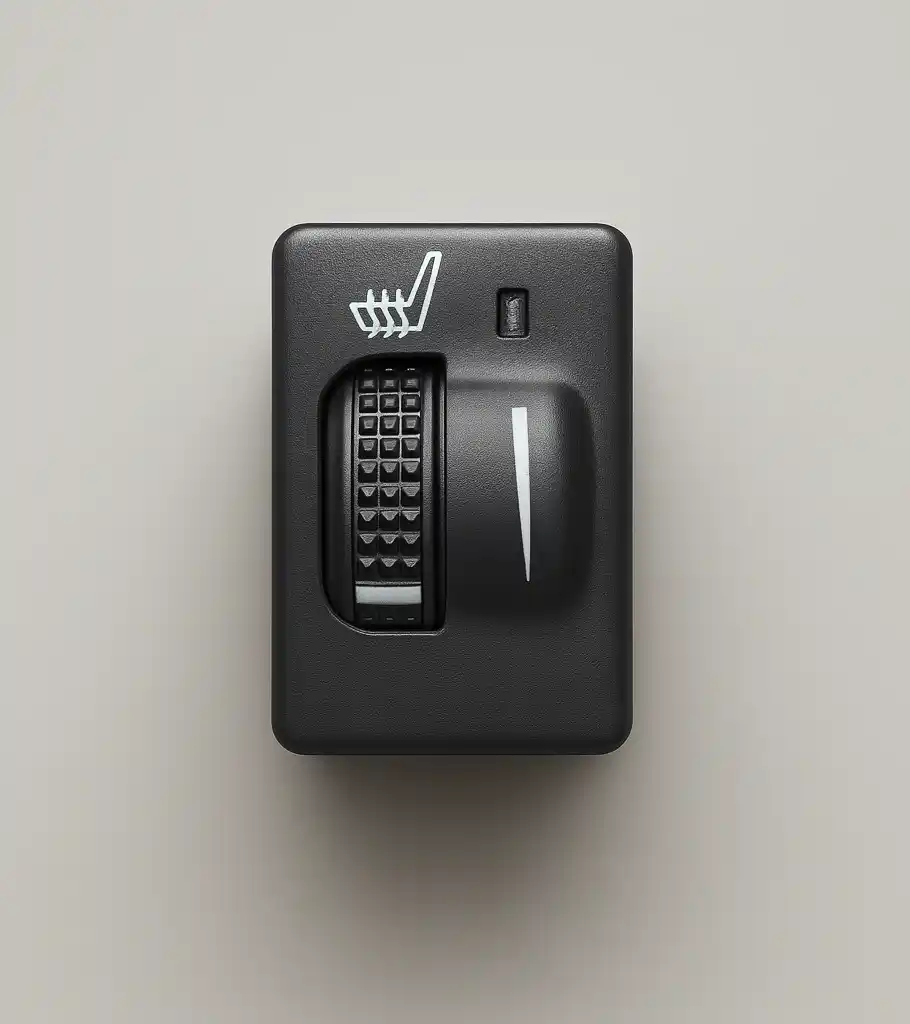
The first question to resolve is whether the switch carries heater current or merely signals a control module.
A typical seat heating pad set draws roughly 3.5 to 6 amps per seat at 12 V DC, with cold-start inrush higher than steady-state draw because the resistance of the heating element rises as it warms.
A switch that directly carries that load needs contacts rated well above nominal — generally 10 A minimum, with a safety margin for inrush and for the voltage spikes typical of automotive electrical systems.
Low-current signal switches, by contrast, may be rated at 100 mA or less because the module does the heavy lifting. These two architectures are not interchangeable, and a supplier who cannot tell you which one a given part number is should not be quoting it.
Ask for the contact rating in amps at 14 V DC, the rated electrical life in cycles at that load, and whether the rating is resistive or inductive. A 10 A resistive rating tells you little if the switch is being asked to interrupt a motor-driven ventilation fan.
2. Switching Topology: Two-Level, Three-Level, and PWM Systems
Heated seat systems in North America typically offer two or three heat levels. The simplest implementations use a rotary or rocker switch that selects between full power, a series-resistor or half-element path for low, and off.
More sophisticated systems hand control to a module that modulates average power electrically rather than by changing circuit paths.
That approach relies on pulse-width modulation to hold the pad at a target temperature, which gives finer control and reduces the thermal stress a mechanical level change puts on the element.
The topology matters to sourcing because it determines the switch’s internal pole and throw configuration. A three-level system may need a single-pole triple-throw switch, a pair of independent circuits, or a simple momentary input that increments a state machine in the module.
When you request a quote, specify the pole/throw arrangement and the expected switching logic, not just “three-level heated seat switch.” A supplier with genuine engineering depth will push back with clarifying questions rather than quoting whatever is in stock.
3. Connector and Terminal Compatibility
More returns are caused by connector mismatch than by electrical failure. Automotive switch connectors vary by terminal pitch, blade width, housing geometry, locking tab position, and sealing class. A switch that is electrically perfect but arrives with a 2.8 mm blade where the harness expects 6.3 mm is scrap.
- Terminal size and type — blade width, thickness, and plating material (tin versus silver versus gold flash for low-current signal paths).
- Pin count and pinout — including which pin is illumination supply and which is ground, since these are frequently reversed between vehicle platforms.
- Housing and lock — whether the harness mates directly or requires a pigtail adapter.
- Sealing — console-mounted switches are usually unsealed, but door-panel and seat-base mounts may require an IP-rated interface.
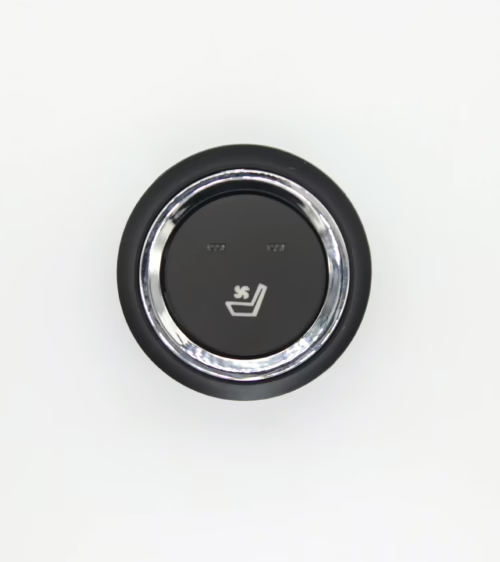
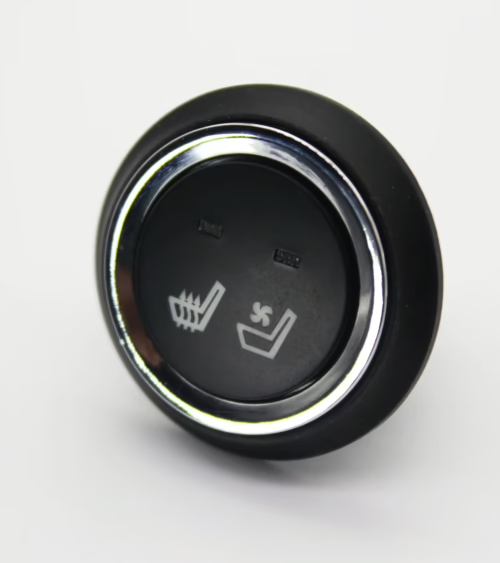
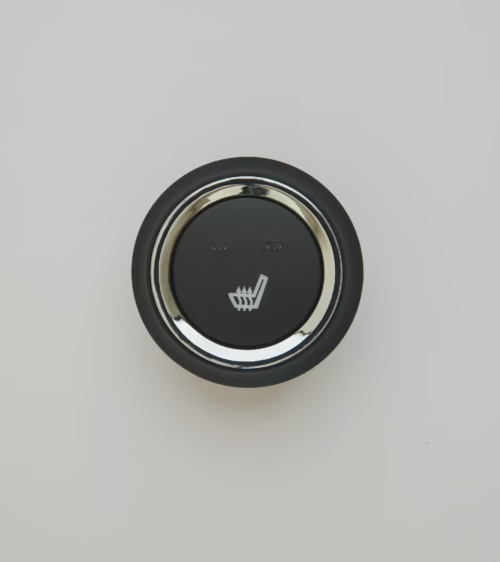
Insist on a dimensioned drawing and a pinout table for every part number before the first order. If you are building replacement inventory, a catalog that documents these details — as ours does across our range of replacement seat heater switches — removes most of the guesswork from cross-referencing.
4. Illumination, Indicators, and Level Feedback
Backlighting is a cosmetic feature that generates functional complaints. Three issues recur. First, color consistency:
- an amber LED that reads slightly green next to the surrounding HVAC controls looks like a defect to the customer even though it works. Ask for a specified color temperature or dominant wavelength and a tolerance
- not a color name.
Second, brightness and dimming behavior. Many vehicles supply switch illumination from a dimmer-controlled rail. A switch wired to constant 12 V will stay at full brightness while everything around it dims. Confirm whether the illumination pin expects switched, dimmed, or constant supply.
Third, level indication. Two- and three-level switches usually indicate the active setting with discrete LEDs or segment icons. Verify that the indicator logic matches the control strategy — a module that increments levels on each press needs the switch’s indicators driven by the module, not hardwired to the contact position.
Mismatched indicator logic produces a switch that shows the wrong level, which is functionally worse than no indicator at all.
5. Environmental and Durability Validation
A console switch lives in a harsh place:
- direct sun through the windshield
- cabin temperatures from well below freezing to above 85 °C
- tens of thousands of actuations over a vehicle’s life. Credible validation data should cover mechanical life (actuation cycles with contact resistance measured before and after)
- electrical life at rated load
- high and low temperature operation and storage
- thermal shock and humidity cycling
- vibration
- UV exposure for any exposed plastic or printed graphic.
Printed and laser-etched icons deserve particular attention. An icon that abrades away after two winters of glove contact makes the whole seat look cheap. Ask how the graphic is applied — pad printing with clear topcoat, laser etching through a painted layer, or in-mold decoration — and request abrasion test results.
Finally, ask for actual test reports rather than a compliance statement. A supplier that has genuinely run the tests will have the data; one that has not will offer reassurance instead.
6. Panel Fit, Bezel Geometry, and Tooling Reality
Physical fit determines whether a switch reads as factory-installed or as an add-on. Three dimensions matter most:
- the cutout footprint
- the panel thickness range the retention clips accommodate
- the depth behind the panel required for the body and mated connector. Behind-panel depth is the one most often discovered too late
- when the switch will not seat because a reinforcement rib or duct sits 4 mm too close.
If you are developing a custom bezel or housing, get clarity on tooling early:
- who owns the mold
- what the tooling lead time and cost are
- what the minimum order quantity is per run
- what the texture and gloss specification is. Matching a supplier’s standard texture to a vehicle interior is usually easier and far cheaper than cutting a new tool
- so ask what textures are already available before committing to custom work.
7. Supply Continuity, Documentation, and Compliance
The last specification is about the supplier rather than the part. Switch programs fail commercially when a part number goes unavailable mid-season or when a running change alters the pinout without notice. Establish the following in writing before volume commitments:
- Change control — written notification before any change to form, fit, function, or sub-supplier.
- Stocking position — North American inventory versus made-to-order, and replenishment lead time.
- Traceability — lot or date coding that lets you isolate a defective batch instead of quarantining all inventory.
- Documentation — drawings, pinouts, test reports, RoHS and REACH declarations, and Proposition 65 assessment for California distribution.
- Quality system — IATF 16949 or at minimum ISO 9001, with a documented PPAP path for OEM programs.
For distributors building out assortment breadth, pairing switches with matched pads, modules, and ventilation components from one source simplifies all of the above.
You can browse our full range of seat heating products to see how switches, control modules, and heating pads are specified as compatible systems rather than loose parts.
Frequently Asked Questions
Can a two-level seat heater switch be used in a three-level system? Not reliably. In a module-controlled system where the switch is a momentary input, a two-position switch cannot cycle through three states, and the level indicators will not correspond to actual output.
In a direct-switching system, the missing throw leaves one heat path unconnected. Match the switch to the control architecture, not just the connector.
What current rating should a directly wired seat heater switch have? For a typical 12 V system drawing 3.5 to 6 A per seat, specify a minimum 10 A resistive rating at 14 V DC, and confirm the rated electrical life at that load.
If one switch controls both seats or feeds a ventilation fan as well, the required rating rises accordingly and a relay or control module becomes the better design.
Do seat heater switches require specific regulatory approval in the United States? There is no FMVSS standard governing aftermarket seat heater switches specifically. Practical obligations are material compliance — RoHS, REACH, and California Proposition 65 assessment — plus accurate country-of-origin marking.
OEM programs typically impose the customer’s own validation and PPAP requirements, which are more demanding than any statutory minimum.
Work With a Supplier That Specifies Before It Quotes
Lucky Driver Inc. supplies seat heating pads, seat heater switches, control modules, and seat ventilation systems to OEM seat manufacturers and aftermarket distributors across North America.
Every switch we quote comes with a dimensioned drawing, a documented pinout, a stated current rating, and validation data — because a switch that fits the harness and survives the cabin is the only one worth shipping.
Send us your vehicle platform, harness connector, and target heat levels, and our engineering team will come back with a matched specification and a stocking plan built around your season.
Related Articles
- Automotive Seat Heating Supplier North America: 7 Checks
- Seat Heater Pads Bulk: 7 Specs to Verify in 2026
- Custom Seat Heating Elements: 7 Specs for 2026
- Private Label Seat Heaters: 7 Steps to Launch in 2026
- Wholesale Heated Seat Kits: 7 Specs to Verify in 2026
Frequently Asked Questions About seat heater switch supplier
Procurement engineers evaluating seat heater switch supplier for OEM programs regularly ask the following questions. Answers cover specification, compatibility, certification, and sourcing for seat heater switch supplier requirements.
What voltage ratings are available for seat heater switch supplier?
Standard seat heater switch supplier configurations support 12 V DC for passenger vehicles and 24 V DC for commercial trucks. Selecting the correct seat heater switch supplier voltage at the design stage eliminates harness rework later. Lucky Driver maintains seat heater switch supplier inventory in both ratings for same-week shipment.
Which certifications apply to seat heater switch supplier production?
seat heater switch supplier assemblies entering OEM programs typically require UL recognition, REACH compliance, and RoHS documentation. Lucky Driver holds certification records for every seat heater switch supplier variant and includes copies with sample and production shipments.
How is watt density specified for seat heater switch supplier?
Watt density for seat heater switch supplier is expressed in W/cm² and ranges from 0.04 to 0.12 depending on heat-up time requirements. Lower watt density seat heater switch supplier designs improve element longevity, while higher values suit cold-climate applications.
Lucky Driver engineering reviews seat heater switch supplier requirements and recommends watt density based on your seat platform.
What connector families are used with seat heater switch supplier?
seat heater switch supplier harnesses are available with Molex, TE Connectivity, and Delphi connector families. Matching the seat heater switch supplier connector to the vehicle harness reduces assembly time and eliminates adapter cables. Specify your harness format when requesting a seat heater switch supplier quote from Lucky Driver.
What is the lead time for seat heater switch supplier samples?
seat heater switch supplier samples from Lucky Driver’s North American warehouse ship within 3 to 5 business days for standard configurations. Custom seat heater switch supplier variants with modified pad geometry or connector pinouts require 4 to 6 weeks.
Contact Lucky Driver to confirm seat heater switch supplier availability before submitting your engineering schedule.