Buying seat heater pads bulk is a fundamentally different exercise from buying a single retrofit kit off a shelf. At one unit, a pad either warms the cushion or it does not.
At 5,000 or 50,000 units, the same pad becomes a warranty exposure, an assembly-line variable, and a line item that either holds its margin or quietly erodes it through trim rework and field returns.
Seat manufacturers, Tier 1 integrators, and aftermarket distributors who source in volume need to qualify a pad against measurable specifications before the first purchase order is cut.
The seven specifications below are the ones that separate a pad that performs identically across an entire production run from one that passes a sample inspection and then generates claims eighteen months later.
1. Heating Element Type: Carbon Fiber vs. Alloy Resistance Wire
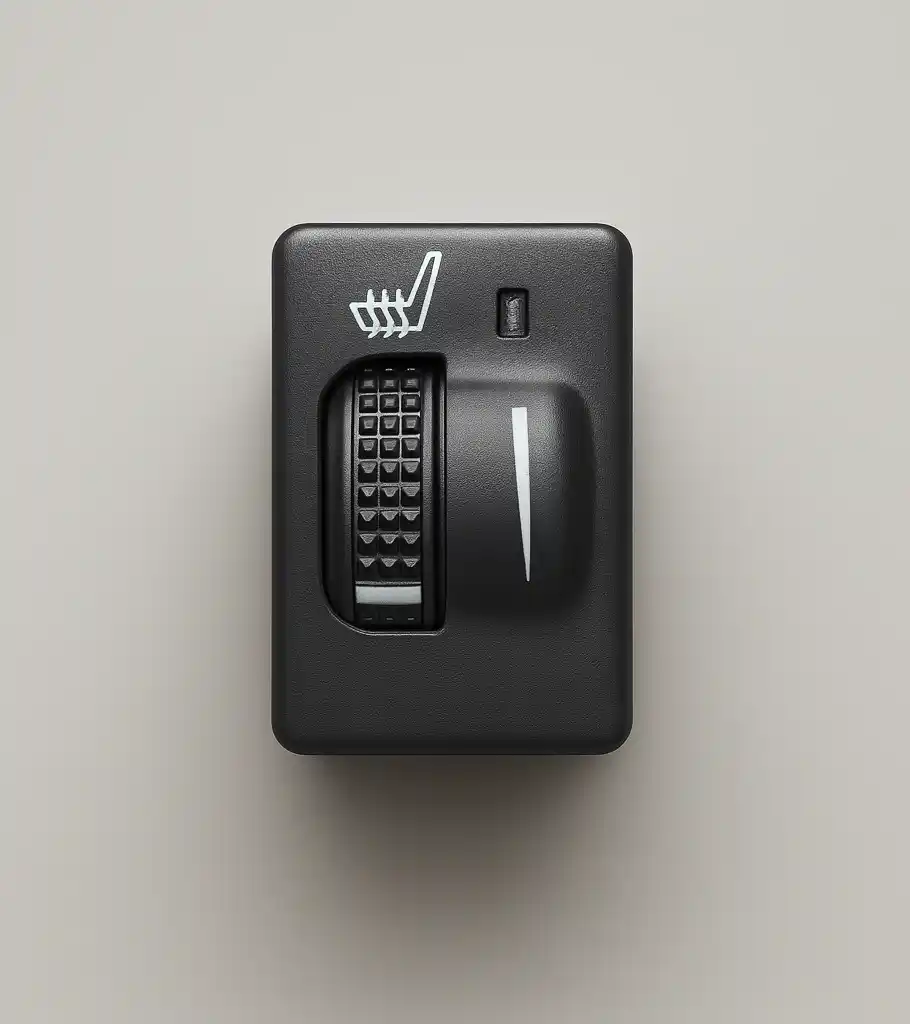
Every seat heater pad reduces to a resistive element laminated between carrier layers, but the element construction drives nearly every downstream characteristic. Alloy resistance wire — typically a nickel-chromium or copper-nickel alloy — is the long-standing OEM approach.
Its resistance per unit length is tightly controlled at the mill, so pad-to-pad resistance variance in a well-run factory stays within a few percent. Wire also tolerates repeated flexing when it is routed in a serpentine pattern with adequate bend radii and anchored with proper stitch or adhesive retention.
These alloys are standard nichrome and related resistance alloys whose temperature coefficient of resistance is low enough that output stays stable as the pad warms.
Carbon fiber and carbon-paste elements spread heat over a wider area and are thinner, which helps in seats with aggressive contour or thin foam. The trade-off is resistance consistency:
- printed and woven carbon elements are more sensitive to process variation
- a 10 percent resistance spread across a lot translates directly into a 10 percent power spread. When you evaluate bulk quotations
- ask for the measured resistance distribution from a recent production lot
- not the nominal design value.
2. Watt Density and Current Draw per Seat
Specify power in watts and watt density, not in vague warm-up claims. A typical 12 V cushion pad draws 35 to 55 W; a backrest pad runs 25 to 45 W.
A full seat at both pads on high therefore pulls roughly 5 to 8 A, and a dual-front-seat system can approach 16 A — enough to require careful fuse and relay sizing on the vehicle side.
Watt density matters more than total wattage for comfort and safety. Concentrating 50 W into a small pad area produces hot spots that occupants feel as burning rather than warmth, and it accelerates foam and trim degradation.
Most comfortable designs land between 300 and 600 W/m² at the heated area, with element spacing tuned so the surface temperature gradient stays under a few degrees across the seating surface.
Ask your supplier for a thermal image of the pad at steady state on high — a 60-second infrared capture reveals element spacing problems that no datasheet will disclose.
3. Substrate, Adhesive, and Trim-Cut Tolerance
The carrier material determines how the pad behaves on the assembly line. Non-woven polyester carriers are the volume standard:
- they are breathable
- they bond well to foam
- they can be die-cut to a seat-specific outline. Fiberglass-reinforced carriers survive higher temperatures and resist tearing during installation but cost more and conform less readily to sculpted cushions.
For bulk orders, the specification that actually drives scrap is dimensional tolerance. Confirm the die-cut tolerance (±2 mm is achievable; ±5 mm will cause fitment complaints), the location tolerance of trim-channel cutouts and listing-wire slots, and whether the pad is supplied with pressure-sensitive adhesive, hook-and-loop, or plain.
If PSA is specified, require the adhesive’s service temperature range and verify it in a humidity-aged sample, because adhesives that pass at 23 °C frequently delaminate after a few weeks of cabin heat cycling.
4. Thermal Protection and Control Strategy
No volume buyer should accept a pad without defined overtemperature protection. Three approaches dominate. A bimetallic thermostat bonded to the element opens at a set temperature — commonly 40 to 50 °C at the pad — and resets on cooling; it is inexpensive and self-contained but offers coarse control.
An NTC thermistor feeds a control module that closed-loop regulates surface temperature, which is the OEM norm and gives repeatable comfort across ambient conditions. A thermal fuse provides one-shot protection and is used as a backup layer rather than a primary control.
The important question for a bulk program is whether protection is integrated into the pad or lives in the module. Integrated thermostats simplify the harness but mean a protection change requires a new pad part number.
Thermistor-based pads push complexity to the module, where firmware can be revised without re-tooling the pad. Decide this before tooling, not after.
5. Connectors, Harness Length, and Switch Compatibility
Connector mismatch is the single most common cause of rejected bulk shipments. Lock down the housing family and part number, the terminal plating, the wire gauge, and the pigtail length on the purchase specification. Wire gauge is not cosmetic:
- at 5 A over a 600 mm run
- undersized conductors add measurable voltage drop and reduce pad output at the far end of the circuit. For 12 V systems carrying 4 to 8 A per pad
- 18 AWG is a reasonable floor and 16 AWG is safer for longer runs.
Equally important is matching the pad to its control interface. A two-level pad wired for series/parallel switching will not behave correctly behind a PWM module, and a thermistor pad will not work with a simple rotary control.
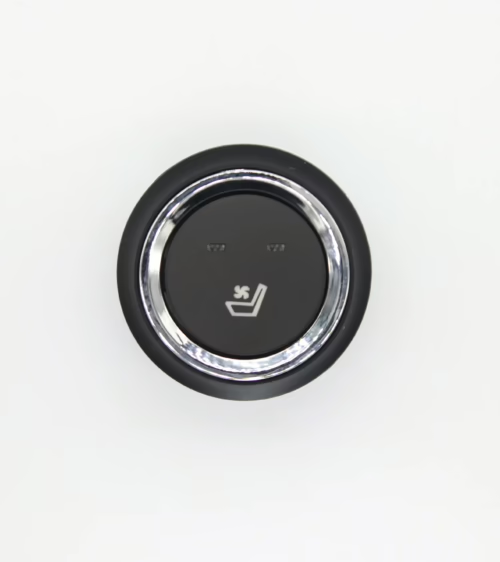
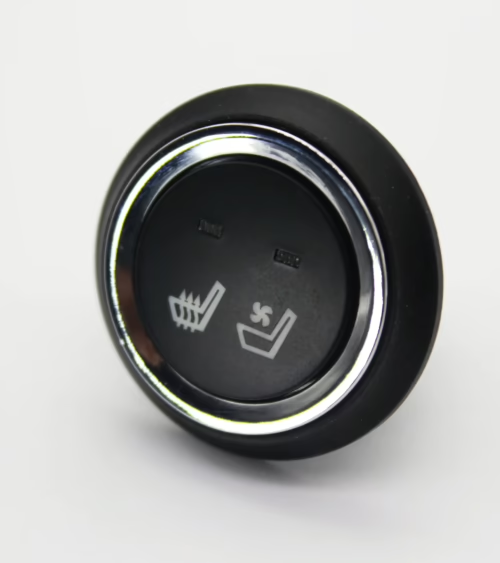
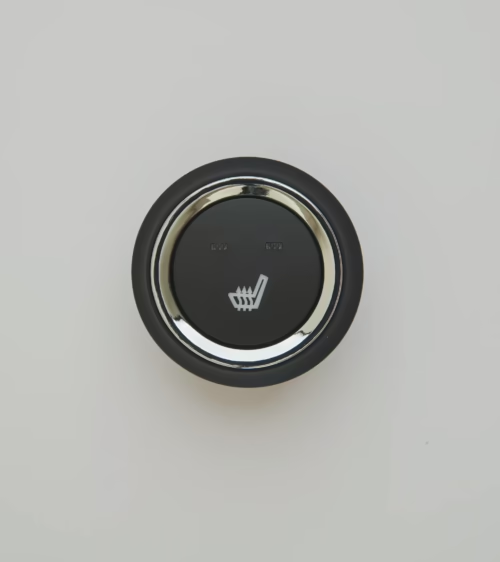
Confirm that your seat heater switch options match the pad’s electrical architecture, including indicator LED voltage and the number of heat levels, before you commit to volume. Mismatched switch and pad logic is the defect that surfaces only after the seats are assembled.
6. Validation Testing and Documentation You Should Require
A credible bulk supplier can produce test reports without hesitation. Request, at minimum:
- resistance and insulation-resistance data from a production lot
- dielectric withstand results
- a thermal cycling report (typically −30 °C to 85 °C for several hundred cycles) with pre- and post-test resistance
- a durability report covering repeated flex or seat-ingress cycling
- a surface-temperature profile showing time to target and steady-state maximum. For automotive programs
- also ask about flammability performance of the pad stack-up in the assembled seat
- since the pad becomes part of a system that must meet applicable motor-vehicle interior flammability requirements.
Alongside test data, require material declarations, RoHS and REACH statements, and an IMDS entry if you supply an OEM. If a quotation is unusually low and the supplier cannot produce these documents, the gap in price is the cost of the testing they skipped.
7. MOQ, Tooling, Lead Time, and True Landed Cost
Bulk pricing is driven by element layout and die tooling. A seat-specific pad requires a cutting die and a routing fixture, usually a few hundred to a couple of thousand dollars in one-time cost, amortized across the program.
Minimum order quantities for custom geometry commonly start around 500 to 1,000 sets, while standard rectangular pads can often be bought in smaller lots.
Build the real landed cost before comparing quotes:
- unit price
- tooling amortization
- freight mode
- duty
- packaging
- the inspection or rework labor you expect at receiving. A pad that is 40 cents cheaper but arrives with a 2 percent resistance-out-of-spec rate costs more once incoming inspection and line stoppages are counted. If you are still scoping the program
- it helps to browse available seat heating products to establish which configurations are already standard — using an existing layout avoids tooling cost entirely and typically cuts lead time by several weeks.
Frequently Asked Questions
What is a realistic minimum order quantity for custom seat heater pads? For a pad with custom die-cut geometry, expect 500 to 1,000 sets as a practical starting point, because the cutting die and element routing fixture need volume to amortize.
Standard-size pads with generic rectangular outlines are frequently available in lots of 100 to 200, which makes them the better choice for market validation before a tooled program.
Should I specify carbon fiber or alloy wire elements for a volume program? Choose alloy resistance wire when resistance consistency, long service life, and predictable warranty behavior matter most — which describes most OEM and Tier 1 applications.
Choose carbon fiber when the seat has thin foam or complex contour and pad thickness is the binding constraint. In either case, qualify the decision with lot-level resistance distribution data rather than nominal specifications.
How long should a bulk seat heater pad order take to deliver? For an existing standard pad, four to six weeks from purchase order is typical, including production and ocean freight.
A custom pad adds two to four weeks for tooling and sample approval, plus whatever time your own validation testing requires. Build a sample-approval gate into the schedule; approving samples before production starts is far cheaper than sorting a full container.
If you are sourcing seat heater pads bulk for an OEM seat program or an aftermarket distribution line, Lucky Driver Inc.
supplies heating pads, switches, control modules, and seat ventilation systems to seat manufacturers and distributors across North America — with production test data, material declarations, and configurations that are already tooled and in volume production.
Send us your seat geometry, target wattage, connector requirement, and annual volume, and our engineering team will return a specification sheet, a sample for fit and thermal validation, and a landed-cost quotation so you can qualify the part before you commit to a production run.
Related Articles
- Custom Seat Heating Elements: 7 Specs for 2026
- Private Label Seat Heaters: 7 Steps to Launch in 2026
- Wholesale Heated Seat Kits: 7 Specs to Verify in 2026
- Automotive Seat Heater Market: 7 Trends Shaping 2026
- Seat Heater OEM Supplier: 7 Criteria for 2026 Sourcing
Frequently Asked Questions About seat heater pads bulk
Procurement engineers evaluating seat heater pads bulk for OEM programs regularly ask the following questions. Answers cover specification, compatibility, certification, and sourcing for seat heater pads bulk requirements.
What voltage ratings are available for seat heater pads bulk?
Standard seat heater pads bulk configurations support 12 V DC for passenger vehicles and 24 V DC for commercial trucks. Selecting the correct seat heater pads bulk voltage at the design stage eliminates harness rework later. Lucky Driver maintains seat heater pads bulk inventory in both ratings for same-week shipment.
Which certifications apply to seat heater pads bulk production?
seat heater pads bulk assemblies entering OEM programs typically require UL recognition, REACH compliance, and RoHS documentation. Lucky Driver holds certification records for every seat heater pads bulk variant and includes copies with sample and production shipments.
How is watt density specified for seat heater pads bulk?
Watt density for seat heater pads bulk is expressed in W/cm² and ranges from 0.04 to 0.12 depending on heat-up time requirements. Lower watt density seat heater pads bulk designs improve element longevity, while higher values suit cold-climate applications.
Lucky Driver engineering reviews seat heater pads bulk requirements and recommends watt density based on your seat platform.
What connector families are used with seat heater pads bulk?
seat heater pads bulk harnesses are available with Molex, TE Connectivity, and Delphi connector families. Matching the seat heater pads bulk connector to the vehicle harness reduces assembly time and eliminates adapter cables. Specify your harness format when requesting a seat heater pads bulk quote from Lucky Driver.
What is the lead time for seat heater pads bulk samples?
seat heater pads bulk samples from Lucky Driver’s North American warehouse ship within 3 to 5 business days for standard configurations. Custom seat heater pads bulk variants with modified pad geometry or connector pinouts require 4 to 6 weeks.
Contact Lucky Driver to confirm seat heater pads bulk availability before submitting your engineering schedule.