A carbon fiber heated seat kit replaces the traditional metal resistance wire found in older seat heaters with a woven or laminated carbon fiber heating element. For OEM seat manufacturers and aftermarket distributors, the difference is not cosmetic:
- carbon fiber elements change warm-up behavior
- failure modes
- flex life
- even how a pad should be trimmed and installed. This guide covers seven facts that matter when you are specifying or sourcing these kits — what is actually inside them
- how the elements behave electrically
- what realistic power and temperature figures look like
- what to verify before committing to a production order.
1. What a Carbon Fiber Heated Seat Kit Actually Contains
A complete kit is more than two warm pads.
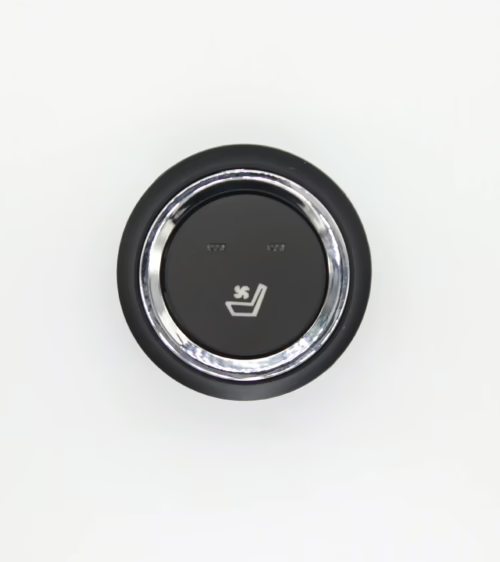
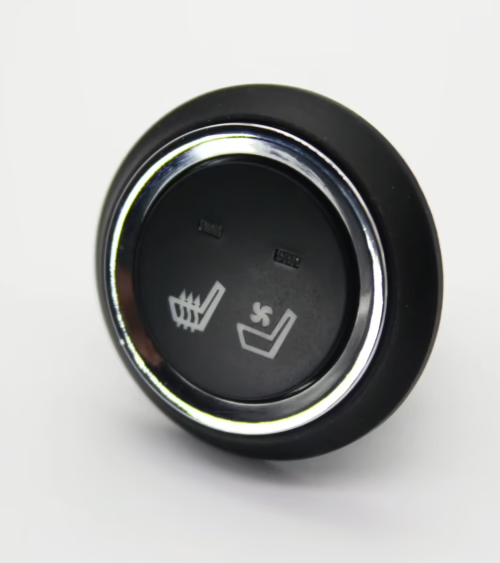
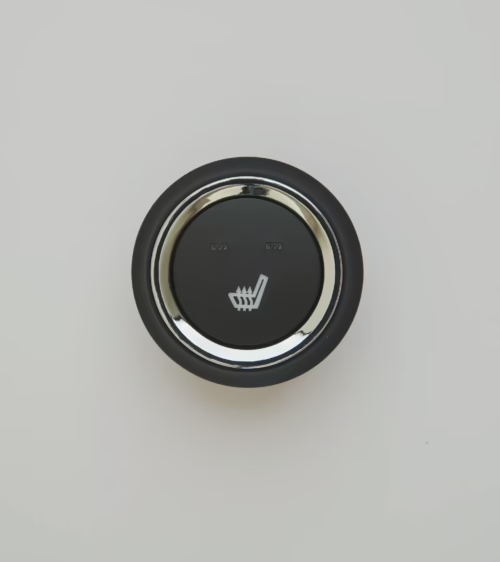
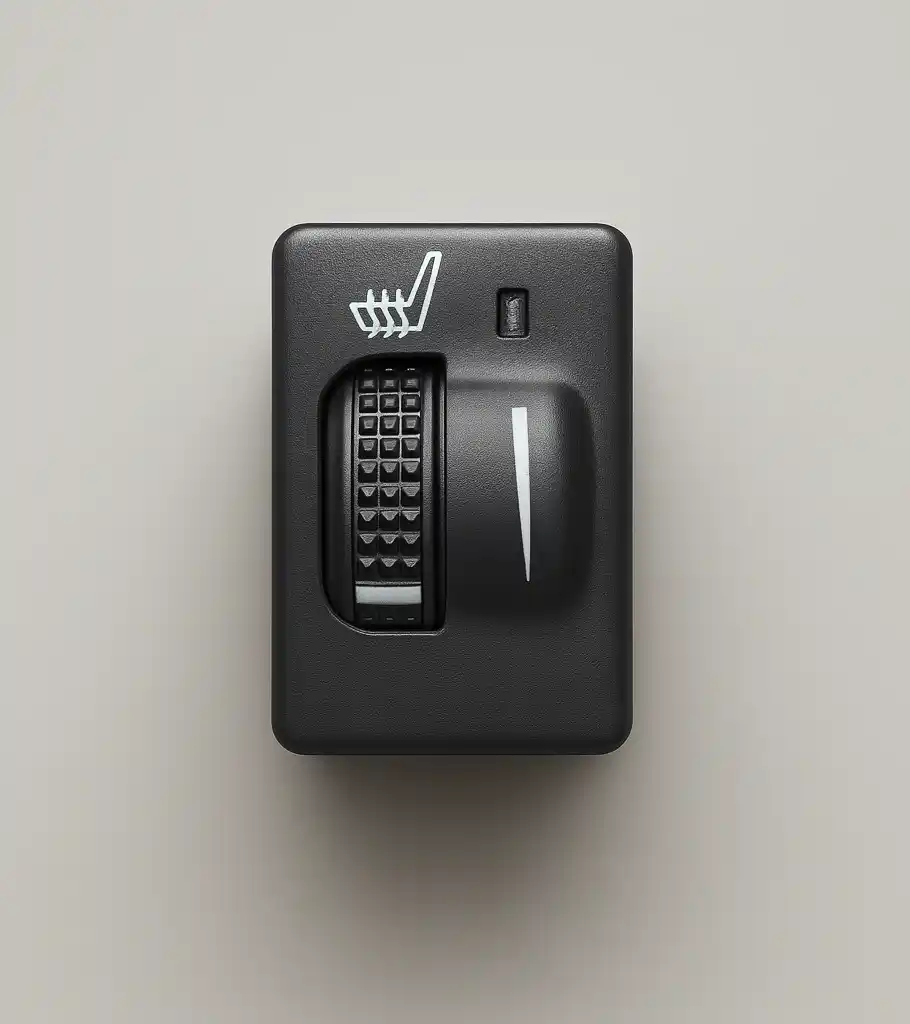
A production-grade carbon fiber heated seat kit typically includes a cushion (seat base) heating pad, a backrest heating pad, a wiring harness with inline connectors, a control module or relay, a dash- or bezel-mounted switch, and one or more temperature sensors.
The heating pads themselves are usually a sandwich construction:
- carbon fiber heating elements laminated between layers of non-woven polyester or felt
- with lead wires crimped or ultrasonically welded to bus bars at the element edges.
When evaluating a kit, treat each of these parts as a separate quality item. A well-made element paired with a cheap switch or an undersized harness will still generate warranty claims.
Check the wire gauge of the harness against the rated current, confirm the connector series is automotive-grade (positive-lock, vibration-resistant), and confirm the sensor type — most quality kits use an NTC thermistor embedded in the pad rather than relying on a simple bimetal thermostat alone.
2. How Carbon Fiber Elements Differ from Resistance Wire
Traditional seat heaters use a single serpentine run of copper or copper-nickel alloy wire stitched across the pad. If that wire breaks at any point — usually at a flex zone near the seat bolster — the entire circuit opens and the heater dies. A carbon fiber element works differently:
- each heating trace is a tow made up of thousands of individual carbon fibers carrying current in parallel. A few broken filaments barely change the trace resistance
- so the element keeps working and keeps heating evenly.
This parallel-filament construction also spreads heat across a wider contact area. Instead of a narrow hot line under each wire run, the occupant feels a broader, more uniform warm zone.
For seat engineers, that means fewer localized hot spots against foam and trim materials, and more latitude in element layout. The trade-off is that terminations matter more:
- the crimp or weld joint between the carbon tow and the copper lead wire is the most common failure point in low-quality pads
- so joint construction deserves close inspection during sample evaluation.
3. Realistic Warm-Up Times and Power Draw
Typical 12 V carbon fiber kits draw 3 to 5 amps per seat — roughly 35 to 60 watts split between cushion and backrest pads.
Because carbon fiber traces have low thermal mass and large surface area, perceptible warmth usually arrives in 60 to 120 seconds, noticeably faster than comparable wire pads, which often need 3 to 5 minutes to feel warm through a trim cover.
Steady-state surface temperature should be regulated, not open-loop. A properly designed controller holds the pad surface in the 36–42 °C range on high by cycling power based on thermistor feedback, typically via a relay duty cycle or PWM. Be skeptical of marketing claims about extreme peak temperatures:
- an unregulated pad that can reach 60 °C is a liability
- not a feature. Prolonged skin contact at temperatures above roughly 44 °C can cause low-temperature burns
- which is why closed-loop control and a thermal fuse or overheat cutoff should be considered mandatory in any kit you distribute.
4. Durability, Flex Life, and Common Failure Modes
Seat heating pads live in a hostile mechanical environment:
- they are compressed
- sheared
- flexed every time an occupant sits down or shifts weight. Reputable manufacturers validate pads with flex-cycle testing — tens of thousands of compression and bending cycles at the bolster and hip zones — plus crush testing and thermal cycling.
In field returns, the failure points are predictable:
- Lead wire junctions: the transition from carbon tow to copper lead concentrates mechanical stress; strain relief and reinforced lamination at this point separate good pads from bad ones.
- Connector crimps: undersized or poorly crimped terminals cause resistive heating at the connector, sometimes melting the housing.
- Installation damage: pads folded sharply during installation, or stapled and hog-ringed through an active heating trace.
Carbon fiber’s parallel-filament redundancy makes the element itself the least likely failure point — which is exactly why terminations and workmanship dominate real-world reliability.
5. Switches, Controllers, and Temperature Regulation
The switch and controller define the user experience more than the pad does. Most aftermarket kits ship with a three-position rocker (high/low/off) or a multi-stage rotary or push-button switch with LED level indicators. On the control side, there are two common architectures:
- a simple relay-plus-thermostat design where the switch selects between two resistance taps
- a microcontroller-based module that reads the NTC thermistor and regulates output with timed duty cycles or PWM.
For distributors, switch compatibility is a recurring service issue — bezels crack, backlights fail, and vehicle-specific panel cutouts vary widely, so stocking replacement seat heater switches in common form factors alongside complete kits reduces returns and keeps installers out of trouble.
When specifying for OEM programs, also confirm the controller’s behavior on ignition cycling:
- a heater that silently restores its last state can conflict with some vehicle makers’ requirements
- which often call for the heater to default to off after a restart.
6. Installation Considerations for OEM and Retrofit Work
Carbon fiber pads install between the seat foam and the trim cover, adhered or tape-tacked to the foam surface. Several rules protect both the pad and the vehicle’s existing systems:
- Never fold an active trace. Pads may only be trimmed or relieved in zones the manufacturer marks as cut-permitted, typically between traces.
- Respect trench and hog-ring lines. Element layouts should leave clear channels where the trim cover is tied down into the foam; fasteners through a trace will destroy it.
- Mind occupant detection. Many passenger seats contain a pressure-sensitive occupant classification mat for airbag logic. The heating pad must sit in a position validated not to alter that mat’s response — this is a safety-relevant check, not a comfort detail.
- Route and fuse correctly. Leads should exit away from seat-frame pivots and tracks, and the circuit should be fused at the rated current, fed from an ignition-switched source.
For retrofit businesses, kits with generously sized, clearly marked trim zones and pre-terminated harnesses cut installation time and reduce the installer error rate significantly.
7. How to Evaluate Kits and Suppliers Before You Order
Before committing to a container order, run samples through a short but disciplined evaluation. Verify resistance and current draw against the datasheet at nominal voltage, measure surface temperature distribution with a thermal camera on high setting, and confirm the overheat protection actually trips.
Ask the supplier for flammability test evidence against FMVSS 302, which governs the burn rate of materials used in vehicle occupant compartments, and for flex-cycle test reports on the exact pad construction you are buying — not a generic certificate.
On the commercial side, probe lot-to-lot consistency:
- request samples from two different production runs and compare resistance values and workmanship. Confirm labeling
- polarity conventions
- connector pinouts are documented so your downstream customers are not guessing. A supplier that maintains a structured catalog — where you can browse seat heating products with published specifications rather than negotiating every parameter from scratch — is generally a supplier whose production is equally well controlled.
Frequently Asked Questions
Are carbon fiber heated seat kits better than wire-element kits?
For most applications, yes. Carbon fiber elements heat faster, distribute warmth more evenly, and tolerate partial filament breakage without failing outright. Wire elements remain acceptable in low-cost applications, but their single-conductor construction means one break at a flex point kills the heater.
The quality gap today is less about element chemistry and more about terminations, controllers, and lamination workmanship.
How much power does a carbon fiber heated seat kit use, and will it drain the battery?
Plan on 35 to 60 watts per seat, or roughly 3 to 5 amps at 12 V. With the engine running, this is a trivial load for any alternator.
Kits should be wired to an ignition-switched circuit so they cannot run with the vehicle off; with that wiring, battery drain is not a practical concern.
Can carbon fiber heating pads be used under leather or combined with seat ventilation?
Yes on both counts. Leather and vinyl conduct heat well, though warm-up feels slightly slower than through fabric.
For ventilated seats, the heating pad must be a perforated version aligned with the ventilation airflow path, and the heater and blower control logic should be coordinated — this is a standard combination in modern climate seat systems when specified correctly at the design stage.
If you are sourcing carbon fiber heated seat kits for an OEM seat program or building out an aftermarket product line, Lucky Driver Inc. supplies carbon fiber heating pads, switches, control modules, and ventilation components to seat manufacturers and distributors across North America.
Contact our team for specifications, samples, and volume pricing tailored to your application.
Related Articles
- Heated Seat Kit With Switch: 7 Things to Know in 2026
- Seat Heater Kit for Cars: 7 Things to Check Before You Buy
- Seat Climate Control Module Supplier: 7 Specs for 2026
- Heated Seat Components Distributor: 7 Criteria for 2026
- Seat Heater Switch Supplier: 7 Specs to Verify in 2026
Frequently Asked Questions About carbon fiber heated seat kit
Procurement engineers evaluating carbon fiber heated seat kit for OEM programs regularly ask the following questions. Answers cover specification, compatibility, certification, and sourcing for carbon fiber heated seat kit requirements.
What voltage ratings are available for carbon fiber heated seat kit?
Standard carbon fiber heated seat kit configurations support 12 V DC for passenger vehicles and 24 V DC for commercial trucks. Selecting the correct carbon fiber heated seat kit voltage at the design stage eliminates harness rework later.
Lucky Driver maintains carbon fiber heated seat kit inventory in both ratings for same-week shipment.
Which certifications apply to carbon fiber heated seat kit production?
carbon fiber heated seat kit assemblies entering OEM programs typically require UL recognition, REACH compliance, and RoHS documentation. Lucky Driver holds certification records for every carbon fiber heated seat kit variant and includes copies with sample and production shipments.
How is watt density specified for carbon fiber heated seat kit?
Watt density for carbon fiber heated seat kit is expressed in W/cm² and ranges from 0.04 to 0.12 depending on heat-up time requirements. Lower watt density carbon fiber heated seat kit designs improve element longevity, while higher values suit cold-climate applications.
Lucky Driver engineering reviews carbon fiber heated seat kit requirements and recommends watt density based on your seat platform.
What connector families are used with carbon fiber heated seat kit?
carbon fiber heated seat kit harnesses are available with Molex, TE Connectivity, and Delphi connector families. Matching the carbon fiber heated seat kit connector to the vehicle harness reduces assembly time and eliminates adapter cables.
Specify your harness format when requesting a carbon fiber heated seat kit quote from Lucky Driver.
What is the lead time for carbon fiber heated seat kit samples?
carbon fiber heated seat kit samples from Lucky Driver’s North American warehouse ship within 3 to 5 business days for standard configurations. Custom carbon fiber heated seat kit variants with modified pad geometry or connector pinouts require 4 to 6 weeks.
Contact Lucky Driver to confirm carbon fiber heated seat kit availability before submitting your engineering schedule.