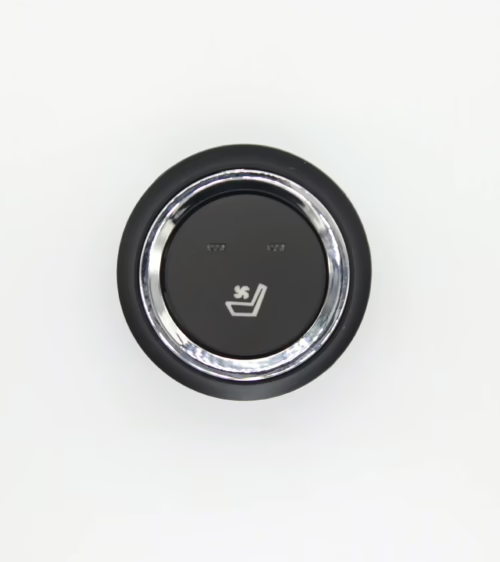
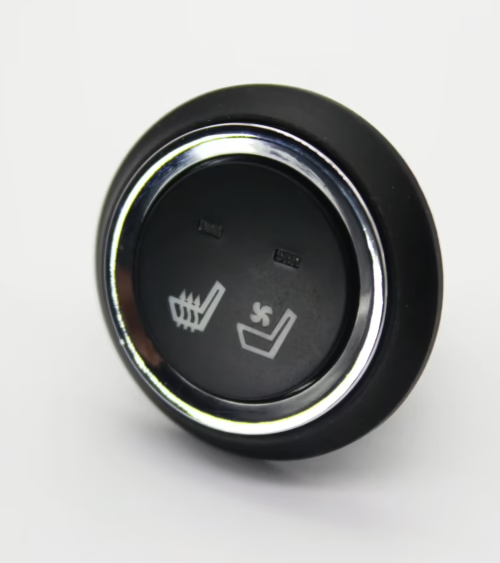
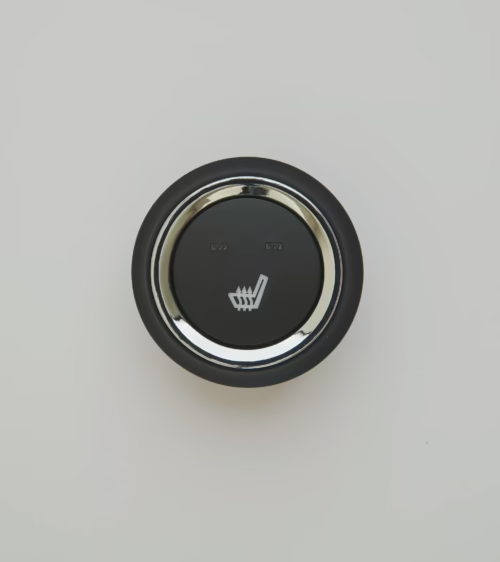
Selecting a heated seat components distributor is a sourcing decision with engineering consequences.
A seat heating system is not a single part — it is a matched set of resistive elements, temperature sensors, thermal protection devices, operator controls, and a current-handling module, all of which must behave predictably together across a vehicle’s service life.
When those parts arrive from unrelated sources with mismatched resistance targets or incompatible control logic, the integrator absorbs the warranty cost. The seven criteria below are the ones OEM seat manufacturers and aftermarket distributors in North America should verify before committing to a supply agreement.
1. Scope of Catalog: Element, Control, and Comfort Coverage
The first criterion is simple coverage. A distributor that stocks only heating pads forces you to manage three or four additional vendors for the rest of the system.
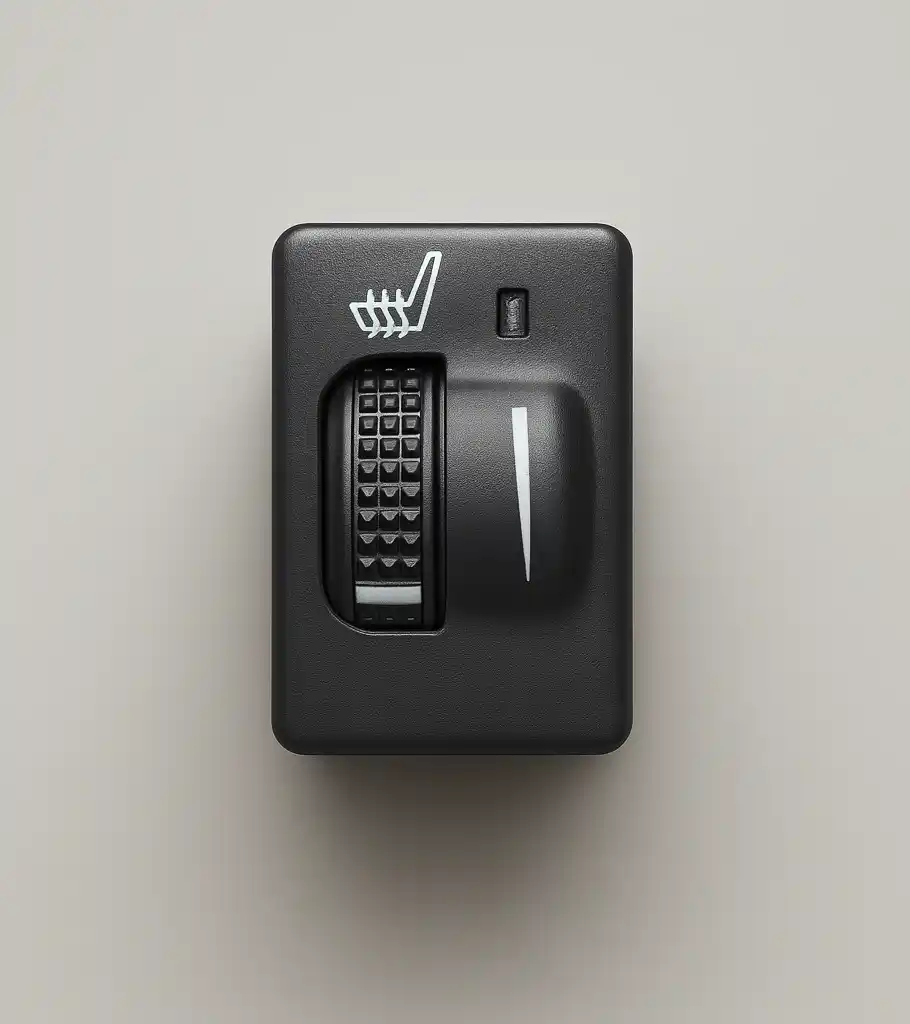
Full-scope suppliers carry carbon-fiber and alloy-wire heating pads in cushion and backrest geometries, round and rocker operator switches with two- and three-stage output, standalone control modules, wiring harnesses with sealed connectors, and seat ventilation blower assemblies with their spacer layers.
Coverage matters most during revisions. If a seat program changes foam thickness mid-cycle, a single-source supplier can re-cut the element, re-validate the sensor placement, and ship the matching harness in one change order.
Fragmented sourcing turns that into a multi-week coordination exercise with no single party accountable for the thermal result.
- Heating elements — carbon fiber, alloy wire, and carbon-film constructions
- Controls — switches, rotary selectors, and integrated control modules
- Protection — NTC thermistors, bimetallic cutoffs, and thermal fuses
- Ventilation — blower units, air distribution spacers, and ducting
- Interconnect — harnesses, pigtails, and sealed terminal housings
2. Heating Element Construction and Watt Density
Two constructions dominate the market. Alloy-wire pads use a fine resistance wire sewn in a serpentine pattern onto a non-woven carrier; they are inexpensive, repairable, and well understood, but a single wire break opens the entire circuit.
Carbon-fiber pads distribute current across thousands of filaments, which makes them tolerant of localized damage and more flexible under repeated occupant loading — the failure mode is gradual resistance drift rather than a hard open.
Ask any distributor for watt density, not just total wattage. A 12 V cushion pad drawing 45 W over a 0.14 m² active area yields roughly 320 W/m², which warms to a comfortable surface temperature in three to five minutes without creating hot spots under thin leather.
Pads specified only as “45 watt” tell you nothing about how that power is distributed. Also confirm the resistance tolerance band:
- ±10% is normal
- anything looser will cause visible stage-to-stage inconsistency between the left and right seats of the same vehicle.
3. Temperature Sensing and Thermal Protection Strategy
Every compliant seat heating system needs two independent layers of thermal management:
- a sensing element that closes the control loop
- a fail-safe device that opens the circuit if that loop fails. The sensing element is almost always an NTC thermistor bonded into the pad near the center of the occupant contact zone
- typically 10 kΩ at 25 °C
- feeding a voltage divider inside the control module.
The fail-safe is separate. Bimetallic thermostats rated to open around 55–60 °C are common on aftermarket pads, while one-shot thermal fuses are used where regulation requires a non-resetting device.
Confirm which your distributor supplies and where it sits physically — a cutoff placed at the pad edge rather than under the occupant will never see the temperature that actually matters.
Ask whether the sensor is factory-bonded or loose in the kit; loose sensors are installed inconsistently in the field and are a leading cause of complaints about seats that run too cool.
4. Switch Compatibility and Operator Interface
Switches are where most compatibility failures surface, because they must match three things at once:
- the control module’s expected input
- the vehicle’s illumination circuit
- the physical bezel cutout. Resistive-ladder switches present a different resistance to the module for each stage
- while discrete-output switches use separate low
- medium
- high wires. These are not interchangeable
- a distributor who cannot tell you which type a part uses is reselling without engineering support.
Illumination is the second trap. Older designs use incandescent bulbs or 12 V LEDs wired directly to the park-lamp circuit; newer modules supply a regulated, often PWM-dimmed supply, and feeding a direct-drive LED switch from a PWM source produces visible flicker.
When specifying a program, review the available bezel styles and terminal pinouts in our seat heater switch catalog before locking the trim panel geometry, since bezel dimensions are far harder to change after tooling than the switch itself.
5. Control Module Architecture and Current Capacity
A two-seat system running dual-zone pads at high stage can pull 15 to 20 A continuous. The module must handle that current with adequate thermal margin, which means MOSFET switching rather than relays in any modern design, and a documented continuous rating — not a peak rating — at 85 °C ambient.
Ask three questions about module behavior. First, does it use closed-loop regulation against the thermistor, or simple duty-cycle timing? Timed modules are cheaper but deliver inconsistent surface temperatures across ambient conditions. Second, what is the low-voltage cutoff?
A module that keeps drawing 20 A at 11.2 V will strand customers in cold weather, which is exactly when the feature is used. Third, how does it handle an open or shorted sensor — a safe design defaults to off and flashes the switch LED, rather than defaulting to full output.
Automatic shutoff timing also deserves attention. Fifteen to thirty minutes is typical for aftermarket modules; OEM-pattern modules often hold indefinitely while regulating to a lower setpoint. Match the behavior to the application rather than accepting whatever the module happens to do.
6. Ventilation and Climate Seat Integration
Ventilated seating has moved from luxury trim to mainstream, and a distributor serving 2026 programs should carry blower assemblies alongside heating elements. The two systems share physical space in the cushion, so they must be specified together.
A ventilation build stacks a perforated trim cover, a 3D spacer mesh that keeps air channels open under load, a distribution plenum, and one or two radial blowers drawing 6 to 12 W each.
The integration constraint is thickness. A heating pad laid directly over a spacer layer will crush the air channels unless the pad is perforated or routed around the plenum. Suppliers with genuine experience here will provide pads pre-cut for airflow pass-through rather than asking the assembler to improvise.
Also confirm blower acoustic data — anything above roughly 35 dB(A) at the occupant’s ear will generate complaints in a quiet cabin, and this specification is frequently omitted from datasheets.
7. Validation Data, Documentation, and Supply Continuity
The final criterion separates a parts reseller from a supply partner. Request the validation package:
- insulation resistance results
- dielectric withstand voltage
- cycle testing on the sewn or bonded joints
- surface temperature mapping under a loaded occupant simulator. For pads sold into vehicles
- flammability performance of the carrier and cover materials should be documented. Ask for RoHS and REACH declarations
- for the harmonized tariff classification used on import — that last item saves significant time at customs and in landed-cost modeling.
Continuity is equally important. Confirm whether components are held in North American inventory or shipped per order from overseas, because a twelve-week ocean lead time on a replacement switch will stall an entire seat line.
Ask about minimum order quantities, whether private-label packaging is available, and how long a part number stays active after a design revision. Distributors who maintain domestic stock of common configurations let you browse available seat heating products and order against real inventory instead of a production forecast.
Frequently Asked Questions
What is the difference between a carbon-fiber and an alloy-wire seat heating pad? Alloy-wire pads carry current through a single continuous resistance wire sewn in a serpentine path, so one break disables the pad entirely.
Carbon-fiber pads spread current across many parallel filaments, which tolerates localized damage, flexes better under repeated occupant loading, and heats more evenly. Alloy wire costs less and is easier to repair in the field; carbon fiber generally lasts longer in high-cycle applications.
Can I use any seat heater switch with any control module? No. Switches divide into resistive-ladder types, which signal each stage with a different resistance value, and discrete-output types, which use separate wires per stage. The module must be designed for the type you install.
Illumination voltage and dimming method also have to match, or the switch backlight will flicker or fail prematurely.
How much current does a complete two-seat heating system draw? Plan for 15 to 20 A continuous at high stage for two seats with both cushion and backrest pads, plus roughly 1 to 2 A if ventilation blowers run simultaneously.
The circuit should be fused accordingly and fed from a relay-switched ignition source, never from an accessory tap sized for low-current loads.
Lucky Driver Inc. supplies seat heating pads, switches, control modules, and ventilation systems to OEM seat manufacturers and aftermarket distributors across North America, with domestic inventory on common configurations and engineering support for custom element geometries, resistance targets, and private-label programs.
If you are qualifying a heated seat components distributor for a 2026 program, send us your seat dimensions, voltage, and target watt density, and our team will return matched element, sensor, switch, and module specifications — along with the validation documentation your quality group will ask for.
Related Articles
- Seat Heater Switch Supplier: 7 Specs to Verify in 2026
- Automotive Seat Heating Supplier North America: 7 Checks
- Seat Heater Pads Bulk: 7 Specs to Verify in 2026
- Custom Seat Heating Elements: 7 Specs for 2026
- Private Label Seat Heaters: 7 Steps to Launch in 2026
Frequently Asked Questions About heated seat components distributor
Procurement engineers evaluating heated seat components distributor for OEM programs regularly ask the following questions. Answers cover specification, compatibility, certification, and sourcing for heated seat components distributor requirements.
What voltage ratings are available for heated seat components distributor?
Standard heated seat components distributor configurations support 12 V DC for passenger vehicles and 24 V DC for commercial trucks. Selecting the correct heated seat components distributor voltage at the design stage eliminates harness rework later. Lucky Driver maintains heated seat components distributor inventory in both ratings for same-week shipment.
Which certifications apply to heated seat components distributor production?
heated seat components distributor assemblies entering OEM programs typically require UL recognition, REACH compliance, and RoHS documentation. Lucky Driver holds certification records for every heated seat components distributor variant and includes copies with sample and production shipments.
How is watt density specified for heated seat components distributor?
Watt density for heated seat components distributor is expressed in W/cm² and ranges from 0.04 to 0.12 depending on heat-up time requirements. Lower watt density heated seat components distributor designs improve element longevity, while higher values suit cold-climate applications.
Lucky Driver engineering reviews heated seat components distributor requirements and recommends watt density based on your seat platform.
What connector families are used with heated seat components distributor?
heated seat components distributor harnesses are available with Molex, TE Connectivity, and Delphi connector families. Matching the heated seat components distributor connector to the vehicle harness reduces assembly time and eliminates adapter cables. Specify your harness format when requesting a heated seat components distributor quote from Lucky Driver.
What is the lead time for heated seat components distributor samples?
heated seat components distributor samples from Lucky Driver’s North American warehouse ship within 3 to 5 business days for standard configurations. Custom heated seat components distributor variants with modified pad geometry or connector pinouts require 4 to 6 weeks.
Contact Lucky Driver to confirm heated seat components distributor availability before submitting your engineering schedule.