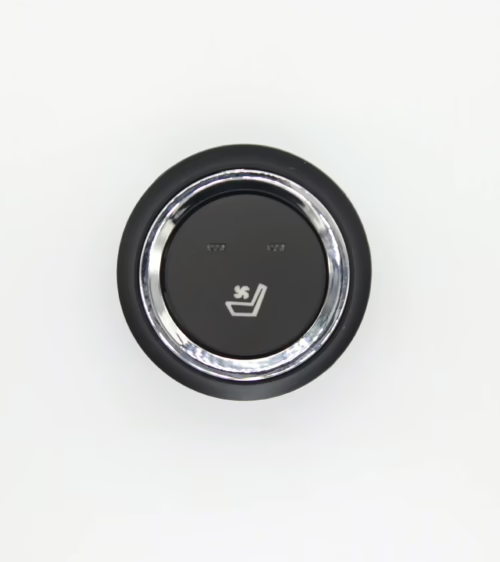
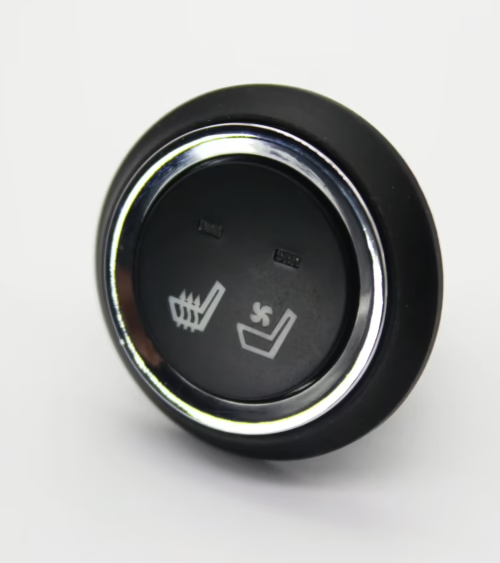
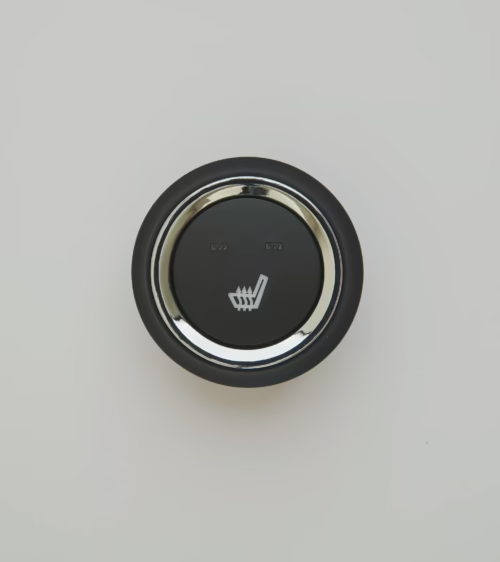
Choosing a seat climate control module supplier is one of the few sourcing decisions in a heated or ventilated seat program that touches safety, warranty exposure, and electrical architecture all at once.
The module is the component that reads the occupant’s setpoint, interprets temperature feedback from the pad, modulates current to the heating element or blower, and reports faults upstream to the body controller. Get it wrong and the symptoms are not subtle:
- scorched foam
- nuisance shutdowns
- flickering indicator LEDs
- or a module that quietly ignores an open-circuit sensor. This guide walks through the seven specifications that OEM seat manufacturers and aftermarket distributors should verify before releasing a purchase order in 2026.
1. Output Topology and PWM Switching Characteristics
The first question to ask any module vendor is how the output stage is built. Older designs used a mechanical relay with a bimetallic thermostat in series — cheap, but it offers only on/off behavior and a finite contact life measured in tens of thousands of cycles.
Modern modules use a low-side or high-side MOSFET driven by pulse-width modulation, which allows true proportional control of pad surface temperature.
- Switching frequency: typically 100 Hz to 1 kHz. Too low and occupants can perceive thermal pulsing; too high and switching losses in the FET rise without benefit.
- RDS(on) and thermal derating: a 5 A continuous load across two pads needs a FET with enough margin that junction temperature stays well below limits at 85 °C ambient inside a seat cushion.
- Load-dump survivability: the module must tolerate the 12 V system transients defined by ISO 16750-2 without latching off permanently.
- Soft-start ramping: prevents inrush from tripping a shared fuse when both front seats are switched on simultaneously at key-on.
Ask for the actual duty-cycle table used for each heat level. A supplier that cannot produce one is reselling a module they did not design.
2. Temperature Sensing Strategy and NTC Matching
A module is only as accurate as the feedback it receives. Most seat heating systems embed a negative temperature coefficient (NTC) thermistor in the cushion pad, and the module’s firmware maps resistance to temperature using a lookup table. The critical issue is matching:
- if your pad uses a 10 kΩ at 25 °C thermistor with a B25/85 value of 3435 K
- the module firmware was written for a 100 kΩ part
- the system will either undershoot badly or run hot.
Verify these points explicitly:
- Nominal resistance and beta value the firmware expects, in writing.
- Behavior on open-circuit sensor — the module must fail safe to off, not to full output.
- Behavior on short-circuit sensor, which reads as implausibly high temperature.
- Whether sensing is pad-mounted or module-internal. Internal-only sensing cannot detect a localized hot spot and is unacceptable for OEM-grade programs.
3. Communication Protocol: Discrete, LIN, or CAN
Aftermarket and low-volume OEM programs often use discrete wiring: a switch pulls a line low, the module responds. That is simple and robust, but it cannot report diagnostics, cannot be commanded by a climate strategy, and cannot support remote preconditioning from a phone app.
Networked modules communicate over LIN or CAN.
LIN is the common choice for seat comfort functions because it is a single-wire, low-cost bus suited to slave nodes that update a few times per second. The Controller Area Network overview gives useful context on how these buses coexist in a modern body electrical architecture.
If your program needs bus integration, confirm up front whether the supplier can supply an LDF or DBC file and whether they will support signal-name changes without a full firmware requalification.
4. Thermal Protection Layers and Redundancy
Single-point protection is not enough in a component that sits under an occupant. A credible module design stacks at least three independent layers:
- Firmware setpoint limiting based on the NTC reading, with a hard ceiling that cannot be exceeded by any commanded level.
- Overcurrent detection via shunt or FET current sense, which catches a pinched harness or a partially shorted heating element.
- A thermal cutoff device — a one-shot fuse or resettable PTC — in the pad circuit itself, so a firmware hang or a stuck-on FET still cannot drive the pad indefinitely.
Ask what happens when each layer is deliberately defeated in test. Suppliers who have actually run those tests will have the data; the rest will describe the block diagram instead.
5. Automatic Shutoff Timers and Memory Behavior
Nearly every production seat heater turns itself off after a fixed interval — commonly 15, 30, or 45 minutes — to limit battery drain and reduce prolonged low-temperature contact exposure. The timer interacts with ignition state in ways that matter during integration:
- Does the timer reset on ignition cycle, or persist across a short key-off?
- Does the module restore the last heat level at restart, or always boot to off? Most OEM specifications require boot-to-off.
- Is the module powered from ACC or constant battery? A constant-battery module must have quiescent current low enough — typically under 100 µA — to avoid draining a vehicle parked for weeks.
These are firmware parameters, not hardware ones, which means a capable supplier can change them. A supplier who says the timer is fixed is telling you they do not control the source code.
6. Switch and HMI Compatibility
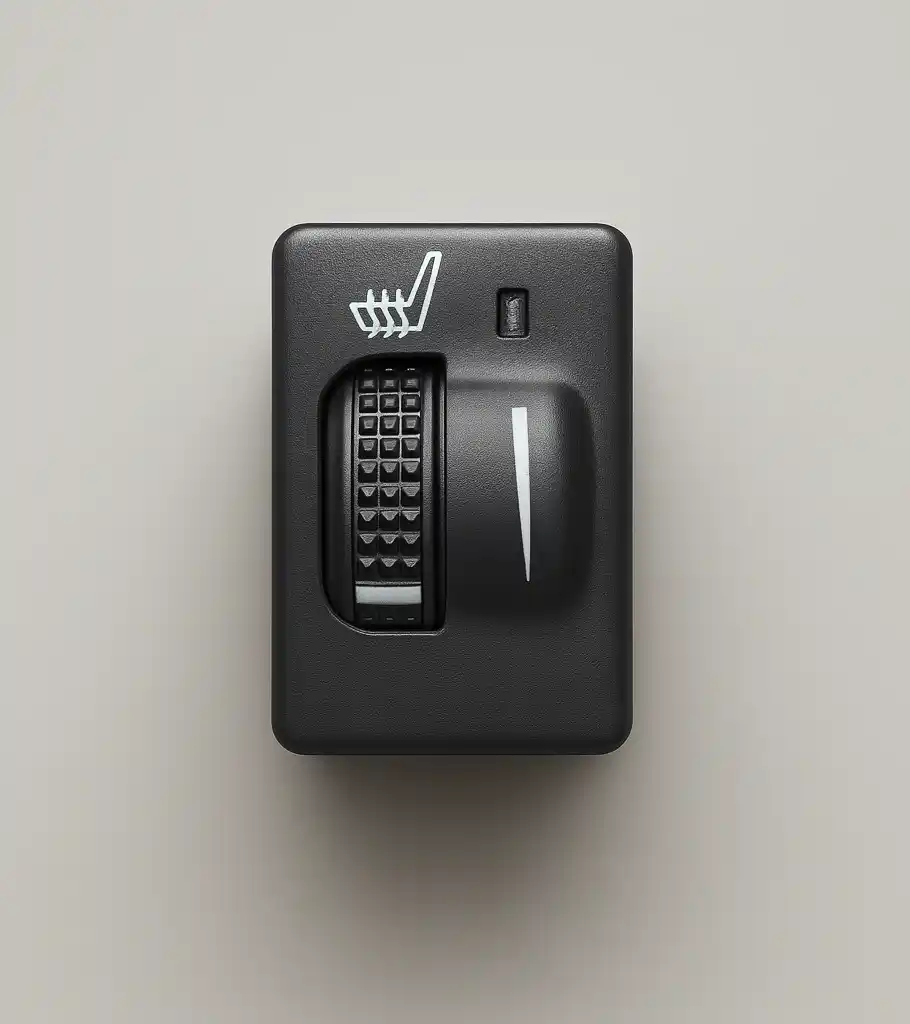
The module and the user interface are a matched pair. A three-level module expects a switch that produces three distinguishable states, and the indicator LEDs on that switch are usually driven by the module rather than by the switch itself.
Mismatches here are the most common cause of integration delays:
- the heat works
- but the LEDs show the wrong level or stay dark.
Confirm the connector family, pin assignment, LED drive method (direct current sink versus multiplexed), and whether the switch uses resistive ladder encoding or discrete lines.
When a program needs the control module and the interface to come from the same source, pairing the module with our seat heater switch catalog removes an entire class of connector and signal-level surprises before the first prototype harness is cut.
7. Validation Evidence, Traceability, and Supply Continuity
The last specification is about the supplier rather than the part. Request the following before committing volume:
- Test reports: thermal cycling, humidity, vibration, and electrical transient results per the applicable ISO 16750 sections.
- Quality system: IATF 16949 for OEM work, or at minimum a documented ISO 9001 system with PPAP capability for aftermarket programs.
- Lot traceability: date-coded modules let you bound a field issue to a production window instead of recalling everything.
- Component sourcing: which MCU and which FET, and what the second source is. A module built around a single-sourced microcontroller is a program risk, as the 2021–2023 shortages demonstrated.
- North American inventory: ocean freight adds five to eight weeks. Domestic stock is the difference between a two-day fix and a quarter-long backorder.
Distributors building out a product line can evaluate pads, switches, modules, and ventilation hardware together — it is usually worth taking time to browse the full range of seat heating products before locking a bill of materials, since module compatibility constrains everything downstream.
Frequently Asked Questions
Can one control module drive both the driver and passenger seats?
Some dual-channel modules can, but verify the total current rating rather than the per-channel rating. Two cushion pads plus two backrest pads can draw 8–10 A combined on high. A module rated 5 A continuous overall will thermally derate and begin cycling, which occupants perceive as weak heating.
For most installations, one module per seat is the lower-risk choice and simplifies harness routing.
What is the difference between a seat heater module and a seat climate control module?
A seat heater module controls heating elements only. A seat climate control module manages heating plus ventilation — it drives one or more blowers, often with independent fan speeds, and may coordinate the two functions so that heat and airflow are not commanded simultaneously.
Climate modules need more output channels and typically more sophisticated firmware, so confirm which you are actually quoting.
Do aftermarket modules require any certification in the United States?
There is no federal certification specific to aftermarket seat heating control modules. FMVSS flammability requirements apply to materials in original equipment rather than to replacement comfort accessories.
That said, Proposition 65 warnings are required for California sales, country-of-origin marking applies to imports, and most retail channels and insurers expect documented electrical safety testing. Absence of a mandate is not absence of liability.
Work With a Supplier That Builds the Whole System
Lucky Driver Inc. supplies seat heating pads, seat heater switches, seat climate control modules, and seat ventilation systems to OEM seat manufacturers and aftermarket distributors across North America, with manufacturing depth in electro-heating textiles and domestic inventory that keeps lead times measured in days.
If you are scoping a new heated or ventilated seat program — or replacing a module that has become a warranty problem — contact Lucky Driver Inc.
with your current and target specifications, and our engineering team will confirm compatibility against your pad resistance, sensor type, switch interface, and bus requirements before you commit to tooling.
Related Articles
- Heated Seat Components Distributor: 7 Criteria for 2026
- Seat Heater Switch Supplier: 7 Specs to Verify in 2026
- Automotive Seat Heating Supplier North America: 7 Checks
- Seat Heater Pads Bulk: 7 Specs to Verify in 2026
- Custom Seat Heating Elements: 7 Specs for 2026
Frequently Asked Questions About seat climate control module supplier
Procurement engineers evaluating seat climate control module supplier for OEM programs regularly ask the following questions. Answers cover specification, compatibility, certification, and sourcing for seat climate control module supplier requirements.
What voltage ratings are available for seat climate control module supplier?
Standard seat climate control module supplier configurations support 12 V DC for passenger vehicles and 24 V DC for commercial trucks. Selecting the correct seat climate control module supplier voltage at the design stage eliminates harness rework later.
Lucky Driver maintains seat climate control module supplier inventory in both ratings for same-week shipment.
Which certifications apply to seat climate control module supplier production?
seat climate control module supplier assemblies entering OEM programs typically require UL recognition, REACH compliance, and RoHS documentation. Lucky Driver holds certification records for every seat climate control module supplier variant and includes copies with sample and production shipments.
How is watt density specified for seat climate control module supplier?
Watt density for seat climate control module supplier is expressed in W/cm² and ranges from 0.04 to 0.12 depending on heat-up time requirements. Lower watt density seat climate control module supplier designs improve element longevity, while higher values suit cold-climate applications.
Lucky Driver engineering reviews seat climate control module supplier requirements and recommends watt density based on your seat platform.
What connector families are used with seat climate control module supplier?
seat climate control module supplier harnesses are available with Molex, TE Connectivity, and Delphi connector families. Matching the seat climate control module supplier connector to the vehicle harness reduces assembly time and eliminates adapter cables.
Specify your harness format when requesting a seat climate control module supplier quote from Lucky Driver.
What is the lead time for seat climate control module supplier samples?
seat climate control module supplier samples from Lucky Driver’s North American warehouse ship within 3 to 5 business days for standard configurations. Custom seat climate control module supplier variants with modified pad geometry or connector pinouts require 4 to 6 weeks.
Contact Lucky Driver to confirm seat climate control module supplier availability before submitting your engineering schedule.