Factory-style seat heating is no longer reserved for premium trim levels. A universal heated seat kit 12v lets installers, upholstery shops, and seat manufacturers retrofit professional-grade heating into almost any vehicle seat — cars, trucks, vans, UTVs, and fleet vehicles alike.
But “universal” covers a wide quality range, from thin resistive mats that fail within a season to OEM-grade carbon fiber elements engineered for hundreds of thousands of heat cycles. This guide breaks down the seven things that matter most when evaluating a 12V universal kit:
- what universality really means
- element technology
- power draw
- temperature control
- switching
- installation method
- compliance testing.
1. What “Universal” Actually Means in a 12V Kit
A universal kit is not built for one vehicle platform. Instead, it is designed around the 12-volt electrical architecture shared by nearly every passenger car, pickup, and powersports vehicle on the road.
A complete kit typically includes two heating pads per seat (cushion and backrest), a relay harness, an inline fuse, a control switch, and the connectors needed to splice into a switched power source.
In practice, universality comes down to three design choices:
- Trimmable or multi-size pads that fit common cushion and backrest dimensions without covering seam channels.
- Flexible mounting — adhesive backing or hog-ring attachment that works under cloth, vinyl, and leather upholstery.
- A relay-switched harness that connects to any switched 12V ignition or accessory circuit.
The trade-off is that nothing is pre-shaped to your specific seat. Pad dimensions, wire exit points, and switch mounting all have to be verified against the actual seat frame, which is why dimension sheets and samples matter more for universal kits than for vehicle-specific ones.
2. Heating Element Technology: Carbon Fiber vs. Alloy Wire
Both element types work on the same physical principle — resistive Joule heating, where current flowing through a conductor converts electrical energy into heat. The difference lies in how that heat is distributed and how the element tolerates flexing.
Carbon fiber elements use bundles of conductive fiber laminated into a non-woven substrate. Because current spreads across thousands of parallel filaments, heat distribution is even, warm-up is fast (noticeable heat within 30–60 seconds), and a single broken filament does not disable the pad.
Carbon fiber also survives repeated compression and flex cycles far better than solid wire, which is why it dominates OEM seat programs.
Alloy wire elements — typically copper-nickel resistance wire — snake a single conductor back and forth across the pad. They cost less, but heat concentrates along the wire path, producing warm stripes rather than uniform warmth.
Worse, a break anywhere in the conductor disables the entire pad, and the most common break points are the bolster areas where entry and exit flexing is constant.
For anyone offering a warranty or supplying seat manufacturers, carbon fiber is the default choice in 2026. Wire-element kits remain viable only at the lowest price tiers.
3. Power Draw, Amperage, and Circuit Protection
A typical dual-pad set draws 40 to 90 watts per seat depending on element design and heat setting. At a nominal 13.5V charging voltage, that is roughly 3 to 7 amps per seat — so a front pair running on high can pull close to 14 amps continuously.
Three details separate a safe kit from an electrical liability:
- Relay switching. Heating current should pass through a relay triggered by the ignition or ACC circuit, never directly through the dash switch. This prevents battery drain when parked and keeps high current away from thin switch contacts.
- Correct fusing. The inline fuse should be rated just above maximum draw — typically 15A for a two-seat installation — and located close to the power pickup point so the entire run is protected.
- Adequate wire gauge. Power runs should be 16 AWG or heavier. Undersized wire causes voltage drop, slow warm-up, and insulation heating inside the harness itself.
Ask your supplier for measured element resistance and its production tolerance, not just a wattage claim. A resistance tolerance of ±10% across production lots is a reasonable OEM-grade benchmark; wider spreads mean inconsistent heat output from seat to seat.
4. Temperature Regulation: Thermostats, Sensors, and Controllers
An unregulated resistive pad keeps heating as long as current flows, so every credible kit includes at least one layer of temperature control:
- Bimetal thermostats are the simplest approach: a mechanical disc bonded to the pad opens the circuit at a fixed temperature — commonly in the 40–45°C surface range — and recloses a few degrees lower. They are cheap and reliable but offer only on/off hysteresis control.
- NTC thermistor sensing feeds real-time pad temperature to an electronic controller, which modulates power using PWM (pulse-width modulation). This enables true high/low or multi-level settings and much tighter temperature bands.
- Timer or auto-off logic shuts the heater down after a set interval, a feature increasingly expected in powersports and fleet applications where seats may run unattended.
The best universal kits layer these:
- an electronic controller handles comfort regulation
- while an independent thermostat or thermal fuse acts as a fail-safe if the controller sticks on. When evaluating samples
- verify steady-state surface temperature with an occupant load applied — foam compression and the trim cover change thermal behavior significantly compared to an open-air bench test.
5. Switch Options: High/Low Rockers to OEM-Style Controls
The switch is the only component the end user ever sees, so it carries most of the perceived quality of the kit. Common configurations for 12V universal kits include:
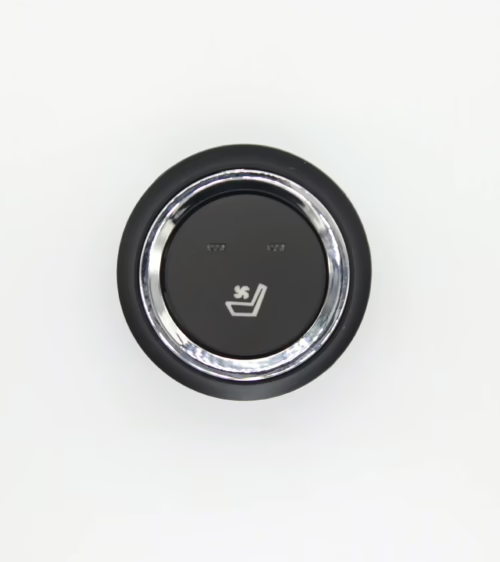
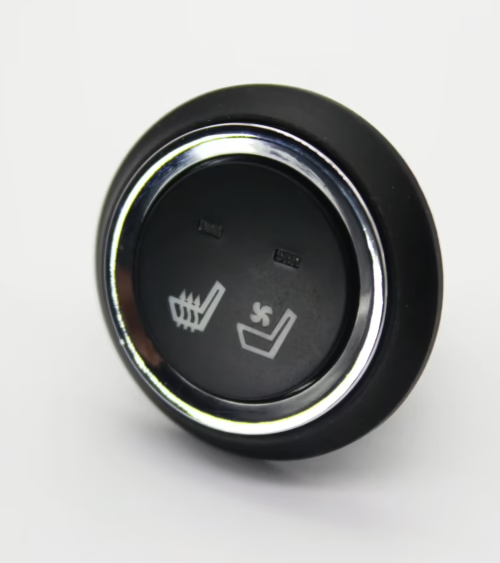
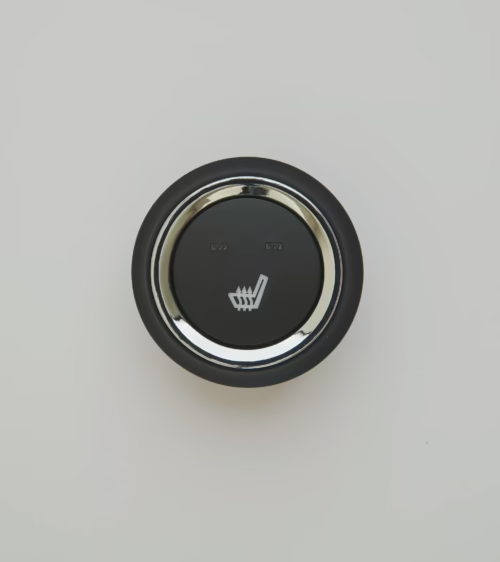
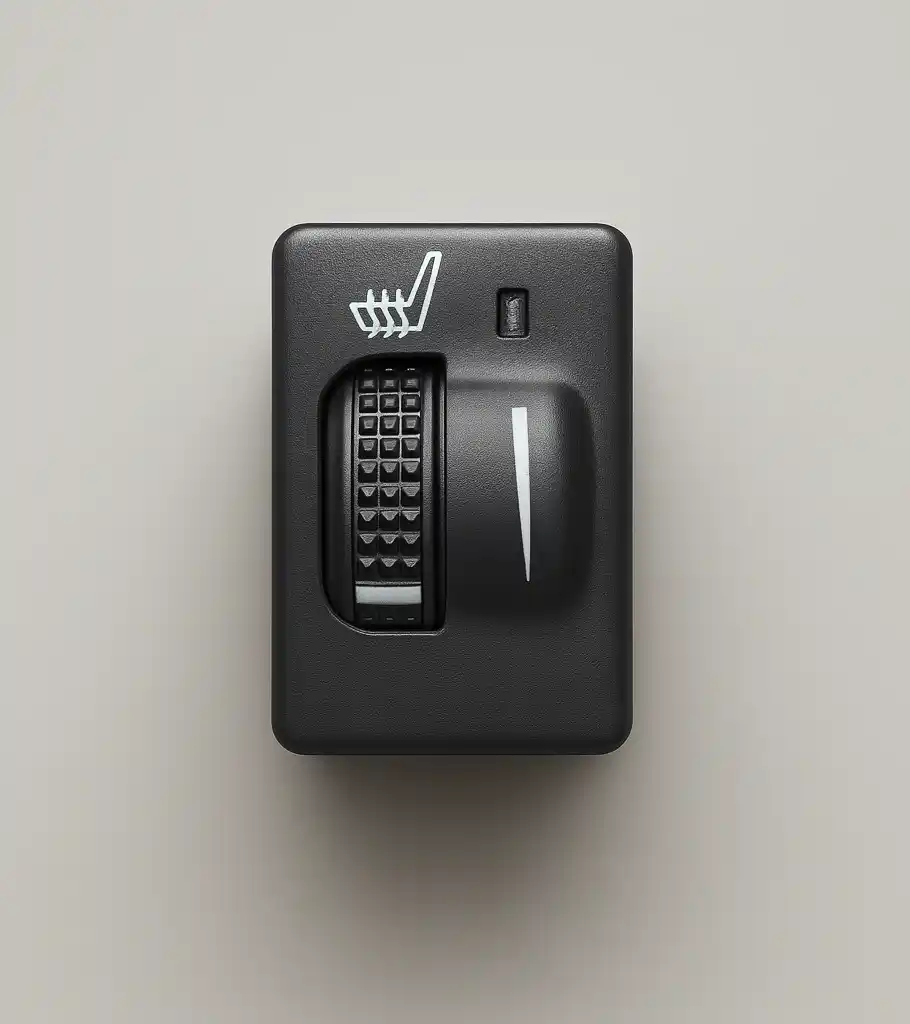
- Three-position rockers (high / off / low) — the aftermarket standard, usually backlit and sized for a round 20mm or rectangular panel cutout.
- Round push or rotary controls with LED level indicators, useful where dash or console space is limited.
- OEM-style switches molded to match factory panel openings for specific seat programs and retrofit lines.
Whatever the style, confirm that the switch carries only the relay coil current rather than the full heating load — switch contacts rated for a few amps will pit and fail quickly if they handle 7A of continuous element current.
If you are repairing an existing installation or standardizing controls across a product line, you can compare positions, backlighting, and connector types in our seat heater switch catalog, which covers rocker, round, and multi-level configurations.
6. Installation: Pad Placement, Wiring, and Common Mistakes
Installation quality determines service life as much as the hardware does. A sound installation sequence looks like this:
- Remove the trim cover and position each pad centered on the seating surface, keeping heating zones clear of seam and hog-ring channels. Trim only in marked trim areas — never fold a pad or cut through an active heating zone.
- Route lead wires through a low-flex exit point with strain relief, so repeated cushion compression does not work-harden the conductors.
- On seats with occupant classification mats, verify pad placement relative to the sensor and confirm airbag system function after reassembly.
- Measure element resistance before closing the seat — catching a damaged pad at this stage saves a complete teardown later.
- Functionally test every heat setting before bolting the seat back into the vehicle.
The most common field failures trace back to three mistakes: folding a pad over a seam channel, driving a hog ring through the element, and wiring the full heating load through the switch instead of a relay. All three are preventable with ten minutes of care during installation.
7. Compliance, Testing, and Supplier Qualification
If you resell kits or integrate them into manufactured seats, documentation matters as much as performance. Interior materials, including heater pads, must meet FMVSS 302 flammability requirements in the United States, and reputable suppliers validate pads through endurance programs:
- thermal cycling (commonly 10,000+ heat-up/cool-down cycles)
- compression and flex testing at bolster zones
- connector pull testing. RoHS material compliance is the baseline for electronic controllers and switches.
When qualifying a supplier, ask for test reports rather than claims, resistance tolerance data across production lots, and engineering samples before committing to volume.
A supplier that manufactures its own heating elements — rather than trading finished kits — can also adjust pad dimensions, lead lengths, and connector types for your program. You can evaluate current pad, switch, and controller configurations by browsing our full range of seat heating products before requesting samples for validation.
Frequently Asked Questions
How many amps does a 12V heated seat kit draw?
Most dual-pad kits draw 3 to 7 amps per seat on high, depending on element wattage. Budget for roughly 14 amps when running two seats simultaneously, fuse accordingly, and use 16 AWG or heavier wire for the power run.
Can a universal kit be installed under leather or perforated seats?
Yes. Carbon fiber pads work under cloth, vinyl, and leather. For perforated leather or seats with ventilation, confirm the pad layout does not block airflow passages and that the trim shop positions heating zones away from perforation fields used by the ventilation system.
Will a heated seat pad interfere with the occupant classification system?
It can if installed carelessly. On passenger seats equipped with an OCS weight-sensing mat, the heating pad must sit so it does not change the sensor’s load response. Follow the pad placement guidance, then verify that the airbag readiness indicator behaves correctly with the seat occupied and empty.
Lucky Driver Inc. supplies OEM-grade 12V heating pads, seat heater switches, control modules, and ventilation systems to seat manufacturers and aftermarket distributors across North America, with US-based inventory and engineering support for custom pad dimensions and harness configurations.
Contact our team for samples, specifications, and volume pricing on universal heated seat kits built for your program.
Related Articles
- Carbon Fiber Heated Seat Kit: 7 Facts Buyers Should Know
- Heated Seat Kit With Switch: 7 Things to Know in 2026
- Seat Heater Kit for Cars: 7 Things to Check Before You Buy
- Seat Climate Control Module Supplier: 7 Specs for 2026
- Heated Seat Components Distributor: 7 Criteria for 2026
Frequently Asked Questions About universal heated seat kit 12v
Procurement engineers evaluating universal heated seat kit 12v for OEM programs regularly ask the following questions. Answers cover specification, compatibility, certification, and sourcing for universal heated seat kit 12v requirements.
What voltage ratings are available for universal heated seat kit 12v?
Standard universal heated seat kit 12v configurations support 12 V DC for passenger vehicles and 24 V DC for commercial trucks. Selecting the correct universal heated seat kit 12v voltage at the design stage eliminates harness rework later.
Lucky Driver maintains universal heated seat kit 12v inventory in both ratings for same-week shipment.
Which certifications apply to universal heated seat kit 12v production?
universal heated seat kit 12v assemblies entering OEM programs typically require UL recognition, REACH compliance, and RoHS documentation. Lucky Driver holds certification records for every universal heated seat kit 12v variant and includes copies with sample and production shipments.
How is watt density specified for universal heated seat kit 12v?
Watt density for universal heated seat kit 12v is expressed in W/cm² and ranges from 0.04 to 0.12 depending on heat-up time requirements. Lower watt density universal heated seat kit 12v designs improve element longevity, while higher values suit cold-climate applications.
Lucky Driver engineering reviews universal heated seat kit 12v requirements and recommends watt density based on your seat platform.
What connector families are used with universal heated seat kit 12v?
universal heated seat kit 12v harnesses are available with Molex, TE Connectivity, and Delphi connector families. Matching the universal heated seat kit 12v connector to the vehicle harness reduces assembly time and eliminates adapter cables.
Specify your harness format when requesting a universal heated seat kit 12v quote from Lucky Driver.
What is the lead time for universal heated seat kit 12v samples?
universal heated seat kit 12v samples from Lucky Driver’s North American warehouse ship within 3 to 5 business days for standard configurations. Custom universal heated seat kit 12v variants with modified pad geometry or connector pinouts require 4 to 6 weeks.
Contact Lucky Driver to confirm universal heated seat kit 12v availability before submitting your engineering schedule.