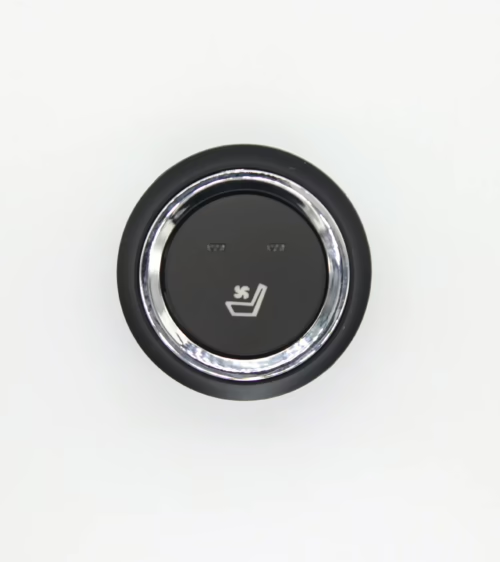
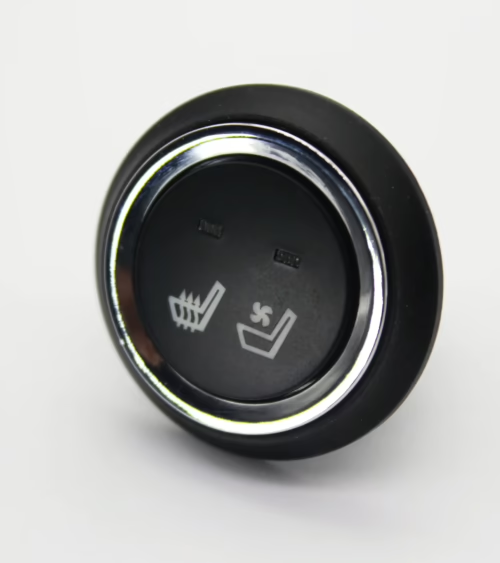
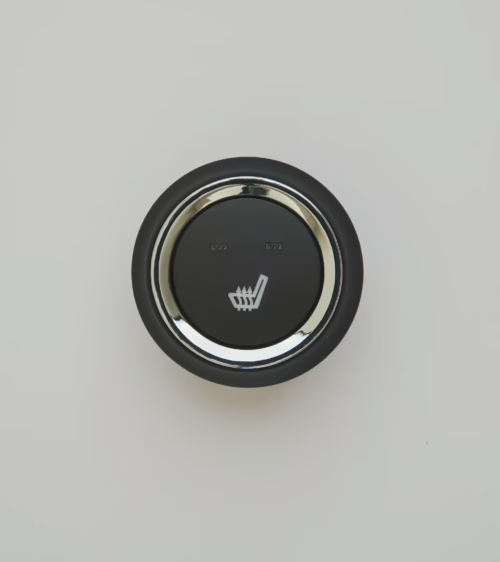
The ford explorer seat heater switch is the primary interface between the driver and the seat heating circuit—and when it fails, even a fully functional heating element stays cold.
Whether you own a third-generation Explorer from 2002 or a sixth-generation 2024 model with dual-zone climate control, the switch is the most frequently replaced component in the heated seat system.
This guide covers how the switch operates, how to isolate a fault from the fuse, relay, and element, what the replacement process looks like across Explorer generations, and how to choose the right part the first time.
How the Ford Explorer Seat Heater Switch Works
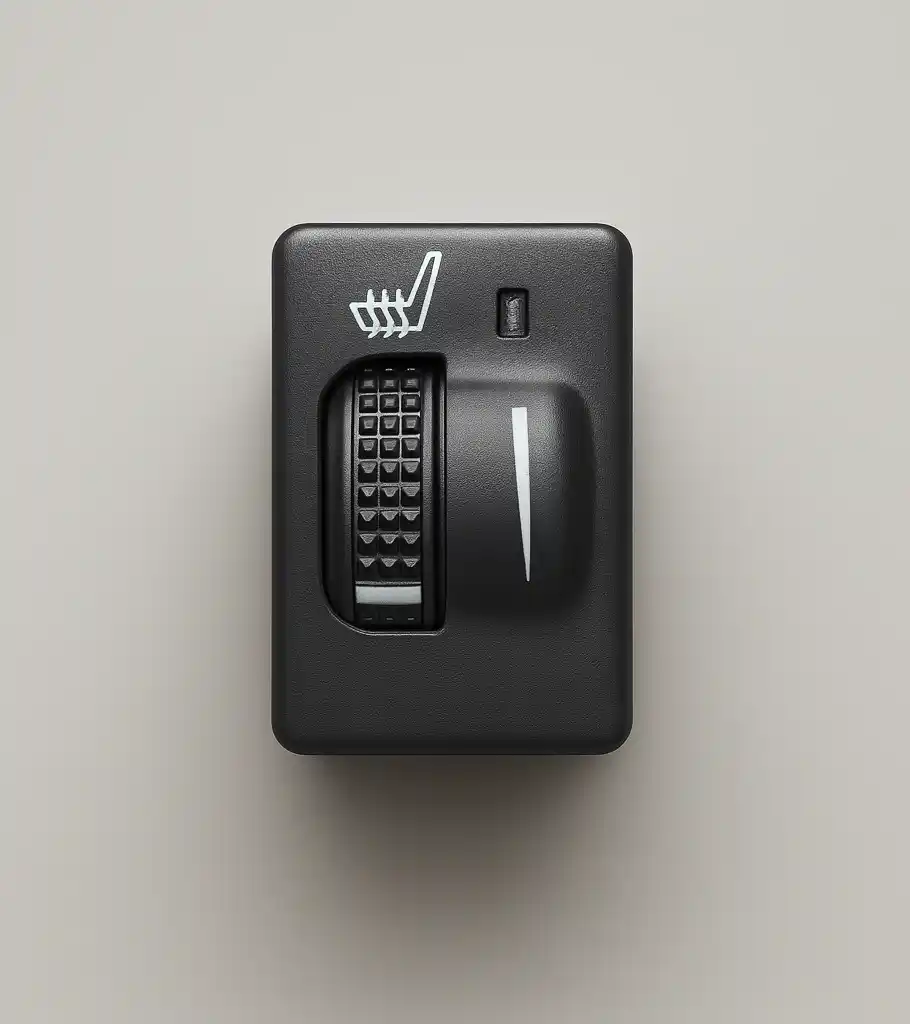
The seat heater switch in the Ford Explorer does more than toggle heat on and off. In most Explorer generations, the switch contains an integrated thermistor or works in conjunction with a temperature sensor embedded in the seat cushion foam.
When you press the switch to a low or high heat setting, it sends a signal—either directly or through the Body Control Module (BCM)—to a relay that energizes the resistive heating element beneath the seat cover.
Heated seats in the Explorer operate on a 12V DC circuit. The heating element is a resistive wire grid laminated into the seat foam or cover, typically rated to draw between 3 and 8 amps depending on the selected heat level.
The switch manages this load by controlling relay duty cycle directly, or—on 2011-and-newer Explorers with BCM-integrated systems—by transmitting a digital request signal that the BCM translates into proportional heating output.
According to the Wikipedia article on heated seats, modern automotive seat heaters must balance thermal output against skin-contact safety thresholds—a constraint that makes the switch’s temperature-limiting function safety-critical, not merely cosmetic.
Common Symptoms of a Failing Seat Heater Switch
Recognizing a failing switch early prevents misdiagnosis and unnecessary parts purchases. The most common signs include:
- No heat on any setting: The switch receives power but the heating element never activates. Usually caused by a failed internal contact or a broken thermistor inside the switch body.
- Heat on one setting only: The low-heat contact is intact but the high-heat contact has burned or corroded, or vice versa.
- Switch illumination fails: The LED indicator burns out, making it impossible to confirm which setting is active without a multimeter.
- Intermittent operation: The seat heats normally when the car is cold, then cuts out as the cabin warms up—often a sign of a thermistor reading high and falsely commanding the system to shut off the element.
- Switch stuck in the on position: The element runs continuously even after pressing the switch to off; the internal contacts have welded together under excessive current draw.
Not every symptom points to the switch. A failed relay, a broken heating element, or a blown fuse can produce identical behavior. The diagnosis section below shows how to isolate the switch as the root cause before ordering any parts.
Switch Location by Explorer Generation
The physical location of the seat heater switch varies by model year and trim level:
- 2002–2005 (3rd Gen): Switches are mounted on the outboard side of each front seat, integrated into a small control panel on the seat side bolster. Heated seats were available on XLT and higher trims only.
- 2006–2010 (4th Gen): Switches moved to the lower center stack of the instrument panel, grouped with rear seat heater controls on Limited trim. A two-button layout provides independent driver and passenger control.
- 2011–2019 (5th Gen): On base trims, controls appear within the HVAC panel or the MyFord Touch and SYNC 3 touchscreen interface. A physical rocker switch remains standard on Limited and Platinum trims for tactile feedback.
- 2020–2024 (6th Gen): Heated seat controls are capacitive touch buttons embedded in the lower instrument panel fascia. The Platinum trim retains a physical toggle switch.
On SYNC 3 and SYNC 4 systems, a software glitch in the climate control module can mimic a switch failure entirely. Perform a master reset—hold the power button and seek-forward button simultaneously for 10 seconds—before condemning any hardware.
Step-by-Step Diagnosis
Follow this sequence to confirm the switch is the faulty component and not the fuse, relay, or heating element:
- Step 1 — Check the fuse: Locate the seat heater fuse in the power distribution box under the hood, typically a 20A or 25A blade fuse. Replace if blown. If it blows again immediately, suspect a shorted element or damaged wiring harness, not the switch.
- Step 2 — Verify switch power: With the ignition in the Run position, use a multimeter to confirm 12V is present at the power pin on the switch connector. Consult the Explorer EVTM (Electrical, Vacuum, and Troubleshooting Manual) for pin assignments specific to your model year and build date.
- Step 3 — Test switch output: Activate the switch and check for voltage on the output pin that feeds the relay coil. No voltage here with confirmed input power indicates an open switch—replace it.
- Step 4 — Test the relay: Swap the seat heater relay with an identical relay from another slot in the power distribution box. If the seat now heats normally, the relay was the failure point, not the switch.
- Step 5 — Test the element: Disconnect the heating element connector and measure resistance across the element leads. A healthy element reads 1.5 to 6 ohms. An open circuit reading (OL on the meter) indicates a broken wire grid inside the seat that requires element replacement regardless of switch condition.
If Steps 2 and 3 confirm switch failure—power present at input, no voltage at output—proceed directly to replacement.
Replacing the Ford Explorer Seat Heater Switch
Replacing the switch is a straightforward job on most Explorer generations and typically takes under 30 minutes with basic hand tools:
- Tools needed: Plastic trim removal tool, T15 or T20 Torx driver, small flathead screwdriver, multimeter.
- Step 1: Disconnect the negative battery cable and wait 60 seconds to discharge capacitors in the airbag and BCM systems before touching any connectors.
- Step 2: Use a plastic trim removal tool to pry the switch panel or center stack trim piece away from the dash. Most Explorer panels are retained by push-clips—work around the perimeter evenly to avoid cracking the panel face.
- Step 3: Press the locking tab on the wiring harness connector and pull it straight back from the switch. Do not pry at the wires or lever against the connector body.
- Step 4: Depress the retention clips on both sides of the switch body using a small flathead and push the switch out through the panel face from behind.
- Step 5: Install the new switch, reconnect the harness connector until it clicks, and press the trim panel back onto the clips. Reconnect the battery and test both heat settings before reinstalling any fasteners permanently.
On 5th and 6th generation Explorers with BCM-integrated seat heater systems, no module programming is required after switch replacement. The BCM recognizes the switch signal automatically on the next ignition cycle.
OEM vs Aftermarket: Choosing the Right Switch
OEM switches sourced from Ford dealers carry the correct resistance specifications, LED brightness ratings, and harness connector geometry for your specific Explorer build date. However, OEM parts for Explorer years no longer in production can be expensive or backordered for weeks at a time.
Quality aftermarket switches manufactured to OEM specifications offer a cost-effective alternative. Verify the following criteria before purchasing:
- Exact connector pinout match for your Explorer’s model year and trim level—a visually similar connector with transposed pins will cause backfeed faults
- Rated current capacity at or above the OEM specification, typically 10A minimum for dual-zone heated seat circuits
- Integrated thermistor with the same resistance-temperature curve as the original, if your Explorer routes temperature control through the switch body rather than a standalone sensor
- LED indicator rated for 12V operation—not a 5V-spec component that will dim or fail prematurely once installed in a 12V circuit
Browse our replacement seat heater switches to find options sorted by vehicle application and connector type. If you are also evaluating heating elements or control modules, explore the full range in our seat heating products catalog.
Frequently Asked Questions
Q: Why does my Ford Explorer seat heater work for a few minutes and then shut off?
A:
- This almost always points to the switch’s integrated thermistor reading incorrectly high
- causing the system to conclude the seat has reached its target temperature before it actually has. It can also be triggered by a failing relay with elevated internal resistance that generates enough heat to trip a thermal cutoff.
- Test the switch output voltage while the seat is still cold—if the output voltage drops while the element has not yet warmed up
- the thermistor inside the switch is faulty and the switch requires replacement.
Q: Can I replace just the switch, or do I need to replace the entire control panel?
A:
- On all Explorer generations with physical push-button or rocker switches—roughly 2002 through 2019
- Platinum trims through 2024—the switch snaps into the trim panel and is replaced as an individual component without disturbing the panel itself. The exception is the capacitive touch panel used on 2020–2024 base and mid-level trims
- where the entire panel assembly must be replaced if the touch layer fails. Physical switches are always sold and serviced individually.
Q: Is a Ford Explorer seat heater switch failure covered under warranty or any recall?
A:
- Under the original Ford 3-year/36,000-mile bumper-to-bumper warranty
- seat heater switch failures are covered in full. Extended Service Plans vary—PremiumCare plans typically include the switch
- while lower-tier plans may classify it as a comfort feature and exclude it. For out-of-warranty vehicles
- run your VIN through the NHTSA lookup tool for any active seat-heater-related recalls. Ford has issued technical service bulletins and recalls affecting seat heater systems on select Explorer model years
- a covered recall repair costs nothing out of pocket.
Lucky Driver Inc. supplies seat heater switches, heating elements, control modules, and seat ventilation systems to OEM seat manufacturers and North American aftermarket distributors.
If your Ford Explorer diagnosis points to a switch replacement, our team can match you to the correct part for your model year, trim level, and connector configuration. Contact Lucky Driver Inc. for bulk pricing, application-specific recommendations, and fulfillment from US-based inventory.
Related Articles
- Ford F150 Heated Seat Switch: 2026 Complete Repair Guide
- Honda Pilot Heated Seat Switch: 2026 Complete Repair Guide
- Honda CR-V Seat Heater Switch: 2026 Complete Repair Guide
- Honda Accord Heated Seat Switch: 2026 Repair Guide
- Honda Civic Seat Heater Switch: 2026 Repair Guide
Frequently Asked Questions About ford explorer seat heater switch
Procurement engineers evaluating ford explorer seat heater switch for OEM programs regularly ask the following questions. Answers cover specification, compatibility, certification, and sourcing for ford explorer seat heater switch requirements.
What voltage ratings are available for ford explorer seat heater switch?
Standard ford explorer seat heater switch configurations support 12 V DC for passenger vehicles and 24 V DC for commercial trucks. Selecting the correct ford explorer seat heater switch voltage at the design stage eliminates harness rework later.
Lucky Driver maintains ford explorer seat heater switch inventory in both ratings for same-week shipment.
Which certifications apply to ford explorer seat heater switch production?
ford explorer seat heater switch assemblies entering OEM programs typically require UL recognition, REACH compliance, and RoHS documentation. Lucky Driver holds certification records for every ford explorer seat heater switch variant and includes copies with sample and production shipments.
How is watt density specified for ford explorer seat heater switch?
Watt density for ford explorer seat heater switch is expressed in W/cm² and ranges from 0.04 to 0.12 depending on heat-up time requirements. Lower watt density ford explorer seat heater switch designs improve element longevity, while higher values suit cold-climate applications.
Lucky Driver engineering reviews ford explorer seat heater switch requirements and recommends watt density based on your seat platform.
What connector families are used with ford explorer seat heater switch?
ford explorer seat heater switch harnesses are available with Molex, TE Connectivity, and Delphi connector families. Matching the ford explorer seat heater switch connector to the vehicle harness reduces assembly time and eliminates adapter cables.
Specify your harness format when requesting a ford explorer seat heater switch quote from Lucky Driver.
What is the lead time for ford explorer seat heater switch samples?
ford explorer seat heater switch samples from Lucky Driver’s North American warehouse ship within 3 to 5 business days for standard configurations. Custom ford explorer seat heater switch variants with modified pad geometry or connector pinouts require 4 to 6 weeks.
Contact Lucky Driver to confirm ford explorer seat heater switch availability before submitting your engineering schedule.