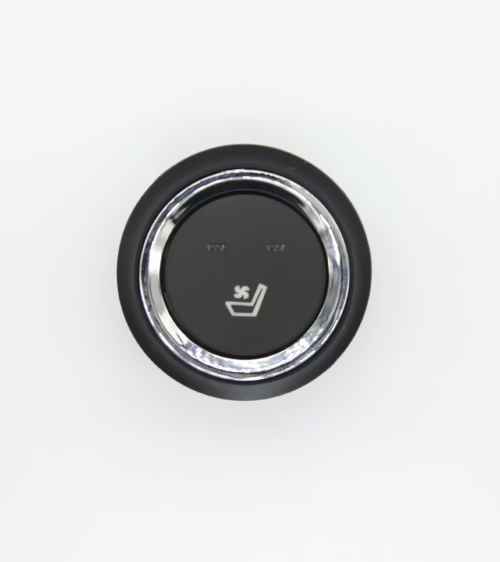
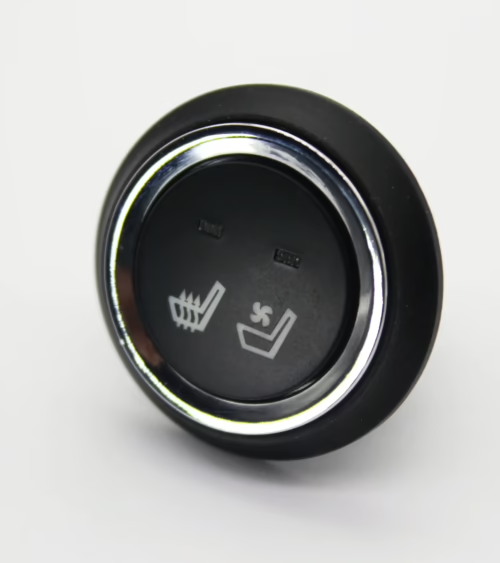
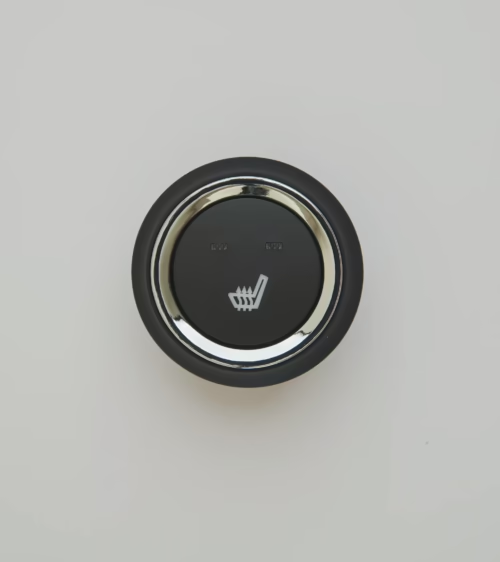
What Are Dual Function Seat Heater Ventilation Controls?
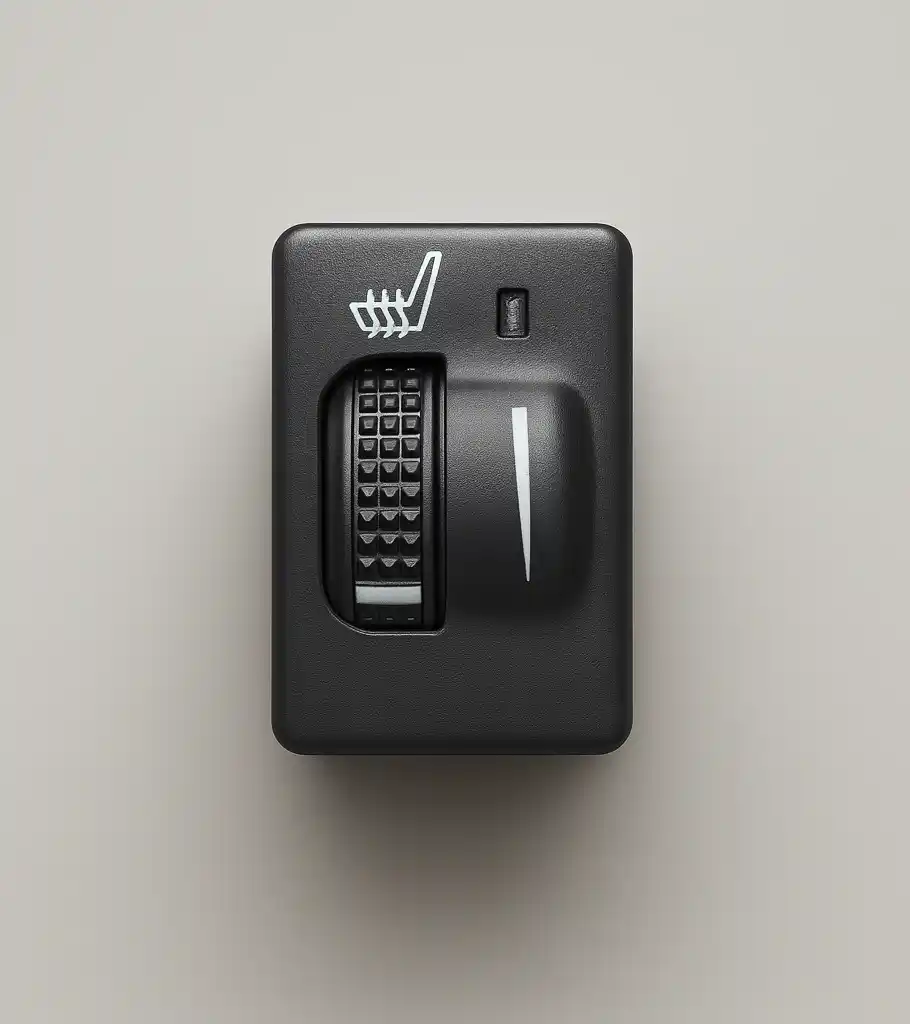
A dual function seat heater ventilation control is a single electronic module — and its associated switch interface — that governs both resistive seat heating and active seat ventilation from one control point. Unlike separate heating and cooling controllers wired in parallel, a dual function unit shares a common power bus, a unified thermal sensor network, and a single user-facing switch cluster.
The term matters to procurement engineers, upholstery shops, and OEM integrators because the control strategy for heating (high-side PWM to a carbon-fiber or wire-element heater pad) and ventilation (brushless blower motor driven through a separate low-side driver) are fundamentally different, yet a well-designed dual function module handles both without cross-interference.
How the Heating and Ventilation Circuits Work Together
Seat heating relies on a resistive heating element — typically 25 Ω to 40 Ω total resistance for a full seat — powered by pulse-width modulation at switching frequencies between 100 Hz and 1 kHz. The control module reads a NTC thermistor embedded in the seat surface and adjusts PWM duty cycle to reach a target surface temperature, usually between 36 °C and 42 °C on the high setting.
Ventilation runs a separate blower motor, commonly rated 5 W to 15 W, that pulls cabin air through a spacer layer in the seat foam. The blower requires a stable DC supply — many designs use a dedicated LDO or a filtered PWM signal — because inductive spikes from the motor can couple into the heating sense lines and trigger false over-temperature shutdowns if the PCB layout is careless.
In a dual function module, the firmware manages both loops simultaneously by:
- Assigning separate interrupt priorities to the heater PWM timer and the blower speed feedback line
- Using RC filters on the thermistor ADC channel to reject blower switching noise
- Running current arbitration logic that reduces heater duty cycle when blower draw would push total seat current above the fuse rating
Control Module Architecture: Single vs. Dual Channel
A single-channel module drives one seat zone — seat bottom only, or backrest only. A dual-channel module drives both zones independently, with separate thermistors and separate PWM outputs. Most production vehicles use dual-channel heating (bottom plus back) combined with single-channel ventilation, meaning the blower is wired to one dedicated output while two heating outputs serve the element zones.
The critical architecture decision is whether ventilation and heating share the same microcontroller or use separate ASICs with a shared communication bus. Shared-MCU designs reduce BOM cost but require careful firmware partitioning to prevent a heater fault from disabling ventilation simultaneously. Separate-ASIC designs cost more but simplify fault isolation — a burned heater pad does not pull down the ventilation output driver.
Key module specifications to evaluate when sourcing:
- Heater output rating: typically 8 A continuous per channel at 12 V
- Blower output rating: 2 A to 5 A depending on blower motor size
- Thermistor input range: 0 °C to 85 °C NTC, 10 kΩ at 25 °C standard
- Protection features: over-temperature cutoff, short-circuit protection, open-element detection
- Communication interface: LIN bus (ISO 17987), PWM input, or discrete switch lines
Switch Interface Options and Driver Experience
The switch the driver touches is where dual function control becomes a UX engineering problem. Three common interface approaches exist in production seats today.
Rotary dial with center push: Turning the dial selects heat level (typically three steps plus off); pressing the center toggles ventilation on or off. Simple, low part count, widely understood. The limitation is that heat and vent settings cannot be adjusted in a single gesture.
Segmented capacitive touch panel: A flat panel with dedicated heat and vent icons, each with up/down tap zones. This allows independent adjustment of both functions simultaneously and supports haptic feedback. The tradeoff is cost — a capacitive touch PCBA with RGB status LEDs adds $8 to $15 to the switch assembly compared to a mechanical rotary.
LIN-controlled panel with HMI integration: The seat switch sends requests over the vehicle’s LIN bus to the body control module, which then commands the seat control module via a second LIN segment. This architecture appears in vehicles where climate settings are centralized in the infotainment display.
It removes dedicated seat switches entirely but adds latency — typically 20 ms to 80 ms per LIN frame cycle — and requires diagnostic support in the BCM software stack.
Thermal Management and Safety Cutoff Logic
Every production-grade dual function seat heater ventilation control must implement thermal runaway protection. A heating element can reach destructive temperatures within 90 seconds of a thermistor failure if no secondary cutoff exists.
Best-practice cutoff architecture uses two independent layers:
- Software cutoff: The MCU monitors thermistor resistance every 100 ms. If calculated surface temperature exceeds the high setpoint by more than 5 °C, the PWM output is disabled via firmware. This layer handles normal closed-loop regulation.
- Hardware cutoff: A 72 °C thermal fuse in series with the heater element provides a hard cutoff independent of firmware state. This layer catches MCU lockup or firmware bugs that would otherwise allow uncontrolled heating.
For ventilation, thermal cutoff is less critical because blower motors are not a burn risk, but over-current protection remains essential. A 5 A polyfuse on the blower output prevents stall-state damage if a foreign object blocks the blower wheel.
OEM Integration Requirements and Harness Design
OEM seat manufacturers integrating dual function controls into a new seat program face harness routing, connector selection, and EMC validation requirements that add measurable lead time to the program.
Harness guidelines for dual function seat control:
- Wire gauge: Heater element feeds require 18 AWG minimum for 8 A continuous. Blower motor feeds use 20 AWG for motors under 3 A. Thermistor lines use 24 AWG shielded pair to suppress noise pickup from adjacent switching circuits.
- Connector sealing: Seat harnesses operate in high-humidity, high-vibration conditions. IP67-rated connectors in the Molex MX150 or TE AMP CTS series are standard for cushion-to-module connections.
- Ground strategy: Heater and blower grounds should share a single chassis ground point near the seat track to avoid ground loop noise between the two circuits.
EMC compliance under CISPR 25 Class 5 requires blower motor switching noise below −40 dBV/m in the AM band. Adding a common-mode choke on the blower supply lines and a 100 nF X2 capacitor across the motor terminals typically achieves compliance without a PCB redesign.
Aftermarket Retrofit Considerations
Retrofitting dual function seat heater ventilation controls into a vehicle that shipped with neither heating nor ventilation requires sourcing a compatible seat pad, a ventilation spacer layer, a control module, and a switch — then integrating all four without compromising seat foam integrity or side-curtain airbag deployment paths.
Key points for a clean aftermarket retrofit:
- Verify the seat foam has sufficient depth — minimum 10 mm void — to accept the ventilation spacer without raising seat height visibly above adjacent seats.
- Tap into a switched ignition feed rather than a battery-direct line to ensure the module powers down with the ignition and does not contribute to parasitic drain.
- Use a module that supports both 2-wire and 3-wire heater pad connections to remain compatible with various pad formats across suppliers.
- Route the switch harness through the seat structure rather than across the hinge gap at the seat base to prevent wire chafing during fore-aft adjustment cycles.
Frequently Asked Questions
Can a dual function seat heater ventilation control run heating and ventilation at the same time?
Yes, and many users prefer low heat combined with full ventilation for a temperate seat feel. However, the module’s current arbitration logic will reduce heater duty cycle if combined draw approaches the fuse rating. Running both functions at maximum on a seat with a large heater element drawing 6 A and a strong blower drawing 4 A can trigger current limiting on a 10 A fused circuit.
Size the supply fuse and wire gauge to the combined peak current — typically a 15 A fuse on 16 AWG feed wire — to allow unrestricted simultaneous operation.
What is the difference between a LIN-bus seat control module and a standalone module?
A standalone module receives commands directly from a physical switch via discrete voltage levels on input lines. A LIN-bus module receives serial commands from the vehicle’s BCM or climate control unit over a two-wire bus. LIN-bus modules enable control from infotainment screens and support diagnostic fault codes readable by an OBD-II scan tool.
Standalone modules are simpler, cheaper, and easier to retrofit into vehicles that lack a LIN-bus seat segment in their body electronics architecture.
How long do seat heater ventilation control modules typically last?
A module designed to automotive-grade standards — AEC-Q100 qualified ICs, conformal-coated PCB, vibration-tested to ISO 16750-3 — should last the vehicle service life, typically 150,000 miles or 15 years. Field failure data from aftermarket programs shows that most module failures trace to connector corrosion rather than component wear. Applying silicone dielectric grease to connector pins at installation eliminates the majority of premature failures seen in high-humidity climates.
Source Dual Function Controls From Lucky Driver Inc.
Lucky Driver Inc. supplies dual function seat heater ventilation controls, seat heating pads, switches, and control modules to OEM seat manufacturers and aftermarket distributors across North America. Whether your program requires a LIN-bus integrated dual function module for a new seat platform or a bolt-in retrofit kit for an existing vehicle line, Lucky Driver’s engineering team can provide validated module specifications, sample harness layouts, and application support from initial design through production launch.
Contact Lucky Driver Inc. to discuss your seat heating and ventilation control requirements and request samples for evaluation.
Dual Function Seat Heater Ventilation Controls: Buying Guide
Sourcing dual function seat heater ventilation controls for a production program begins with confirming the electrical architecture — whether the dual function seat heater ventilation controls module will operate standalone on a discrete switch input, or integrate with the vehicle BCM over a LIN bus. Standalone dual function seat heater ventilation controls are simpler to install and validate, requiring only a switch, power supply, and thermistor connection.
LIN-integrated dual function seat heater ventilation controls require BCM calibration and are specified for OEM programs where infotainment-screen control of the seat climate system is a requirement.
When evaluating dual function seat heater ventilation controls modules from competing suppliers, compare four parameters: maximum heater output wattage (determines warm-up speed), blower PWM range (determines ventilation precision), thermistor input R-T curve (must match the seat pad sensor), and operating voltage range (9 to 16 V minimum for automotive programs).
Dual function seat heater ventilation controls that fail on any of these four parameters will not perform correctly in the application regardless of other features.
Lucky Driver Inc. supplies dual function seat heater ventilation controls assemblies to OEM seat manufacturers and aftermarket distributors across North America. Each dual function seat heater ventilation controls module ships with a wiring diagram, connector pinout, and functional test report. Contact Lucky Driver Inc. to request dual function seat heater ventilation controls samples or pricing for your program.
Further Reading
Related Articles
- How to Add Heated Seats to Any Car: 5-Step Aftermarket Installation Guide
- Seat Heater Switch Replacement: Identification, Sourcing, and Installation Guide
- Seat Ventilation System: How It Works, Components, and OEM Sourcing Guide
- How to Choose an Automotive Seat Heater Supplier: 7 Qualification Criteria
Frequently Asked Questions About dual function seat heater ventilation controls
Procurement engineers evaluating dual function seat heater ventilation controls for OEM programs regularly ask the following questions. Answers cover specification, compatibility, certification, and sourcing for dual function seat heater ventilation controls requirements.
What voltage ratings are available for dual function seat heater ventilation controls?
Standard dual function seat heater ventilation controls configurations support 12 V DC for passenger vehicles and 24 V DC for commercial trucks. Selecting the correct dual function seat heater ventilation controls voltage at the design stage eliminates harness rework later.
Lucky Driver maintains dual function seat heater ventilation controls inventory in both ratings for same-week shipment.
Which certifications apply to dual function seat heater ventilation controls production?
dual function seat heater ventilation controls assemblies entering OEM programs typically require UL recognition, REACH compliance, and RoHS documentation. Lucky Driver holds certification records for every dual function seat heater ventilation controls variant and includes copies with sample and production shipments.
How is watt density specified for dual function seat heater ventilation controls?
Watt density for dual function seat heater ventilation controls is expressed in W/cm² and ranges from 0.04 to 0.12 depending on heat-up time requirements. Lower watt density dual function seat heater ventilation controls designs improve element longevity, while higher values suit cold-climate applications.
Lucky Driver’s engineering team reviews dual function seat heater ventilation controls requirements and recommends watt density based on your seat platform.
What connector families are used with dual function seat heater ventilation controls?
dual function seat heater ventilation controls harnesses are available with Molex, TE Connectivity, and Delphi connector families. Matching the dual function seat heater ventilation controls connector to the vehicle harness reduces assembly time and eliminates adapter cables.
Specify your harness format when requesting a dual function seat heater ventilation controls quote from Lucky Driver.
What is the lead time for dual function seat heater ventilation controls samples?
dual function seat heater ventilation controls samples from Lucky Driver’s North American warehouse ship within 3 to 5 business days for standard configurations. Custom dual function seat heater ventilation controls variants with modified pad geometry or connector pinouts require 4 to 6 weeks.
Contact Lucky Driver to confirm dual function seat heater ventilation controls availability before submitting your engineering schedule.