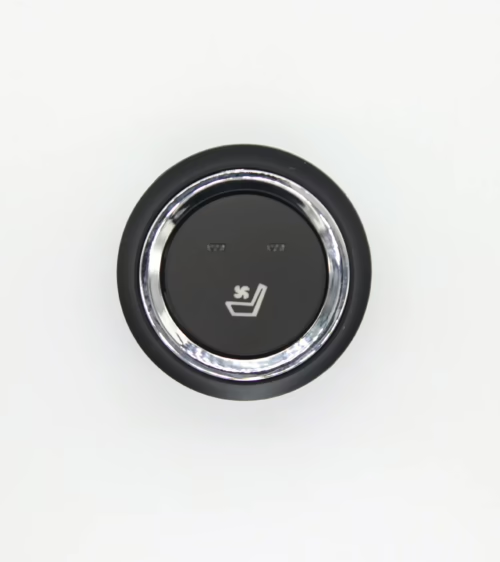
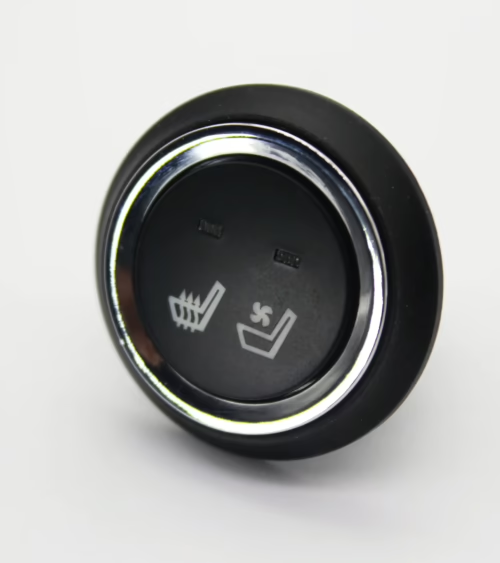
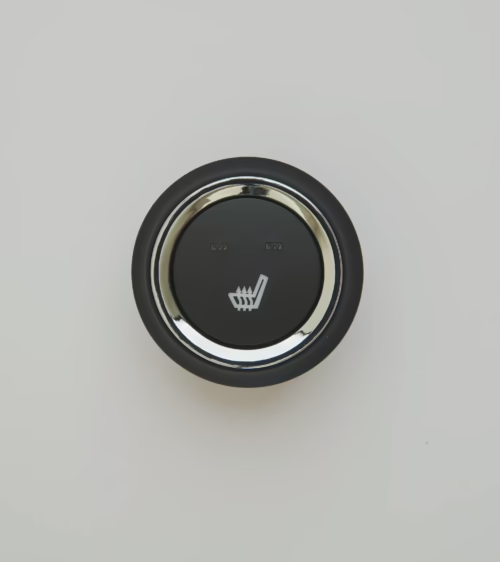
When your cabin temperature drops and the driver’s seat stays cold, a failed toyota tundra heated seat switch is often the culprit.
Unlike a dead battery or a blown engine fuse, a faulty seat heater switch rarely triggers a warning light, so many owners spend weeks assuming the element itself is at fault.
This guide covers how the Tundra’s seat heater circuit is wired, how to confirm the switch is the failed component, and how to replace it without a dealership visit.
How the Toyota Tundra Seat Heater System Works
The Tundra uses a resistance wire mat laminated beneath the seat cover fabric. When current flows through the mat, Joule heating converts electrical energy into thermal energy, raising seat surface temperature within two to three minutes on the High setting.
The switch does not power the element directly; it sends a low-current control signal to a relay, which then gates full battery voltage to the mat. A bimetal thermostat bonded to the mat monitors surface temperature and opens the circuit automatically if the mat exceeds roughly 60 °C (140 °F).
The switch governs what heat level is requested; the thermostat handles over-temperature protection independently.
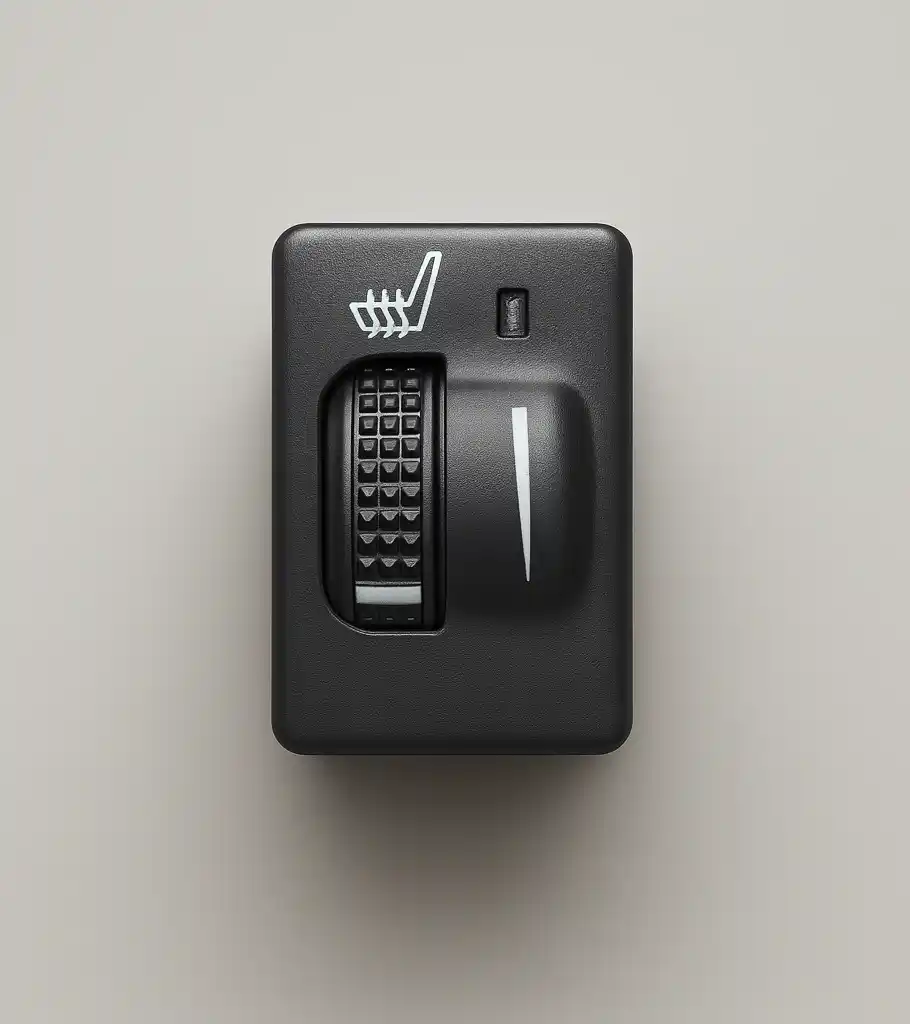
Most Tundra trim levels from 2007 onward use a three-position rocker or rotary switch:
- Off
- Low (approximately 3–4 A element draw)
- High (approximately 7–8 A element draw). The switch connector is a Sumitomo-type housing with two to four pins depending on model year and whether backlight illumination is on a dedicated pin.
Which Tundra Trims and Years Include Heated Seats
Heated front seats were not standard on every Tundra trim. Knowing whether your truck was originally built with the feature prevents chasing a circuit that was never installed.
- 2007–2013 Tundra: Heated seats available on SR5, Limited, and Platinum. Single heating zone per seat; two-speed switch; two-pin Sumitomo connector.
- 2014–2021 Tundra: Heated seats standard on SR5 and above. Dual-zone available on Platinum and 1794 Edition. Three-pin connector; LED backlight on the switch face.
- 2022–2026 Tundra: SR5 and above include heated front seats. Platinum and Capstone add heated rear seats. Upper trims integrate the control into the climate touchscreen; SR5 and Limited retain a dedicated rocker switch.
Base SR and Work Truck packages across all generations omit heated seats entirely. If your VIN does not include the factory heated seat option code, no switch replacement will restore a function that was never wired from the factory.
Common Symptoms of a Failing Heated Seat Switch
A worn or corroded switch presents in four recognizable patterns:
- No heat on any setting: Internal contacts are open. The relay never receives a signal, so the element never energizes. The seat remains at ambient temperature regardless of switch position.
- Heat stuck on High: A welded contact holds the relay closed continuously. The seat stays at maximum temperature and cannot be turned off. This is a burn hazard and should be corrected immediately.
- Intermittent operation: Carbon deposits on contact surfaces cause the circuit to drop out under vibration. Tapping the switch center often restores function temporarily, confirming the fault is contact-related rather than wiring.
- Backlight on but no heat: The illumination circuit and signal circuit are separate inside the switch. If the backlight works but the element does not respond, the signal contact pair has failed while the illumination pin remains intact.
All four symptoms can also originate from a blown fuse, a failed relay, an open heating element, or a stuck thermostat. Systematic diagnosis before ordering parts avoids unnecessary expense.
Diagnosing the Switch Before Ordering Parts
You need a digital multimeter (DMM) and the wiring diagram for your specific Tundra model year. The diagnosis has four steps.
Step 1 — Inspect the fuse. The seat heater fuse on 2007–2021 Tundras is labeled HTD SEAT in the driver’s side instrument panel fuse box and rated at 20 A. A blown fuse typically indicates a shorted element, not a switch problem. Replace the fuse only after locating the short.
Step 2 — Test relay control voltage. With the switch set to High, probe the relay control coil terminals with the DMM in DC voltage mode. A reading near 12 V confirms the switch is signaling correctly.
A reading of 0 V with the switch on means the switch is not completing the control circuit.
Step 3 — Bench-test the switch. Unplug the connector from the switch and use the DMM in continuity mode across each signal pin pair for every switch position. A serviceable switch shows continuity only across the correct pins for each position.
Contact resistance above 2 Ω on a pair that should be closed points to carbon fouling or mechanical wear.
Step 4 — Clean the connector. Corrosion at the connector pins is common in high-humidity or road-salt environments. Spray the connector with electrical contact cleaner and mate it several times before condemning the switch. Connector corrosion that mimics a switch failure is a frequent misdiagnosis.
OEM vs. Aftermarket Switch Options
Toyota’s OEM switch is guaranteed to match the original connector housing, pin count, backlight color, and current rating. Dealer list price typically falls between $55 and $90, but lead times can reach two weeks on lower-volume trim configurations. For urgent repairs, that delay is impractical.
Aftermarket switches from reputable suppliers replicate the OEM connector and carry the same amperage rating at a cost of $18–$40 with two-to-four-day shipping. When evaluating an aftermarket option, verify these specifications against your Tundra’s original switch:
- Connector housing type (Sumitomo or Molex) and pin count match your model year
- Continuous current rating equals or exceeds the OEM figure (minimum 10 A for a two-speed switch)
- Operating temperature range covers at least –40 °C to +85 °C
- LED or incandescent backlight type matches the original; LED retrofits into an incandescent circuit may require a load resistor to prevent flicker
If you are sourcing a switch online, start with our complete seat heater switch catalog, where Toyota Tundra fitments are organized by model year and trim with OEM-matched connector specifications listed for every part.
Step-by-Step Switch Replacement on the Tundra
The procedure below applies to 2007–2021 Tundra models with the switch mounted in the center console trim panel. Disconnect the negative battery terminal and wait 90 seconds before working near any airbag-equipped trim panel.
- 1. Disconnect the battery. Remove the negative cable. Wait 90 seconds to allow airbag system capacitors to discharge.
- 2. Remove the center console trim panel. Use a plastic trim removal tool to unclip the panel at three to five retention points. Avoid metal pry tools to prevent scratching the surrounding trim.
- 3. Unplug the switch connector. Press the connector’s locking tab and pull straight rearward. Never twist the connector body, as this can bend pins inside the housing.
- 4. Release the switch from the panel. Most Tundra switches are retained by two plastic locking tabs on the sides of the switch body. Press both tabs simultaneously with a small flathead screwdriver while pushing the switch out from the front face of the panel.
- 5. Install the replacement switch. Align the new switch with the opening and press it firmly until both side tabs click into the locked position.
- 6. Reconnect the wiring harness. Push the connector onto the new switch until the locking tab snaps. A click confirms full engagement.
- 7. Reinstall the trim panel. Align all clips with their receptacles and press the panel evenly until every clip seats.
- 8. Reconnect the battery and test. Turn the ignition to ON and cycle through all switch positions. At the High setting, the seat surface should feel warm within 90 seconds.
A competent DIY installer can complete this job in 20 to 40 minutes. Professional shops typically bill 0.5 to 0.8 flat-rate hours.
When the Switch Is Not the Problem
If the switch passes continuity testing and the relay is receiving the correct control voltage but the seat remains cold, investigate the downstream components. You can browse our full range of seat heating components including elements, thermostats, and relays if the diagnosis points beyond the switch.
- Heating element: Measure resistance across the element terminals with the DMM. A functional element reads 2–6 Ω depending on mat size and construction. An open-circuit reading (OL on the display) means the resistance wire has broken, most often at a seat fold line where the mat flexes repeatedly.
- Bimetal thermostat: A thermostat stuck in the open position permanently interrupts the circuit. These splice in-line with the element wiring and cost under $15. Replace it if the switch and relay test good but the element never receives voltage.
- Relay: Swap the seat heater relay with an identical relay from another circuit. On most Tundras the horn relay and seat heater relay share the same Toyota part number. If the seat works with the horn relay installed, replace the seat heater relay.
- Ground path: The seat frame must maintain a clean chassis ground. Use the DMM in resistance mode between the seat frame and a known-good chassis ground point. Resistance above 0.5 Ω warrants cleaning the seat frame ground bolt and the chassis contact surface.
Frequently Asked Questions
Q: Can I drive the Tundra with the heated seat switch removed?
A: Yes. Removing the switch leaves the relay de-energized, so the heating element never activates. There is no safety risk and no fault code is stored. Park the wiring harness connector safely away from any heat sources while you wait for the replacement part to arrive.
Q: Why does the heated seat work on Low but not on High?
A: The Low and High positions use separate contact pairs inside the switch. Carbon fouling or a broken contact on the High-position pins causes this asymmetric failure while leaving the Low contacts intact.
Bench-testing the switch across the High-position pins with a DMM in continuity mode will confirm or eliminate the switch as the fault within two minutes.
Q: How long should a replacement seat heater switch last?
A:
- A switch rated to OEM current specifications and tested for contact resistance before shipment should outlast the vehicle under normal use. Premature failures are almost always caused by an underrated current rating
- untested contact quality
- or moisture intrusion through a damaged console seal that was not addressed at installation.
Lucky Driver Inc. stocks OEM-grade seat heater switches, heating element mats, relays, and control modules for the Toyota Tundra across all model years and trim levels.
Whether you are a shop technician replacing a single switch or a fleet manager sourcing components for multiple vehicles, Lucky Driver offers verified fitment data, factory-spec current ratings, and same-day shipping on in-stock inventory.
Contact our technical team or order directly from our website to get your Tundra’s heated seats back to full operation.
Related Articles
- Toyota 4Runner Seat Heater Switch: 2026 Repair Guide
- Toyota Corolla Heated Seats: 2026 Complete Owner’s Guide
- Toyota Highlander Seat Heater Switch: 2026 Repair Guide
- Seat Heater Guide: How They Work, Types, and Buying Advice
- Toyota Tacoma Heated Seat Switch: Diagnosis and Replacement
Frequently Asked Questions About toyota tundra heated seat switch
Procurement engineers evaluating toyota tundra heated seat switch for OEM programs regularly ask the following questions. Answers cover specification, compatibility, certification, and sourcing for toyota tundra heated seat switch requirements.
What voltage ratings are available for toyota tundra heated seat switch?
Standard toyota tundra heated seat switch configurations support 12 V DC for passenger vehicles and 24 V DC for commercial trucks. Selecting the correct toyota tundra heated seat switch voltage at the design stage eliminates harness rework later.
Lucky Driver maintains toyota tundra heated seat switch inventory in both ratings for same-week shipment.
Which certifications apply to toyota tundra heated seat switch production?
toyota tundra heated seat switch assemblies entering OEM programs typically require UL recognition, REACH compliance, and RoHS documentation. Lucky Driver holds certification records for every toyota tundra heated seat switch variant and includes copies with sample and production shipments.
How is watt density specified for toyota tundra heated seat switch?
Watt density for toyota tundra heated seat switch is expressed in W/cm² and ranges from 0.04 to 0.12 depending on heat-up time requirements. Lower watt density toyota tundra heated seat switch designs improve element longevity, while higher values suit cold-climate applications.
Lucky Driver engineering reviews toyota tundra heated seat switch requirements and recommends watt density based on your seat platform.
What connector families are used with toyota tundra heated seat switch?
toyota tundra heated seat switch harnesses are available with Molex, TE Connectivity, and Delphi connector families. Matching the toyota tundra heated seat switch connector to the vehicle harness reduces assembly time and eliminates adapter cables.
Specify your harness format when requesting a toyota tundra heated seat switch quote from Lucky Driver.
What is the lead time for toyota tundra heated seat switch samples?
toyota tundra heated seat switch samples from Lucky Driver’s North American warehouse ship within 3 to 5 business days for standard configurations. Custom toyota tundra heated seat switch variants with modified pad geometry or connector pinouts require 4 to 6 weeks.
Contact Lucky Driver to confirm toyota tundra heated seat switch availability before submitting your engineering schedule.