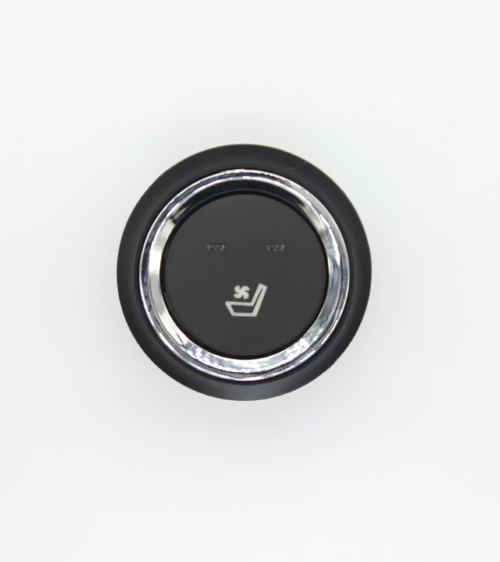
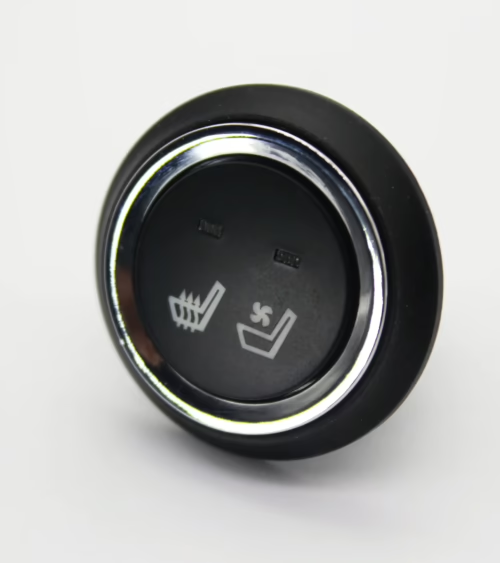
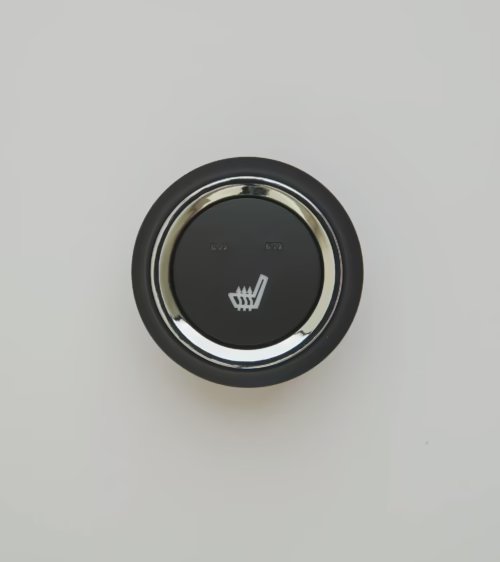
What Is a Heated Seat Rocker Switch?
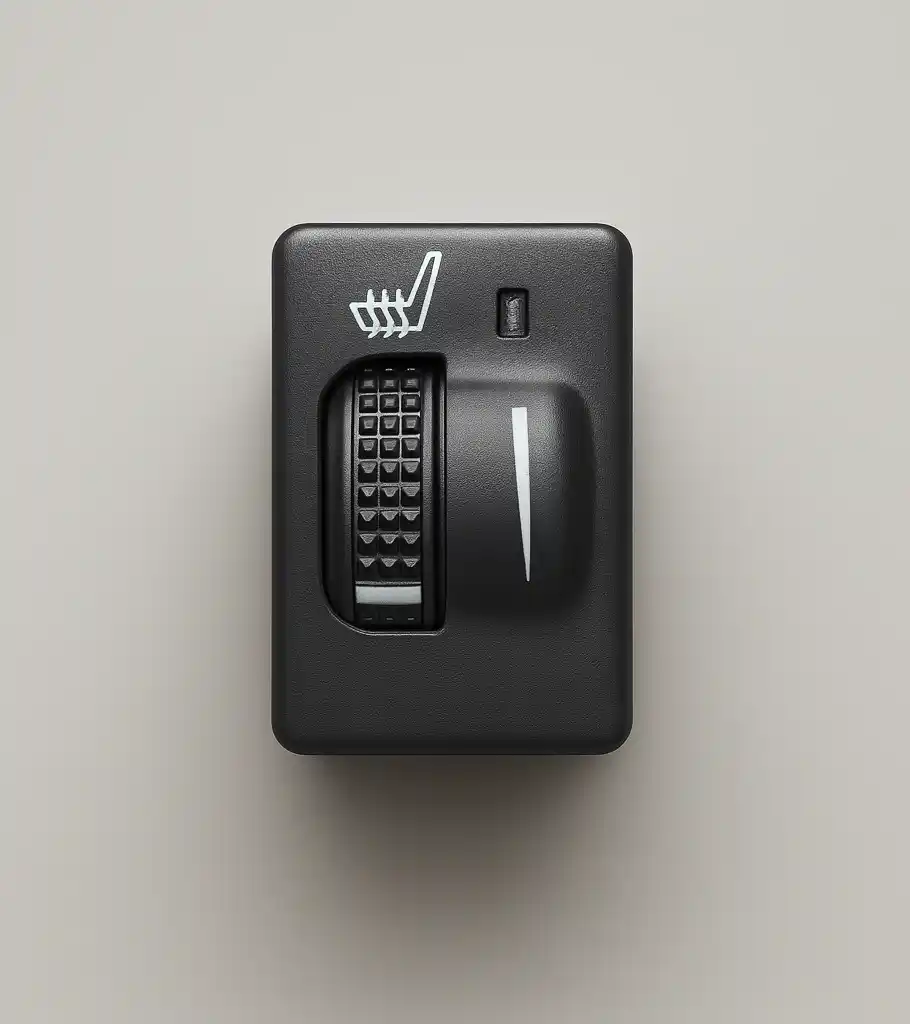
A heated seat rocker switch is a momentary or latching toggle switch that completes or interrupts the low-voltage control circuit between a seat heater controller and the heating element embedded in a seat cushion or backrest.
Unlike a simple on/off toggle, most rocker switches used in heated seat applications are illuminated, multi-position devices that signal the controller to cycle through discrete heat levels — typically off, low, medium, and high.
The rocker format is dominant in aftermarket and OEM retrofit builds because it fits standard 20 mm × 40 mm DIN switch cutouts found across dashboards, center consoles, and door panels on a wide range of vehicles.
How a Heated Seat Rocker Switch Works in a Seat Heater Circuit
The switch itself carries almost no load current. In a properly designed seat heater system, the rocker switch sends a logic-level signal — usually 12 V referenced to chassis ground — to a dedicated seat heater control module (SHCM). The SHCM reads the signal, interprets the requested heat level, and drives a relay or MOSFET output that actually routes the 8 A to 15 A draw of the carbon fiber or wire heating element. This separation of control and power circuits is critical:
- it protects the switch contacts from arcing
- extends switch life
- allows the controller to implement safety features such as over-temperature cutoff via an NTC thermistor embedded in the seat pad.
Illuminated rocker switches add a second function:
- a built-in LED or lamp biased across the load output gives the driver visual confirmation that the heater is active and indicates the selected power level through color or intensity changes. Common configurations use a single amber LED for all active states
- while premium OEM-style switches use a three-LED array — one per heat level — to display status clearly.
Types of Heated Seat Rocker Switches
Not every rocker switch is wired or rated the same way. Understanding the main categories prevents mismatches during installation:
- Single-pole single-throw (SPST) latching rocker: The simplest form. One position closes the circuit; the other opens it. Used in basic two-wire on/off seat heater kits where the controller handles all level logic internally. Typical contact rating is 20 A at 12 VDC, far above the control-circuit demand.
- Single-pole double-throw (SPDT) momentary rocker:
- Returns to a center-off position when released. Each press sends a momentary pulse to the SHCM
- which interprets successive pulses as level-up or level-down commands. This is the architecture used in most late-model OEM-compatible retrofit kits because a single switch face can cycle through multiple heat levels without separate wiring for each level.
- Double-pole double-throw (DPDT) rocker: Provides two independent circuits. Found in dual-zone seat heater setups where one switch controls both the cushion and backrest elements independently, or where a combined heater-ventilation switch must switch two separate loads.
- Illuminated rocker with integrated pilot lamp:
- The pilot lamp is wired in parallel with the load output from the SHCM
- giving visual feedback proportional to actual heater output rather than just switch position. Required for any installation where the switch and the controller are not co-located or where the driver cannot easily feel the heat level change.
Wiring a Heated Seat Rocker Switch: Step-by-Step Overview
Correct wiring is non-negotiable. An improperly wired switch can backfeed voltage to the controller’s logic board, cause false triggering, or — if the switch is miswired to carry full heater current — overheat the switch body and melt surrounding trim.
The following overview applies to the most common aftermarket SHCM with a three-terminal control input:
- Terminal 1 — Power (12 V switched): Connect to an ignition-switched 12 V source, not a constant live feed. Using constant power means the heater remains active when the ignition is off, draining the battery and creating a burn risk on an unoccupied seat.
- Terminal 2 — Signal output: This wire runs from the switch back to the SHCM’s heat-level input. When the rocker is closed, 12 V appears on this line, and the controller increments the heat level. The wire gauge can be light — 20 AWG is sufficient — because current draw is measured in milliamps.
- Terminal 3 — Ground: Connect to chassis ground using a short, direct path. A poor ground connection here introduces voltage offset on the signal line and causes erratic level-stepping behavior that is commonly misdiagnosed as a faulty SHCM.
- Illumination terminal (if present):
- Connect to the vehicle’s panel lamp dimmer circuit so the switch backlight tracks instrument cluster brightness. Do not omit this connection and leave the lamp terminal floating — in some switch designs
- a floating lamp terminal creates a high-impedance path that can interfere with the signal output.
Always verify polarity before final assembly. Many illuminated rockers contain a diode in series with the lamp to prevent reverse current, and connecting the switch backwards will result in a lit switch that provides no control signal to the controller.
Selecting the Right Heated Seat Rocker Switch for Your Application
Several parameters determine whether a given rocker switch is appropriate for a specific installation:
- Panel cutout dimensions: The ISO/DIN standard 20 × 40 mm cutout is the most common in passenger vehicles produced after 2000. Verify the dashboard or console panel cutout before ordering, as some Asian and European vehicles use narrower 15 × 21 mm mini-rocker formats.
- Contact configuration: Match the switch logic to the SHCM’s input requirements. A momentary-input controller paired with a latching switch will lock the heater at one level and require the driver to cycle the ignition to reset.
- A latching-input controller paired with a momentary switch may never register a stable on-state.
- Operating temperature range: Switches mounted in sun-exposed center consoles or near windshield defrost vents can see panel temperatures above 70 °C. Confirm the switch body is rated for at least 85 °C ambient to prevent deformation or contact creep over time.
- IP rating: For marine, off-road, or convertible applications where moisture ingress is likely, specify a switch with at minimum an IP54 rating. Standard automotive-grade rockers without a seal ring are adequate for enclosed passenger compartments.
- Illumination color: Choose amber or red for heat-state indication; avoid blue or green, which are conventionally used for cooling or ventilation systems. Consistent color coding reduces driver confusion in combined heater-ventilation installations.
Common Failure Modes and Diagnosis
Heated seat rocker switches fail in predictable ways. Knowing the failure signatures speeds up diagnosis and prevents unnecessary replacement of functional controllers or heating pads:
- Heater stuck on one level: The switch’s detent mechanism has worn, allowing the rocker to rest in an intermediate position that continuously pulses the SHCM. Confirm by unplugging the switch and observing whether the controller holds its last-commanded level. If it does, the switch is at fault.
- Illumination present but no heat response: The switch lamp circuit is intact, but the signal output terminal has an open contact or corroded crimp. Measure signal voltage at the SHCM input with the rocker closed. Absence of signal voltage with correct switch wiring confirms a failed signal contact.
- Intermittent operation: Fretting corrosion on the signal contact, most common in high-humidity environments. Clean contacts with electrical contact cleaner. If the problem recurs within weeks, replace the switch; contact cleaner only delays failure on a mechanically worn switch.
- Switch body discoloration or melting: The switch has been wired to carry full heater element current instead of the control signal only. Replace the switch and audit the wiring against the SHCM schematic before reinstalling. Full element current through a control-rated switch will repeat the failure within hours.
Installing a Heated Seat Rocker Switch in an Aftermarket Build
Panel location is the first decision in an aftermarket build. The ideal mounting point is within the driver’s reach without requiring the driver to look away from the road — the lower center console area between the gear selector and the seat base is the factory choice for a reason.
Avoid mounting the switch where it can be accidentally actuated by a shifting knee or a passenger’s bag.
Use a step drill or chassis punch to cut a clean 20 × 40 mm opening. Deburr the edges thoroughly; sharp panel metal edges will abrade switch harness insulation over time and create intermittent shorts.
Feed the switch harness through the panel before snapping the switch into place — attempting to connect terminals after the switch is seated in thin trim panels frequently cracks the panel.
Route all control wiring away from high-current cables such as amplifier power leads or engine bay wiring. Low-level signal wires are susceptible to capacitively coupled interference, which the SHCM may interpret as spurious level commands.
If routing near high-current conductors is unavoidable, use shielded twisted pair for the signal wire and ground the shield at one end only.
Frequently Asked Questions
Can I use any rocker switch to control a seat heater, or does it need to be a specific type?
You cannot use just any rocker switch interchangeably.
The switch must match the input logic of the seat heater control module — latching or momentary — and must be rated for the operating voltage and current of the control circuit.
Using a switch designed for high-current direct switching in a signal-input circuit is electrically safe but will typically not provide multi-level control. Using an undersized switch on a direct-load circuit is a fire hazard.
Why does my heated seat rocker switch light up but the seat doesn’t heat?
Switch illumination and heater control are independent circuits in most systems. The lamp is powered from the vehicle’s panel dimmer or a constant source, while the signal output goes to the controller.
A lit switch with no heat response means the illumination circuit is complete but the signal output contact is open or the wire between the switch and the SHCM is broken or disconnected at the controller end.
Probe the SHCM signal input terminal with a multimeter while toggling the switch.
What gauge wire should I use when wiring a heated seat rocker switch?
For the control signal wire between the switch and the SHCM, 20 AWG is adequate — the current on this line is typically under 50 mA.
For the switched 12 V feed to the switch and the illumination circuit, use 18 AWG.
Never use control-circuit wire sizing on any line that carries element current; those wires — from the SHCM to the heating element — should be sized per the element’s rated current draw, typically 16 AWG or heavier for a 10 A element.
Lucky Driver Inc. supplies heated seat rocker switches, compatible seat heater control modules, and complete heated seat pad kits engineered specifically for OEM-quality aftermarket installation. All Lucky Driver switch components are validated against our in-house heating pad assemblies for signal compatibility, operating temperature, and long-term contact reliability.
Contact our technical sales team or browse the product catalog at lucky-driver.com to find the correct switch and controller combination for your vehicle or OEM seat manufacturing application.
Explore our universal seat heater switch options for direct-fit and universal applications.
Related Articles
- Toyota Heated Seat Switch: Diagnosis, Replacement, and Upgrades
- Lucky Driver Seat Heater Products: 2024 Updates and New SKUs
- Seat Ventilation System: How It Works and How to Add One in 4 Steps
- Add Heated Seats to Car: 5-Step Aftermarket Installation Guide
- Heated Seat Switch Types: Rocker, Rotary, and Push-Button — 3 Options Compared
Frequently Asked Questions About heated seat rocker switch
Procurement engineers evaluating heated seat rocker switch for OEM programs regularly ask the following questions. Answers cover specification, compatibility, certification, and sourcing for heated seat rocker switch requirements.
What voltage ratings are available for heated seat rocker switch?
Standard heated seat rocker switch configurations support 12 V DC for passenger vehicles and 24 V DC for commercial trucks. Selecting the correct heated seat rocker switch voltage at the design stage eliminates harness rework later. Lucky Driver maintains heated seat rocker switch inventory in both ratings for same-week shipment.
Which certifications apply to heated seat rocker switch production?
heated seat rocker switch assemblies entering OEM programs typically require UL recognition, REACH compliance, and RoHS documentation. Lucky Driver holds certification records for every heated seat rocker switch variant and includes copies with sample and production shipments.
How is watt density specified for heated seat rocker switch?
Watt density for heated seat rocker switch is expressed in W/cm² and ranges from 0.04 to 0.12 depending on heat-up time requirements. Lower watt density heated seat rocker switch designs improve element longevity, while higher values suit cold-climate applications.
Lucky Driver engineering reviews heated seat rocker switch requirements and recommends watt density based on your seat platform.
What connector families are used with heated seat rocker switch?
heated seat rocker switch harnesses are available with Molex, TE Connectivity, and Delphi connector families. Matching the heated seat rocker switch connector to the vehicle harness reduces assembly time and eliminates adapter cables. Specify your harness format when requesting a heated seat rocker switch quote from Lucky Driver.
What is the lead time for heated seat rocker switch samples?
heated seat rocker switch samples from Lucky Driver’s North American warehouse ship within 3 to 5 business days for standard configurations. Custom heated seat rocker switch variants with modified pad geometry or connector pinouts require 4 to 6 weeks.
Contact Lucky Driver to confirm heated seat rocker switch availability before submitting your engineering schedule.
Rocker switch electrical specifications for automotive applications are defined under SAE International automotive standards, which govern contact rating, temperature range, and vibration resistance.