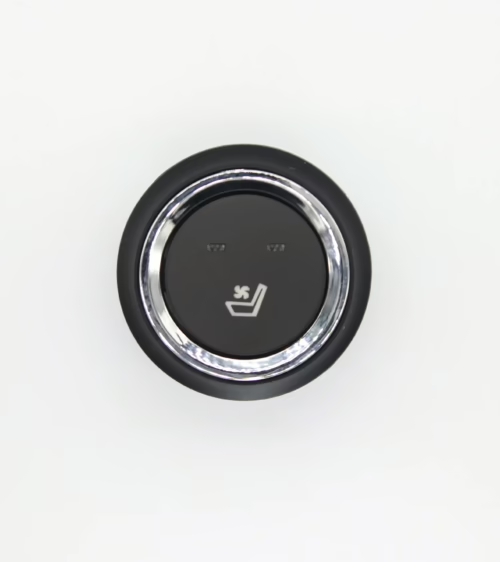
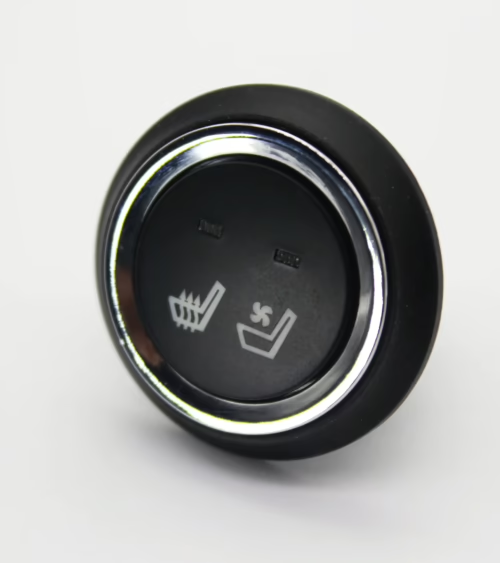
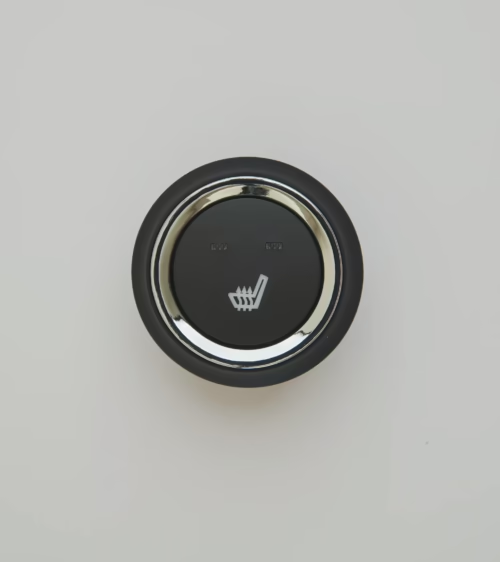
What the Honda Civic Seat Heater Switch Does
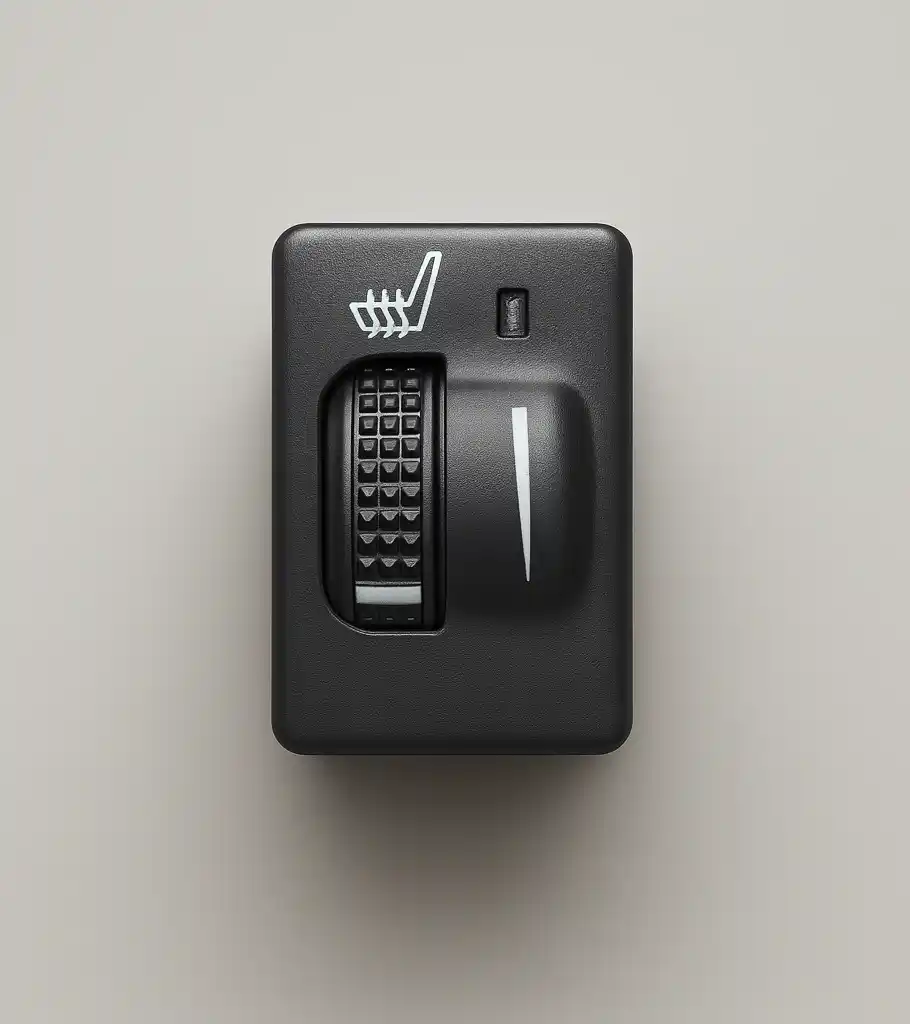
The honda civic seat heater switch is the primary interface between the driver or passenger and the resistive heating element embedded beneath the seat upholstery.
When you press the switch, it closes a circuit that sends 12-volt current through a carbon-fiber or stainless-steel heating wire woven into the seat cushion and backrest.
Most Civic models with factory heated seats use a two- or three-stage rocker switch — cycling through high (approximately 107°F / 42°C surface temperature), medium (approximately 99°F / 37°C), and off.
A thermistor sensor embedded in the seat foam feeds temperature data back to the switch or control module, which modulates the duty cycle to prevent overheating and maintain consistent comfort throughout the drive.
Honda Civic Model Years With Factory Heated Seats
Honda added heated front seats as an option or standard feature on select Civic trims across multiple generations. Knowing your generation is the first step to finding the correct replacement switch:
- 8th Generation (2006–2011): Available on EX-L and higher trims in North American markets. The switch is typically located in the lower HVAC panel cluster near the climate controls.
- 9th Generation (2012–2015): EX-L sedan only. Heated driver and front passenger seats are standard equipment; the switch is integrated into the lower climate control bezel.
- 10th Generation (2016–2021):
- EX-L
- Sport Touring
- Touring trims. On some builds
- the switch shares a panel module with other climate functions in the center console. The circuit on these years may be partially managed by the HVAC body control module
- meaning faults can generate diagnostic trouble codes (DTCs) rather than a simple open circuit.
- 11th Generation (2022–2025): EX-L and Sport Touring trims. The switch may share a panel with the heated steering wheel button on the center console. Connector type and pin count differ from earlier generations — always verify fitment before ordering.
If your trim level is not listed above, Honda did not factory-install heated seats on that configuration. Aftermarket installation is possible but requires a heating element pad, a wiring harness, a fused relay circuit, and a switch — a more involved project than a simple switch swap.
Common Symptoms of a Failing Seat Heater Switch
Correctly identifying the failed component before ordering parts saves time and money. These are the most reliable indicators pointing to the switch rather than the heating element or wiring harness:
- No heat on any stage: The seat does not respond to any switch position. Before condemning the switch, verify the seat heater fuse — a blown 15A or 20A blade fuse is the most common cause of complete seat heater failure and takes thirty seconds to check.
- One heat stage inoperative: Multi-stage switches use discrete internal contact sets for each level. A worn or oxidized contact on the high stage may leave medium working but not high, or the reverse.
- Intermittent operation:
- The seat heats on some drives and not others. This pattern strongly suggests a marginal contact inside the switch housing. Pressing firmly on the switch face or gently wiggling it while the circuit is energized can temporarily restore function
- which confirms the fault is in the switch itself.
- Switch illumination failed, heat still works: The LED or indicator bulb inside the switch housing has burned out. This is a cosmetic issue only — seat heating function is unaffected.
- Switch indicator stays lit but seat does not heat: The switch is passing current to its internal indicator circuit, but the heating load circuit is open downstream. This points to a failed element, a broken wire under the seat track, or a failed relay rather than the switch.
How the Seat Heater Circuit Works
A clear understanding of the circuit path prevents misdiagnosis and unnecessary parts replacement.
In a typical Honda Civic heated seat system, current flows from the battery through an ignition relay, the seat heater fuse, the switch, and a seat heater relay to the heating element — roughly 1.5–3.5 ohms per zone depending on year and seat section — then to chassis ground.
A thermistor — a resistor whose resistance changes predictably with temperature — monitors the seat surface and signals the switch module or control unit to reduce duty cycle as the seat approaches its upper limit, typically capped near 113°F / 45°C to comply with automotive burn-prevention guidelines.
On 10th- and 11th-generation Civics, this temperature regulation logic is partially offloaded to the HVAC body control module. The physical switch becomes a low-current signal input — it communicates the driver’s requested heat level to the module, which then controls the relay and enforces the thermal limit.
On these architectures, a faulty switch input wire can produce a stored DTC rather than a dead circuit, which is why a scan tool is a valuable first diagnostic step on newer Civics before touching any hardware.
Step-by-Step Diagnosis
Work through the following checks in sequence using a digital multimeter and your model-year wiring diagram. This order is designed to catch the most common faults first and avoid misdiagnosing a downstream component as a switch failure:
- Step 1 — Inspect the fuse:
- Locate the seat heater fuse in the interior fuse block using your owner’s manual. Test for continuity with the DMM set to continuity mode
- or pull and visually inspect the fuse element. Replace if blown. If it blows again immediately
- a short exists downstream — do not keep replacing the fuse until you locate the short.
- Step 2 — Verify supply voltage at the switch connector:
- With the ignition on
- unplug the switch harness connector and probe the supply terminal with the positive DMM lead. You should read approximately 12V. No voltage here means the fault is in the fuse
- the relay
- or the supply wiring — not the switch.
- Step 3 — Test the switch contacts in isolation:
- With the switch disconnected from the harness
- set the DMM to continuity or resistance mode. Press each heat stage and confirm the correct terminal pairs show continuity. A stage that shows no continuity has a failed internal contact and the switch must be replaced.
- Step 4 — Measure element resistance:
- From the seat harness connector (switch still disconnected)
- measure resistance across the element terminals. Values significantly above the service manual specification
- or an open-circuit (OL) reading
- indicate a failed heating element. A near-zero reading indicates a dead short — the element has failed and likely caused the blown fuse.
- Step 5 — Check the thermistor:
- Measure resistance across the thermistor terminals at room temperature and compare to the factory specification. An open-circuit reading means the thermistor has failed. Many Honda seat heater control circuits refuse to activate if the thermistor reads outside its expected range
- so a bad thermistor can convincingly mimic a bad switch at the symptom level.
Replacing the Honda Civic Seat Heater Switch
Once you have confirmed through testing that the switch is the faulty component, the replacement procedure on most Civic generations takes under thirty minutes with basic hand tools:
- Disconnect the negative battery terminal and wait at least two minutes before proceeding. Seat wiring runs near supplemental restraint system (SRS) components — discharging the airbag capacitors before working in this area is a mandatory safety precaution, not optional.
- Remove the surrounding trim panel. On 8th- and 9th-generation Civics, the switch cluster in the lower HVAC bezel is typically held by two to four Phillips screws and a row of plastic snap clips.
- On 10th-gen and 11th-gen models, the center console trim panel may need to come off as a preliminary step. Always use a plastic trim pry tool to avoid scratching finished surfaces.
- Release the switch from the panel. Honda uses a tab-and-slot retention design — compress the locking tabs on each side of the switch body while pushing the switch rearward from the front face. Do not pry from the decorative face or you risk cracking the lens or panel.
- Unplug the harness connector by pressing the locking tab and pulling straight back. The connector body is keyed and will only engage fully in one orientation during reinstallation.
- Seat the new switch into the panel, reconnect the harness connector, and test all heat stages and indicator illumination before refitting the trim panel and reinstalling any screws.
For verified direct-fit options sorted by Civic generation and connector type, visit our replacement seat heater switches page to find the correct match for your year.
OEM vs. Aftermarket Switch: What to Know Before You Buy
Honda OEM switches sourced through a dealership or authorized Honda parts supplier are guaranteed to match the factory connector footprint, pin count, illumination color, and heat-stage logic for your specific Civic year. Typical dealer pricing runs $45–$90 per switch.
Aftermarket options are available in the $12–$35 range and perform well for most owners, provided the connector pinout and stage count are confirmed correct for the application.
When evaluating any aftermarket switch, confirm that the operating current rating covers the circuit load — Honda heated seat circuits typically draw 8–15A per zone at the high stage. Also verify whether the switch includes any integrated thermal cutoff protection required by your generation’s design.
Owners who want to add heated seats to a base-trim Civic that did not come with the factory option can pair a universal bare-wire switch with a universal element kit.
You can browse our full seat heating product range to find complete kits that include both the heating element and switch, which simplifies universal installs considerably.
Frequently Asked Questions
Q:
- Can a faulty seat heater switch cause a blown fuse?
A: Rarely. A failing switch almost always opens the circuit rather than creating a short. Seat heater fuses blow most often when the heating element wire is pinched under a seat track during seat adjustment - or when the element itself has failed internally and developed a low-resistance short. If you are replacing the fuse repeatedly
- check element resistance and inspect the wiring harness under the seat before assuming the switch is responsible.
Q:
- My 2018 Honda Civic stored a seat heater DTC — does that mean the switch failed?
A: On 10th-generation Civics - seat heater fault codes typically point to a signal communication issue between the switch input and the HVAC body control module
- not necessarily a failed heating element or burned switch. Pull the specific code
- inspect the switch signal wire for continuity
- test the switch output at each stage with a DMM. Honda has also issued technical service bulletins addressing false-positive seat heater codes on certain 10th-gen production runs — ask a dealer to check for applicable TSBs before replacing components.
Q:
- Is it safe to run the seat heater on high for an entire drive?
A: Yes - under normal operating conditions. The thermistor circuit limits seat surface temperature to approximately 113°F / 45°C regardless of the selected stage
- so running on high simply reaches that cap faster before the control circuit reduces duty cycle. Avoid extended high-heat operation if the seat upholstery has a recent repair involving adhesive or heat-sensitive materials
- as sustained heat can weaken bonds in freshly repaired areas.
Whether you are swapping a worn switch, retrofitting heat into a base-trim Civic, or sourcing components for a high-volume repair shop, Lucky Driver Inc. supplies direct-fit and universal seat heater switches, elements, and wiring kits to DIY installers and professional technicians across North America.
Our fitment data is verified by generation and trim, and our technical team can confirm compatibility before you place an order.
Related Articles
- Toyota Tundra Heated Seat Switch: 2026 Repair Guide
- Toyota 4Runner Seat Heater Switch: 2026 Repair Guide
- Toyota Corolla Heated Seats: 2026 Complete Owner’s Guide
- Toyota Highlander Seat Heater Switch: 2026 Repair Guide
- Seat Heater Guide: How They Work, Types, and Buying Advice
Frequently Asked Questions About honda civic seat heater switch
Procurement engineers evaluating honda civic seat heater switch for OEM programs regularly ask the following questions. Answers cover specification, compatibility, certification, and sourcing for honda civic seat heater switch requirements.
What voltage ratings are available for honda civic seat heater switch?
Standard honda civic seat heater switch configurations support 12 V DC for passenger vehicles and 24 V DC for commercial trucks. Selecting the correct honda civic seat heater switch voltage at the design stage eliminates harness rework later.
Lucky Driver maintains honda civic seat heater switch inventory in both ratings for same-week shipment.
Which certifications apply to honda civic seat heater switch production?
honda civic seat heater switch assemblies entering OEM programs typically require UL recognition, REACH compliance, and RoHS documentation. Lucky Driver holds certification records for every honda civic seat heater switch variant and includes copies with sample and production shipments.
How is watt density specified for honda civic seat heater switch?
Watt density for honda civic seat heater switch is expressed in W/cm² and ranges from 0.04 to 0.12 depending on heat-up time requirements. Lower watt density honda civic seat heater switch designs improve element longevity, while higher values suit cold-climate applications.
Lucky Driver engineering reviews honda civic seat heater switch requirements and recommends watt density based on your seat platform.
What connector families are used with honda civic seat heater switch?
honda civic seat heater switch harnesses are available with Molex, TE Connectivity, and Delphi connector families. Matching the honda civic seat heater switch connector to the vehicle harness reduces assembly time and eliminates adapter cables.
Specify your harness format when requesting a honda civic seat heater switch quote from Lucky Driver.
What is the lead time for honda civic seat heater switch samples?
honda civic seat heater switch samples from Lucky Driver’s North American warehouse ship within 3 to 5 business days for standard configurations. Custom honda civic seat heater switch variants with modified pad geometry or connector pinouts require 4 to 6 weeks.
Contact Lucky Driver to confirm honda civic seat heater switch availability before submitting your engineering schedule.